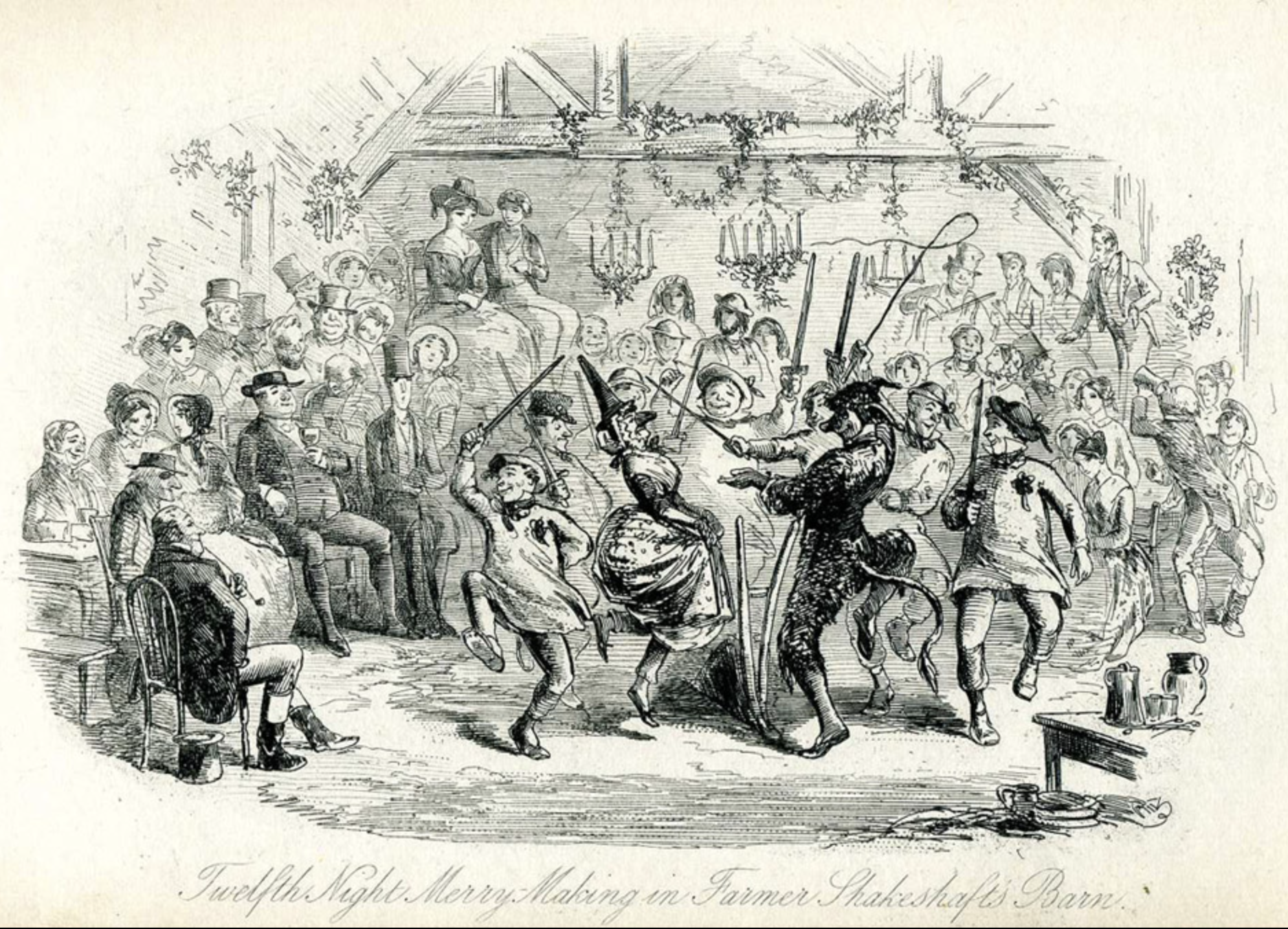
In Regency England, Twelfth Night (January 5th) marked the climax of the Christmas season with revelry, games, and masquerades. It was a time for breaking social norms, with balls, parties, and theatrical merriment, often including masquerades where guests adopted character roles. The centerpiece was the Twelfth Night cake, and the person finding a bean or pea baked inside would become the “King” or “Queen” of the evening.
Its history is rooted in ancient pre-Christian festivals, such as the Roman Saturnalia and Celtic Samhain, which featured inversions of social order and revelry. Over time, these traditions merged with Christian celebrations of the Epiphany, which commemorates the visit of the Three Wise Men to the baby Jesus.
- Pre-Christian Roots: Twelfth Night celebrations have roots in festivals like Saturnalia, where social roles were reversed, and a Lord of Misrule held sway.
- Christianization: The celebration evolved to coincide with the eve of Epiphany, which commemorates the visit of the Three Wise Men.
- Feast of Fools: In medieval Europe, Twelfth Night was also known as the Feast of Fools, a time for feasting, drinking, and overturning social norms.
- Shakespeare’s Play: Shakespeare’s play “Twelfth Night” is believed to have been inspired by and performed during these celebrations, reflecting the holiday’s themes of social inversion and revelry.
Key Aspects of Twelfth Night Celebrations:
- Balls and Parties: Elaborate balls were held in homes or assembly rooms, featuring dancing like cotillions and country dances.
- Masquerades: Costumes and masks were common, adding a playful, theatrical element.
- Twelfth Night Cake: A rich fruitcake with a bean and/or pea baked inside.
- King and Queen of the Bean/Pea: The individuals finding the bean and pea respectively would lead the festivities and adopt humorous or whimsical roles for the evening.
- Topsy-Turvy Customs: Servants might playfully mimic their masters, and general merriment and games were encouraged.
- Popular Games: Games like charades, snapdragon (plucking raisins from flaming brandy), and card games were popular.
- End of Christmastide: Twelfth Night marked the end of the Christmas season, and decorations were traditionally taken down and sometimes burned.
- Out with the Old: Some sources mention a belief that keeping greenery after Twelfth Night would bring bad luck.
In Regency England, Twelfth Night was a night of revelry, games, music, and even theatrical performances. The aristocracy and the gentry often hosted grand balls in their homes or local assembly rooms. One might host a masquerade ball (something one sees in many Regency romances.
With the Twelfth Night cake, the man who found the bean became the King of the Bean, and the woman who found the pea was the Queen of the Pea. We Regency writers like to bring our hero and heroine together in this manner. It is especially delightful if they have “hated” each other until this moment in the book. These traditions reflect customs passed down through centuries.

A performance or soliloquies or recitations from Shakespeare’s comedy, Twelfth Night, might also be presented as part of the festivities. If one recalls, Shakespeare uses themes of mistaken identity throughout the play.
Food served are quite lavish, with an emphasis on desserts of all sorts. Naturally, a Wassail bowl was necessary, along with mulled wine or brandy.
One might find the “lower” class enjoying community gatherings on this particular evening.
Devout Christians might have spent the evening attending church services leading into the Epiphany morning.


 Every Woman Dreams...