
In this tale, the reader learns that Alexander Dutton’s father sold his mother and younger sister in what Robert Dutton claimed was a way to save them from the life in which Robert has sank, but was this legal in Regency England?
A man sitting in the House of Lords who wished a divorce could do so my bringing charges against his wife in a VERY PUBLIC proceeding. [Note: The wife did not have that option.] The local newsprints would publish the testimony against the woman. Legally, this was known as Criminal Conversation. I live in North Carolina where Crim Con is still the law on the books. There are seven U.S. states that still have criminal conversation laws on the books: Hawaii, Illinois, Mississippi, New Mexico, North Carolina, South Dakota, and Utah. Many states have abolished criminal conversation laws, along with similar “heartbalm” actions like alienation of affection.
Before she died, U. S. Senator Elizabeth Edwards considered suing Andrew Young, a former aide to her husband John Edwards, who was running for President in 2008, for Young’s alleged role in covering up John Edwards’ affair with Rielle Hunter, arguing “alienation of affection.” As I said above, North Carolina is one of the few states that allows a third party to be sued for contributing to the dissolution of a marriage.
Of course, none of that has to do with this new book, but it does reflect how such scandal can bring down an important public figure.

If you ever read Thomas Hardy’s 1866 novel, The Mayor of Casterbridge: The Life and Death of a Man of Character, you might know something of the custom practiced in England of wife selling. Wife selling dates back to the 17th Century as a means for the poor to earn a divorce. Hardy’s plot points add depth of reality to my own tale.
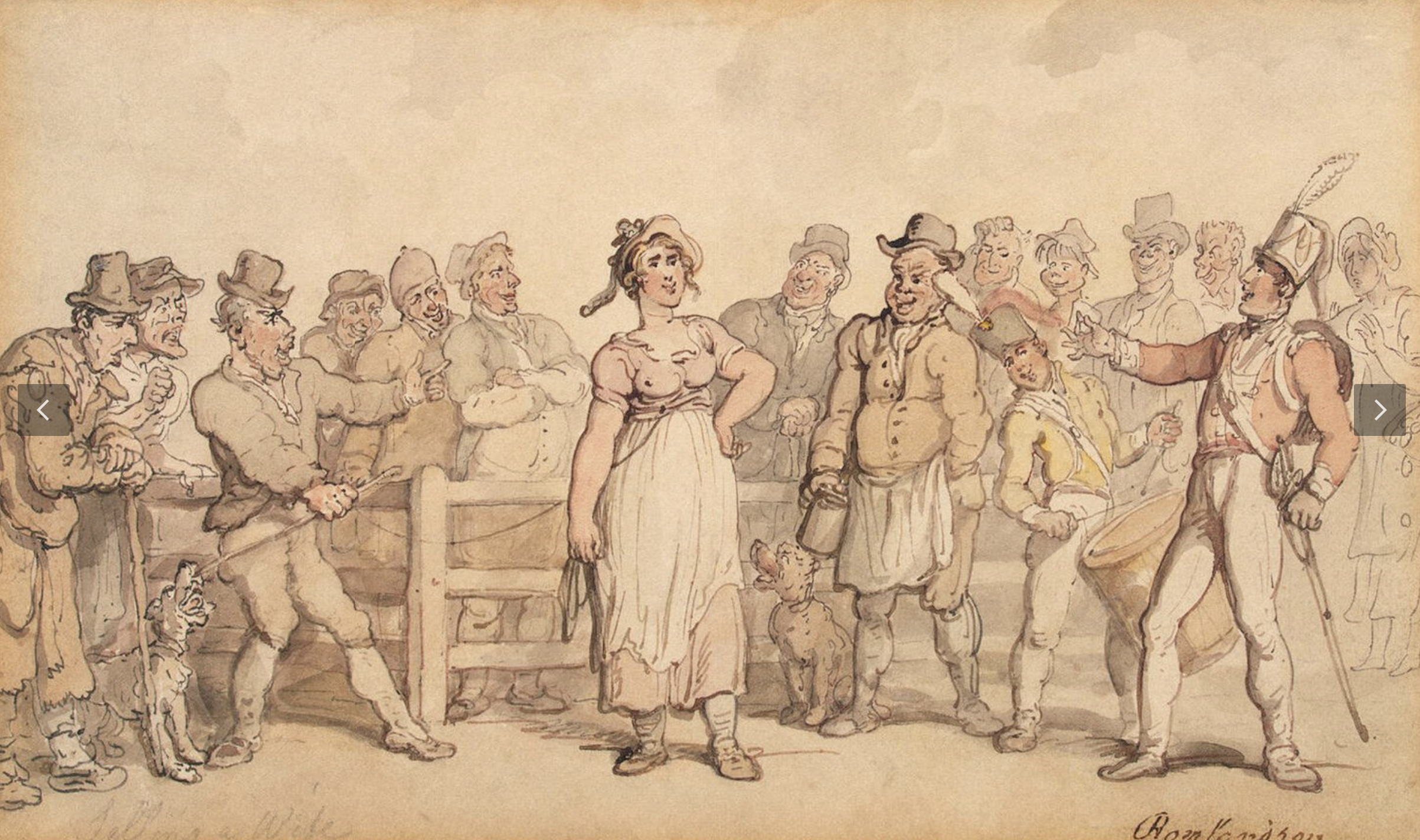
The “ritual” of wife selling likely originated around the end of the 1600s, though there is one account of a man deeding his wife to another that is dated 1302. [Bryce, James (1901), Studies in history and jurisprudence, Vol. II, Oxford University Press, pg. 820.]The practice was common enough in the 17th century for the English philosopher John Locke to write (apparently as a joke) in a letter to French scientist Nicolas Toinard [fr] that “Among other things I have ordered you a beautiful girl to be your wife … If you do not like her after you have experimented with her for a while you can sell her and I think at a better price than a man received for his wife last week in London where he sold her for four sous a pound; I think yours will bring 5 or 6s per pound because she is beautiful, young, and very tender and will fetch a good price in her condition.”[Locke, John (2002). John Locke : selected correspondence. Oxford: Oxford University Press. pp. 76–77.]

Though it lacked a basis in law and one could be prosecuted if caught doing so, many magistrates looked the other way. After all, the local Poor Law Commissioners often forced the husband to sell his wife rather than having to maintain the whole family in the workhouse. I talking mid 1800s, Some form of wife selling persisted in England until the early 20th Century. In one of the last reported instances of a wife sale in England, a woman gave evidence in a 1913 Leeds police court where she claimed to have been for £1to a man with whom her husband worked.
Until the passing of the Marriage Act 1753, a formal ceremony of marriage before a clergyman was not a legal requirement in England, and marriages were unregistered. All that was required was for both parties to agree to the union, so long as each had reached the legal age of consent, [Bryce (1901), pp. 816–817] which was 12 for girls and 14 for boys. [The Scottish Case that Led to Hardwicke’s Marriage Act]. Women were completely subordinated to their husbands after marriage, the husband and wife becoming one legal entity, a legal status known as coverture. As the eminent English judge Sir William Blackstone wrote in 1753:”the very being, or legal existence of the woman, is suspended during the marriage, or at least is consolidated and incorporated into that of her husband: under whose wing, protection and cover, she performs everything”.
Married women could not own property in their own right, and were indeed themselves the property of their husbands. [Caine, Barbara; Sluga, Glenda (2002). “Gendering European History: 1780-1920, Continuum, pp. 12-13.] But Blackstone went on to observe that “even the disabilities the wife lies under are, for the most part, intended for her protection and benefit. So great a favourite is the female sex of the laws of England”.
Lyon’s Obsession: The Lyon’s Den Connected World
Short on temper. Long on pride. True to his word.
Lady Theodora Duncan, daughter and only child of Lord Macdonald Duncan, reluctantly embarks on a London season in hopes of making a suitable match. She had always thought she would marry Lord Alexander Dutton, 12th Earl Marksman. After all, they had been raised together in her father’s house since Duncan became Marksman’s guardian when his lordship was but twelve. Her father’s estate marches along with Marksman’s, and they had shared multiple words of devotion, as well as stolen moments and heated kisses. Yet…
Lord Alexander Dutton always planned to marry Lady Theodora Duncan, but not until he finds his family. His father, long before Robert Dutton became the heir to the Marksman’s peerage, had sold Alexander’s mother and younger sister to the captain of a sailing ship. Alexander has searched for them for some ten years, spending thousands of the Marksman fortune in his desire to reclaim them. He cannot think truly to know happiness until he can share his title and his wealth with them. Assuredly, Theodora understands why he has not made an offer of marriage. Yet, if she does, then why does he constantly find her on the arm of a Sardinian count? He never expected Theodora’s abandonment, but Alexander is finally so close to knowing his real family again.
Must he risk one dream to know another?
Tropes you’ll love:
✔️ Friends to lovers
✔️ Soul mates
✔️ Secret identity
✔️ Fish out of water
✔️ Unrequited love
✔️ Dark secret
✔️ Emotional scars
✔️ Marriage pact
✔️ Innocent cohabitation
✔️ Love interest vs. Missing family
✔️ Honorable marriage
✔️ Marriage pact
✔️ Emotional scars
Read in Kindle Unlimited!
Buy Links:
BookBub
Amazon


 Every Woman Dreams...