
I had a recent question from a reader/writer about how after the death of the current peer was one made the new peer. Was it immediate? Is there a process or some sort of hearing. What must he prove to be the new peer?
This particular writer was asking about a nephew assuming the new peerage, as the peer had no male heirs, but the nephew being the son of the peer’s brother.
In such cases, there is very little delay or a contest. The son of the second brother is immediately the peer, but he would generally wait until after the funeral to assume the title publicly. It is when a title can be inherited by a female and there are no direct descendants. like a daughter or granddaughter that contests arise that delays happen. Delays might also occur if the widow is pregnant or if there is doubt about the young man’s legitimacy.
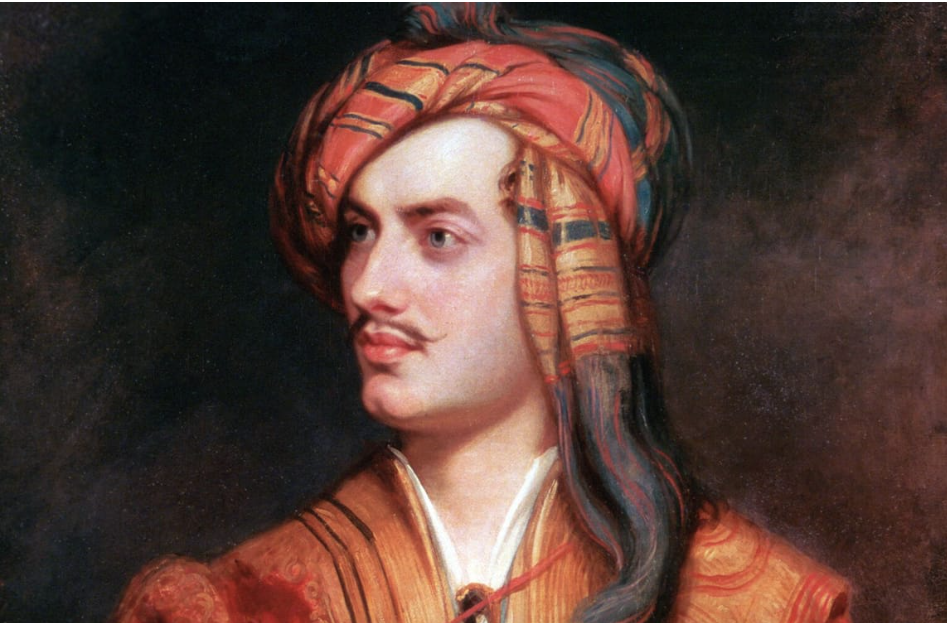
For example, let us have a look at Lord Byron. “George Gordon Noel Byron was born, with a clubbed right foot, in London, on January 22, 1788. He was the son of Catherine Gordon of Gight, an impoverished Scots heiress, and Captain John (“Mad Jack”) Byron, a fortune-hunting widower with a daughter, Augusta. The profligate captain squandered his wife’s inheritance, was absent for the birth of his only son, and eventually decamped for France as an exile from English creditors, where he died in 1791 at age 36.
“With the death in 1798 of his great-uncle, the “Wicked” fifth Lord Byron, George became the sixth Baron Byron of Rochdale, heir to Newstead Abbey, the family seat in Nottinghamshire. He enjoyed the role of landed nobleman, proud of his coat of arms with its mermaid and chestnut horses surmounting the motto “Crede Byron” (“Trust Byron”).” [Poetry Foundation]
Lord Byron’s guardian, Lord Carlisle was ill when Byron turned 21. As mentioned above, Byron inherited at age ten from a great uncle. He thought he was being singled out to prove that his father and his mother were married before he was born, that his father was legitimate, and that his father was the son of a previous deceased baron, that the baron’s sons were all dead without legitimate male issue, and that any contenders were the sons of a son junior to John Byron. Byron gathered all the needed information– he had been the peer for 11 years by then, presented it and was accepted. He castigated Carlisle in one of his poems, but his half sister, Augusta, took him to task for this by letting him know that Carlisle had been ill. Not that the earl did much for the boy. Hanson the solicitor of Chancery handled the practical aspects of the guardianship, but either did not know enough to tell Byron that it was standard operating procedure or just forgot to.
The Hereditary Peer Association explains the official process of claiming a title. Here is the relevant portion of the reply:
The position up to the end of 1999 and the passing of the House of Lords Act 1999, was that on the death of any hereditary peer, his heir would have to prove to the Clerk of the Parliaments his right of succession by appropriate birth marriage and death certificates, and in some cases, affidavits to prove for example, that there was no better claimant. I think other evidence such as parish records can be used as often heirs outside the direct line have to search back many generations to prove their lineage and rights.
Having satisfied the Clerk, the new peer would receive a Writ of Summons to attend the House. The procedure for taking his seat was simply that he would alert the Clerk on the day he wished to take his seat before the start of the day’s business. At the opening of the day’s business, he would take a seat usually on the Bishops’ benches and after the opening prayers, the Clerk would call him to the despatch box where he would take the Oath of Allegiance, walk to the wool sack and shake the hand of the Lord Chancellor or his deputy if the latter was not present. He would then leave the Chamber to be greeted by representatives of the political parties in the Lobby. He would then declare his party allegiance if any and proceed to take a seat on the appropriate benches.
There was no more ceremony than that. Only newly created peers (now days exclusively Life Peers) endured, and still do, an introductory ceremony at which they and their two supporters, wear parliamentary robes over their ordinary suits, and carry Coked Hats which they doff the Lord Chancellor (now Speaker) and to the throne. They also take the Oath and shake hands with the Lord Chancellor or Speaker.
This latter ceremony has recently been simplified but has it origins some centuries ago. Sadly few peers have their own robes, either parliamentary or Coronation and mostly hire them from Ede & Ravenscroft. Coronets are only worn at a Coronation and as you note, only following the actual crowning of the new Monarch. I am fairly certain that a peer had to have received a Writ, sworn allegiance and taken his seat in the House of Lords in order to attend a Coronation. Sadly, there was no ceremony involved in inheriting a peerage, other than a consultation with a parliamentary tailor such as E&R.
According to Titles and Forms of Addresses: A Guide to Correct Usage, in the case of any inheritance it is customary for the new peer to be known as their previous style until after the funeral of the late peer. For instance, Mr. John Doe, the nephew of the Duke of Soandso, inherits, but continues to go by Mr. John Doe until after the funeral; this is the same for a direct heir as well. Also, while the heir takes on the title automatically upon confirmation of his claim, his siblings only gain their honorifics by favour of the Crown. So Mr. John Doe’s brothers and sisters would not be permitted to add “Lord” or “Lady” to his or her name until they apply for them and have it granted. The widow of the new peer’s father, however, is not entitled to a change in title because that honour only comes through the husband, who is dead. So Mr. John Doe’s mother does not become the (Dowager) Duchess of Soandso and is not entitled to apply for the favour from the Crown; she remains Mrs. Doe.
Sources:
The Last of the Hereditary Peers in the House of Lords

At the bend of the path, an unexpected meeting.
She is all May. He is December.
But loves knows not time.
Colonel Lord Andrew Whitmire has returned to England after spending fifteen years in service to his country. In truth, he would prefer to be anywhere but home. Before he departed England, his late wife, from an arranged marriage, had cuckolded him in a scandal that had set Society’s tongues wagging. His daughter, Matilda, who was reared by his father, enjoys calling him “Father” in the most annoying ways. Unfortunately, his future is the viscountcy, and Andrew knows his duty to both the title and his child. He imagines himself the last of his line until he encounters Miss Verity Coopersmith, the niece of his dearest friend, the man who had saved Andrew’s life at Waterloo. Miss Coopersmith sets Whitmire’s world spinning out of control. She is truly everything he did not know he required in his life. However, she is twenty-two years his junior, young enough to be his daughter, but all he can think is she is absolute perfection.
Purchase Links:
Read for FREE on Kindle Unlimited https://www.amazon.com/kindle-dbs/hz/subscribe/ku?passThroughAsin=B085QNYHRW&ref_=ku_lp_rw_pbdp&_encoding=UTF8&shoppingPortalEnabled=true
Enjoy this scene from Chapter 5 of my Courting Lord Whitmire, where his lordship claims his peerage before the House of Lords. We view it through the heroine’s eyes.
When they learned at Lady Stephenson’s gathering that the Countess of Savidge had taken a fall earlier in the day and had cancelled her entertainment, Verity had convinced Matilda that they should return to Parliament and plead to be admitted to the gallery to view Lord Whitmire’s introduction to the House of Lords.
“What if they turn us away?” Matilda had protested, the girl’s earlier bravado fading quickly before the pudding was set.
“Then we will discover a tea room nearby and wait,” Verity had said without the exasperation she felt. All afternoon, Matilda had bemoaned not being able to join Robinson in the gallery, but now that Verity had suggested their doing so, Matilda wished Verity to beg or to insist, so the girl would not bear any of the blame, if Lord Whitmire disapproved. It was Matilda’s wish not to upset the delicate balance the girl and Lord Whitmire had achieved, but, on this particular day, Verity had no time, or desire, to coddle the child. “Do you not wish to view your father’s elevation?”
“Most assuredly, I would wish to observe the proceedings,” Matilda said softly. Her gaze remained steady, although her tone held unrelenting curiosity. “But I have heard it said only those women who hold exalted positions dare enter the gallery. Father may not be happy with our presence.”
“Miss Ridenour again?” Verity questioned. She should have known the chit would say something to discourage Matilda from her desire to sit with Robinson in the gallery.
She did not wait for the girl’s response; instead, Verity decided for them. She had considered Lord Whitmire’s possible disapproval before she had made her suggestion, but she refused to think of his lordship’s disdain when she had the opportunity to look upon him again, especially in such a life-defining moment. Not being a part of this event, even if it were from a distance, was not a choice she could consider. Although he did not recognize her total devotion to him, she wished to share the experience—wished to have the memory to cherish in her old age. Unfortunately for her badly bruised heart, her fascination with the man had not waned; rather, it had intensified the longer she remained in his company. “We shall ask, and, if refused, accept the tradition in which the ceremony is imbued.”
And so, with heavy reprimands delivered toward them by a clerk for even asking for permission to enter the gallery, along with a generous donation to the man’s purse, she and Matilda had been hidden behind a heavy drape, where they might peer down upon the floor of the House of Lords. After what felt like forever, the House was called to order by the Lord Chancellor. A prayer followed, and Verity’s anticipation rose. She tugged Matilda closer, placing the girl before her, so they could share the small space.
She explained in Matilda’s ear. “Black Rod, an officer of the Order of the Garter, has already escorted Lord Whitmire and your father’s retinue to the King of Arms, who will lead the trio into the main chamber. Just wait a minute, and they will appear where we can see them.” True to her narration, his lordship and the others appeared, but, for Verity, the thrill was in watching Andrew Whitmire. Looking upon him, she had never known a prouder moment. His countenance remained stern and respectful of the majesty of the ceremony, while also holding a hint of contentment. He was a man meant for the aristocracy—noble and strong.
“Who is with Father?” Matilda asked softly, destroying the moment for Verity.
Swallowing the sigh of exasperation rushing to her lips, Verity leaned closer to whisper once again. “According to tradition, his lordship must be escorted by two of his fellow viscounts. When Robinson goes through the ceremony, my brother will be accompanied by two barons. Lord Whitmire asked two of his former soldiers to serve him. Black Rod leads, followed by the Garter King. The peer in front of your father is the junior peer, Lord Franklin. The one behind Whitmire is Lord Lexford.”
“How did you learn all this?” Matilda asked with what sounded to be a nervous giggle.
Verity smiled easily, enjoying her confession before she spoke it. “I have the habit of overhearing what I should not. I listened as your father explained the process to Robinson.” Her smile grew. “Some day you will learn that men often think women have no brains to understand of what they speak. They sometimes treat the women in their lives as if they were a silent servant.”
“They enjoy strutting their colors as much as would an actor upon a stage,” Matilda observed in hushed tones. Verity realized the girl meant the goings on in the Lords, but Matilda’s words fit many situations where men gathered.
“Or as much as a diamond of the first water in a ballroom,” Verity said with another smile. She pointed over Matilda’s shoulder to the area below. “Notice each peer wears a robe designed to indicate his rank. Also notice that the Garter King of Arms carries a silver gilt scepter in his right hand. In his left is the patent of creation for your father.”
Matilda rose up on her toes and whispered, “Thank you for arranging this. I shall never forget your kindness. I did not think I would enjoy the spectacle of all this, but it is quite remarkable, is it not?”
“Very remarkable, and it is my pleasure to share this with you,” Verity replied in all seriousness.
She wished she could resist the pull and the push that always rested between her and Lord Whitmire. She was both perplexed and fascinated by the man. Her heart knew the deepest compassion when his long-time suffering, at no fault of his own, mind you, marked the lines about his mouth and his eyes. The manner of the conversations in which he partook displayed his quick wit and keen intellect. He was accustomed to giving orders and having them obeyed, but he was also one of the most reasonable men she had ever encountered. His lordship had a firm, stubborn nature, and Verity imagined they would have a regular stream of quarrels, followed by a round of passion, the type she had only read of in Minerva novels. She suspected he held the ability to sweep her off her feet, both, figuratively, and, literally, but he kept his desires rigidly under control. She both admired and despised him at the same time.
Carrying their cocked black hats in their left hands, the lords in the procession below reached the Bar of the House. Lord Whitmire carried his Writ of Summons in his right hand. They walked up the temporal side of the House. They bowed first to where the Sovereign would sit, if present, then to the table where the clerks sat, followed by a third bow to the Judges.
“What now?” Matilda asked. Her excitement showed upon the girl’s face.
“Your father will next approach the Lord Chancellor.” Verity waited, holding her breath until the Lord Chancellor raised his hat to acknowledge Lord Whitmire. “His lordship will kneel on one knee and present the letters patent of his creation to the Lord Chancellor. Once the Lord Chancellor accepts the patent on behalf of the King, he will hand it to the Reading Clerk to be read aloud to all the peers present.”
Along with Matilda, Verity held her breath as she listened to the formalities and to his lordship’s resonant, distinct voice. Then, the oddest thought caught her by surprise: She did not simply admire Lord Andrew Whitmire; she loved him. She could not remove her eyes from where the man stood, tall and proud, even when she felt Matilda shift before her. She could no more control the sense of longing in her chest than she could stop the world from spinning on its axis. The air, what there was to be had in their hiding place, thickened. Her breathing grew short.
“Verity?” Matilda’s voice held the girl’s concern. “Are you unwell? You are so pale. We should leave.”
Verity quickly shook off the idea. “In a moment,” she assured. “The ceremony nears its conclusion.” She returned her attention to what she could view of the proceedings. When the Reading Clerk finished reading the Summons, Lord Whitmire read the Oath of Allegiance. His full-bodied orotund voice carried to the rafters. “Now your father will sign the Test Rolls.”
As his lordship bent over the document to add his signature to a list that went back one hundred twenty-five years, Verity caught Matilda’s hand. “Now we may depart. The ceremony is essentially over. Next, your father will change out of the ceremonial constraints and assume his seat in the Lords. Therefore, we should leave before we are seen. We promised the clerk not to be a distraction.” She led the girl through a door and down a set of stairs the clerk had said were rarely used. “I think we should have his lordship’s carriage take us to Whitmire House. Then the driver can return for Lord Whitmire and Robinson. We have no idea how long your father and my brother must tarry before they can leave without being thought poorly of. We might discover ourselves dining alone this evening.”
The door at the bottom of the stairs led to the outside and fresh air. Stepping into a small bricked circle, Verity inhaled deeply. She needed to clear her thinking. What was she to do? Without realizing it, she had given her heart to a man who would never love her.


 Every Woman Dreams...