In the singular form the lexicon of a particular subject is all the terms associated with it. The lexicon of a person or group is all the words they commonly use. As a plural noun, a lexicon is an alphabetical list of the words in a language or the words associated with a particular subject. To distinguish lexicon from a dictionary, it is an alphabetical list of the words in a language or the words associated with a particular subject.
These examples are a mix of what one might hear upon the lips of the aristocracy, as well as examples of Cant used upon London’s streets and those terms used by farmers and like in the country.
dace – Cant. for two pence
being at daggers – slang for ready to fight
daft – stupid
The Daily Courant – England’s first daily newspaper; founded in 1702
dam – a small Indian coin, mentioned in the Gentoo code of laws: hence etymologists may have derived the expression, “I do not give a dam” to mean “I do not care half a farthing for it.”
damask – a fancy silk or linen fabric used for table linen; usually had a flower design raised
damned hum – a falsehood or lie
damper – a luncheon or sack before dinner; so called because it dampened the appetite
dance upon nothing – to be hanged
dandy – the term came into use in 1813; It indicated a man of fashion, charm and wit. The preferred subdued, carefully curated looks that reflected a “studied masculinity” with dark colors, no perfume, and artful accessories.
dangling after – hanging about; pursuing someone, especially man interested in a female
dapper – sharply dressed
dark cully – a married man who keeps a mistress; he visits her only after dark for fear of discovery
“Dark Lady” – sometimes used to refer to the character of Marianne Dashwoood in “Sense and Sensibility”; it is a term Leslie Fiedler uses in “Love and Death in the American Novel”; a woman of deep feelings and sensibilities

to cut a dash – to be well dressed; cut a figure
David Jones – the devil; the spirit of the sea; called “Necken” in the north countries, such as Norway, Denmark, and Sweden; sleeping in “David Jones’s locker,” would be having drowned in the sea
dead horse – to work for the dead horse was to work for wages already paid
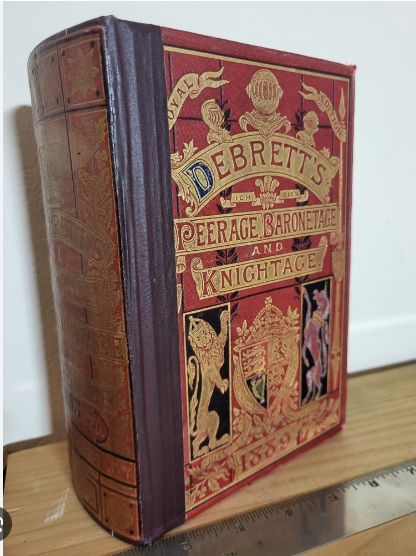
Debrett’s – an guide to the peerage; published annually
debt of honor – a gambling debt; not enforceable by law
Decree Nisi – a provisional divorce decree; the couple had to wait 6 months to see if the circumstances changed, only then was the decree final
deep one – a thorough-paced rogue; a sly, designing fellow
degen, or dagen – a sword; nim the degen; steal the sword; “dagen” is Dutch for sword

demesne – land upon which the manor house is built (as opposed to tenants’ cottages)
demi-monde – the phrase means “half world” when translated; class on the fringes of respectable Society. Often used in reference to courtesans, prostitutes, etc, though this is not strictly correct.
Derby – the greatest of the horse racing venues; pronounced “Darby”; held at Epsom Downs, which is some 15 miles outside of London
devil – the gizzard of a turkey or fowl, scored, peppered, salted, and broiled; it derives its appellation from being hot in the mouth
devil’s guts – a surveyor’s chain, so called by farmers who did not their landlords to measure their land
dicked in the nob – being silly; crazed
dicky – a woman’s under petticoat
dickey – a seat for servants to sit behind a carriage when their master drives
dimwitted – torn to pieces by a mob, as was the great Dutch statesman John de Wit (Johan de Witt) in Holland in 1672

dingey Christian – Cant. used in the British West Indies – said for a mulatto; or anyone who has some Negro blood in him
ditto – a suit of ditto was to have a coat, waistcoat, and breeches, all of one colour
divan – a public smoking room
divorce – the ending of a marriage; granted only by an Act of Parliament; was very expensive, very public, and quite shameful
Other Sources:


 Every Woman Dreams...
.jpg)
I like Ducks and Drakes. I haven’t heard that phrase before.