In the singular form the lexicon of a particular subject is all the terms associated with it. The lexicon of a person or group is all the words they commonly use. As a plural noun, a lexicon is an alphabetical list of the words in a language or the words associated with a particular subject. To distinguish lexicon from a dictionary, it is an alphabetical list of the words in a language or the words associated with a particular subject.
These examples are a mix of what one might hear upon the lips of the aristocracy, as well as examples of Cant used upon London’s streets and those terms used by farmers and like in the country.
Bible – a boatswain’s great axe

The Pirate’s Lair website tells us, “Above photo is an excellent example of a beautifully preserved 18th century Swedish Naval Boarding Ax or Danish Boarding Ax. This particular boarding ax has a cross engraved onto the haft and the number 101 engraved on the bottom butt which is believed to be an armament rack number or position aboard a naval vessel. It has been established that it was the Scandinavians, or more precisely the Vikings, who first employed boarding axes as standard inventory. This particular boarding ax is 35″ long with an 11” head from tip of blade to tip of curved spike. Note the flaring and curved ax blade which is typical and distinctive of the Scandinavian and French boarding ax.
“The naval boarding ax was the most indispensable and versatile weapon used aboard a naval vessel prior to the advent of propeller-driven steel-hulled ships of the late 19th century. During the era of wooden hulled naval vessels powered by wind and sail the boarding ax was a critical piece of equipment used by the enlisted deckhand throughout a naval engagement from beginning the beginning shots of canon fire to the end when capturing or vanquishing an opponent. Outside of the large bore canon and skilled seamanship of captain and crew the boarding ax was likely the most single most important weapon which would determine a ships survivability during battle.
“Critical to a naval vessels survivability during an engagement would be to ensure that:
A) all “hot shot” was quickly removed and efficiently dug out from the hull, masts, or any wooden structure which it may have been imbedded preventing a catastrophic fire,
B) the rapid removal and discarding overboard of any downed rigging, ropes and masts which would prevent a vessel to properly navigate,
C) instrumental in allowing naval infantry or boarders to climb up the side of a wooden hull on an opposing vessel,
D) an effective weapon or sidearm used in close quarter combat either as a boarder or in repelling boarders.”
Bidget – commonly pronounced “Biddy” – a kind of tub contrived for ladies to wash themselves, for which purpose they bestride it; a modern definition explains: A bidet is a low, basin like bathroom fixture, usually with spigots, used for bathing the genital and perineal areas. A bidet is used to clean yourself off after you’re done with the toilet. It serves the same purpose as toilet paper but uses water instead of paper.

bienly – excellently; she coaxed or flattered so cleverly
to bilk – to cheat
Billingsgate – a large fish market in London
bird-witted – inconsiderate, thoughtless, easily imposed upon
bishop – the highest of three orders in the Church of England
bishop – a mixture of wine and water into which is put a roasted orange
bishoped or to bishop – a term used among horse dealers for burning the mark into a horse’s tooth, after he has lost it by age; by bishoping a horse is made to appear younger than he is
bishoped – when a bishop passed through a village, all the inhabitants ran out of their houses to solicit his blessings, even leaving their milk and food on the fire, which when burnt, was said to have bishoped
bit – money; in Jamaica, a bit is equal to about sixpence sterling

Blackfriars – the area between Ludgate Hill and the Thames
black book – has a stain on his reputation/character
black eye – We gave the bottle a black eye; i.e., drank up nearly the whole bottle
black eye – a stain upon a person’s character – “He cannot say black is the white of my eye.”
black fly – slang for the parson who takes tithes of the harvest
Black Indies – Newcastle on Tyne, whose rich coal mines proved to be an Indies to the proprietors – also its landed gentry and businessmen were involved in more than just coal. They exploited new
opportunities that arose, including land and ownership of, and trading in, enslaved Africans to
cultivate and harvest produce in the colonies in North America up to independence and the
creation of the United States of America.
For further reading on the subject, please see Black Indies.
black jack – a jug to drink out of, made of jacked leather; The ‘Black Jack‘ Jug was a leather pitcher made from one piece of doubled leather with thick stitches holding.

Black Monday – the first Monday after the schoolboys’ holidays, when they are to go to school for a new term
black pudding – a sausage made with blood spread on the outside
black spice racket – to rob a chimney sweep of his bag and soot, likely to claim good luck ~
“The tradition of Chimney Sweeps kissing the bride and shaking the groom’s hand for good luck started more than 200 years ago after a London chimney sweep saved the life of King George III. King George was riding horseback in a royal procession when a dog ran from the crowd and began nipping at the King’s horse. The horse reared, and to the horror of the crowd, almost threw the King off of the horse! A lone and sooty figure of a man, a chimney sweep, stepped into the road and caught the horse’s halter. The sweep had been the only person brave enough to stop the King’s out of control horses and carriage. By Royal Decree, the King proclaimed that Chimney Sweeps should be regarded as Lucky! When people saw a chimney sweep, they thought they would be blessed with good luck, and as the years went by, it became a tradition to have a chimney sweep attend your wedding, therefore blessing your future marriage with good luck and happiness.
“To this day, a Chimney Sweep is considered a sign of good luck, wealth, and happiness! Make your Wedding Day complete—invite the lucky Chimney Sweep!
“Chim chiminey,
Chim chiminey,
Chim chim cher-ee!
A sweep is as lucky
As lucky can be” (Fire Safe Chimney Sweeps)
Black Strap – Bêne Carlo wine; also port
black strap – a task of labour imposed on soldiers at Gibraltar, as a punishment for small offences
blast – to curse
bleached mort – a fair complexioned wench
bleeders – spurs, as in “He clapped his bleeder to his prad.” meaning he put spurs to his horse
bleeding cully – bleeds freely, as in parting with one’s money freely, not actually bleeding
bleeding new – a metaphor borrowed from fish, which will not bleed when stale
blessing – a small quantity over and above the measure
blind – a feint, pretense, or shift
blind excuse – a blind alehouse, lane, or alley, meaning a little known or frequented one
blind harpers – beggars counterfeiting blindness, playing on fiddles, etc.
blindman’s holiday – night, darkness
block houses – prisons, houses of corrections, etc.
blood for blood – a term used by tradesmen for bartering the different commodities in which they dealt. Thus, a hatter, for example, furnishing a hosier with a hat would take payment in stockings ~ exchanging the “blood” of their labours.
blood money – reward given by the legislature on the conviction of highwaymen, burglars, etc.
blood back – a jeering appellation for a soldier, alluding to his scarlet coat
bloody – a swear word
bloss or blowen – the pretended wife of a bully or of a shoplifter (Cant)
blower – a pipe
blow-up – a discovery or the confusion caused by one
a blowse, or blowsabella – a woman whose hair is dishevelled and hanging about her face
Admiral of the Blue – Admiral of the Blue was a senior rank of the Royal Navy of the United Kingdom, immediately outranked by the rank Admiral of the White. From 1688 to 1805 this rank was in order of precedence third; after 1805 it was the fourth. In 1864 it was abolished as a promotional rank.

blue devils – low spirits
blue flag – He has hoisted the blue flag; he has commenced publican, or taken a public house, an allusion to the blue aprons worn by publicans
blue pill – a pill to counteract the build up of bile; it was made from glycerin, honey and mercury
blue pigeons – thieves who steal lead off houses and churches
blue plumb – a bullet
blue skin – a person begotten on a black woman by a white man
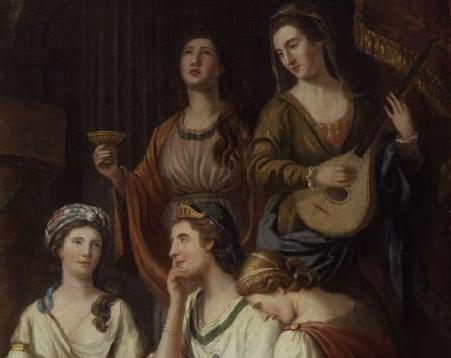
Bluestocking – an 18th/19th Century woman devoted to intellectual conversation and charitable causes
blue tape, blue sky, or blue ruin – gin
blunderbuss – a short gun, with a wide bore, for carrying slugs; also, a stupid, blundering fellow

blunt – money
to bluster – to talk big; be a bully
Other Helpful Sources:
Other Sources:


 Every Woman Dreams...