In the singular form the lexicon of a particular subject is all the terms associated with it. The lexicon of a person or group is all the words they commonly use. As a plural noun, a lexicon is an alphabetical list of the words in a language or the words associated with a particular subject. To distinguish lexicon from a dictionary, it is an alphabetical list of the words in a language or the words associated with a particular subject.
These examples are a mix of what one might hear upon the lips of the aristocracy, as well as examples of Cant used upon London’s streets and those terms used by farmers and like in the country.
Regency Era Lexicon – And Then There Was “B”
babes in the woods – a criminal in the stocks or pillory
backboards – stiff, straight boards, strapped to a young lady’s back, to improve her posture
bacon – He has saved his bacon, meaning he has escaped.
bad bargained – one of His Majesty’s worthless soldiers; a malingeror (a military term for one who, under the pretense of sickness, evades his duties)
badge coves – Cant for parish pensioners
bag of nails – He squints like a bag of nails; i.e., his eyes are directed as many ways as the points of a bag of nails
baggage – a familiar and often derogatory epithet for a woman, as in “she is a cunning baggage”
bailey – the outside wall of a fortress or castle; the Old Bailey was the main criminal court in London
bakers dozen – fourteen; the number of rolls being allowed to the purchasers of a dozen [I know, like me you were thinking 13. According to Britannica, “There are a few theories as to why a baker’s dozen became 13, but the most widely accepted one has to do with avoiding a beating. In medieval England there were laws that related the price of bread to the price of the wheat used to make it. Bakers who were found to be “cheating” their customers by overpricing undersized loaves were subject to strict punishment, including fines or flogging. Even with careful planning it is difficult to ensure that all of your baked goods come out the same size; there may be fluctuations in rising and baking and air content, and many of these bakers didn’t even have scales to weigh their dough. For fear of accidentally coming up short, they would throw in a bit extra to ensure that they wouldn’t end up with a surprise flogging later. In fact, sometimes a baker’s dozen was 14—just to be extra sure.”
baker-kneed – one whose knees knocked together while walking, as in kneading dough
balderdash – adulterated wine (late 16th century (denoting a frothy liquid; later, an unappetizing mixture of drinks): of unknown origin
balderdash – senseless talk or writing; nonsense; gibberish; nonsense; claptrap; blather
ballast lighter – a boat the carried ballast to colliers in the Thames, who unloaded the coal
ballocks – the testicles of a man or beast; cant “His brains are in his ballocks,” indicating he is a fool
Banbury story (cock and bull story) – a round about, nonsensical story [Origin unknown. Folk history claims derivation from the rivalry between two inns in Stony Stratford, Buckinghamshire, England, one called “The Cock” and the other called “The Bull”, where travellers would congregate to hear fanciful stories told; one such story involved travellers destined for the city of Banbury. However, there is little evidence supporting this etymology. (Gary Martin (1997–), “A cock and bull story”, in The Phrase Finder.)
bandbox – a box used to carry and store hats and bonnets
bang up – something quite fine; well done; dashing
banging – great (as in “a banging boy, indeed”)
bang straw – a nickname for a thresher, but often applied to all servants of a farmer
bankrupt cart – a one-horse cart, said to be so called by a Lord Chief Justice, from their being so frequently used on Sunday jaunts by extravagant shopkeepers and tradesmen
bam – to impose on anyone by a falsity; also to jeer or make fun of someone
to bamboozle – to make a fool of another; to impose on him
banns – permission to marry; “reading of the banns” required the parish rector/vicar to read aloud the intention of the couple to marry; he must do so for three consecutive Sundays; the couple must marry within 3 months of the banns being read

bark – a three-masted ship
barker – the shopman of a bow-wow shop or dealer in secondhand clothes, particularly about Monmouth Street and deafens every passerby with cries of “Clothes! Coats! Gowns! What ‘ye want, gemmen?”
barking irons – pistols [Irish: comes from their explosive resembling the bow-wow of a barking dog]
Barnaby – an old dance to a quick movement
baron – the lowest level of the aristocracy; A baron is addressed as “Lord”; his baroness is addressed as “lady,” but his children are addressed as “Mr.” and “Miss”
baronet – a hereditary title; the bearer of which is referred to as “Sir”
barouche-landau – a small carriage with two rows of seats and a collapsible top; the seats faced one another
barrel fever – to drink oneself to death
barrow man – a man under sentence of transportation; the convicts at Woolwich were employed in wheeling barrows full of bricks or dirt
barton – farmyard
bastardly gullion – a bastard’s bastard
basting – a beating
batchelor’s fare – bread and cheese and kisses (the spelling is correct for the time period)
bathing machine – a large covered wagon attached to a horse who towed the wagon out into the water; women did not go swimming in the ocean; they would undress inside the machine and then swam or hung onto the machine’s rope within the constraints of the machine; men were separated from women because they often swam nude
batttle-royale – a battle or bout at cudgels or fisty-cuffs, wherein more than two persons are engaged: perhaps from its resemblance, in that particular, to more serious engagements fought to settle royal disputes
battue – large parties organized for shooting
bawbee – a halfpenny (Scotch)
Bayard of Ten Toes – to ride “bayard of ten toes,” is to walk on foot. Bayard was a horse famous in old romances.
beak – a justice of the peace or a magistrate; also a judge or chairman who presides in court
bean – a guinea
bear leader – a tutor
beard splitting – a man given to much wenching
beau trap – a loose stone in a pavement, under which water lodges, and on being trod upon, squirts it up, to the great damage of white stockings; also a sharper neatly dressed person, lying in wait for raw country squires or ignorant fops
Put to bed with a mattock – tucked up with a spade, said of one that is dead and buried
Bedfordshire – “I am for Bedfordshire,” i.e., for going to bed

Bedlam – the Hospital of St Mary of Bethlehem; an insane asylum
beef – to cry beef is to give the alrarm
Being Out – being of age to be “out” in Society; ready to become a wife
Belgrave Square – a posh area of London, south of Hyde Park; less fashionable than Mayfair, however
bender – a sixpence
Bergamot – a citrus tree; a fancy pear
Berlin – a four-wheeled carriage with a hood
beetle-browed – having thick, projecting eyebrows
beetle-headed – dull, stupid
beggar maker – a publican or ale-house keeper
beggar’s bullets – stones; throwing stones
Beilby’s Ball – He will dance at Beilby’s ball, where the sheriff pays the music; he will be hanged.
belcher – a red silk handkerchief, intermixed with yellow and a little black; worn around the neck
Bell, Book, and Candle – an allusion to the popish form of excommunicating and anathematizing persons who had offended the church

To Bear the Bell – to excel or surpass all competitors, to be the principal in a body or society; an allusion to the fore horse or leader of a team, whose harness is commonly ornamented with a bell or bells
bellower – the town crier
bellowser – transportation for life; i.e., as long
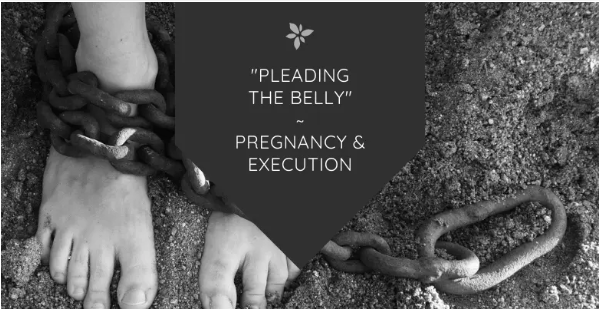
belly plea – the plea of pregnancy, generally adduced by female felons capitally convicted, which they take care to provide for, previous to their trials; every gaol having, as the Beggar’s Opera informs us, one or more child getters, who qualify the ladies for that expedient to procure a respite
bell wether – the chief or leader of a mob; an idea taken from a flock of sheep, where the wether has a bell about his neck
betwattled – surprised, confounded, out of one’s sense
bever – dialectal, chiefly British, an afternoon’s luncheon
beaver – a fine hat; beaver’s fur makes the best hats


 Every Woman Dreams...
The Boatswain was usually called and addressed as ‘Bosun’ and I believe most peole are more used to and aware of this expression than the full name of Boatswain. I was goingto post a photograph of the replica of Capt Cooks ship the Endeavour a Bark stationed in Sydney but I thought it presumptious so I refrained 🙄

I always appreciate your insights, Brian.