18 June 1815 saw what has become known as The Battle of Waterloo. The French Army was led by Napoleon Bonaparte, a man still attempting to capture the glory of the French empire of 1810. France of 1815 had lost some of its “chutzpah.” Tired of war which had dragged on for more than 20 years, France had basically lost all for which it had fought. It was a final stand for Napoleon.
France was made to pay the allied forces led by the Duke of Wellington and Marshal Blücher. Moreover, the allies’ forces occupied the French capital of Paris. Louis XVIII was determined to claim rule and control of his own country after Napoleon’s defeat.
Ironically, nearly as soon as it was completed, a debate began as to what to call this battle which had seen the British forces and its allies successful. The French named the battle after the village of Mont-Saint-Jean, for such was the name of the village situated in the middle of Wellington’s line. “Waterloo” was the small village from which the dispatch sent to England by Wellington was written; therefore, the British called it the Battle of Waterloo. Meanwhile, the Prussians, Britain’s strongest ally in the battle called it “La Belle Alliance,” for the symbolized the spot on the battlefield where Wellington and Blücher met at the end of the battle. The name was settled when Wellington claimed his forces had already set the French back before the Prussians arrived.

via Wikipedia
The decisive battle of its age, it concluded a war that had raged for 23 years, ended French attempts to dominate Europe, and destroyed Napoleon’s imperial power forever.
In truth, less than half of Wellington’s forces were from Great Britain, and the British government was paying citizens of countries and their governments to join the allies assisting Wellington. The army Wellington led was composed of a large number of Dutch, those from Belgium, and Germans.
Some say Wellington “stretched the truth” when he claimed himself outnumbered by the French and simply trying to hold on until Blücher arrived. Wellington’s army outnumbered the French by what one might call a “smidgeon.” Therefore, Wellington calling the victory a “near-run thing,” was likely the duke crafting a story of the victory to play out again and again for the British public. One must give credit to Wellington for his sharp handling of the situation. He was smart enough to know his version of the battle would be one remembered. For the government’s sake, he was justifying all the money spend on this campaign and this last battle. For his future career, it was important to claim the victory as a British one.
This is not to say, the British did not do their job is bringing Napoleon to his knees. They did. They held the French forces, slowing down their approach upon Brussels. Yet, it was the Prussians who ultimately overwhelmed the French.
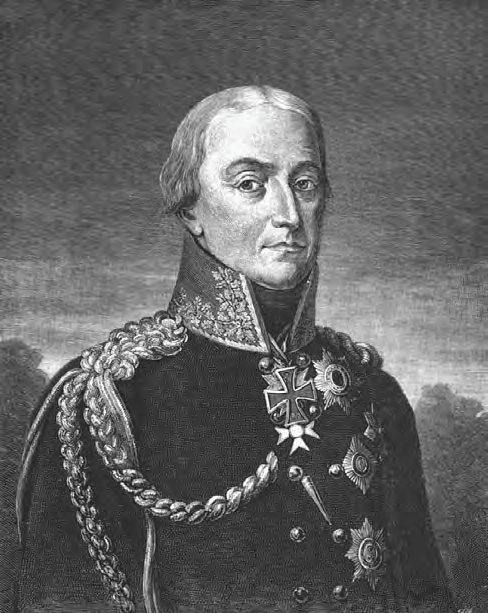
The Prussians might have been able to claim more of the victory, but Marshal Blücher’s forces has suffered a defeat at Ligny only the day before the Waterloo battle took place. Their arrival prevented the French from overrunning Wellington’s forces. Friedrich Wilheim Freiherr von Bülow’s men were the key to the victory. Blücher arrived late to battle, but Bülow arrived early. In the Waterloo Campaign, Bülow commanded the IV Corps of Blücher’s army. He was not present at Ligny when Blücher knew defeat, but his corps headed the flank attack upon Napoleon at the Battle of Waterloo, and bore the heaviest part in the fighting of the Prussian troops around Plancenoit. [Chisholm, Hugh, ed. (1911). “Bülow, Friedrich Wilhelm, Freiherr von”. Encyclopædia Britannica. Vol. 4 (11th ed.). Cambridge University Press. p. 795.]
The British saw to it that their version of the war was the one history would remember. They received the credit for the victory. They imprisoned Napoleon Bonaparte on Saint Helena. The world calls the confrontation “The Battle of Waterloo.”
When the battle had come to an end with the French surrender on 19 June 1815, Wellington made the short jaunt to the village of Waterloo, a bit over a mile north of the actual battle site. There at the Brabant Inn, Wellington penned his account of the battle. The account was sent off to Henry Bathurst, 3rd Earl of Bathurst and the British Secretary of War at the time. Some four days later, The Times in London published Wellington’s letter, sending a grateful nation into celebration. The famous moment was captured in Sir David Wilkie’s painting, entitled Chelsea Pensioners Reading the Waterloo Dispatch.

The Age of Revolution tells us, “In this painting by Sir David Wilkie, a group of retired soldiers living at the Royal Hospital in London are shown reacting to news of the British victory at Waterloo. Wilkie’s painting, first exhibited in 1822, depicts Waterloo as the climax of British military efforts during the previous half-century.
“The Duke of Wellington’s dispatch, describing the battle, arrived in London on the night of the 21 June 1815. Widespread celebration greeted the news that Napoleon had finally been defeated, ending 23 years of war against France.
“The central figure is shown reading a special edition of the London Gazette of Thursday 22 June 1815, which printed the Duke of Wellington’s dispatch. His audience is a motley collection of Londoners outside a pub, but the main group are Chelsea Pensioners in their distinctive red uniforms and black tricorn caps. The scene is Jew’s Row, near the Royal Hospital in Chelsea.
“These were soldiers who had retired because of injury, and lived at the Royal Hospital in Chelsea, London. By 1815 there were of these over 38,000 of these veterans drawing a pension from the Hospital – a reflection of Britain’s long and bloody wars around the world.
“The Duke of Wellington commissioned this painting from Sir David Wilkie, the most popular genre painter of his day. In 1822, 7 years after the Battle of Waterloo, it was exhibited at the Royal Academy, and was so popular that rails had to be erected to protect it from the crowds. Even today it still captures the popular jubilation after the Battle of Waterloo and the vibrant life of London at that time.”


 Every Woman Dreams...