Austen and Portrait Artists of Her Time

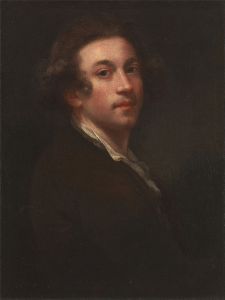
Sir Joshua Reynolds

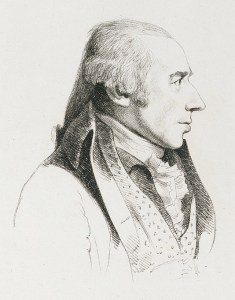
There are many people who have purported the idea that Austen presenting the Pemberley housekeeper the name of “Reynolds” in Pride and Prejudice is a reference to Joshua Reynolds, the most widely known artist of the late Georgian era. After all, Mrs. Reynolds leads Elizabeth and the Gardiners to the infamous portrait gallery, where Elizabeth returns again and again to Darcy’s portrait, essentially surrendering to her attraction to him and eliminating all her doubts regarding the man. There are some who also suggest that another housekeeper, Mrs. Hodges who is employed at Donwell in Emma could refer to William Hodges, a well-known painter of “exotic” lands, for he travelled with Captain James Cook on Cook’s second voyage to the Pacific Ocean. 

William Hodges

Hodges’ painting of HMS Resolution and HMS Adventure in Matavai Bay, Tahiti

However, there are more overt references to painters of the time. For example, in Northanger Abbey, Catherine Morland’s (the heroine’s) younger brother is George Morland. The painter George Morland was known for his images of rural life. Morland’s unassuming style and rural subjects match quite well with the fictionalized Catherine Morland, whose charm can be easily found in her lack of pretentiousness. 

George Morland at an easel

George Morland’s (26 June 1763 to 29 October 1804) early work was influenced by Francis Wheatley, but he came into his style during 1790s. He came by his talent naturally. His father Henry Robert Morland was an English portrait painter, best remembered for a portrait of King George III. Meanwhile, his grandfather, George Henry Morland, was a British genre painter. Morland began to draw at a very young age, some say as early as three years old. At the age of ten, his name appears as an honorary exhibitor or sketches at the Royal Academy. Later, he exhibited at the Free Society, the Society of Artists, and, again, at the Royal Academy. 

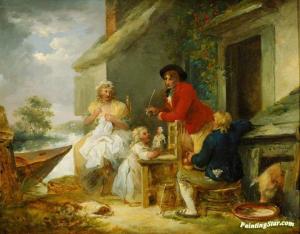
The Cottage Door

It is said that his father shut young George up in a garret to make drawings (copies of the paintings of others), etc., to sell for the family funds. It is also said young George hid some of his drawings and sold them for his own devices (usually something involving self-indulgence). His father set him to copying pictures of the Dutch and Flemish masters. He was introduced to Sir Joshua Reynolds and obtained permission to copy Reynolds’s pictures. His originality became evident in his The Angler’s Repast. His work appeared in a lively print trade; he supposedly had some 4000 paintings and drawings accredited to him. George Morland was celebrated for what was called “cottage door” style paintings, depicting sentimental homecomings. Is it ironic that the character of George Morland in Northanger Abbey is one of those who meet Catherine upon her return from her stay at Northanger Abbey. “Her father, mother, Sarah, George, and Harriet, all assembled at the door, to welcome her with affectionate eagerness.” More ironic is the fact that one William Collins wrote a biography of Morland’s life, which was said to have been full of reckless self-indulgence and dissipation. 

Remember Austen originally sold the manuscript of Northanger Abbey to Crosby & Co. Her brother Henry bought it back, and in 1816, Jane Austen added this disclaimer to it: “those parts of the work which thirteen years have made comparatively obsolete.” Unlike Persuasion, there was no revision of Northanger Abbey because Jane’s illness took her too soon. It was published as it was originally written. 

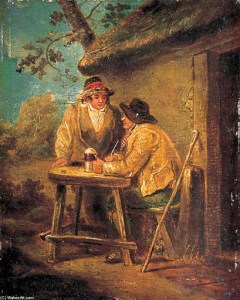
The Alehouse Door

We do know that Jane Austen was familiar with George Morland’s career (and likely his fall of shame) because her sister Cassandra did watercolors of Morland’s The Alehouse Door and The Alehouse Kitchen. Later, Cassandra did another watercolor of Morland’s Pedlars

Do you recall the scene in Northanger Abbey where the Tilneys are on Beechen Cliff. The Tilneys are describing the landscape. “They were viewing the country with the eyes of persons accustomed to drawing, and decided on its capability of being formed into pictures, with all the eagerness of real taste. Here Catherine was quite lost. She knew nothing of drawing—nothing of taste—and she listed to them with an attention which brought her little profit, for they talked in phrases which conveyed scarcely any idea to her.”

Charles Hayter

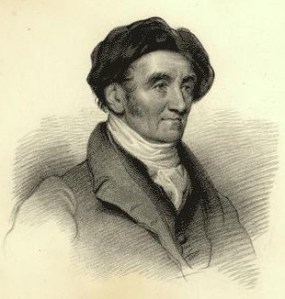
Charles Hayter is another artist of the time, whose name you might recall as belonging to one of the characters in Persuasion. Hayter, the artist, specialized in portraits of navy men and their families. Hayter (24 February 1761 to 1 December 1835) was the son of an architect and builder, who, initially, trained with his father, but soon his ability to draw images of family members sent him down a different path. He attended the Royal Academy Schools in London, entering there at age 25, much older than the average student. He made his living as a painter of portrait miniatures, creating some 113 images between 1786 and 1832. His two sons, Sir George Hayter and John Hayter, along with his daughter Anne, were all successful artists.

He taught “perspective,” of which he was considered an authority, to Princess Charlotte, King George IV’s daughterm to whom he was later appointed Professor in Perspective and Drawing. He also dedicated to her his book An Introduction to perspective, adapted to the capacities of youth, in a series of pleasing and familiar dialogues, first published in 1813 in London. He later published A New Practical Treatise on the Three Primitive Colours Assumed as a Perfect System of Rudimentary Information (London 1826), in which he described how all colours could be obtained from just three.

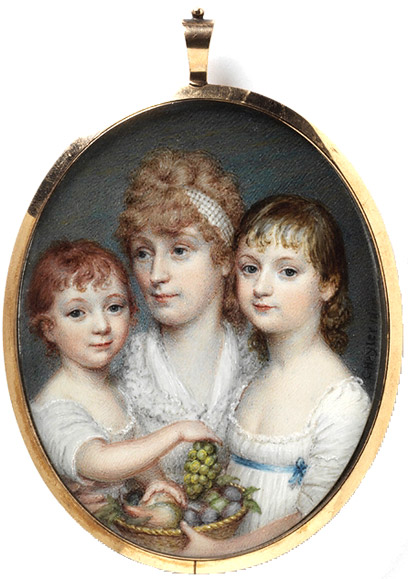
Portrait of an Unknown Woman and Two Children, about 1800, watercolour on ivory

Like Morland’s work, Hayter’s pieces were also available in the form of prints. We know that miniatures were excessively popular during Austen’s life time. The average size of a miniature became three inches. Hayter was especially skilled with the use of watercolors on ivory, the medium preferred by those seeking miniatures made. The small, compact portraits were quite popular with naval officers, allowing them to take an image of their loved ones to sea with them. If one recalls the tale in Persuasion, Captain Benwick had had his image done up in a miniature for Fanny Harville. He asks Captain Harville to have the portrait “properly set” for Louisa Musgrove. The need for a new setting likely indicates that the original image held an inscription meant for Harville’s sister, Fanny. That would need to be removed before it could be presented to Louisa Musgrove. Even Austen mentions “the little bit of Ivory on which I work with so fine a Brush” in one of her letters. 

Posted in British history, British Navy, Georgian England, Georgian Era, history, Jane Austen, Living in the Regency, real life tales, Regency era, writing | Tagged , , , , , , , , , , , , , | Comments Off on Austen and Portrait Artists of Her Time

Auctioning Off Household Goods in the Regency Era, Part 3

If you have not read the other two posts on this subject, look to Monday and Friday of the previous week for other posts regarding this thriving business in the Georgian era, of which the Regency can be found.

As I mentioned in Part 1, in the scene from Season 6, Episode 1, of Downton Abbey, we saw many people streaming through the doors of a neighboring estate for the sale of the majority of the household goods.

https://www.thebillfold.com/2016/01/did-i-make-the-most-of-loving-my-stuff-lets-talk-about-the-downton-abbey-season-premiere/

The sale of goods from country houses became common. Do you recall in Season 6 of Downton Abbey when in a development that would have been unthinkable back in Season 1, Robert and his wife, Cora, the Countess of Grantham, find themselves attending an auction of a nearby estate (the aristo inhabitants are downsizing to a London-only lifestyle). Of course, this episode were set in 1925, but they were just as poignant in the early 1800s. As it was in the Downton episode, many houses held a “walk through” for people to come a few days ahead of the actual auction to view what was available. I know the contents of Lady Blessington’s house was auctioned in that manner. The auctioneers held an open house before the auction where serious buyers and curious people could tour the house and  the serious could choose what they wanted to buy before the auction started. I imagine that the auction house had people stationed all through the house who listened to comments and upped the reserve on the items that garnered the most interest.

In the scene pictured above, the Darnleys are selling Mallerton Hall and downsizing into a smaller home. They are auctioning nearly everything the family has collected over the past several generations, including an enormous portrait of Sir Darnley’s grandmother. Lord Grantham is appalled that any family might choose to sell off their treasures and memorabilia, and he and Sir Darnley have the following conversation:

DARNLEY: We’re selling things we shouldn’t have, but I kept thinking of that poky little house on Thurston Square, and I don’t know what else to do.

GRANTHAM: You might have stored some of it, in case one of the children starts up another house someday.

DARNLEY: That’s a dream. Face it: in 20 years’ time there won’t be a house of this size still standing that isn’t an institution.

How did these sales work? First, they, generally, occurred at the house itself and for very practical reasons. I recently moved into a new house only seven miles from where I lived the previous twenty years. It was an expensive endeavor, and moving my humble belongings was one of the more expensive pieces of the puzzle. Thankfully, I held great equity in the other house and with today’s crazy housing market, even after paying off the previous mortgage, I could afford the move. Yet, what if I had a grand estate (like Jane Austen’s Pemberley in Pride and Prejudice) or even a more most one such as Longbourn in the same novel? Moving the furniture and other items to be sold into a warehouse in London would have been an expensive endeavor, especially for those who were selling because of bankruptcy. Moreover, many warehouses could not have held all the items nor could the proprietors of the warehouse “stage” the rooms/items as well as they would be seen in the house itself. Therefore, the house was customarily opened for public view several days before the actual sale began, as well as on the day of the sale itself, so people might view the items—large or small. This process could take a week or more, but 4 days was the average. The longer sales would be used for specialized items (an extensive library, such as the one belonging to Fitzwilliam Darcy in the Austen novel) or because of the a larger number of items to be auctioned.

The auction houses developed a system where, first and foremost, the goods were seen within the rooms in which they would normally be found. Then common items—linens, rugs, china, etc.— would be set in “common” rooms and often presented as one item, if someone wished to clam them all, as these would quite often appeal to a different buyer than those interested in a Joshua Reynolds’ portrait or Thomas Hope cabinet. These “different” items were often auctioned off several days prior to the main household auction. If you have any concept of a probate inventory, you will understand what I mean by the two types of sales.

*************************************

The Regency Reader tells us, “In Regency era England, there were several popular furniture makers and designers.  These included: Thomas Sheraton, Thomas Hope, George Seddon and Sons, and George Hepplewhite.  These furniture makers were influenced by Georgian Thomas Chippendale, a Georgian cabinet-maker and furniture designer associated with the English Rococo and Neoclassical styles.

“Reflecting the neo-classical style which appeared in the Georgian era, Regency furniture featured plain, slender, elegant lines and avoided shapes and curves for surfaces. Carving and elaborate forms of decoration and ornament like marquetry declined, giving way to brass work and use of rosewood and zebrawood. These woods allowed striking use of colour in veneers, alongside mahogany, which was still the wood of  choice for most library, dining room, and regency bedroom furniture. (http://www.furniturestyles.net).  Regency furniture style was an adaptation of the French Empire sensibilities (http://www.english-classics.net/blog/furniture-commentary/regency-furniture) and included animal ornamentation and scrolled ends in rosewood.”

*************************************

Most assuredly, these sales were the precursor to the estates in England which are set up for a large number of visitors today. The “guided tour” type experience keeps many of the estates we most cherish from crumbling to the ground. In my opinion, these early auctions were the beginning of the house tours. The country house has been rendered into a money-making endeavor.

Naturally, most who attended the auctions wished to purchase “second-hand” merchandise available, but there more than a few who simply wished to view how the other half lived. They permitted those who would never know a day of such luxury to view it up close and personal.

Many of you who regularly follow me know I am an Austen fan (notice I did not say “fanatic”). Austen is said to have been influenced by Frances Burney, and, as I was an English teacher for some 40 years, I have read Burney’s Cecilia. If you have read it you might well remember when Miss Larolles means to visit the sale going on at Lord Belgrade’s estate.

“All the world will be there, and we shall go in with tickets, and you have no notion how it will be crowded.”

“What is to be sold there?” asked Cecilia.

“O every thing you can conceive: house, stables, china, laces, horses, caps, every thing in the world.”

“And do you intend to buy anything?”

“Lord, no, but one likes to see the people’s things.”

I will close with another episode from Downton Abbey, Season 6. This is the one where the Crawleys open the house to raise money for the local hospital. What is most poignant of the scene is how many people want to visit the house, but none of them find it cozy. Equally as important, the Crawleys do not seem to know much about the rooms for which they are serving as guides.

https://www.tvfanatic.com/2016/02/downton-abbey-season-6-episode-6-review-an-open-house/

From Mic.com we learn: “In order to raise money for the ever-problematic local hospital, the Crawleys are throwing open their drawing room doors, inviting an entire village’s worth of plebeians to ogle their artworks.

“When the big day dawns, Cora and her daughters tour groups through their home and are largely unable to field questions from the crowd due to their utter lack of knowledge about their environs. Pressed for details on the fireplace molding, the paintings, the architects behind the grandeur, the Crawley women are largely at a loss. Except for Granny. The Dowager Countess of Grantham is never at a loss, as demonstrated when she storms the open house and interrupts Mary’s tour in the library. Mary seizes the opportunity and prompts her to comment on the room’s history. “

“The library was assembled by the fourth Earl,” the dowager tells the tour group. “He loved books.”

“What else did he collect?” Mary asks.

“Horses and women,” the Dowager responds, curtly.

The most illuminating lesson anyone learns at Downton Abbey all day. As well as …

Cora: No, the third Earl built it. Well, he didn’t really build it so much as envelope it, because this room is originally medieval. It was the monks’ refectory of an abbey that King Henry sold after the Dissolution of the Monasteries.
Visitor: Is that why it’s called Downton Abbey?
Cora: … I guess so.

Posted in British history, commerce, estates, Georgian England, Georgian Era, history, real life tales, Regency era | Tagged , , , , , , , | Comments Off on Auctioning Off Household Goods in the Regency Era, Part 3

Auctioning Off Household Goods During the Regency Era, Part 2

You may find Part 1 HERE.

One thing we should assume in sales of household goods, meaning furniture, portraits, silver, etc., is this was an activity of the wealthier tradesmen, the gentry, and the aristocracy. After all, who wished to purchase items from the poor? And what auction house would think of taking on anything not worth the time to sell it? The most important items being offered were furniture, books (yes, books because few were mass produced at the time), household goods, silver plate, paintings, musical instruments, tapestries, porcelain, jewelry, pottery and earthen ware, Persian rugs, items brought in from other countries, such as wall hangings, suits of armor, carriages, and even a few “oddities,”as in stuffed animals. However, the sales were not limited to the house itself. Often, we might also find sales involving livestock.

Unlike in today’s auction house sales, those of the Georgiana era also listed the reason the items were being sold. Therefore, the sales catalogues might offer a bit of gossip for the community. The catalogue might tell a person if the owner of the items had known bankruptcy or whether he meant to use the income to pay debts. One might also learn if the person meant to invest in a new capital gain venture. Or he might require the funds to establish a legacy for his minor children or he might be what we now refer to as “downsizing” and moving to a different residence. Or perhaps a family death called for a change of circumstances. The listing of the “reason for the sale” presented the activity a sense of being “legitimate” and not some sort of scam. The sales items were as listed, and those conducting the sales were respectable members of the community, who held a reputation for honesty and fairness.

Thomas Rowlandson (1756–1827) and Augustus Charles Pugin (1762–1832) (after) John Bluck (fl. 1791–1819), Joseph Constantine Stadler (fl. 1780–1812), Thomas Sutherland (1785–1838), J. Hill, and Harraden (aquatint engravers)[1] – File:Microcosm of London Plate 006 – Auction Room, Christie’s.jpg ~ Public Domain ~ https://en.wikipedia.org/wiki/Auction#/media/File:Microcosm_of_London_Plate_006_-Auction_Room,_Christie’s(colour).jpg

One other thing to consider is this was no yard sale experience where the owner of said item lists it for $10 and the potential customer haggles and gets the price down to $2 before walking away with a bargain. In these sales, the goods offered retained their value, perhaps even going for more than what was expected if more than one person wished to purchase it.

Those wishing to sell, especially in the shires, generally, turned to one of the tradesmen in the community to conduct the auctions. More often than not, the gentry and the aristocracy chose someone from one of the London auction houses. These “professional” auction houses, unlike those in the shires who mostly survived by word of mouth for their “advertising,” placed adverts in the newspapers of the day. Catalogues of the items available where made available in the larger municipalities at places such as coaching inns.

The first step in selling the goods was to create a flyer that displayed the name of the auctioneer (indicating the sale was legitimate), the owner of the items, and then a listing of the more important or larger items to be included in the sale. The catalogues themselves presented the potential buyer with not only the particular items up for bidding, but also the location of the item within the house itself, meaning the room. The catalogue also contained the “order” in which the items would be sold, and this did not always mean all the items in one room were addressed before moving on to another room. The descriptions of each item were carefully crafted to entice the buyers into purchasing pieces they made not have initially meant to add to their households. We all understand the “impulse buy” in today’s society. Trust me, this is not a new concept.

A Peep at Christies (1796) – caricature of actress Elizabeth Farren and huntsman Lord Derby examining paintings at Christie’s, by James Gillray ~ Public Domain ~ https://en.wikipedia.org/wiki/Auction#/media/File:Peep-at-Christies-Gillray.jpeg

The idea of advertising to draw in the most sales is also not a new concept. As I am writing this piece, I just purchased several items for my grandchildren’s Christmas on Amazon Prime Days. (Yes, I am one of those who customarily has a large portion of my Christmas shopping completed by September. Yes, I am a Virgo. Yes, I am a bit weird about some things. Enough said.) We all know something of when is the best time to purchase linens, televisions, cars, etc. Those who ran these auctions also knew a great deal about when to offer which items. Obviously, the more prestigious items were held for last, much as we see at modern-day auctions. Those who produced the catalogues also were very particular in their choice of words. We all know the temptation for descriptors such as “one-of-a-kind,” “elegance,” “value,” “cultured,” but also words such as “antique” (not for furniture, that did not happen until mid 1800s) but perhaps for armor) or “genteel” or even the names of countries, such as “Persian” rug. These house sales brought commercialism to the country house and used it as a commercial space. In many ways, such still remains, but the house’s history is now the sales point. All around the world, houses of historical importance are restored to their glory days and opened to the public for tours, where we might look again upon a life none of us will every know.

Posted in British history, business, estates, Georgian England, Georgian Era, history, Living in the Regency, Regency era | Tagged , , , , , , , , | 1 Comment

Breach of Promise in the Regency + an Excerpt from MR. DARCY’S BRIDEs

In Jane Austen’s Pride and Prejudice, Miss Austen brings up the issue of “Breach of Promise Suits” as they apply to Lydia and Wickham. This exchange actually occurs after Darcy’s second proposal (chapter 60) when Elizabeth is asking Darcy when he fell in love with her:

“Because you were grave and silent, and gave me no encouragement.”

“But I was embarrassed.”

“And so was I.”

“You might have talked to me more when you came to dinner.”

“A man who had felt less, might.”

“How unlucky that you should have a reasonable answer to give, and that I should be so reasonable to admit it! But I wonder how long you would have gone on, if you had been left to yourself. I wonder when you would have spoken, if I had not asked you! My resolution of thanking you for your kindness to Lydia had certainly great effect. Too much, I am afraid; for what becomes of the moral, if our comfort springs from a breach of promise? for I ought not to have mentioned the subject. This will never do.”

A breach of promise suit could be pursued by both men and women during the Regency, and it may surprise some to learn, more men than women filed for compensation in the ecclesiastical courts. A “promise” to marry had long been looked upon by the church courts as a legal marriage. The promise = the marriage. By the 1600s, this practice became part of common law.

To constitute a breach a promise case in court there first had to be a valid betrothal. Among the aristocracy of the Regency era, one might find the engagement announcement in the newspapers, but not necessarily the wedding announcement. That is because the betrothal was as good as a marriage in the minds of many of the time. But why did the couple not simply go their separate ways when they decided not to marry?

A female often found herself as “damaged goods” when the nuptials were called off. Although premarital sex was deeply frowned upon by society, as a whole, often an engaged couple would consider the betrothal as good as the marriage. If the engagement was broken after sexual intimacies, the “future bride” would be ruined. She could not go to another as anything less than a virgin. Therefore, she was unlikely never to marry. Women of society depended upon a husband to take care of their financial course. If a woman did not marry, she would be a poor relation, depending on the kindness of a brother or a cousin to keep her.

A gentleman might file a suit if he had borrowed money against the dowry he was to receive when he married the lady. He was to become in control of the lady’s fortune once their vows were officially spoken. A break in the promise to marry would leave him at the whims of the moneylenders.

Neither the potential bride or the groom were permitted to enter testimony during the court proceedings. The jury was to award the compensation based upon the actual costs incurred, the loss of reputation, the length of the engagement, and the defendant’s ability to pay, but often the awards were based on “other factors,” for example the most entertaining barrister between the pair representing the plaintiff and the defendant. Jurors would likely award a woman as low as £50 and as high as several thousands, depending upon how comely her countenance might be or how badly she had suffered in the public’s eye. However, just going to court could add insult to injury. The proceedings were often posted in the newspapers.

Ginger Frost in her book Courtship, Class, and Gender in Victorian England speaks to “the myth of breach of promise” in popular literature and culture:

Suits for breach of promise of marriage were well know to the public in Victorian England. From at least the 1830s, a variety of writers recognized the inherent humor and drama of the action and began to fictionalize the cases as they were then brought. The depictions of trials during the century gave a strangely uniform representation of the people who brought such litigation and the outcome of their conflicts. This interpretation built up an idealized myth of breach of promise, one which influenced the perception of the suit far more than actual cases did.

MDF eBook Cover Introducing MR. DARCY’S BRIDEs…

I much prefer the sharpest criticism of a single intelligent man to the thoughtless approval of the masses.

ELIZABETH BENNET is determined that she will put a stop to her mother’s plans to marry off the eldest Bennet daughter to Mr. Collins, her father’s heir, but a man that Mr. Bennet considers an annoying dimwit. Hence, Elizabeth disguises herself as Jane and repeats her vows to the supercilious rector as if she is her sister, thereby voiding the nuptials and saving Jane from a life of drudgery. Yet, even the “best laid plans” can often go askew.

FITZWILLIAM DARCY is desperate to find a woman who will assist him in leading his sister back to Society after Georgiana’s failed elopement with Darcy’s old enemy George Wickham. He is so desperate that he agrees to Lady Catherine De Bourgh’s suggestion that Darcy marry her ladyship’s “sickly” daughter Anne. Unfortunately, as he waits for his bride to join him at the altar, he realizes he has made a terrible error in judgement, but there is no means to right the wrong without ruining his cousin’s reputation. Yet, even as he weighs his options, the touch of “Anne’s” hand upon his sends an unusual “zing” of awareness shooting up Darcy’s arm. It is only when he realizes the “zing” is arrives at the hand of a stranger, who has disrupted his nuptials, that he breathes both a sigh of relief and a groan of frustration, for the question remains: Is Darcy’s marriage to the woman legal?

What if Fitzwilliam Darcy and Elizabeth Bennet met under different circumstances than those we know from Jane Austen’s classic tale: Circumstances that did not include the voices of vanity and pride and prejudice and doubt that we find in the original story? Their road to happily ever after may not, even then, be an easy one, but with the expectations of others removed from their relationship, can they learn to trust each other long enough to carve out a path to true happiness?

In this EXCERPT from Chapter 18 of MR. DARCY’S BRIDEs, we hear Darcy’s take on his aunt’s insistence that he marry his cousin Anne De Bourgh, although Anne left him waiting at the altar the first time they were to speak their vows.

“So this is the welcome I am to receive,” her ladyship harrumphed. “Your mother would be ashamed of you, Darcy.” She sat heavily in an armed chair.

Darcy remained standing beside his desk. He spoke in clipped tones. “I was considering something similar as to Lady Anne’s reaction to your poor manners, Aunt. I can guarantee that George Darcy would never have tolerated your ordering his servants about, and neither will I. This is Pemberley, madam, not Rosings Park. I am the master here.”

His aunt snarled, “I see your insolence continues.”

“And I see you still think that the world will bend to your whims,” he countered.

Rather than to fuel their standoff with more inflammatory accusations, Lady Catherine switched tactics, a devise he had observed her employ previously. Darcy had always thought her doing so was an intelligent means for a woman to earn agreement over business matters in a man’s world, but her diversion would not work on him. “Is that girl in this house?” she demanded.

Darcy propped a hip on the corner of his desk and attempted to appear casual when he responded, “I fear Georgiana is not at home at this time. My sister will be sorry to have missed your call.”

Lady Catherine’s chin rose in stubbornness. “So that is the way you wish to discuss this matter. Very well. Then I shall be more direct. Did you bring Miss Elizabeth Bennet to Pemberley when you left Matthew Allard’s estate in Scotland?”

Darcy schooled his features. Someone would pay dearly for sharing his business with Lady Catherine. “I am not in the habit of discussing my personal life with anyone, and you of all people should realize I am more Darcy than Fitzwilliam. Your line of questions will not win you my favor.”

“I see you mean to protect this upstart! Are you so enthralled with the woman’s arts and allurements that you cannot see reason? If you fancy her, Darcy, then make her your mistress. Anne will ignore your indiscretions. I will instruct my daughter in the ways of men. Anne can be your wife while this strumpet can suffer your lust.”

His aunt’s description of aristocratic life sickened Darcy. “I have no intention of marrying Anne. You may beg. You may threaten. You may cajole. You may bargain. But I will never change my mind. I permitted you to use the memory of my dear mother to coerce me into agreeing to marry Anne, but Fate had other ideas. Anne was late, and I spoke my vows to another.”

“We both know those vows are not legal,” she drawled in warning tones.

Darcy had heard from his solicitor regarding those first vows exchanged with Elizabeth, and as expected, his first marriage to the woman had proved void. Mr. Jaffray had filed the papers to have the ceremony declared null. “Such knowledge does not change my resolve. I will not marry Anne.”

“Would you prefer that I instruct Anne in suing Miss Bennet for criminal conversation?” she challenged.

“Although neither Anne or I could officially testify in such a suit, the truth would win out. A skilled barrister can make certain all the facts are relayed to the judge. The lady in question could not have claimed my affections away from your daughter, for beyond a fondness between cousins, I never loved Anne.” He would not say that Elizabeth Bennet held his heart in her delicate hands. “Moreover, as I did not hold the lady’s acquaintance until several hours after that morning at St. George, it would be impossible for her to draw me away with her arts and allurements. All such a suit would do would be to bring ruin upon Anne’s head and mar my family name. You would have your vengeance and little else to keep you warm in the winter. No man would ever claim Anne after such a public display, but I suppose that is what you wish. You wish Anne forever to remain under your control.”

“Anne’s dowry of thirty thousand pounds can cover any flaw you name,” Lady Catherine argued.

“Yes, I suppose her dowry and the promise of Rosings Park can conceal all but one of my cousin’s failings: that of possessing an overbearing and controlling mother. Only the most desperate of men would consider aligning his name with Sir Lewis’s daughter. You would turn over Anne’s future to a man of no principles. That fact should surprise me, but it does not,” he said in sad tones. “Such a man would run through every penny of Anne’s inheritance, leaving you and your daughter as Matlock’s poor relations. I suppose that much be my justice.”

“You think me so cold-hearted?” his aunt demanded. “Everything I do, I do for Anne.”

“You may tell yourself these lies,” Darcy cautioned, “but your family and soon society will recognize you as a bitter, vindictive woman.” He sighed heavily. “If you persist in this madness, I will sue Anne for breach of promise. Her fortune will be greatly reduced, for I will win my suit. There were at least two dozen witnesses that can swear to the fact that she left me at the altar. If not for the false exchange of vows, I would have been long gone from the church by the time Anne arrived. You, too, would have been gone, likely looking for your wayward daughter to strangle her, as you attempted to do when she did arrive. Are you willing to tarnish your daughter’s name twice in the court of public notice? Poor Anne who has never had a Season. Who has never been permitted the freedom to form a friendship. Who is poorly educated beyond what her governess provided her. That Anne will be irretrievably ruined.” His tone held the warning of winter’s embrace. “I do not wish to see Anne suffer, but I will not permit you to injure an innocent just to puff up your consequence.”

“An innocent?” his aunt accused in her most implacable voice. “The woman traveled with you to Scotland where she passed herself off as Mrs. Darcy. You see, Mr. and Mrs. Allard were quite pleased to tell my man of your indiscretions. Allard was most displeased that you withdrew your financial support of his latest venture.”

Allard’s financial future would be nonexistent when Darcy finished with the man. He would permit no one to bandy about Elizabeth’s name in a vile manner. “We could debate this matter all afternoon,” he announced as he stood. “I believe somewhere within your hard resolve you want what is best for Anne, and I am flattered that you think me a suitable match for my cousin, but I wish to marry in affection, and my feelings for Anne are more brotherly than those of a potential husband.” A profound sadness crept into his tone when Darcy spoke of his cousin’s situation. He should have done more to assist Anne before things had reached this turning point. Like most in the family, he had thought all would change when Anne inherited Sir Lewis’s properties and fortune. He had never considered the fact that Lady Catherine would do all she could to shove Anne out Rosings Park’s door in order to maintain control of all of Sir Lewis’s holdings. “Do you not wish something more for your daughter and your dearest sister’s only son that a marriage of convenience?”

“I wish to see Anne well settled,” she declared in undisguised contempt.

Darcy hesitated briefly before accepting the gauntlet. His aunt would force him to be ruthless. “Then you leave me no choice, madam. If you force me into marrying Anne, I will leave you with little more than a humble cottage and a pair of servants to tend you for the remainder of your days. Anne will be five and twenty in two months. I will postpone the wedding until your daughter inherits Rosings Park per Sir Lewis’s will. All of it will belong to her, and as the estate and the fortune are entailed upon the female line, when we marry, as Anne’s husband, I will have control of it all. I have no intention of bringing Anne to child, so all your manipulations will be for naught. As you say, I will take my lust elsewhere. At Anne’s death, I will sell Rosings Park and all it holds piece-by piece, until nothing remains of Sir Lewis De Bourgh’s legacy. All you hold most dear will be scattered among the households of those with the funds to purchase it. I will destroy everything you have ever loved: Rosings Park and Anne. And each day of your miserable life you will know that I did these things in retribution for your foolish sense of consequence.” Needing to be away from his aunt, Darcy started for the door. “Good day, your ladyship. I will have Mr. Nathan see you out.” With that, he was gone, never looking back to view the look of astonishment upon his aunt’s features.

Posted in book excerpts, book release, British history, Church of England, eBooks, Jane Austen, Living in the Regency, marriage, marriage customs, marriage licenses, Pride and Prejudice, publishing, Regency era, Regency romance, romance, Vagary, writing | Tagged , , , , , , | 19 Comments

Auctioning Off Household Goods in the Regency Era, Part 1

The Georgian era of which the Regency is a part saw greater economic prosperity for new groups, hoping to become a part of the genteel class. Think of Mr. Bingley in Jane Austen’s “Pride and Prejudice.” Although he had a larger income than Mr. Collins, Lady Catherine de Bourgh’s clergyman ; theoretically, Collins, who depended upon her ladyship for ever morsel of his daily life, outranked the tradesman, Charles Bingley. Following his father’s wish for wanting more for his family, Bingley sought out a country life in the form of letting Netherfield Park. We readers assume Netherfield Park came furnished, for nothing is mentioned of the need for furniture and the like in Austen’s classic, but what if it was an empty house and needed to be furnished? Where might one acquire such items? (Remember: If one wished no to appear a “newby,” so to speak, all new furniture would be a dead giveaway.) What one required was the “used” furniture from the “rich and famous” to dress one’s home.

Moreover, the range of goods available greatly increased. The middling sort often purchased used goods through auctions. These public auctions “redistributed” goods, allowing those with new wealth to claim the articles while blurring social distinctions. New money came to rub elbows, so to speak, with the establishment.

The sale of goods from country houses became common. Do you recall in Season 6 of Downton Abbey when in a development that would have been unthinkable back in Season 1, Robert and his wife, Cora, the Countess of Grantham, find themselves attending an auction of a nearby estate (the aristo inhabitants are downsizing to a London-only lifestyle). Of course, this episode were set in 1925, but they were just as poignant in the early 1800s. As it was in the Downton episode, many houses held a “walk through” for people to come a few days ahead of the actual auction to view what was available. I know the contents of Lady Blessington’s house was auctioned in that manner. The auctioneers held an open house before the auction where serious buyers and curious people could tour the house and  the serious could choose what they wanted to buy before the auction started. I imagine that the auction house had people stationed all through the house who listened to comments and upped the reserve on the items that garnered the most interest.


1822 Painting by Thomas Lawrence ~ Marguerite Gardiner, Countess of Blessington ~ Public Domain ~ https://en.wikipedia.org/wiki/Marguerite_Gardiner,_Countess_of_Blessington#/media/File:Maguerite,_Countess_of_Blessington.jpg

From Encyclopeida.com “Marguerite, Countess of Blessington (1789 – 1849) Irish author who published a number of popular novels of fashionable life and for many years presided over the most brilliant salon in London. Name variations: Marguerite Gardiner; Marguerite Power; Lady Blessington; Margaret, Sally. Born Marguerite Power on September 1, 1789, at Knockbrit, near Clonmel, County Tipperary, Ireland; died in Paris, France, on June 4, 1849; daughter of Edward (or Edmund) Power (a landowner, magistrate and newspaper editor) and Ellen (Sheehy) Power; educated at home and for a short period at boarding school; married Captain Maurice St. Leger Farmer, in 1804 (died 1817); married Charles John Gardiner, 1st earl of Blessington, in 1817 (died 1829); no children.

“However melodramatic the plots of Lady Blessington’s novels, few could have been more unlikely than the story of her own life. Born in poverty and obscurity in the Irish countryside, she was a plain child who became a dazzling beauty. Married against her will at 14 to a vicious husband, whom she left after just a few months, she went on to marry into the aristocracy and to become London’s most celebrated hostess. Despite her scandalous reputation, her wit, intelligence and generosity made her the confidante of many of the most eminent men of her day, and her close friends included the poet Lord, George Gordon Byron, the novelist Charles Dickens, and the future prime minister, Benjamin Disraeli. Renowned for the extravagance of her lifestyle, she was also an indefatigable worker, who supported herself and her establishment by a constant stream of literary works, which included novels, travel books, and memoirs, as well as journalism. Nevertheless, it is clear that the disruption and unhappiness of her early years left an indelible mark on her, in her unconventional private life, in her improvidence and compulsive generosity, and in her need for admiration and attention. Ultimately, she was to find herself bankrupt and ignored by many of those whom she had regarded as her friends. Even in that final disaster, however, she retained the courage, optimism, and sense of style which had enabled her to make her first, unlikely escape, to reshape her identity, and to shine for so many years as ‘the gorgeous Lady Blessington.'”

During the 18th and 19th centuries, one must recall the sale of land/estates was greatly restricted, but, for those in dire straits financially, a person could generally sell the contents of a house. Valuable paintings. Furnishings. Silver. Imported wine collections. Etc.

Any number of reasons could cause need for such an auction: family neglect, the need to what now call “downsize” to a different property, failure to produce an heir, etc. In fact, the new heir may not have liked his predecessor’s “taste” in furnishings and decided to earn some money to furnish the estate as he wished by holding an auction to be rid of the items.

Most assuredly, those in London had their up-scale auction houses, but those in the country increasingly depended upon those not part of the fashionable sect. These “would be” country gentlemen and ladies were must more accustomed to bargaining at a variety of venues from artisan shops to market stalls.

Newspapers of the day, especially those in the countryside, carried advertisements for auctions of household goods. Now, this is not to say all such sales were restricted to the homes of the aristocracy. It would be equally possible to find one being conducted in the home of a wealthy tradesman. One thing we discover is more money could be raised by selling the items directly from the house itself, rather than moving them into a large auction house in London or one of the larger municipalities for the sell.

Those of you who have ever purchased a new house totally understand the concept. You look at a home you think to purchase, and it has been staged by the realtor. However, when you move your own things in, it does not look so well organized.

The items in a country house would be likewise. The grandeur. The elegance. The ambiance. All would be part of the sales’ point.

One thing we rarely mention in such scenarios is what these sales did for the house’s future, as well as its history. A once in a lifetime type sale might not decrease the value of the home, but what if there were repeated sales over a matter of years. Such happened more often than we would like to think.

Take, for example, the three sales of goods from Kirby Hall in Northamptonshire. These sales took place in 1772, 1824, and then again 1831. After that, Kirby Hall died a slow death, left to rot.

From Wikipedia, we have a quick overview of the house. “Kirby Hall is an Elizabethan country house, located near Gretton, Northamptonshire, England. The nearest main town is Corby. One of the great Elizabethan houses of England, Kirby Hall was built for Sir Humphrey Stafford of Blatherwick, beginning in 1570. In 1575 the property was purchased by Sir Christopher Hatton of Holdenby, Lord Chancellor to Queen Elizabeth I. It is a leading and early example of the Elizabethan prodigy house. Construction on the building began in 1570, based on the designs in French architectural pattern books and expanded in the Classical style over the course of the following decades. The house is now in a semi-ruined state with many parts roof-less although the Great Hall and state rooms remain intact.

Posted in art, British history, England, estates, Georgian England, Georgian Era, history, Industrial Revolution, Living in the Regency, Regency era | Tagged , , , , , , , , | 2 Comments

Banking and Bank Notes in Georgian England

The 18th Century saw the roots of modern day banking in England. International trade and the various wars, most importantly, the war with France, led to the development of the British banking system. Checks and banknotes appeared, as well as the founding of the Bank of England.

from “A Brief History of Banknotes” ~ http://gaukartifact.com/2013/02/28/a-brief-history-of-banknotes/

Before banks, many of the services we think of when it comes to banking were provided by merchants and brokers, but, most assuredly, by goldsmiths located in most cities and large towns, but, especially, in London. Goldsmiths, as early as the 16th Century, accepted deposits, made loans, and transferred funds. Goldsmiths did more than deal with coins, meaning gold coins, deposited with them. Their promises to pay were accepted as “legal tender,” and these receipts were known as “running cash notes.” They were made out in the name of the depositor and were a promise to pay him on demand. These Goldsmiths were men of character, whose word was as good as the law. They issued endorsed receipts, which one could return to collect his money.

After the name of the depositor, these receipts would carry words “or bearer,” permitting a certain style of circulation of funds, not found previously.

The Bank of England was founded in 1694 as a means to raise money for King William III’s war against France. “Almost immediately the Bank started to issue notes in return for deposits. Like the goldsmiths’ notes, the crucial feature that made Bank of England notes a means of exchange was the promise to pay the bearer the sum of the note on demand. This meant that the note could be redeemed at the Bank for gold or coinage by anyone presenting it for payment; if it was not redeemed in full, it was endorsed with the amount withdrawn. These notes were initially handwritten on Bank paper and signed by one of the Bank’s cashiers. They were made out for the precise sum deposited in pounds, shillings and pence. However, after the recoinage of 1696 reduced the need for small denomination notes, it was decided not to issue any notes for sums of less than £50. Since the average income in this period was less than £20 a year, most people went through life without ever coming into contact with banknotes.” [A Brief History of Banknotes]

In addition, people with money could write to the goldsmith to transfer money into another person’s account, which was an early form of writing a “check.” However, with more access to international trade and investments, a need to move money more efficiently was required. Thus, goldsmith houses became the banks of the 1700s.

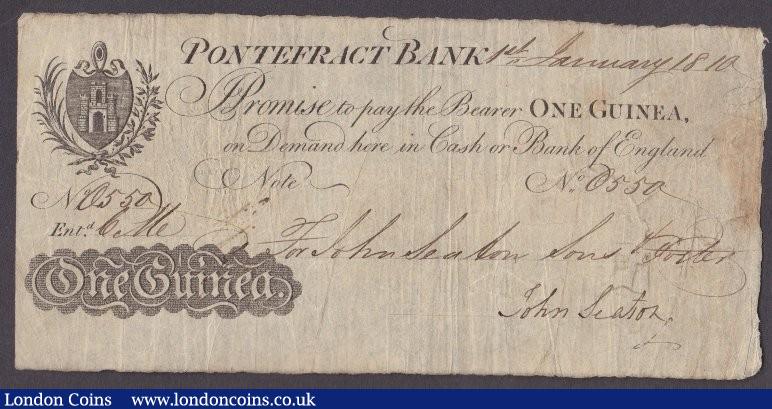
As mentioned above, fixed denomination notes were common. The Bank of England began issuing partly printed notes for completion in manuscript around 1730. “The £ sign and the first digit were printed but other numerals were added by hand, as were the name of the payee, the cashier’s signature, the date and the number. Notes could be for uneven amounts, but the majority were for round sums. By 1745 notes were being part printed in denominations ranging from £20 to £1,000.

“In 1759, gold shortages caused by the Seven Years War forced the Bank to issue a £10 note for the first time. The first £5 notes followed in 1793 at the start of the war against Revolutionary France. This remained the lowest denomination until 1797, when a series of runs on the Bank, caused by the uncertainty of the war, drained its bullion reserve to the point where it was forced to stop paying out gold for its notes. Instead, it issued £1 and £2 notes. The Restriction Period, as it was known, lasted until 1821 after which gold sovereigns took the place of the £1 and £2 notes. The Restriction Period prompted the Irish playwright and MP, Richard Brinsley Sheridan, to refer angrily to the Bank as ‘… an elderly lady in the City’. This was quickly changed by cartoonist, James Gillray, to the Old Lady of Threadneedle Street, a name that has stuck ever since.”

Pontefract Bank 1 guinea dated 1810 No.O550 for John Seaton, Sons & Foster, https://www.londoncoins.co.uk/?page=Pastresults&auc=132&searchlot=263&searchtype=2

A great source for everything “normal” during the Regency era is the book, In These Times, by Jenny Uglow. [As the Napoleonic wars raged, what was life really like for those left at home? Award-winning social historian Jenny Uglow reveals the colourful and turbulent everyday life of Georgian Britain through the diaries, letters and records of farmers, bankers, aristocrats and mill-workers. Here, lost voices of ordinary people are combined with those of figures we know, from Austen and Byron to Turner and Constable. In These Times movingly tells the story of how people really lived in one of the most momentous and exciting periods in history.]

This book contains a lot of information on banks. It concerns the impact of the Wars on life in England, and follows certain families, some involved in banking, for the duration.  You might be surprised by the number of local banks and the amount of commerce it discusses. There are several references to banking and banks.– city banking and country banking. The Bank of England. ” Several private banks dotted down Fleet street and the Strand to Charing Cross, a busy corridor between the city and Westminster and the West end, all dealing with wealthy landed customers in need of mortgages and loans,or, if they were flush, a safe house for their deposits. …. Each bank had its distinctive clientele: Praed & Co in Fleet Street had the West Country and Cornish business; Drummond’s catered for army agents, Gosling’s and Child’s for East India company tycoons; Coutts dealt with the aristocracy and never with industry; Wright’s in Covent Garden looked after the Catholic gentry and Herries Bank in St. James Street, further west, issued cheques for smart travellers setting out on the grand tour.The rule at Hoare’s was that one partner was in attendance at all times…. Ten clerks. One must be in at all times even on Sundays and Christmas day. They could live there.”

Baring’s was a merchant banker even if the word was not used at that time. The Quakers had several banks: Lloyd’s in Birmingham, Backhouse in Darlington, and Gurney’s in Norwich.

Supposedly, Child & Co. was one of the London banks that catered to aristocrats, so I’m using that as my hero’s London bank.

In Jane Austen, Edward Knight & Chawton : Commerce and Community by Linda Slothouber, the author says Edward Austen Knight’s primary London bank was Goslings Bank. He also used a bank founded by his brother Henry. Austen, Maunde & Austen, which went bankrupt, causing Edward to suffer a substantial loss.

Book Blurb: When Jane Austen’s third brother, Edward, inherited the estates of his rich relatives, he took on their surname, Knight, and he took control of property scattered across five English counties. Jane visited her brother at his home in Kent, and she spent her final years in a cottage he owned in the village of Chawton in Hampshire. From these vantage points, she observed Edward’s approach to managing his estates and learned about the concerns and activities of wealthy landowners, knowledge that is reflected in her novels.

Using original estate books, bank records, letters, and other archival sources, Linda Slothouber has created the most detailed portrait to date of Edward Knight. With Edward as an example, along with excerpts from Jane Austen’s novels, the reader discovers how the landed gentry of fact and fiction made their money, tried to ensure the prosperity of their heirs, and interacted with workers on their estates. People at all levels of the estate economy are represented, with profiles of specific individuals that Jane Austen would have known during her years in Chawton.
To fully understand the social criticism and subtle humor in Jane Austen’s novels, it is necessary to understand her world; while the pastimes of the gentry are often in the foreground, the business of estate ownership is an essential foundation. Learn what being “Lord of the Manor” and having “ten thousand a year” really meant; what stewards, bailiffs, overseers, and churchwardens did; who administered the civic affairs of the village; how attitudes toward natural resources and common property changed during Jane Austen’s lifetime; and why the estate-owner, though at the top of the social order of the village, was often judged according to the well-being of his humblest cottagers.

Goslings bank had records of money deposited in country banks. One such was Hammond & Co, in Canterbury. That bank consistently sent large deposits to the Gosling bank. I imagine these deposits would travel with guards. Agents also regularly made deposits in the Gosling bank. They were close enough to town to do so.

Sparrow & Co., an Essex bank also made deposits into the Gosling account. Money for current expenses and for current wages were kept on hand so not all money was sent to the bank. People were not quite in the habit of writing checks. Coin was preferred to paper, and most servants and such were paid in coin. Though this book is about the finances of Edward Austen Knight, it is the only one so far that I have found that actually discusses the bank deposits. Others discus the debts, the expenses, loans made by the landowner to others or taken out from a bank.

Banks in the countryside grew exponentially after the recoinage of guineas in 1774, meaning an institution/established business was required to collect coins and provide alternate currency for the people in the surrounding villages and neighborhood.

If one was involved with government securities, were part of the aristocracy, or the gentry, or was a wealthy barrister, one would customarily use these banks: Hoares, Coutts, Childs, and Drummonds.

If one was a member of the stock exchange, acted as a liaison for country banks, or did business with traders and manufacturers, one would deal with Martins, Mastermans, Curries, or Glyn Mills.

Other Resources: 

BANKING AND BANK NOTES:

Banking in Eighteenth Century England

http://www.umich.edu/~ece/student_projects/money/banking.html

British Banking History

http://www.banking-history.co.uk/history.html

Regency England and Money

http://hibiscus-sinensis.com/regency/money.htm

Posted in British currency, British history, Georgian England, Georgian Era, Great Britain, Jane Austen, Living in the Regency, real life tales, Regency era | Tagged , , , , , , , , | 2 Comments

Promissory Estoppel as a Means to Marry in the Regency or Otherwise

Marriage by Estoppel

One of the possibilities I explored in researching my book, MR. DARCY’S BRIDEs was marriage by estoppel as a plot point. According to Investopedia, “Promissory estoppel is a legal principle that a promise is enforceable by law, even if made without formal consideration, when a promisor has made a promise to a promisee who then relies on that promise to his subsequent detriment. Promissory estoppel is intended to stop the promisor from arguing that an underlying promise that was made should be not be legally upheld or enforced. Promissory estoppel is a legal principle that a promise is enforceable by law, even if made without formal consideration, when a promisor has made a promise to a promisee who then relies on that promise to his subsequent detriment. Promissory estoppel is intended to stop the promisor from arguing that an underlying promise that was made should be not be legally upheld or enforced.” As you can readily imagine I was thinking of some sort of breach of promise suit, when our Mr. Darcy does not marry Anne De Bourgh as he had intended to do, but rather finds himself speaking his vows to a our “dearest, loveliest Elizabeth.”

I was well aware of promissory estoppel being used in marriage issues in the United States, especially in common law marriages. For example, in Martin v. Coleman, 19 S.W.3d 757 (S.Ct Tn 2000), it states that our courts have recognized marriage by estoppel when parties have believed in the validity of their marriage and have evidenced that belief by cohabitation. [Rambeau, 212 S.W.2d at 361.] The doctrine of marriage by estoppel is applied in exceptional cases. It does not apply in cases where the parties knowingly live together in an unmarried state and are privileged to discontinue that relationship at will. [Crawford, 277 S.W.2d at 392.] And although England does recognize Promissory Estoppel, where the doctrine of promissory estoppel prevents one party from withdrawing a promise made to a second party if the latter has reasonably relied on that promise, most of the cases I found dealt with contractual law. I felt I was writing myself into a “legal” nightmare, so I abandoned the idea of promissory estoppel as part of my plot. Good old “Breach of Promise” took its place. We must remember the Regency is an era in which marriage is pretty much forever, and engagements meant you were just as good as married-—neither person can call off without damage to his or her reputation, but the lady had more leeway to back out. Even so, she still risks being labeled either a jilt if she makes a habit of this.

If you are interest, you may read more on Promissory Estoppel here: Promissory Estoppel http://www.investopedia.com/terms/p/promissory_estoppel.asp#ixzz4mdnX1f81

MDF eBook Cover Introducing MR. DARCY’S BRIDEs…

I much prefer the sharpest criticism of a single intelligent man to the thoughtless approval of the masses.

ELIZABETH BENNET is determined that she will put a stop to her mother’s plans to marry off the eldest Bennet daughter to Mr. Collins, the Longbourn heir, but a man that Mr. Bennet considers an annoying dimwit. Hence, Elizabeth disguises herself as Jane and repeats her vows to the supercilious rector as if she is her sister, thereby voiding the nuptials and saving Jane from a life of drudgery. Yet, even the “best laid plans” can often go awry.

FITZWILLIAM DARCY is desperate to find a woman who will assist him in leading his sister back to Society after Georgiana’s failed elopement with Darcy’s old enemy George Wickham. He is so desperate that he agrees to Lady Catherine De Bourgh’s suggestion that Darcy marry her ladyship’s “sickly” daughter Anne. Unfortunately, as he waits for his bride to join him at the altar, he realizes he has made a terrible error in judgement, but there is no means to right the wrong without ruining his cousin’s reputation. Yet, even as he weighs his options, the touch of “Anne’s” hand upon his sends an unusual “zing” of awareness shooting up Darcy’s arm. It is only when he realizes the “zing” has arrived at the hand of a stranger, who has disrupted his nuptials, that he breathes both a sigh of relief and a groan of frustration, for the question remains: Is Darcy’s marriage to the woman legal?

What if Fitzwilliam Darcy and Elizabeth Bennet met under different circumstances than those we know from Jane Austen’s classic tale: Circumstances that did not include the voices of vanity and pride and prejudice and doubt that we find in the original story? Their road to happily ever after may not, even then, be an easy one, but with the expectations of others removed from their relationship, can they learn to trust each other long enough to carve out a path to true happiness?

Enjoy this Excerpt from MR. DARCY’S BRIDEs…

“Mr. Darcy?” his butler said tentatively. “There is a gentleman below who requests a few minutes of your time.”

With a frown marking his brow, Darcy looked up from his book. “At this hour?” He wondered if his aunt had sent a magistrate for Miss Elizabeth. “Does the gentleman have a name, Thacker?”

“A Mr. Gardiner, sir.”

Not the magistrate, he thought, but someone to remove her from my protection, nevertheless. Miss Elizabeth’s family has come for her. The idea did not please Darcy half as much as it should, but it was only proper to speak to the man. He had set several barristers to work today in pursuit of whether he was married to the woman or not. One of the men mentioned the possibility of Darcy’s pursuing a Promissory Estoppel case where one person makes a promise to another, but there is no enforceable contract. However, Darcy had no desire to sue the woman for the promise to “love, honor, and obey.” He simply wished to know whether he needed to approach the church courts to void his marriage. “See him up, Thacker,” he instructed.

Within a few minutes, a well-dressed gentleman appeared in the open door. He presented Darcy a bow of respect. “Please pardon the lateness of my call, Mr. Darcy.”

Darcy’s bow was less formal. “I suspect I am aware of your purpose.” He gestured to a nearby chair. “Come join me. Would you care for a drink?”

“No, thank you, sir.”

Gardiner claimed the chair to which Darcy directed him. “That will be all, Thacker.” His butler bowed from the room, and Darcy resumed his seat. “You have come for Miss Elizabeth.”

Mr. Gardiner’s tense shoulders sagged in what appeared to be relief. “She is here? Thank our dearest Lord. When Elizabeth did not return to my office, I began to search for her. It was only by accident that I overheard a tale of how you and Lord Haverton had rescued a girl in the street. Did she step into the way of his lordship’s coach? I told Lizzy that her plan would prove dangerous.”

Ah, Mr. Gardiner is not aware of all that has occurred. “I fear your niece ran into the street when she noted my pursuit.”

“Your pursuit?” Gardiner’s eyebrows drew together in confusion. “Why would a man of your consequence chase after a young woman of little notice? Did our Lizzy offer you an offense?”

“Not unless one would consider her taking the place of my bride during my wedding an offense,” Darcy said in droll tones.

“But she was supposed to be at the wedding of her…” Gardiner’s words slid to a halt as the truth found root. “Oh, my…”

A hint of sympathy touched Darcy’s countenance. “Your niece appears to act before she thinks.”

Gardiner ruefully acknowledged, “You have no idea the half of it.” The gentleman smiled mirthlessly. “Elizabeth meant to disrupt the wedding of her sister to Mr. Bennet’s heir.”

“Mr. Collins?” A wry grimace twisted briefly at Darcy’s lips as Mr. Gardiner’s features again registered his surprise. “Miss Elizabeth has explained her purpose in preventing her sister’s marriage to my aunt’s rector.”

Gardiner’s tone was singularly ironic. “Your aunt is Lady Catherine De Bourgh?”

Darcy nodded his affirmation. “Needless to say, her ladyship was in attendance at my nuptials, as I was to marry her daughter.” The gentleman did not disguise his groan of despair as he buried his face in his hands. “Lady Catherine means to have Miss Elizabeth turned over to the magistrate once she learns of your niece’s whereabouts. Such is the reason I brought Miss Elizabeth here so a physician could attend her, and I could protect her from my aunt’s wrath. Moreover, it is important that I determine whether the vows we spoke are legal or not. Fraud must be in place prior to the nuptials. As Miss Elizabeth and I held no acquaintance until I called in upon her earlier today, fraud may not be applicable to annul the marriage.”

“But did not Elizabeth use her sister’s name in the exchange of vows? That was her intent in foiling Collins’s marriage.” Gardiner contested.

Darcy drawled with cold formality. “She said, ‘I, Elizabeth, take thee William.’ I am Fitzwilliam Darcy, but am known to family and close associates as William. Although we did not sign the registry, I am not certain whether a shortened name is grounds for annulment or to have the marriage declared void. When I spoke my vows, I did so to ‘Anne,’ my cousin.”

Gardiner shared in ironic tones, “Anne is one of Elizabeth’s middle names.” Studying Darcy carefully, the gentleman cleared his throat. “I am certain your legal advisors have already discussed this issue, the marriage is valid as long as those who marry by license marry whom they think they are marrying, no matter what names are used. Elizabeth should have objected to the joining when the vicar asked if she took you as her husband. The fact that she did not could indicate her intent to marry you or her intent to practice fraud. The church courts could rule either way. As to the signing of the register, it is commonplace practice in the church, and I know some bishops have issued warning to clergymen about keeping careful records, but it does not mean the register must be signed immediately after the ceremony. I know a gentleman, a client of mine, who signed the register more than a week following his nuptials, which were conducted by special license and at his betrothed’s home. The clergyman had to call upon the gentleman to secure the man’s signature.”

It was Darcy’s turn to know surprise. “I was unaware of your niece’s full given name, and as to the other information, I was aware of some, but not all of what you have shared.”

“What I do not understand is how Elizabeth appeared at your wedding. She was to be at All Saints at Kingston upon Thames. Where were your nuptials held?”

“A chapel at St. George, which is also near the Thames.”

“Admittedly, Lizzy knows little of London. Mr. Bennet despises the place and comes to Town only when necessary. She and Jane visit often, but not enough to understand the city’s diverse populations and the neighborhoods harboring each or how there are hundreds of churches with ‘Saint’ in their names.” He smiled sadly. “Why did she not hail a cab to return to my office?”

“Miss Elizabeth left her reticule at the church,” Darcy explained.

“But someone would have paid the fare,” the gentleman began in explanation, but halted his protest. “It does not signify to second-guess Elizabeth’s frightened state.” Gardiner sighed heavily. “What do you wish me to do with Elizabeth? It is you who my niece has offended.”

Darcy counted to ten before he responded. What he wished to do and what was proper were in sharp contrast. “Miss Elizabeth should not be moved this evening. Doctor Nott reset her shoulder, and she struck her head upon the paving stones when Haverton’s team knocked her down. Such an injury must be handled carefully. Moreover, your niece has expressed concern at having disappointed her mother’s aspirations. Miss Elizabeth believes her punishment could be extensive. I know from my cousin that Lady Catherine’s ire has yet to abate. If you are agreeable, I think it is best if Miss Elizabeth remain with me until she is well enough to face her accusers or until we have a definitive answer as to whether ours is a legal joining. The vicar did pronounce us man and wife.”

Posted in American History, Austen Authors, British history, Church of England, eBooks, Jane Austen, Living in the Regency, marriage, marriage licenses, Pride and Prejudice, Scotland, Vagary, writing | Tagged , , , , , | 16 Comments

A Brief History of Ballooning

By the Regency, hydrogen balloons were more typically used than hot air. The problem with hot air balloons at that time was they did not have a good fuel source, as we do now. So they could stay up only a short time, whereas hydrogen balloons could be used for long flights, depending on conditions. It was a hydrogen balloon which made the first channel crossing, although just barely.

Nova tells us, “The year was 1783, a milestone year for aviation—the dream of flying had finally been realized. On October 15 of that year, a few months after the duck’s historic flight, a balloon called Aerostat Reveillon, launched in France and carrying scientist Jean-François Pilâtre De Rozier, rose to the end of its 250-foot tether. It stayed aloft for 15 minutes and then landed safely nearby. A month later, De Rozier and a companion, the Marquis d’Arlandes, flew untethered to 500 feet and traveled about five and a half miles in a 20-minute flight—the first “free flight” made by man.

“Designed by the Montgolfier brothers, Joseph-Michel and Jacques-ítienne, the balloon was heated by a straw fire that later caused the balloon to catch on fire. But the Montgolfier brothers, undaunted, went on to design other balloons, including the first successful balloon that was unmanned (and unducked, for that matter).”

The TV show used drawings from 1783 of the crowds surrounding the ascent. King Louis was interested in ballooning but did not want to risk a human, so the French first sent up a chicken, a duck, and a sheep. The animals survived. Later Louis allowed the balloonists to send up men  in a balloon, as long as they did so away from his palace.

In the Nova program, reportedly, the French air command refused to allow the reenactors to cut the tethers. 

Amazing to think that these balloons were the beginning of aviation. The various ideas of DaVinci and  tales of Icarus kept the idea in men’s minds, but most experts in the field say aviation started with those first balloon flights.

In the early days of ballooning, crossing the English Channel was considered the first step to long-distance ballooning. Two years after his historic first balloon ride, De Rozier attempted the crossing. De Rozier’s experimental system consists of a hydrogen balloon and a hot air balloon tied together. Tragically, the craft explodes half an hour after takeoff, and de Rozier and his copilot are killed. This double balloon helium/hot air system, however, remains among the most successful designs for long-distance ballooning. This same year, 1785, French balloonist Jean-Pierre Blanchard and American John Jeffries become the first to fly across the English Channel.

On December 1, 1783, just ten days after the first hot air balloon ride, the first gas balloon was launched by physicist Jacques Alexander Charles and Nicholas Louis Robert. This flight too started in Paris, France.  The flight lasted 2½ hours and covered a distance of 25 miles. The gas used in the balloon was hydrogen, a lighter than air gas that had been developed by an Englishman, Henry Cavendish in 1776, by using a combination of sulphuric acid and iron filings.

Gas balloons soon became the preferred mode of air travel. The balloon shown at left is the Royal Vauxhall Balloon typical of gas balloons which were flown in the 1830’s and 1840’s. Unlike hot air balloons, gas balloons did not depend upon fire to get them aloft and stay up and therefore they were able to stay up longer and their altitude could be controlled somewhat easier with the use of ballasts. Gas balloons continued to be the primary mode of air travel until the invention of the fixed wing aircraft  by the Wright brothers in America in 1903. However, it was expensive to and time consuming to inflate a gas balloon so flying was not something just anyone could afford. Hot air balloons, however, had no dependable heat source, so hot air ballooning was not very practical.

The first parachute was used by a person in a balloon. 

An animal was the first one sent out of the balloon with a parachute. A woman died when she fell from a balloon and other ballooners died when their balloons tore or exploded.

They (parachutists) would cut loose from the balloon, not actually jump from it. The 5th illustration at this link gives you an idea: http://en.m.wikipedia.org/wiki/André-Jacques_Garnerin

Sources:

David L. Bristow

The Museum of Flight

National Balloon Museum

Posted in British history, Georgian England, Georgian Era, history, real life tales, research, travel, world history | Tagged , , , , , | 2 Comments

Felt But Unseen in Pride and Prejudice, a Guest Post from Lelia Eye

This post originally appeared on the Austen Authors’ blog on 30 June 2022. I hope you find it as interesting as I did. Enjoy!

I thought I would touch upon five characters that each have a presence which is felt despite the fact that they are deceased. In novels, we often get caught up in the living characters who speak and act, but in Pride and Prejudice, Jane Austen created such depth in her novel that there are numerous characters who have a presence despite their absence! Some of them are more in a wondering sense (like, “If X character is like this, then what were X’s parents like?”), and some are expressed with more details.

The Old Mr. Bingley

I am beginning with the Old Mr. Bingley. Since we are shown Mr. Bingley, his sisters, and his brother-in-law, the question of what his parents were like is brought to mind. We don’t really see any sort of real hint about the Old Mrs. Bingley, but we are given a glimpse of the Old Mr. Bingley even beyond the fact that his family was respectable and that their wealth was acquired in trade. The most descriptive information from the book is below:

They were of a respectable family in the north of England; a circumstance more deeply impressed on their memories than that their brother’s fortune and their own had been acquired by trade.

Mr. Bingley inherited property to the amount of nearly a hundred thousand pounds from his father, who had intended to purchase an estate, but did not live to do it. Mr. Bingley intended it likewise, and sometimes made choice of his county; but as he was now provided with a good house and the liberty of a manor, it was doubtful to many of those who best knew the easiness of his temper, whether he might not spend the remainder of his days at Netherfield, and leave the next generation to purchase.

His sisters were anxious for his having an estate of his own; but, though he was now only established as a tenant, Miss Bingley was by no means unwilling to preside at his table—nor was Mrs. Hurst, who had married a man of more fashion than fortune, less disposed to consider his house as her home when it suited her. Mr. Bingley had not been of age two years, when he was tempted by an accidental recommendation to look at Netherfield House. He did look at it, and into it for half-an-hour—was pleased with the situation and the principal rooms, satisfied with what the owner said in its praise, and took it immediately.

As you can see in the bolded portion, the first line tells us that the Old Mr. Bingley had money to buy an estate but died before he did it. The following line makes it sound as though perhaps the Old Mr. Bingley was like his son. As long as the family is comfortable and well off, why go to the trouble of buying an estate? Let someone else handle the work! Because of this portion, I think that the Old Mr. Bingley was much like his son. And perhaps the daughters took after their mother, but that can only be speculation!

Sir Lewis de Bourgh

I rather thought Sir Lewis de Bourgh would be mentioned quite a bit, but we really don’t see much about him:

  • [Quote from Mr. Collins:] My mind, however, is now made up on the subject, for having received ordination at Easter, I have been so fortunate as to be distinguished by the patronage of the Right Honourable Lady Catherine de Bourgh, widow of Sir Lewis de Bourgh, whose bounty and beneficence has preferred me to the valuable rectory of this parish, where it shall be my earnest endeavour to demean myself with grateful respect towards her ladyship, and be ever ready to perform those rites and ceremonies which are instituted by the Church of England.
  • Every park has its beauty and its prospects; and Elizabeth saw much to be pleased with, though she could not be in such raptures as Mr. Collins expected the scene to inspire, and was but slightly affected by his enumeration of the windows in front of the house, and his relation of what the glazing altogether had originally cost Sir Lewis de Bourgh.
  • “Your father’s estate is entailed on Mr. Collins, I think. For your sake,” turning to Charlotte, “I am glad of it; but otherwise I see no occasion for entailing estates from the female line. It was not thought necessary in Sir Lewis de Bourgh’s family. Do you play and sing, Miss Bennet?”

We basically see that Sir Lewis spent a lot to look good. (Presumably, it was his idea anyway.) Based on the officious nature of Lady Catherine, I rather think he was cowed by his wife and just did whatever she wished of him. Could you imagine a man who tried to dampen Lady Catherine’s enthusiasm? I cannot! I think the way Lady Catherine speaks of him seems to indicate that they were not at odds with one another, which in turn implies that she was in charge.

Lady Anne Darcy

We have a few different references to Lady Anne Darcy:

  • “You know of course that Lady Catherine de Bourgh and Lady Anne Darcy were sisters; consequently that she is aunt to the present Mr. Darcy.”
  • ” . . . When my niece Georgiana went to Ramsgate last summer, I made a point of her having two men-servants go with her. Miss Darcy, the daughter of Mr. Darcy, of Pemberley, and Lady Anne, could not have appeared with propriety in a different manner. . . . “
  • “The engagement between them is of a peculiar kind. From their infancy, they have been intended for each other. It was the favourite wish of his mother, as well as of her’s. While in their cradles, we planned the union: and now, at the moment when the wishes of both sisters would be accomplished in their marriage, to be prevented by a young woman of inferior birth, of no importance in the world, and wholly unallied to the family! Do you pay no regard to the wishes of his friends? To his tacit engagement with Miss de Bourgh? Are you lost to every feeling of propriety and delicacy? Have you not heard me say that from his earliest hours he was destined for his cousin?””Yes, and I had heard it before. But what is that to me? If there is no other objection to my marrying your nephew, I shall certainly not be kept from it by knowing that his mother and aunt wished him to marry Miss de Bourgh. You both did as much as you could in planning the marriage. Its completion depended on others. If Mr. Darcy is neither by honour nor inclination confined to his cousin, why is not he to make another choice? And if I am that choice, why may not I accept him?”
  • “I will not be interrupted. Hear me in silence. My daughter and my nephew are formed for each other. They are descended, on the maternal side, from the same noble line; and, on the father’s, from respectable, honourable, and ancient—though untitled—families. Their fortune on both sides is splendid. They are destined for each other by the voice of every member of their respective houses; and what is to divide them? The upstart pretensions of a young woman without family, connections, or fortune. Is this to be endured! But it must not, shall not be. If you were sensible of your own good, you would not wish to quit the sphere in which you have been brought up.”

Lady Catherine’s fondness for Lady Anne and the plans she made with Lady Anne seem to indicate that Lady Anne was probably much like her sister. Yet with what we have heard about the Old Mr. Darcy (and the fact that Fitzwilliam Darcy doesn’t appear to have received a dying wish about marrying Anne de Bourgh or anything like that), it also seems likely that Lady Anne was much less extreme in her concerns for proper matches. Regardless, if she did indeed hope to match Fitzwilliam Darcy with Anne de Bourgh, that means she either had leanings toward haughtiness or she had a fondness for her sister and simply wished to be made closer to her.

The Old Mr. Darcy and the Old Mr. Wickham

I attempted to break up the sections on the Old Mr. Darcy and the Old Mr. Wickham at first, but they would have been frequently repeated. Much of what we know about one is related to the other. A good chunk of what we hear is from a conversation between Elizabeth and Wickham that I have abbreviated below:

” . . . His father, Miss Bennet, the late Mr. Darcy, was one of the best men that ever breathed, and the truest friend I ever had; and I can never be in company with this Mr. Darcy without being grieved to the soul by a thousand tender recollections. His behaviour to myself has been scandalous; but I verily believe I could forgive him anything and everything, rather than his disappointing the hopes and disgracing the memory of his father.”

. . .

” . . . The church ought to have been my profession—I was brought up for the church, and I should at this time have been in possession of a most valuable living, had it pleased the gentleman we were speaking of just now.”

“Indeed!”

“Yes—the late Mr. Darcy bequeathed me the next presentation of the best living in his gift. He was my godfather, and excessively attached to me. I cannot do justice to his kindness. He meant to provide for me amply, and thought he had done it; but when the living fell, it was given elsewhere.”

. . .

“There was just such an informality in the terms of the bequest as to give me no hope from law. A man of honour could not have doubted the intention, but Mr. Darcy chose to doubt it—or to treat it as a merely conditional recommendation, and to assert that I had forfeited all claim to it by extravagance, imprudence—in short anything or nothing. Certain it is, that the living became vacant two years ago, exactly as I was of an age to hold it, and that it was given to another man; and no less certain is it, that I cannot accuse myself of having really done anything to deserve to lose it. I have a warm, unguarded temper, and I may have spoken my opinion of him, and to him, too freely. I can recall nothing worse. But the fact is, that we are very different sort of men, and that he hates me.”

“This is quite shocking! He deserves to be publicly disgraced.”

“Some time or other he will be—but it shall not be by me. Till I can forget his father, I can never defy or expose him.”

. . .

“But what,” said she, after a pause, “can have been his motive? What can have induced him to behave so cruelly?

“A thorough, determined dislike of me—a dislike which I cannot but attribute in some measure to jealousy. Had the late Mr. Darcy liked me less, his son might have borne with me better; but his father’s uncommon attachment to me irritated him, I believe, very early in life. He had not a temper to bear the sort of competition in which we stood—the sort of preference which was often given me.”

. . .

Elizabeth was again deep in thought, and after a time exclaimed, “To treat in such a manner the godson, the friend, the favourite of his father!” She could have added, “A young man, too, like you, whose very countenance may vouch for your being amiable”—but she contented herself with, “and one, too, who had probably been his companion from childhood, connected together, as I think you said, in the closest manner!”

“We were born in the same parish, within the same park; the greatest part of our youth was passed together; inmates of the same house, sharing the same amusements, objects of the same parental care. My father began life in the profession which your uncle, Mr. Phillips, appears to do so much credit to—but he gave up everything to be of use to the late Mr. Darcy and devoted all his time to the care of the Pemberley property. He was most highly esteemed by Mr. Darcy, a most intimate, confidential friend. Mr. Darcy often acknowledged himself to be under the greatest obligations to my father’s active superintendence, and when, immediately before my father’s death, Mr. Darcy gave him a voluntary promise of providing for me, I am convinced that he felt it to be as much a debt of gratitude to him, as of his affection to myself.

. . .

[About Georgiana Darcy:] “I wish I could call her amiable. It gives me pain to speak ill of a Darcy. But she is too much like her brother—very, very proud. As a child, she was affectionate and pleasing, and extremely fond of me; and I have devoted hours and hours to her amusement. But she is nothing to me now. She is a handsome girl, about fifteen or sixteen, and, I understand, highly accomplished. Since her father’s death, her home has been London, where a lady lives with her, and superintends her education.”

While we always have to look at Wickham’s words with suspicion, the fact that he sings the Old Mr. Darcy’s praises so highly (and the fact the Old Mr. Darcy treated the son of his steward so well) seems to indicate the Old Mr. Darcy was indeed kind. And we are told the Old Mr. Wickham was an intimate friend in addition to being a steward. It seems likely to me the Old Mr. Wickham was indeed a genuinely good person. Of course, Caroline doesn’t seem to think that was possible:

“So, Miss Eliza, I hear you are quite delighted with George Wickham! Your sister has been talking to me about him, and asking me a thousand questions; and I find that the young man quite forgot to tell you, among his other communication, that he was the son of old Wickham, the late Mr. Darcy’s steward. Let me recommend you, however, as a friend, not to give implicit confidence to all his assertions; for as to Mr. Darcy’s using him ill, it is perfectly false; for, on the contrary, he has always been remarkably kind to him, though George Wickham has treated Mr. Darcy in a most infamous manner. . . . His coming into the country at all is a most insolent thing, indeed, and I wonder how he could presume to do it. I pity you, Miss Eliza, for this discovery of your favourite’s guilt; but really, considering his descent, one could not expect much better.”

“His guilt and his descent appear by your account to be the same,” said Elizabeth angrily; “for I have heard you accuse him of nothing worse than of being the son of Mr. Darcy’s steward, and of that, I can assure you, he informed me himself.”


But Darcy himself, a more reliable source, supports the high opinions of both his father and the Old Mr. Wickham to Elizabeth:

“Mr. Wickham is the son of a very respectable man, who had for many years the management of all the Pemberley estates, and whose good conduct in the discharge of his trust naturally inclined my father to be of service to him; and on George Wickham, who was his godson, his kindness was therefore liberally bestowed. My father supported him at school, and afterwards at Cambridge—most important assistance, as his own father, always poor from the extravagance of his wife, would have been unable to give him a gentleman’s education. My father was not only fond of this young man’s society, whose manner were always engaging; he had also the highest opinion of him, and hoping the church would be his profession, intended to provide for him in it. As for myself, it is many, many years since I first began to think of him in a very different manner. The vicious propensities—the want of principle, which he was careful to guard from the knowledge of his best friend, could not escape the observation of a young man of nearly the same age with himself, and who had opportunities of seeing him in unguarded moments, which Mr. Darcy could not have. . . .

“My excellent father died about five years ago; and his attachment to Mr. Wickham was to the last so steady, that in his will he particularly recommended it to me, to promote his advancement in the best manner that his profession might allow—and if he took orders, desired that a valuable family living might be his as soon as it became vacant. There was also a legacy of one thousand pounds. His own father did not long survive mine, and within half a year from these events, Mr. Wickham wrote to inform me that, having finally resolved against taking orders, he hoped I should not think it unreasonable for him to expect some more immediate pecuniary advantage, in lieu of the preferment, by which he could not be benefited. . . . For about three years I heard little of him; but on the decease of the incumbent of the living which had been designed for him, he applied to me again by letter for the presentation. His circumstances, he assured me, and I had no difficulty in believing it, were exceedingly bad. He had found the law a most unprofitable study, and was now absolutely resolved on being ordained, if I would present him to the living in question—of which he trusted there could be little doubt, as he was well assured that I had no other person to provide for, and I could not have forgotten my revered father’s intentions. . . .

Of course, Mrs. Gardiner also seems to support that the Old Mr. Darcy was a good fellow:

To Mrs. Gardiner, Wickham had one means of affording pleasure, unconnected with his general powers. About ten or a dozen years ago, before her marriage, she had spent a considerable time in that very part of Derbyshire to which he belonged. They had, therefore, many acquaintances in common; and though Wickham had been little there since the death of Darcy’s father, it was yet in his power to give her fresher intelligence of her former friends than she had been in the way of procuring.

Mrs. Gardiner had seen Pemberley, and known the late Mr. Darcy by character perfectly well. Here consequently was an inexhaustible subject of discourse. In comparing her recollection of Pemberley with the minute description which Wickham could give, and in bestowing her tribute of praise on the character of its late possessor, she was delighting both him and herself.

Further, Elizabeth does seem to believe what Mr. Darcy says about his father:

The account of [Mr. Wickham’s] connection with the Pemberley family was exactly what he had related himself; and the kindness of the late Mr. Darcy, though she had not before known its extent, agreed equally well with his own words.

And here are just a couple more references to the whole steward issue, as it is brought up often:

  • Her aunt now called her to look at a picture. She approached and saw the likeness of Mr. Wickham, suspended, amongst several other miniatures, over the mantelpiece. Her aunt asked her, smilingly, how she liked it. The housekeeper came forward, and told them it was a picture of a young gentleman, the son of her late master’s steward, who had been brought up by him at his own expense. “He is now gone into the army,” she added; “but I am afraid he has turned out very wild.”
  • [Lady Catherine about Wickham and Lydia:] ” . . . Is her husband, is the son of his late father’s steward, to be his brother? Heaven and earth!—of what are you thinking? Are the shades of Pemberley to be thus polluted?”

So, what are your thoughts about these unseen characters? I rather think the biggest presence is probably that of Darcy’s father, whose wishes and actions have a large effect on the story despite his death. Imagine how things would have been different if he hadn’t had any wishes with regard to helping Mr. Wickham out?

Do you disagree with any of my speculative characterizations? Do you have any unseen characters you feel have a major presence in the book?

Posted in Austen Authors, book excerpts, books, George Wickham, Georgian England, Georgian Era, Guest Post, historical fiction, Jane Austen, manuscript evaluation, Pride and Prejudice, quotes | Tagged , , , , , , , , , , | Comments Off on Felt But Unseen in Pride and Prejudice, a Guest Post from Lelia Eye

Criminal Conversation in the Regency Era + Excerpt from MR. DARCY’S BRIDEs

Several years back, I did a series for my blog, Every Woman Dreams, entitled “Eccentrics of the Regency.” One of the pieces I wrote was on Edward Hughes Ball Hughes. In it, I wrote: “Hughes’ older sister Catherine Ball was a socialite, journalist, and novelist who eventually styled herself the “Baroness de Calabrella” after acquiring property in Italy. She married an older man, Rev. Francis Lee, at the age of 16 in 1804, without her mother’s permission, and was separated from him in 1810 on charges of adultery; her lover, Captain George de Blaquiere, was successfully sued by Reverend Lee for criminal conversation.” When I read this, I wondered whether “criminal conversation” was anything like “alienation of affection.” So, I was determined to find out.

Criminal conversation is commonly known as crim. con. It is a tort arising from adultery.  For those of you who do not understand “legal speak,” tort law involves a situation where a person’s actions unfairly causes another to suffer harm or loss. The case is not based around an “illegal” action, but rather one of not thinking of the other person and causing some sort of harm. The law allows the harmed individual to recover his loss, generally by awarding monetary compensation. To prevail (win) in a tort law case the plaintiff (person suing) must show the actions or lack of action was the most likely cause of the harm.

Criminal Conversation is similar to breach of promise, a former tort involving a broken engagement against the betrothed, or alienation of affections, a tort action brought by a deserted spouse against a third party.

In 18th and 19th Century England, criminal conversation cases were common. It was not unheard of for the plaintiff to be awarded sums as high as £20,000. These cases were seen at the Court of King’s Bench in Westminster Hall. Not only did the plaintiff make money on the proceedings, but so did publishers such as Edmund Curll, whose name became synonymous, through the attacks on him by Alexander Pope, with unscrupulous publication and publicity.  

Although neither the plaintiff, defendant, or the wife accused of the adultery were permitted to take the stand, evidence of the adulterous behavior was presented by servants or observers. Awards of damages were based upon compensation for the husband’s loss of property rights in his wife, the wife being regarded as his chattel. Historically a wife could not sue her husband for adultery, as he could not be her chattel if she was already his. The criminal conversation tort was abolished in England in 1857, and the Republic of Ireland in 1976. It still exists in parts of the United States, although the application has changed. At least 29 states have abolished the tort by statute and another 4 have abolished it by common law. 

A number of very sensational cases were heard in the second half of the 18th century, including Grosvenor v. Cumberland in 1769, where Lord Grosvenor sued the King’s brother, the Duke of Cumberland for crim con with his wife, being awarded damages of £10,000; and Worsley v. Bisset in 1782, where Sir Richard Worsley lost his case against George Bisset, after it had been found that Sir Richard had colluded in his own dishonour, by showing his friend his wife Seymour Dorothy Fleming naked in a bath house. In 1796, the Earl of Westmeath was awarded £10,000 against his wife’s lover, Augustus Bradshaw.

The tort has seen particular use in North Carolina (my current home state). Criminal Conversation is one of the “Heart-Balm” Laws, which include breach of promise, wrongful seduction, and alienation of affection.” ‘Criminal conversation,’ in turn, was a civil cause of action that dated back at least to the Seventeenth Century in England. The name is oddly inappropriate, since there was nothing criminal about the claim, and it certainly was not about conversation. Rather, “Crim. Con.” allowed a man to bring suit against another man who had sex with his wife. It was a remedy for loss of the wife’s “consortium” (that is, of the companionship and sex she had provided before being seduced by another). Proof of a valid marriage and extramarital sex were all that was required for the husband to make out a successful claim against the interloper.” [Find Law] http://supreme.findlaw.com/legal-commentary/elizabeth-edwards-v-andrew-young-can-he-be-held-liable-for-contributing-to-the-failure-of-the-edwardses-marriage.html Our most famous Crim Con case in North Carolina in many years was when the late Elizabeth Edwards sued her husband’s, John Edwards’s, former Presidential candidate, “mistress,” Rielle Hunter.

MDF eBook Cover Introducing MR. DARCY’S BRIDEs…

I much prefer the sharpest criticism of a single intelligent man to the thoughtless approval of the masses.

ELIZABETH BENNET is determined that she will put a stop to her mother’s plans to marry off the eldest Bennet daughter to Mr. Collins, the Longbourn heir, but a man that Mr. Bennet considers an annoying dimwit. Hence, Elizabeth disguises herself as Jane and repeats her vows to the supercilious rector as if she is her sister, thereby voiding the nuptials and saving Jane from a life of drudgery. Yet, even the “best laid plans” can often go awry.

FITZWILLIAM DARCY is desperate to find a woman who will assist him in leading his sister back to Society after Georgiana’s failed elopement with Darcy’s old enemy George Wickham. He is so desperate that he agrees to Lady Catherine De Bourgh’s suggestion that Darcy marry her ladyship’s “sickly” daughter Anne. Unfortunately, as he waits for his bride to join him at the altar, he realizes he has made a terrible error in judgement, but there is no means to right the wrong without ruining his cousin’s reputation. Yet, even as he weighs his options, the touch of “Anne’s” hand upon his sends an unusual “zing” of awareness shooting up Darcy’s arm. It is only when he realizes the “zing” has arrived at the hand of a stranger, who has disrupted his nuptials, that he breathes both a sigh of relief and a groan of frustration, for the question remains: Is Darcy’s marriage to the woman legal?

What if Fitzwilliam Darcy and Elizabeth Bennet met under different circumstances than those we know from Jane Austen’s classic tale: Circumstances that did not include the voices of vanity and pride and prejudice and doubt that we find in the original story? Their road to happily ever after may not, even then, be an easy one, but with the expectations of others removed from their relationship, can they learn to trust each other long enough to carve out a path to true happiness?

Enjoy this excerpt from Chapter 5 of MR. DARCY’S BRIDEs in which Elizabeth first learns of Lady Catherine’s idea of having Anne sue Elizabeth for drawing off Darcy’s attentions.

“I am pleased to find you from your bed,” he said politely while eyeing her with interest.

Elizabeth did not address his attempt at consideration. Instead, she asked, “Could you explain to me, sir, how you thought it acceptable to remove my person from your home to your yacht without my permission?” She watched as a muscle along his jaw line twitched, but otherwise, his expression of indifference remained in place.

“It was necessary for you to depart Darcy House, and as you were in no condition to make that decision, I made it for you. As part of my wedding plans, I was set to sail on the day of our departure; therefore, I took advantage of the ship’s preparedness.”

“And why was it necessary for me to leave Darcy House? Could you not have sailed alone? I would have been up and moving about in a day or two, and then I could be gone from your society. No one would have known the difference.”

Other than a slight life of his eyebrow, he displayed no reaction to her tight lipped accusations. “My aunt learned of your presence under my roof. She planned to send a magistrate to my home to arrest you. I thought it best if we were removed from England until this matter can be settled.”

“Arrest me?” Elizabeth demanded. “Upon what charges? Certainly what I did was unconventional, but it was not a crime. It was a mistake. I have no desire to remain with you, and you, sir, should be glad to observe my exit. I have caused you nothing but grief and inconvenience. Needless to say, Miss De Bourgh would still accept a man of your consequence. Marry your cousin. Lady Catherine will be mollified, and I will return to my life in the country. All will be forgiven.”

“If you think my aunt will forgive or forget your perceived insult, you are sadly mistaken. Lady Catherine will make your life and the lives of your loved ones miserable. Only with my protection will you remain safe,” he argued.

Elizabeth swallowed hard against the trepidation filling her chest. “I shall…I shall assume my chances, sir. Surely a woman of Lady Catherine’s stature will extend her forgiveness once I explain the situation.” She lifted her chin in defiance.

“More likely she will force Anne to sue you for criminal conversation. I know my aunt, she will not be happy until she leaves you and your family in penury. Not only did you forestall her aspirations of having Anne at Pemberley, but you treated her cleric as if he were insignificant. She sees Mr. Collins’s character as a reflection of her condescension.”

Elizabeth fought the anxiety rising in her stomach. “Nevertheless, I insist that you set me down in the next port and provide me enough coins to claim passage home. I will have Mr. Bennet reimburse you as quickly as I make my way to Hertfordshire.”

“That might be difficult,” he said with a wry twist of his lips, “for you to make your way to Mr. Bennet’s estate in what you are wearing.”

Despite her best efforts, despair pooled in her eyes. “So you mean to keep me a prisoner by refusing me proper dress?” she accused. “I demand the return of the dress I wore for the wedding!”

He shrugged in indifference. “On the morning of our departure, Mrs. Guthrie and a maid dressed in your gown made a great show of leaving Darcy House. I am certain my neighbors will have taken notice of your exodus. My servants have been instructed that if anyone asks after me to tell them that I was so upset after the wedding that I departed for my estate. The servants will also inform those who wish to be apprised of my comings and goings that the poor soul I saw into my house was a distant relation who had been injured at the wedding, and that I instructed my staff to tend the young lady in my absence. When the magistrate calls upon Darcy House he will learn of your leave taking from more than Mrs. Guthrie, who is to explain that you fell into the street before Lord Haverton’s coach and was treated by Doctor Nott. Both my housekeeper and the good physician will confirm the story of your departure. They will tell the official that you asked to be returned to your home in Bath, and before I left Town upon personal business, I made the necessary arrangements.”

“No one will believe such a convoluted tale,” she argued.

“On the contrary, my dear. The ton is quite gullible. They will believe any tale that smacks of gossip, and they will add their own tidbits to it to make it more outrageous.”

“Then what am I to wear?” she insisted, although she wished her voice had not cracked upon the word “wear.” She suddenly felt like Mr. Darcy’s mistress, for she was dressed for the role.

His expression softened, as if he could read her thoughts. “We had little time to prepare, but Hannah, the maid you met earlier, has altered several of my sister’s gowns. Miss Darcy has sprouted up in the last year, but some of her former gowns will do nicely until we can have something specifically designed for you. Mrs. Guthrie suggest those items ordered as part of Anne’s trousseau, but I rejected the idea, for my Aunt Catherine could then label you a thief. It is best to do over some of my sister’s gowns, rather than to provide her ladyship with a reason to see you behind bars.”

Elizabeth wished to acknowledge his sensible actions, but it was her life in which he dabbled, and all of his decisions were simply too personal. She gritted out the words, “As I am at your disposal, how are we to proceed?”

“If you are agreeable, I thought we might have supper. I tire of eating alone.”

On the subject of Criminal Conversation, I thought you might enjoy William Makepeace Thackeray’s “Damages, Two Hundred Pounds.”

William Makepeace Thackeray (1811-1863)

                      DAMAGES, TWO HUNDRED POUNDS

Special Jurymen of England! who admire your country’s laws,

And proclaim a British Jury worthy of the realm’s applause;

Gaily compliment each other at the issue of the cause

Which was tried at Guildford ‘sizes, this day week as ever was.

Unto that august tribunal comes a gentleman in grief,

(Special was the British Jury, and the Judge, the Baron Chief),

Comes a British man and husband–asking of the law relief,

For his wife was stolen from him–he’d have vengeance on the thief.

Yes, his wife, the blessed treasure with which his life was crowned,

Wickedly ravished from him by a hypocrite profound.

And he comes before twelve Britons, men for sense and truth renowned.

To award  him for his damage, twenty hundred sterling pound.

He by counsel and attorney there at Guildford does appear,

Asking damages of the villain who seduced his lady dear;

But I can’t help asking, though the lady’s guilt was all too clear,

And though guilty the defendant, wasn’t the plaintiff rather queer?

First, the lady’s mother spoke, and she said she’d seen her daughter cry

But a fortnight after marriage: early times for piping eye.

Six months after, things were worse, and the piping eye was black,

And this gallant British husband caned his wife upon the back.

Three months after they were married, husband pushed her to the door,

Told her to be off and leave him, for he wanted her no more;

As she would not go, why  he went; thrice he left his lady dear,

Left her, too, without a penny, for more than quarter of a year.

Mrs. Frances Duncan knew the parties very well indeed,

She had seen him pull his lady’s nose, and make her lip to bleed;

If he chanced to sit at home not a single word he said;

Once she saw him throw the cover of a dish at his lady’s head.

Sarah Green, another witness, clear did to the Jury note

How she saw this honest fellow seize his lady by the throat,

How he cursed her and abused her, beating her into a fit,

Till the pitying next-door neighbors crossed the wall and witnessed it.

Next door to this injured Briton Mr. Owens, a butcher, dwelt;

Mrs. Owen’s foolish heart towards this erring dame did melt;

(Not that she had erred as yet, crime was not developed in her)

But being left without a penny, Mrs. Owens supplied her dinner–

God be merciful to Mrs. Owens, who was merciful to this sinner!

Caroline Naylor was their servant, said they lived a wretched life,

Saw this most distinguished Briton fling a teacup at his wife;

He went out to balls and pleasures, and never once, in ten-months’ space,

Sate with his wife, or spoke her kindly. This was the defendant’s case.

Pollock, C .B., charged the Jury, said the woman’s guilt was clear;

That was not the point, however, which the Jury came to hear

But the damage to determine which, as it should true appear,

This most tenderhearted husband, who so used his lady dear.

Beat her, kicked her, caned her, cursed her, left her starving, year by

year,

Flung her from him, parted from her, wrung her neck, and boxed her ear–

What the reasonable damages this afflicted man could claim

By the loss of the affections of this guilty graceless dame?

Then the Honest Twelve, to each other turning round,

Laid their clever heads together with the wisdom most profound;

And towards his Lordship looking, spoke the foreman wise and sound;

`My Lord, we find for this here plaintiff damages two hundred pound.’

So, God bless the Special Jury! pride and joy of English ground,

And the happy land of England, where true justice does abound!

British Jurymen and husbands; let us hail this verdict proper;

If a British wife offends you, Britons, you’ve a right to whop her.

Though you promised to protect her, though you promised to defend her,

You are welcome to neglect her: to the devil you may send her;

You may strike her, curse her; so declares our law renowned;

And if after this you lose her– why you’re paid two hundred pound.

Posted in book release, British history, Church of England, giveaway, Jane Austen, Living in the Regency, Pride and Prejudice, Regency romance, Scotland, Vagary, writing | Tagged , , , , , , , , | 10 Comments