New Sketch of Jane Austen to Be Focus of BBC2 Documentary

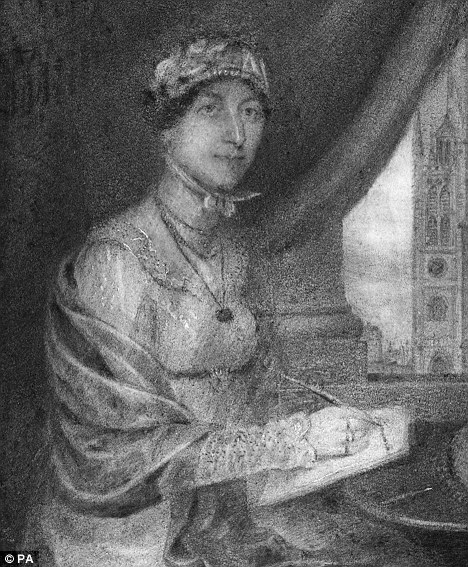
Is this what Jane Austen really looked like? Newly discovered sketch could be lost portrait of 19th century novelist
By GARETH FINIGHAN
Last updated at 11:49 AM on 5th December 2011

The author of a forthcoming biography on Jane Austen believes she has unearthed a previously undiscovered portrait of the novelist.

Dr Paula Byrne was midway through her new book when her husband surprised her with a portrait of a female writer bought at auction, according to the Christmas Radio Times.

She spotted the long, straight ‘Austen nose’ seen in images of the writer’s father and brothers, and enlisted the help of a team of experts and the BBC to test her as yet unproven thesis that the woman is the famous author, who died in 1817 aged 41.

Her find is the subject of a new BBC2 documentary, Jane Austen: The Unseen Portrait? to be broadcast on Boxing Day.

For the complete article, visit The Daily Mail at http://www.dailymail.co.uk/news/article-2070026/Jane-Austen-Newly-discovered-sketch-lost-portrait-19th-century-novelist.html.

Posted in Uncategorized | 2 Comments

Four Million UK Children Do Not Own a Book

Literacy fears as four million children don’t own a single book
By DAILY MAIL REPORTER
Last updated at 7:55 AM on 5th December 2011

Almost four million children in the UK do not own a book, research suggests.

It raises concerns that the number of children growing up without books is rising, with poorer youngsters more likely to miss out.

The latest report by the National Literacy Trust, based on a survey of 18,000 youngsters, reveals a third – 3.8million – do not have books of their own.

And the number has increased from seven years ago, the last time the poll was conducted, when it stood at one in ten.

For the complete article, visit The Daily Mail http://www.dailymail.co.uk/news/article-2070032/Literacy-fears-million-children-dont-single-book.html.

Posted in Uncategorized | Comments Off on Four Million UK Children Do Not Own a Book

Reader’s Entertainment News Interview – Part 2

1. If you could be one of your characters for a day which character would it be? Why?

In the 2008 British series, Lost in Austen, the main character, a modern day woman named Amanda Price, meets the fictionalized Fitzwilliam Darcy. During an argument regarding Darcy’s priggish behavior toward Jane Bennet, Price says, “I’ve had you in my head, Fitzwilliam Darcy, since I was twelve years old…. Cut my heart out, Darcy. It has your name written on it with Elizabeth’s. God Almighty! Here you are – one half of the greatest love story ever told.” Like Amanda Price, I have been in love with Fitzwilliam Darcy since I was twelve – long before Andrew Davies created the myth of Darcy by casting the perfectly “sensual” Colin Firth in the 1995 BBC adaptation and even longer before Joe Wright molded a vulnerably sexy Darcy with Matthew Macfadyen playing opposite of Keira Knightley in 2005.

As a gawky, too tall, too smart preteen, I had more than one question about my likelihood of ever finding someone who would care for me as I am. At the time, I possessed no hope of my getting any prettier or less intelligent. All my cousins were sweet, petite darlings and were extremely talented. (My head is cut off in family pictures!) Then I read Pride and Prejudice, a book where the superior Mr. Darcy chooses the second Bennet sister – not the prettiest among her siblings and certainly not the most congenial. In fact, Darcy was only mildly aware of Elizabeth Bennet’s fine eyes and lithe figure. His initial attraction rested in the lady’s playful, teasing nature and the woman’s desire to improve her mind through extensive reading. I was hooked. I convinced myself that somewhere in this world there was a “Darcy” for me. So, if I could, I would gladly replace Elizabeth Bennet for one day. Heck, I would even accept Firth or Macfadyen as legitimate substitutes for Mr. Darcy.

2. Who is your favorite hero that you’ve written? Why?

Several years ago, I introduced Adam Lawrence, the future Earl of Greenwall, in one of my storylines. In that particular book, Lawrence had a walk through, mentioned as part of a social gathering. I cannot explain it – others authors will understand – but I instantly wanted to know more of Lawrence. Therefore, the viscount became a regular in my novels. In The Phantom of Pemberley, he took the step from supporting role to main character.

This is what I know of Adam Lawrence. He is tormented by his belief that in his father’s eyes that he is a failure. This notion taints Lawrence’s every action. He becomes what he believes others expect of him: a scoundrel, a cad, a rake, and a womanizer. Yet, there are moments when Lawrence acts quite heroic. He risks his life again and again for the sake of others; he is of noble character; although he occasionally acts unethically, the viscount never breaks a personal moral code; and self-knowledge is more important to him than his physical strength. Lawrence is such an appealing character that I have written a novella for his fans. “His Irish Eve” is set six years in the future. It explains Lawrence’s final interactions with his mistress, Cathleen Donnell, and the lady’s lasting impact on the viscount’s life.

3. Who is your favorite hero written by someone else? Why?

Jean Valjean, hero of Victor Hugo’s Les Misérables, is very much defined in terms of ancient heroes: he performs extraordinary feats, he fights for his own honor, and his deeds belong to the community. His fallibility is Valjean’s appeal. A product of the society in which he lives, Valjean makes poor choices. Those choices serve as the basis of his reform; they are the source of his atonement. He acts not from some desire to be seen as a hero, but because he must perform compassionately for others’ benefit to know peace. Valjean uses his life lessons as the basis of his decisions. He is heroic because he get on with the business of living.

4. What do you think makes a good hero?’

Because I write novels based in the early 1800s, I tend to use the Byronic hero most often. In the romantic hero, one finds eagerness in the service of an idea. The hero is devoted to whatever passion he follows. An internal battle serves as a source of the hero’s motivation. However, I do admit that the modern concept of a code of behavior, rather than a code of ethics, holds its appeal. A true hero performs his deeds for the sake of others.

5. If you could have dinner with any writer living or dead, who would it be and why?

Of course, everyone would expect me to say Jane Austen in response to this question, and although I would treasure an evening with “Jane” as my dinner companion, I am going to choose Ernest Hemingway. Besides beings a highly attractive man, I have always admired the Hemingway “hero.” I would want to see if the man truly lived up to his legend. I would imagine that Hemingway would be conscious of the fact that those he met (and those who happened to be in his vicinity) would set in awe of the man. I also picture him as the type who has read every word of praise and of criticism others had written of his efforts, and he has found a way to turn both to his advantage. Hemingway was the consummate literary scholar and a devout lover of books.

As the man once said, “All you have to do is write one true sentence. Write the truest sentence you know.” Excellent advice from a writer who, in 1952, sold five million copies of The Old Man and the Sea in just two days. I admire his style – his avoidance of description of emotions – a prose style characterized by concise sentences, vivid dialogue, and simplistic narration/description. Hemingway’s development of a specific model for his heroes is renowned. Hemingway’s heroes are “super masculine,” enjoying sports and adventure. Of course, we might have a point of contention: Hemingway’s heroines exist only in relation to the men in their lives. Mr. Hemingway and I could have a “heated discussion” over such differences.

6. What authors do you always read?

There are so many writers (besides Jane Austen) who I adore. I have repeatedly curled up on a long winter’s evening to retrace Jane Eyre’s (Charlotte Brontë) journey in discovery. I love Elizabeth Gaskell’s Cranford and North and South. If I come across Alfred Noyes’ “The Highwayman” or Arthur Guiterman’s “Pershing at the Front” in a book, I will stop everything to read these poems. I love Ambrose Bierce’s “A Horseman in the Sky.”

While still teaching, I enjoyed sharing Adeline Yen Mah’s Chinese Cinderella with my students, as well as Ellen Emerson White’s Echo Company series. Some other favorites were Lillian Hellman’s The Little Foxes; Neil Simon’s God’s Favorite; Sonia Levitin’s The Cure; Jane Yolen’s The Young Merlin Trilogy; Ayn Rand’s Anthem; and Robert Cormier’s Heroes. Anthony Trollope’s novel, The Way We Live Now, holds relevance to modern-day ponzi schemes. Give me an Agatha Christie mystery, and I am quite satisfied. I like Thorton Wilder’s The Bridge of San Luis Rey, Gustave Flaubert’s Madame Bovary, Homer Hickman’s October Sky, Julius Lester’s Othello, Tom Jordan’s Pre: The Story of America’s Greatest Running Legend, Jim Vergus’ One Thousand White Women, and just about anything Sharyn McCrumb writes.

7. Do you have a secret talent readers would be surprised by?

Most people would agree that I am more than a fair dancer, and quite a few realize that I hold a Black Belt in Tae Kwon Do, but not many may know that I am also quite adept at twirling a flag – the kind one sees in a marching band or in Drum Corps International. In my garage, one may find two five foot poles with flags and three swing flags. (I no longer own a show rifle. They are too heavy for a woman with a repaired rotator cuff.) I recently taught one of neighborhood’s middle schoolers the basics. The girl plans to audition for the high school line in the spring.

8. What is the one question you never get asked at interviews, but wish you did?

You have published twelve novels in a little short of four years and have another nearing completion. Reportedly, you have several others in waiting. From where do all the ideas come? And what happens when you run out of new ideas?

Posted in Uncategorized | 2 Comments

Readers’ Entertainment News Interview – Part 1

(Originally published on November 11, 2011)
1. First, tell us a bit about yourself. Where you’re from? Past jobs, awards, the usual bio stuff.

Born in Huntington, West Virginia, over the years, I have held many positions: waitress, tax preparer, “Girl Friday” for a media mogul, Off-Broadway performer, media literacy consultant, and a public classroom teacher for forty years. I hold multiple advanced degrees from a variety of colleges and universities. I have been a Martha Holden Jennings Scholar, a Time Warner Star Teacher, Columbus (OH) Educator of the Year, and a guest panelist for the Smithsonian. I have been a daughter, a wife, a mother, a grandmother, a teacher, and now an author.

2. What do you write? You’re welcome to include your latest title (shameless plug) and add a link to it.

I began my career writing Jane Austen-inspired novels. My first, Darcy’s Passions, is Austen’s Pride and Prejudice retold from Mr. Darcy’s point of view. Its sequel, Darcy’s Temptation was a 2009 Booksellers Best Award Finalist. The Phantom of Pemberley, a cozy mystery, placed third in romantic suspense in the 2010 Dixie Kane Memorial Contest. I also have a paranormal version in Vampire Darcy’s Desire, as well as Captain Wentworth’s Persuasion, a retelling of Austen’s Persuasion. Ulysses Press released my latest book, a Christmas-themed sequel to Pride and Prejudice entitled Christmas at Pemberley, on November 8.

I also write Regency romance. I have two series currently on the market. The first three books in the “Realm” (a fictionalized covert governmental group) are available: The Scandal of Lady Eleanor (Book 1), which Publisher’s Weekly called a “knockout” was released in March 2011. A Touch of Velvet (Book 2) and A Touch of Cashémere (Book 3) have followed, while A Touch of Grace and A Touch of Mercy are in the planning stages. In addition, the initial book in The First Wives’ Club trilogy has been released. Readers can preview each of my novels on my website (www.rjeffers.com).

3. Who has been the most difficult character for you to write?

In writing “extensions” of Austen’s classic tales, I am often called upon to bring to life one of her minor characters – creating a back story, a description, motivations, conflict, etc., for characters for which Austen offered few details: Caroline Bingley, Colonel Fitzwilliam, Charlotte Collins, Sir Walter Elliot, Captain Harville. An audience of avid Austen fans who have preconceived ideas of how the character looks and acts because of various film adaptation of Austen’s works compounds the problem. One must have Georgiana Darcy resemble Emilia Fox from the 1995 adaptation of Pride and Prejudice, and Mr. Collins must have a strong resemblance to Tom Hollander from the 2005 film.

Of all Austen’s minor characters, I want Anne De Bourgh to know a different life. I have attempted three possible scenarios for Anne’s future, and although I am more comfortable with the rendering found in my Christmas at Pemberley, I am not totally satisfied with the depth of Anne’s characterization. I want to know more of Lady Catherine De Bourgh’s “sickly” daughter.

4. What characters are lying on your “office floor”? Why didn’t they come to life on the page and do you think they ever will? Or why not?

When I wrote A Touch of Velvet, I expected it to lead to two stories – one for each of Velvet Aldridge’s twin sisters, Cashémere and Satiné Aldridge. Of course, if I had thought about it, I would have known better. A Touch of Velvet was to be book one of the Realm series, but four chapters into writing the story of Brantley Fowler and Velvet Aldridge, I abandoned their story line. Brantley’s sister, Lady Eleanor Fowler, and his commanding officer, James Kerrington, were “screaming” at me to tell their story first. Book 3 was to be the story of Marcus Wellston’s discovering Cashémere Aldridge was everything he never knew he needed. Aidan Kimbolt and Satiné Aldridge were to come to a similar realization in Book 4. Yet, as I wrote A Touch of Cashémere, I found myself growing disillusioned by Satiné’s “woe is me” attitude. (Yes, I do realize that I gave her those qualities that I came to despise, but in my opinion, Satiné was not the appropriate match for Aidan Kimbolt, a character of whom I have grown quite fond.) Kimbolt deserved better. At the end of book 3, Satiné is in Europe. I remain uncertain as to her eventual fate. Perhaps, I will kill her off. Instead, book 4 will concern Gabriel Crowden’s and Grace Nelson’s joining. Aidan’s story will be the center of Book 5, A Touch of Mercy.

5. How much time does it take you to write a book?

I can finish a book in four months, but I would prefer a minimum of five. I hand write the first draft. I realize to many this appears counterproductive, but I find I am completing two steps at once. Because my cursive writing is slower than my typing, I have time to read aloud what I am writing. This gives me a good sense of how the story “sounds.” If I need a rewrite of a scene, I recognize it immediately and can fix it, or I can make a notation to revisit it after the book is complete. Then I word process the piece. Again, I read the story aloud in my head. This serves as my second draft. Finally, I correct one chapter per day the last month prior to my deadline. Although some revision does occur, this final check is more for editing. Surprisingly, my editorial changes are minimal because of the multiple checks prior to the final copy.

6. It seems there has always been an intense love of all things Jane Austen. I know many of your books are “Austen-related.” Why do you think there is this never-ending fascination with Austen, her writing, and the Regency period?

Austen’s appeal rests in the universality of her subject matter. She focuses on themes as old as time: marriage, the generation gap, and societal pressure. Jane Austen’s stories inspire self-reflection: what we never admit to ourselves, and what we will not permit others to know. In Austen, we discover the use of the family as the building block of society. Her stories take us back to a time “when things were simpler.” Her works are a mirror to our own society: as such, the reader is presented with a protagonist whose life and social standing is similar to his own. Her heroines are women of sense, who exemplify rational love. Meanwhile, Austen transforms distant heroes into expressively communicative heroes. It is a magical combination.

7. Any funny “researching your book stories” to share with readers?

While writing, I regularly stop to research the use of a particular phase or a historic fact. Often, such research changes the original story line. For example, I have spoken previously of writing an exquisite scene for my novella, “His American Heartsong,” in which the main character, Arabella, is sprayed by a skunk. I was laughing aloud as I created a scene reminiscent of a friend’s encounter with a black and white intruder. Unfortunately, my instincts screamed with the realization that there are no skunks in England. A quick check proved my hunch true. I filed the scene in the trash and created a less enjoyable one.

8. What do you find is the hardest part of writing?

I do not write comic relief well. This statement would never surprise my family and friends. I am terrible at telling jokes – being one of those people who always anticipates the punch line. I have been known to rehearse a joke in private several times before I share it with others. It is not that I do not appreciate humor. In fact, I usually start an audience’s response during a film or live performance with my own laughter. I love juxtaposition, puns, malapropos, and reversals. I simply struggle in writing the ultimate comic mix. I hold a strong appreciation of those who have mastered satire, parody, incongruity, and the double entendre.

(Join us tomorrow for part 2.)

Christmas at Pemberley: A Pride and Prejudice Christmas Sequel

To bring a renewed sense joy to his wife’s countenance, Fitzwilliam Darcy has secretly invited the Bennets and the Bingleys to spend the Christmastide festive days at Pemberley. But as he and Elizabeth journey to their estate to join the gathered families, a blizzard blankets the English countryside. The Darcys find themselves stranded at a small out-of-the-way inn with another couple preparing for the immediate delivery of their first child, while Pemberley is inundated with friends and relations seeking shelter from the storm.

Without her brother’s strong presence, Georgiana Darcy desperately attempts to manage the chaos surrounding the arrival of six invited guests and eleven unscheduled visitors. But bitter feuds, old jealousies, and intimate secrets quickly rise to the surface. Has Lady Catherine returned to Pemberley for forgiveness or revenge? Will the manipulative Caroline Bingley find a soul mate? Shall Kitty Bennet and Georgiana Darcy know happiness?

Written in Regency style and including Austen’s romantic entanglements and sardonic humor, Christmas at Pemberley places Jane Austen’s most beloved characters in an exciting yuletide story that speaks to the love, the family spirit, and the generosity that remain as the heart of Christmas.

Author Bio
Regina Jeffers, a public classroom teacher for thirty-nine years, considers herself a Jane Austen enthusiast. She is the author of several Austen-inspired novels, including Darcy’s Passions, Darcy’s Temptation, Vampire Darcy’s Desire, Captain Wentworth’s Persuasion, The Phantom of Pemberley, and the upcoming The Disappearance of Georgiana Darcy. She also is a Regency romance author: The Scandal of Lady Eleanor, A Touch of Velvet, A Touch of Cashémere, and The First Wives’ Club. A Time Warner Star Teacher and Martha Holden Jennings Scholar, Jeffers often serves as a consultant in language arts and media literacy. Currently living outside Charlotte, North Carolina, she spends her time with her writing, gardening, and her new grandson.

Posted in Uncategorized | Tagged , , , | 2 Comments

The Legend of Sawney Bean’s Cannibalistic Family

Sawney Bean
Alexander Sawney Bean was reportedly the head of a cannibalistic family residing along Scotland’s Ayrshire/Gallowy coast during the 14th Century. According to the legend, Sawney was born in a small East Lothian village, approximately ten miles from Edinburgh. Enable to hold a job, Sawney soon leaft home and took up with a woman who thought nothing of gaining what she wanted by devious methods.

With no means of supporting themselves, the Beans took up living in a sea cave in Galloway. They maintained their family by robbing and murdering travelers and locals foolish enough to be caught out on the roads at night.
Living incestuously, the Bean family grew to a total of six and forty. Over a twenty-five years period, one thousand people lost their lives to the family. The Beans would cast the unwanted limbs of their victims in the sea to be washed up on the local beaches.

Unfortunately, the authorities of the time had few crime investigation skills available to them. In a time when people still believed in witches and vampires, many innocent people stood accused of Sawney’s crimes and lost their lives. As travelers were traced back to the inns in which they had taken shelter, local innkeepers were often charged with the crimes. Needless to say, travelers began to shun the area.

As they grew in number, the Beans began to take on larger groups of travelers. With their cave being so designed to hide their presence in the area, they were able to attack and then retreat to the cave, which went almost a mile into the cliffs. In addition, the tide filled the opening so people never suspected the cave as a possible hideout.
The Beans were discovered when they attacked a couple returning from a local fayre. The man was able to plough his way through the band that attacked him, but the female cannibals managed to pull his wife from her horse. According to the legend, the Beans ripped out the woman’s entrails and feasted on the woman along the road. When revelers from the fayre appeared, the Beans retreated to their cave/home. The group took the distraught husband to the authorities in Glasgow. Eventually, King James IV personally took charge of the case. With 400 men and bloodhounds in tow, the hunt for the culprits began in earnest.

From the bloody scene, he bloodhounds took up the scent and soon hit on the Beans’ location. Entering the cave, the searchers found dried human parts being cured like other meats, pickled limbs in barrels, and piles of valuables stolen over the years. The Beans were brought to Edinburgh in chains. They were incarcerated in the Tollbooth and taken the next day to Leith. Because of the severity of their crimes, the Beans were barbarically executed. The crowds cut off the men’s hands and feet and left the criminals to bleed to death. The Bean women were burned at the stake.

Many “experts” believe the story to be an 18th Century fabrication, one found in the popular chapbooks and broadsheets of the time. In 1843, John Nicholson included the legend in lurid details in his Historical and Traditional Tales Connected with the South of Scotland. However, several local psychics claim the ghosts of Sawney Bean’s family haunt the area. The legend has become part of the Tourism and Heritage trail. The cave is on the coast at Bennane head between Lendalfoot and Ballantrae. There is a reconstruction of the cave at the Edinburgh Dungeon on Market Street, near the Waverly Bridge.

The “meat” of Sawney’s tale inspired Wes Craven’s “The Hills Have Eyes.” In 1994, a British film group tried to finance a film based on the legend, but the attempt fell through. Snakefinger’s “The Ballad of Sawney Bean” was a part of Ralph Records “Potatoes” collection.

Posted in Uncategorized | Tagged , , | 2 Comments

Shortlist of the UK’s Broadcast Awards Announced

The Broadcast Awards are at the heart of the industry calendar, shining a light on the UK’s most acclaimed TV shows and the unsung talent that made it all possible.

The shortlist for the Broadcast Awards 2012 has been announced and we would like to congratulate each finalist on their outstanding achievements.Winners will be announced on 2nd February, 2012, before 1200 of the leading names in British broadcasting.

For a complete list of the finalists, visit http://www.broadcastawards.co.uk/342981

Posted in Uncategorized | Comments Off on Shortlist of the UK’s Broadcast Awards Announced

Matthew Macfadyen on Hunger TV News

LEADING THE WAY FILM

Matthew Macfadyen has often, and quite unwillingly, been marked out as a very British romantic hero.
It’s a stereotype he’s worked hard to avoid, and one he momentarily left behind when he took on the most controversial role of his career. His portrayal of a paedophile, Charlie, in the Channel 4 drama Secret Life, saw him nominated for a Bafta in 2008. Two years later, he won the Bafta for Best Supporting Actor, for his part in Criminal Justice, before what might have been his crowning TV moment thus far, playing the mid-life Logan Mountstuart in Any Human Heart.

For the complete article and several photos of a bearded Macfadyen as he appears in the new Joe Wright film, Anna Karenina, visit Hunger TV http://www.hungertv.com/video/matthew-macfadyen/?mid=53339

Posted in Uncategorized | 2 Comments

Precision in Language Choices

Originally published on Savvy Authors on November 8, 2011

Precision in Language Choices

Choosing the precise word or phrase remains a challenge for all authors, whether they write professionally or for their own pleasure. The majority of those who make a living from writing have knowledge of words they never use in their creations. I write novels based in the Regency Period (1811-1820). Contemporary words/phrases such as Google, 3D, iPod, and mouse are replaced by acquiesce, obeisance, imprudence, and forbearance. From this quick example, one can easily observe that the number of words of which a person uses in his writing falls short of the number of which he is familiar. Add to that fact, how quickly the English language changes, and an author/poet will find it difficult to keep up with the flexibility of the language. Yet, some basics persist. It is the writer’

s responsibility to use the best word(s) for a particular situation. Instead of choosing a word, it is important to choose the word that expresses the exact meaning he intends. (For the examples below, I give credit to my college journalism professor. These examples remain in my spiral notebook even after all these years.)

Affect, Effect
Affect is a verb meaning to influence.
Effect is a noun meaning result.

Influence, Impact (two words often associated with affect/effect)
Influence refers to the ability to cause desired effects.
Impact means to strike or to collide; to wedge in.

Acute, Chronic

Acute indicates intenseness; that something has become immediately critical.
Chronic means recurring or continuing over a considerable time.

Adapt, Adopt, Adept
Adapt means to adjust to a changing situation.
Adoptmeans to accept something as one’

s own.
Adept means having skills.

Adverse, Averse
Adverse means unfavorable.
Averse means having a distaste for something.

Aggravate, Annoy, Irritate
Aggravate means to make worse or more troublesome. It is used to refer to things.
Annoy means to make angry, usually through repetition. Use it to refer to people.
Irritate means to provoke to impatience or anger.

Agree To, Agree With
Agree to is used to refer to things.
Agree with is used to refer to people.

Character, Reputation
Character is the sum of a person’s behavior and his moral standards.
Reputationis other people’s perception of the person.

Each Other, One Another
Each other is used when two people, places or things are involved.
One another is used for three or more.

Cynic, Skeptic
Cynic refers to a person who doubts or denies the goodness of human nature and does so in a sarcastic manner.
Skeptic refers to a person who has a doubting, questioning attitude. He wants evidence to prove his ideas.

Allusion, Delusion, Illusion
Allusion is an indirect mention.
Delusion is to believe in something even when evidence shows otherwise.
Illusion is a false or misleading idea or image.

Expect, Anticipate
Expect is used when no preparation is made.
Anticipate is used when preparation has been made for something that will occur.

Smell, Odor, Aroma
Smell is a neutral word depending on the surrounding words.
Odor refers to something unpleasant.
Aroma refers to something pleasant.

Eager, Anxious
Eager shows impatient desire.
Anxious indicates worry or concern.

Appraise, Apprise
Appraise means to determine the value.
Apprise means to notify or inform.

Cement, Concrete
Cement is the powder used as an adhesive ingredient in concrete. (Note! Cement is not a verb.)

Doctor
Doctor is a title, not a profession. It should be used generically. Use physician, minister, professor, etc., for more specific descriptions.

Pretense, Pretext
Pretense refers to a false appearance or action used purposely for deception.
Pretext is a false or fabricated reason, developed to hide the truth.

Because, Since
Most writers make no distinction in use between these two words. However, there are certain differences that should be addressed.
Because is used to indicate a cause or a reason.
Since refers to time, meaning between then and now.

To be fair, English is full of such traps. After all, I can deposit my paycheck in a bank, I can sit on the riverbank to fish, or I can bank a basketball off the backboard. English is a language where one’s nose runs and his feet smell. It possesses a deceptively complex structure, but it is well worth knowing English’s subtleties.

Christmas at Pemberley: A Pride and Prejudice Christmas Sequel

To bring a renewed sense joy to his wife’s countenance, Fitzwilliam Darcy has secretly invited the Bennets and the Bingleys to spend the Christmastide festive days at Pemberley. But as he and Elizabeth journey to their estate to join the gathered families, a blizzard blankets the English countryside. The Darcys find themselves stranded at a small out-of-the-way inn with another couple preparing for the immediate delivery of their first child, while Pemberley is inundated with friends and relations seeking shelter from the storm.

Without her brother’s strong presence, Georgiana Darcy desperately attempts to manage the chaos surrounding the arrival of six invited guests and eleven unscheduled visitors. But bitter feuds, old jealousies, and intimate secrets quickly rise to the surface. Has Lady Catherine returned to Pemberley for forgiveness or revenge? Will the manipulative Caroline Bingley find a soul mate? Shall Kitty Bennet and Georgiana Darcy know happiness?

Written in Regency style and including Austen’s romantic entanglements and sardonic humor, Christmas at Pemberley places Jane Austen’s most beloved characters in an exciting yuletide story that speaks to the love, the family spirit, and the generosity that remain as the heart of Christmas.

Regina Jeffers, a public classroom teacher for thirty-nine years, considers herself a Jane Austen enthusiast. She is the author of several Austen-inspired novels, including Darcy’s Passions, Darcy’s Temptation, Vampire Darcy’s Desire, Captain Wentworth’s Persuasion, The Phantom of Pemberley, and the upcoming The Disappearance of Georgiana Darcy. She also is a Regency romance author: The Scandal of Lady Eleanor, A Touch of Velvet, A Touch of Cashémere, and The First Wives’ Club. A Time Warner Star Teacher and Martha Holden Jennings Scholar, Jeffers often serves as a consultant in language arts and media literacy. Currently living outside Charlotte, North Carolina, she spends her time with her writing, gardening, and her new grandson.

www.rjeffers.com
http://austenauthors.net
http://englishhistoryauthors.blogspot.com
(Books available from Barnes & Noble, Amazon, Books-a-Million, Joseph Beth, and Ulysses Press.)

Posted in Uncategorized | 2 Comments

Chinese Numerology and Feng Shui for 2011

Chinese numerology and Feng Shui for 2011:
This year we are going to experience four unusual dates: 1/1/11, 1/11/11, 11/1/11, 11/11/11.
There are some other quirks for this year.
Take the last two digits of the year you were born and add that number to the age you will be this year and the result will add up to 111 That holds true for everyone!!!!
Also, this year, October will have 5 Sundays, 5 Mondays & 5 Saturdays. This happens only once every 823 years. These particular years are known as Moneybag years. The proverb goes that if you send this to eight good friends, money will appear in the next four days, as is explained in the Chinese feng shui.
Those who don’t continue the chain, won’t receive. It’s a mystery, but it’s worth a try.
Good luck to you.

Posted in Uncategorized | Comments Off on Chinese Numerology and Feng Shui for 2011

Princess Charlotte’s Indiscretions

Love with an Improper Stranger (Originally posted on My Jane Austen Book Club on November 9, 2011)

George IV

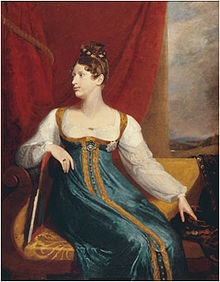
In the spring of 1812, George IV’s attempted to pique his daughter’s, Princess Charlotte of Wales, interest in William of Orange. The move would have strengthened England’s alliance with the Netherlands. Orange had lived in exile in England and had received his education at Oxford.

Princess Charlotte

Princess Caroline of Brunswick

The Prince Regent was well aware of his daughter’s increasing acts of defiance, but he was not aware of the depth of Princess Charlotte’s indiscretions. Charlotte had her first flirtation of note in 1811 (when she was but 15 years of age) with Charles Hesse, who was reportedly the Duke of York’s illegitimate son. Hesse was a young, handsome Hussar captain. Rumors had it that Hesse, who later joined Princess Caroline in Brunswick as an equerry, might have been the lover of both mother and daughter. Caroline had encouraged the relationship. She had once locked her daughter and Hesse in a bedchamber and had told them to amuse themselves. With Caroline’s encouragement, Charlotte had corresponded with Hesse until Charlotte’s friend and confidant, Mercer Elphinstone, advised against continuing the relationship.

Duke of York

George FitzClarence

Next, Charlotte’s cousin Captain George FitzClarence (eldest son of the actress Dorothea Jordan and William, Duke of Clarence, the Prince of Wales’s youngest brother) caught the young princess’s eye, but George soon moved with his regiment to Brighton, where he fell in love with Mary Seymour (who was the first to call the Prince Regent “Prinny”). During this time, Charlotte wrote to Mercer regarding Jane Austen’s Sense and Sensibility saying, “[The book] certainly is interesting, and you feel quite one of the company. I think Marianne and me are very like in disposition. I am not so good, displaying the same imprudence, etc., however very like. I must say it interested me much.”

William IV, Duke of Clarence

Dorothea Jordan

When the Regent first encouraged his daughter to accept William of Orange, Charlotte was determined to oppose the union. However, a marriage would free her from her father’s control, as well as to provide her with her own household and financial independence. Therefore, in December 1813, Princess Charlotte agreed to the marriage.

Yet, when she discovered that Orange would expect her to live part of the year in Holland, Charlotte had second thoughts. The Whig politician Lord Grey had advised Charlotte against leaving England. He had insinuated that if Charlotte resided in Holland for even part of the year that Princess Caroline would follow suit. It was common knowledge that Caroline intended to take up residence away from her estranged husband. If Caroline left Prinny, he could claim desertion and file for a divorce. If the Regent then remarried and produced a son out of his next joining, Charlotte would be replaced in the line of succession. With this in mind, Princess Charlotte ended the engagement.

Meanwhile, the Princess fell in love with Prince Frederick, the King of Prussia’s nephew. One of her lady companions aided Charlotte in arranging several clandestine meetings with Frederick, and she maintained a secret correspondence with the prince until January 15, 1815, when he informed her that he had fallen for another. Frederick returned Charlotte’s gifts and portrait at that time.

Incensed by Charlotte’s refusal to marry Orange, George IV removed his daughter’s servants and dismissed her lady’s companions. Confined to Cranbourne Lodge, Charlotte was permitted no visitors except Queen Charlotte. In August 1814, Princess Caroline departed England. Charlotte felt deserted. Her depression became quite evident. Queen Charlotte encouraged a resolution to the separation between her eldest son and his daughter.

On Christmas Day 1814, Charlotte turned to her father for affection. During their intimate talks, she provided Prinny with a full accounting of her relationship with Captain Hesse. Charlotte explained how her mother had encouraged Charlotte to write to Hesse. She also spoke of her recent attempts to have Hesse return her letters and of the captain’s refusal to do so. Charlotte confided that she expected Hesse to blackmail her with their correspondence.

Leopold

The Regent promised to assist his daughter with Hesse. Therefore, expecting a restoration of their connection, Charlotte confided in her father what she knew of Princess Caroline’s many lovers. To protect his daughter’s position in Society and in the line of succession, he suggested that Charlotte renew her engagement to Orange, but she stood firm. However, she did agree to a possible joining to Prince Leopold, third son of the Duke of Saxe-Coburg-Saalfeld. It was after Napoleon’s defeat in June 1815 before Leopold could return to England. They married on 2 May 1816.

Spoiler: So what does all this have to do with my November 8 release of Christmas at Pemberley? Notice that the previous paragraph mentions Christmas Day 1814. Yes, believe it or not, I incorporated Princess Charlotte’s liaison with Hesse into my Christmas tale. How, one might ask, does a writer mix political intrigue with an inspirational romance, a Regency Christmas-theme tale, and a continuation of Jane Austen’s Pride and Prejudice? Not an easy task, but one I hope you will enjoy reading.

Posted in Uncategorized | Comments Off on Princess Charlotte’s Indiscretions