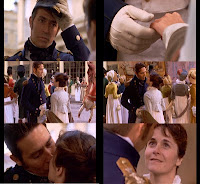
Women’s Rights During Jane Austen’s Time


Feminism made a long overdue showing in the 18th Century. Society, as a whole debated important issues, and, naturally, well-informed women began to question their place in the whole structure. These women were not called “feminists,” but rather “female philosophers.” They were nonmilitant…no bra burners among them. Rather I should say no corset burners among them. They did not protest for legal rights. Instead, they focused on the lack of education for females and on the moral autonomy and authority of males within the family structure. Early female writers included Mary Astell and Catherine Macaulay. Although few would call her a feminist, Jane Austen spoke of such issues in her writing. Austen simply gave us sympathetic female characters. Yet, how can we believe that she grudgingly dedicated a novel to a prince she did not admire and then think that Jane Austen was not aware of the moral debate going on about her.

Perhaps the most controversial figure of the feminist movement of this time period was a teacher and novelist: Mary Wollstonecraft. She wrote A Vindication of the Rights of Women in 1792. The book sets the “female perspective” in the context of post-revolutionary Europe. The downfall of the book is its emphasize on rational principles. That is also the strength of the book. Wollstonecraft created a firestorm of sorts and alienated many readers by attacking male icons such as John Milton and Rousseau because both men advocated subjugation of the woman in a man’s world. When I taught high school English, my female students (and some of the males) saw parallels to the pro-feminist speeches found in the 1960s and 70s in the U.S. One of Wollstonecraft’s more controversial comments dealt with how the English education system for girls taught them how to attract a man but how to run a man’s house once they landed him.

In 1798, Mary’s husband, William Godwin, wrote a Memoir of her life. This was shortly after Wollstonecraft’s death. Mary lost her life to childbirth. (That child, Mary Godwin, became the wife of Percy Shelley and the author of Frankenstein.) Godwin told the world of his wife’s suicide attempts and of her bearing an illegitimate child, as well as an exaggerated version of Mary’s rejection of Christianity. Mary was labeled an atheist and a whore. Such labels destroyed what good Wollstonecraft created with in her work.

Posted in Uncategorized | 3 Comments

“Even You Can Write Comedy,” he said.

A friend of mine recently told me that I should consider writing comedy. I laughed, naturally, because I assumed he meant it as a joke. I am known for those kind of lines, which can strip someone of his dignity, but I would not say I was particularly funny. When I hear a good joke, I do not remember it to retell it to my friends.
He was serious, though. He said, “Writing comedy is the same as writing the romance novels, which are your stock and trade.” Again, I laughed. “Comedy needs real-life situations,” he explained. I thought about that fact and agreed. “It needs strong dialogue, which tells the story.”

My interest piqued. “I think dialogue is one of my strengths in writing,” I confided.

“The characters have to be relatable. You have to see yourself in them.”

“Okay, I get it. What else?” I asked, now enthralled with the idea.

He paused to think what other examples he should use to sell me on the idea. “Pacing is important,” he added.

“Yes. . .” I encouraged.

“A balance between the elements,” he continued.

“Does not one have to know how to write a joke?” I asked when he paused again. “Should not one have a sense of humor?”

“You have an excellent sense of humor,” he assured me. “Maybe a bit too sophisticated at times.”

“So, I do not like bathroom humor,” I countered.

“But you do like word puns and malapropisms.”

“That is true. But just because I enjoy twisting the King’s English, that does not mean I can write comedy.”

“Have it your way,” he said. “But you are funny, whether you know it or not.”

I thought about what he said. Then I noticed the sly smirk turning up the corners of his mouth. “Oh, yeah,” I protested. “Tell me a time when you recognized my natural comedic flare,” I challenged.

He sat for several elongated minutes. Finally, he said, “Besides when you slipped on the ice and looked like a windmill trying to catch your balance.”

“Yes, besides that.”

“Never.”

“I rest my case.”

Posted in Uncategorized | Comments Off on “Even You Can Write Comedy,” he said.

Pride & Prejudice??? Have You Lied about Reading It???

Pride & Prejudice Is Top Book Brits Lie About Reading

This article was originally published on Female First: Celebrity Gossip & Lifestyle Magazine.

When it comes to literary classics, Brits are a nation of book bluffers according to the latest research from the Lindeman’s Wine & Book Club, which has revealed 71% of Britons lie to their friends and family, claiming to have read books they haven’t really in order to keep face.

Fear of being perceived as stupid has been cited as the most common reason for the ‘book bluffing’ phenomenon.

Topping the bill as the most fibbed about book is Jane Austen’s Pride & Prejudice, with over a quarter (26%)of the nation claiming to have read the book that captured the heart of millions of women.

Coming in a close second is Lord of the Rings (17%), which supports the theory that there is a tendency to lie about books that have been made into films – perhaps the secret to a bluffer’s success.

What’s more, the findings show men are more likely to bluff about the books they’ve read than their female counterparts and the reason is trying to impress a prospective partner.

Women, on the other hand are most likely to lie to a female friend or colleague, suggesting this is who they feel judged by most.

The top five books Brits claim to have read but haven’t really are:

1. ‘Pride & Prejudice’

2. ‘The Lord of the Rings’

3.  ‘Jane Eyre’

4.  ‘Tess of the D’Urbervilles’

5.  ‘The Hobbit’

Unfortunately, there are pitfalls to being a book bluffer, in particular not knowing the authors of the highbrow novels you’re supposed to have read.

Surprisingly (or not as the case may be) less than half (45%) of the nation recognizes Emily Bronte as the author of Wuthering Heights, commonly mistaking Charles Dickens, Jane Eyre, Charlotte Bronte and even Kate Bush as the master pieces creator.

As for other classics 15% of respondents thought Jane Austen wrote Jane Eyre and the Bronte sisters were most commonly mistaken as the authors of Tess of the D’Urbervilles.

If you are interested in reading the complete article, please visit http://www.femalefirst.co.uk/books/Pride++Prejudice-238592.html

Posted in Uncategorized | 6 Comments

Authors Pressed to Produce More Than One Novel Per Year

This article was originally posted on the NY Times.com.  

Writer’s Cramp: In the E-Reader Era, a Book a Year Is Slacking

For years, it was a schedule as predictable as a calendar: novelists who specialized in mysteries, thrillers and romance would write one book a year, output that was considered not only sufficient, but productive.

The author Lisa Scottoline, who writes thrillers, has increased her yearly output from one book to two because, she said, “the culture is a great big hungry maw, and you have to feed it.”

But the e-book age has accelerated the metabolism of book publishing. Authors are now pulling the literary equivalent of a double shift, churning out short stories, novellas or even an extra full-length book each year.

They are trying to satisfy impatient readers who have become used to downloading any e-book they want at the touch of a button, and the publishers who are nudging them toward greater productivity in the belief that the more their authors’ names are out in public, the bigger stars they will become.

“It used to be that once a year was a big deal,” said Lisa Scottoline, a best-selling author of thrillers. “You could saturate the market. But today the culture is a great big hungry maw, and you have to feed it.”

The push for more material comes as publishers and booksellers are desperately looking for ways to hold onto readers being lured by other forms of entertainment, much of it available nonstop and almost instantaneously. Television shows are rushed online only hours after they are originally broadcast, and some movies are offered on demand at home before they have left theaters. In this environment, publishers say, producing one a book a year, and nothing else, is just not enough.

At the same time, the Internet has allowed readers to enjoy a more intimate relationship with their favorite authors, whom they now expect to be accessible online via blogs, Q. and A.’s on Twitter and updates on Facebook.

Some of the extra work is being pushed by authors themselves, who are easing their own fears that if they stay out of the fickle book market too long, they might be forgotten.

(At least, I know I am ahead of my time. I recently released my 14th novel in a little over 4 years. I am a writing machine.) For the complete article, please visit http://www.nytimes.com/2012/05/13/business/in-e-reader-age-of-writers-cramp-a-book-a-year-is-slacking.html?_r=4&ref=arts

Posted in Uncategorized | 4 Comments

What Is the True Cost of an eBook?

This article comes from CNET News.

Here’s something that tends to get lost in the debate over e-book prices: Paper doesn’t cost very much. There’s a perception among consumers that an e-book should cost very little or next to nothing because there is no paper, printing, and shipping involved. But in fact, for a new best-selling hardcover, all of the costs associated with print, from the printing to the shipping to the distribution to the warehousing to returns, amount to a mere few dollars per copy, depending on the size of the print run.

The vast majority of a publisher’s costs come from expenses that still exist in an e-book world: Author advances, design, marketing, publicity, office space, and staff. You can therefore imagine the fear that e-book prices instill in publishing executives’ hearts. They’re only saving a few dollars per copy in the switch to the e-book world, but the prices of books were slashed more than half: from $24.99 to $9.99 and even lower.

That begins to explain why publishers are trying to keep e-book prices high. But it doesn’t tell the whole story.

It’s still a print world
Not only are publishers’ margins better on higher-priced print books, but when bookstores close it has enormous ramifications for the industry. When Borders went bankrupt, for instance, Penguin Group was its single largest creditor, with $41.1 million outstanding.

And even aside from financial considerations, publishers’ entire reason for existence is bound up in print. The major publishers are, quite simply, the best companies in the world at getting print books from authors to readers. Most of the tools at their disposal for making a book a hit are tied to a print world, from buying front-of-the-bookstore placement (yes, publishers pay for that) to book tours.

As the exponential growth of e-books has slowed, some publishers are even whispering their hopes that perhaps the rate of e-book adoption will slow further and print will be viable well into the future.

But meanwhile, on the other side of the e-book price divide are consumers. Whatever the cost of paper, $10-plus e-books look mighty expensive when they’re undercut by 99-cent Kindle best sellers sold by authors who don’t have a publisher’s overhead.

Publishers have a massive problem with perception of value. When you can’t hold it in your hands and easily pass it along to a friend, $10-plus just feels too expensive to many people.

For the complete picture and more analysis of the problem, please visit http://news.cnet.com/8301-1023_3-57412587-93/why-e-books-cost-so-much/

Posted in Uncategorized | 1 Comment

The Northanger Horrid Novels – Were They Real?

With this post, I wanted to introduce my visitors to what are known as the Northanger Horrid Novels, seven early Gothic examples of fiction mentioned in Jane Austen’s Northanger Abbey. These books were among the many published by Minerva Press in the late 1700s and early 1800s.

William Lane established Minerva Press at No. 33 Leadenhall Street, London, when he moved his circulating library there in 1790. The seven books, which comprise the Northanger Horrid Novels, were once thought to be creations of Jane Austen’s imagination, but research in the early 1900s by Michael Sadleir and Montague Summers proved that the stories did exist. In Northanger Abbey, Isabella Thorpe tells Catherine Morland …

“Dear creature! How much I am obliged to you; and when you have finished Udolpho, we will read The Italian together; and I have made out a list of ten or twelve more of the same kind for you.”

“Have you, indeed! How glad I am! – What are they all?”

“I will read you their names directly; here they are, in my pocket-book. Castle of WolfenbachClermontMysterious WarningsNecromancer of the Black ForestMidnight BellOrphan of the Rhine, and Horrid Mysteries. Those will last us some time.”

“Yes, pretty well; but are they all horrid, are you sure they are all horrid?”

“Yes, quite sure; for a particular friend of mine, a Miss Andrews, a sweet girl, one of the sweetest creatures in the world, has read every one of them.”

Some years back, Valancourt Books began a project to bring these titles and many others from around the world to the reading public. Along with those found on Valancourt, most of the titles are available from online book sources. Some are even available in their entirety at internet reading sites. So, what are the stories in each of these books? And would Jane Austen have read them?

The Castle of Wolfenbach (1793) by Eliza Parsons
A lecherous and incestuous uncle forces Matilda Weimar to flee her home and to seek refuge in the ancient Castle of Wolfenbach. Horrifying mysteries also dwell in the castle, including that of the missing Countess of Wolfenbach. Matilda must unravel the clues before her uncle tracks her down and takes her away with him.

The Mysterious Warning (1796) by Eliza Parsons
When the much revered Count Renaud dies, his degenerate heir, Rhodophil, assumes his father’s title. The count has disowned his son Ferdinand, who has married without his father’s permission. Rhodophil swears he will share his riches with Ferdinand and the younger brother’s wife, Claudina, but a “mysterious warning” from the grave sends Ferdinand fleeing for his life. To make matters worse, Claudina has aligned herself with Rhodophil. Ferdinand’s quest for his own fortune and adventure brings him to the doorstep of a recluse, who has a horrible secret. Later, he becomes imprisoned by the Turkish army and then encounters one of Gothic literature’s most depraved female characters, Fatima. If he survives all his meanderings, Ferdinand must then return to Renaud Castle to uncover the ghostly truth about his wife and his brother.

Clermont (1798) by Regina Maria Roche
Madeline lives in seclusion with her father Clermont, who holds a mysterious past. That seclusion is interrupted by one of Clermont’s former friends, a Countess. Madeline is allowed to reside with the Countess, with whom she will receive an education. However, the Countess is attacked by unknown assailants, and Madeline is assaulted in a ghostly crypt. Compounding their problems, a sinister stranger appears to claim Madeline as his bride. The stranger knows Clermont’s secret and threatens to ruin Madeline’s father. Madeline must avoid her pursuers, solve the mystery of her father’s past, and win the love of De Sevignie.

The Orphan of the Rhine (1798) by Eleanor Sleath
Sleath is very much an Ann Radcliffe wannabe, and she models many of her pieces on Radcliffe’s works, using several of Radcliffe’s signature plot devices: mysterious monks, ruined towers, assumed names for the characters, last-minute rescues, and death-bed scenes. In this novel, Julie de Rubine discovers that her marriage to the Marchese de Montferrat is a sham. Unfortunately, this news is not delivered until after Julie gives birth. Julie takes her child and an orphan by the name of Laurette to live in a half-ruined castle on the Rhine. She remains there under the Marchese’s threats until Laurette becomes old enough to “stir the passion” of other key characters. Then things get very interesting!

The Necromancer; or, The Tale of the Black Forest (1794) by Karl Friedrich Kahlert

This book is a series of interconnected stories, each of which deals with the enigmatic character Volkert the Necromancer. This is a very strange novel. It is filled with murder, dark magic, and plenty of ghosts. The plot takes too many twists and turns to describe in so short of a space, but for the true Gothic fan, it is a must.

The Midnight Bell: A German Story, Founded on Incidents in Real Life (1798) by Francis Lathom
Alphonsus Cohenburg finds his mother covered in blood. She tells him that his uncle has murdered Alphonsus’s father, and he must flee for his life. He is never to return to Cohenburg castle. Alphonsus’s adventures include being a soldier, a miner, and a church sacristan. He meets and weds Lauretta, but she is kidnapped by a group of ruffians. Alphonsus must solve the mystery of his wife’s disappearance and the question of his mother’s strange pronouncement. Add to those dilemmas the news of ghosts haunting his family’s castle and the sound of great bell each night at midnight, and one has a complete Gothic delight.

The Horrid Mysteries: A Story from the German of the Marquis of Grosse (a translation of the German Gothic novel Der Genius) (1796) by Carl Grosse
The Marquis of Grosse is a member of “a secret revolutionary society, which advocates murder and mayhem in pursuit of an early form of communism. He creates a rival society to combat them and finds himself hopelessly trapped between the two antagonistic forces. The book has been both praised and lambasted for its lurid portrayal of sex, violence, and barbarism.”

Posted in Uncategorized | Tagged , , , , , , , , , , , | 4 Comments

Northanger Abbey 1987 – Movie Discussion

When we read our favorite novels, we bring our own imagination to the experience. Film adaptations, however, leave less room for interpretation. We have all, at one time or another, been disappointed in the casting, not inherently evident to us at the time, of a particular actor in a role.

There have been only two film adaptations of Northanger Abbey. I chose the one from 1987, a BBC/A&E production, because I thought many of you might be less familiar with it, and my blog visitors would want to add it to their studies of all things Jane Austen.

Hopefully, our Austen Authors fans will comment on the costumes, the music and sound effects, the sites used in the film, and even some film errors (i.e., The film is set in 1794, but John Thorpe speaks of reading The Monk, which was published in 1796.). I would also love to hear your opinions of the 2007 version within this discussion. Northanger Abbey(1987) starred Katherine Schlesinger as Catherine Morland and Peter Firth ( not Colin’s brother) as Henry Tilney.

Published, along with Persuasion in December 1818, Northanger Abbey takes a satiric look at the Gothic novel. In reality, Northanger Abbey has never been a popular choice for modern readers, as Catherine Morland, the 17-year-old heroine, lacks the development we find in Emma Woodhouse or Elizabeth Bennet or Elinor Dashwood. Austen even says that Catherine is “in training for a heroine.” The 1987 cinematic adaptation of Austen’s novel serves as a bridge between those earlier cheaply-made Austen offerings and those of the 1990s. Although both Sense and Sensibility andMansfield Park were also released in the 1980s, they mimicked the style of the earlier works, especially lacking on location filming. Northanger Abbey (1987) was one of the first to use on-location settings effectively.

This particular adaptation takes a number of liberties with the original text, most obviously the opening scene. Austen’s novel introduces us to Catherine Morland, chronicling her short life and her lack of accomplishments. The film, however, begins with a feeling of sexual awakening in the young Catherine. The viewer sees the girl reclining on a tree limb while reading a Gothic novel. We see Catherine’s “scandalous” white stocking-clad leg. We hear the female voice over reading aloud from the book: “the horrors of that evil chamber.” Sketches from the novel show us a dead body on the stairs and a male figure carrying a supinated woman’s body. Add the eerie sound effects and choral chanting, and we make the assumption that Austen discussed these Gothic images in her book, which is not true.

So, what else do we see in this adaptation that is not found in Austen’s novel?
* the character of the Marchioness de Thierry, General Tilney’s friend and confidant – Her back story of a husband being guillotined reminds us of Austen’s cousin’s story. The lady is the general’s source of gossip.

* a soft criticism of Ann Radcliffe and the Gothic premise for its sexual pandering – As opposed to the movie, in the novel, Austen seems more likely to be criticizing poorly “educated” readers of Mrs. Radcliffe. “The person, be it gentleman or lady, who has not pleasure in a good novel, must be intolerably stupid.”

*In Austen’s novel, we only become aware of Eleanor’s attachment to a young man in the last chapter. Note in the film, upon her arrival at the Abbey, Catherine finds the message sent to Eleanor from Thomas arranging a secret meeting. “The same day at 3:00. You and I beside the unknown woman.”

*In Austen’s Northanger Abbey, Catherine visits the Tilney residence in town twice to apologize for not walking out with Henry and Eleanor. The novel includes a scene at the opera, where Catherine gushes her apologies to Henry. The film combines these visits and omits the opera scene.

*Catherine burns her copy of The Mysteries of Udolpho in the film.

*The general and the Marchioness are seen in the background at the Upper Rooms and also entering the same building when Catherine and Mrs. Allen first arrive in Bath. In the novel, the general is not mentioned until after Catherine rides out with John Thorpe.

*The Tilney brothers enjoy taking snuff together in the film.

*In the adaptation, the general encourages Catherine’s acquaintance from the beginning (assumably based on information from the Marchioness). In the novel, he only encourages Catherine’s relationship with the Tilneys after Thorpe misleads him regarding Catherine’s wealth.

*Catherine in the film is discovered in Mrs. Tilney’s room in flagrante delicto. In Austen’s novel, she leaves the room “and a shortly succeeding ray of common sense added some bitter emotions of shame.” In addition, Mrs. Tilney’s forbidden bedroom is hideous and sinister in the film, where in the novel is sports bright and modern decor (for that time period).

*The film combines the evening entertainments when Mrs. Allen and Catherine visit the Upper Rooms with their later visit to the Lower Rooms into one scene.

*The film allows the Abbey to keep the element of mystery with dark corridors, high windows, winding stairs, etc. In the novel, Catherine is disappointed by how modern the Abbey is.

*Catherine, Eleanor, and the general visit Henry at Woodston in the novel, but the film does little to establish him as a clergyman (presumably because modern audiences would not see this as a desirable occupation for a potential husband).

*In the novel, Catherine recognizes Isabella’s deviousness in the letter when Isabella begs for the return of James’s affections. In this TV version, there is no such letter.

*In the adaptation, Henry chastises Catherine by saying, “Dearest Miss Morland, has reading one silly novel unbalanced your judgment so completely?” The novel has Henry saying, “Dearest Miss Morland what ideas have you been admitting?” Henry no longer prods Catherine to think for herself in the film version.

*Austen tells the reader that Catherine has not read any Gothic novels before meeting Isabella Thorpe. “It is so odd to me, that you should never have read Udolpho before.” The film begins with Catherine’s Gothic fantasies.

*In the film, James Morland introduces Catherine to Isabella after he comes to Bath.

*Henry rebels against his father in a scene where the predatory-like General Tilney ironically trains a hawk. Also in this scene, the general accepts the fact that a dowry of 400 pounds per year is adequate, after all.

I am ready to hear what you think of this adaptation. Please leave your comments, and I will check in regularly to hold our discussion.

P.S. – One might wish to check out Ashley Judd’s 1992 film Ruby in Paradise, which is considered by many as homage to Northanger Abbey

Posted in Uncategorized | Tagged , , , , , , , , | 1 Comment

Mars vs. Venus – Identifying Male/Female Stereotypes

On a recent rerun of the TV show The Doctors, the featured physicians answered questions from audience participants on male/female stereotypes and comparisons. As a writer, those differences are forever part of one’s psyche. One cannot have an Alpha male responding to a situation as if he is a female. So, understanding some of the basics about male/female relationships is important.

So, these are “givens” when it comes to creating story lines:

Whereas men have excellent abstract orientation, women, for example, need landmarks to orient themselves. That is why women do not read maps well.

On the show, they showed an experiment that proved that women can multi-task better than men. Men are more linear. They must stay with one task at a time – until it is completed.

Women seek acceptance, where men seek respect.

Men who lie do it to cover up something or to build up their ego. Women lie to make someone feel better.

Women in a committed relationship report that they reach fulfillment only 20% of the time, where men say they satisfy their partners completely 55% of the time.

When a group of women eat out, they will divvy up the bill by calculating who owes what. Men, in a similar situation, will compete for the “honor” of paying the entire bill. They will toss money on the table and pretend they would not like some change.

When listening to a person of authority will maintain a neutral face, while women will show up to six distinct expressions.

Women can speak and listen at the same time. Men are totally lost in this type of situation.

Women smile more (showing their teeth) than men do.

Women talk through their stress, while men close up and withdraw to deal with his stress.

Women learn quickly in a cooperative setting, where men need competition. For YA authors, this means differences in a classroom setting (all female vs. traditional classrooms).

Women need the emotional bonding of hearing a man talk to them and to listen to them to be “turned on.” Men react to visual responses: nudity, sexy underwear, etc.

Women are interested in developing relationships; men are interested in the baser forms of recreation.

Women like to talk through their problems; men rarely speak of their problems to anyone.

Being more right brained, women are more in tune with their emotions.

They will, therefore, cry more often. Men have difficulty accessing the right brain centers, which control grief or sadness or depression. A man will seldom cry because of this. Plus, society looks down on a man who cries, saying he must “act like a man.”

For women, testosterone levels control her depression (literally, reducing her irritability, and her nervousness. Men with high testosterone levels, rarely suffer from sadness.

Women not on the pill, find masculine features attractive, but women on the pill find feminized male faces more attractive.

When men sweat, pheromones, which have no odor themselves, are mixed with the sweat to attract the opposite sex.

Males see a female’s waist to hip ratio instinctively when meeting the woman for the first time. It probably has something to do with childbearing and whether a woman might conceive easily.

Large amounts of dopamine and oxytocin surge in a woman’s body when she is talking/bonding with her partner.

Women pay more attention to the tone of a person’s voice and his body language when interpreting meaning. Men are likely to miss these cues to meaning because they need precision in word choice. 

Obviously, the woman’s nurturing center of the brain is more developed than a man’s, while his sexual center is more developed.

Women show their teeth when smiling. Men do not. In a man, showing one’s teeth is considered a weakness.

Women can recall the spoken word exactly. They have a better blood supply to that part of the brain. Men remember the “gist” of the conversation.

Women have a stronger sense of smell, and the chocolate cravings are natural for they also taste sugar better. Men have a better sense of taste for salty and bitter foods/drinks.

Women are physically and neurologically mature at 17; men not until age 22-24.

Women have better finger dexterity than a man, but he has better eye-hand coordination.

What do you think? Do these assumptions play true or not?

Posted in Uncategorized | Tagged , | Comments Off on Mars vs. Venus – Identifying Male/Female Stereotypes

Actions Speak Louder Than Words: Movie Discussion of 1995’s Pride and Prejudice

In reading Jane Austen, one can easily imagine the Austen children acting out a play created by the boisterous Jane. Her novels have all the elements of drama: a small cast, limited settings, and no special effects. In this manner, Austen writes cinematic novels – those easily adapted to the screen. We find in Austen’s works very precise stage directions (“Darcy shook his head in silent acquiescence.”) and characters who disclose their inner lives through dramatic interactions with others. Translation: Austen writes telling dialogue.

Today, we discuss Andrew Davies’ 1995 adaptation of Pride and Prejudice and, specifically, Colin Firth’s portrayal of Fitzwilliam Darcy. I do not wish to debate who was “the best Darcy.” What I wish to discuss is how Davies created the image of Darcy. Firth once said, “What Darcy doesn’t say” is as important as what he does say. As viewers, we observe Darcy looking disapprovingly at all the Meryton residents. He puts distance between himself and others. We watch Firth observe Jennifer Ehle’s character, and we have no doubt that as Darcy, Elizabeth Bennet’s disregard for him piques his interest. In reality, Firth has few lines in the first half of the series; yet, he “speaks” to us. He must convey Darcy’s thoughts and attitude with a raise of an eyebrow or a tightening of a jaw line.

Davies creates scenes and emotions (not expressed in the novel) to “flush out” Darcy’s character. In truth, Darcy is a major minor character. In the novel, he meets Elizabeth at Michaelmas (the end of September) and is at Netherfield until the ball (end of November). Darcy then does not see Elizabeth until Easter at Rosings Park. They are together a fortnight before the disastrous proposal separates them once more, leaving the suspense to build to the fateful meeting at Pemberley during the first week of August. In other words, he has been in her company three months spread over a year before his second proposal. Yet, Davies was smart enough to know that the dominant female audience would want to experience Darcy’s falling in love with Elizabeth Bennet.

In the first half (up to the first proposal), Firth is invariably shown leaning against a mantle (usually with a mirror above) or staring out a window. Both stances are done in profile, indicating that he is shutting himself off from new experiences and new people – it is his distancing technique. Even at the Meryton assembly, Firth is shot in profile when he meets the Bennet sisters for the first time. Also, at the party at Lucas Lodge, Darcy remains in profile by a mirror. (Notice that he is seen reflected in an opposite mirror. I love those types of shots for they tell the story so well!) At Netherfield, Darcy remains in profile at the window as the Bingley sisters discuss Elizabeth.

We do not see Firth in full face until the scene about an “accomplished lady.” He stares at an unseen object/person, which we viewers assume is Elizabeth. This is a pivotal point in our definition of Darcy. He is watching Elizabeth, but we are watching him watch her. Immediately following this telling scene, Davies adds an unscripted Austen scene: Darcy is in his bath. When he steps to the window to observe Elizabeth with the dog, again we watch him observe her. Did you not develop an opinion of Darcy’s growing affections for Elizabeth without Davies telling you so in words? A simple visual effect told the story. From the bath scene onward, Darcy spends a great deal of time observing Elizabeth. This provides the viewer with characterization, but it was also a manipulative film technique to hook the obvious female audience. It was a glamorized framing of Firth as Darcy – offering him up to the feminine belief in true love. Even when Darcy returns to profile while he watches Elizabeth and Jane leave Netherfield, we know he observes her with growing interest. We automatically interpret his gaze.

From Elizabeth’s departure from Netherfield and up to the first proposal, Darcy retreats to the profile, indicating he is fighting his attraction for Elizabeth. At the Netherfield ball, we first discover Darcy in profile before he turns to look upon Elizabeth. At the Hunsford parsonage, he sits in profile when he visits with her and the Collinses, along with Col. Fitzwilliam. In the first proposal, he is back standing before a mirror; he moves in profile after the rejection and then returns to the mirror. All of this staring out windows and standing before mirrors is the filmmaker’s way of telling the viewers that Darcy’s character has never looked at his true self nor at Elizabeth as a true choice for a partner.

Davies displays Darcy’s sexual attractiveness, revealing the character as a sensitive man, as well as a physically fit one. Sensitivity is shown when he embraces a distraught Georgiana after her aborted elopement and with his distress when he discovers at Lambton Elizabeth’s grief over Lydia’s actions. Physically, this Darcy rides, hunts, fences, fishes, and swims. Although Darcy disappears from the novel for some time after the first proposal, Davies keeps the sexual tension by showing us Darcy fencing to fight his growing need for Elizabeth and then cooling his desires in the lake. Note that the fencing scene comes right before we first see Pemberley. It tell us who Darcy is, not what he owns.

When Darcy writes Elizabeth the letter of explanation (the beginning of the second half of this series), his anger and mortification is conveyed to the viewers through a man in shirt sleeves, with disheveled hair, and a grim countenance. He labors over the writing. This second half of the series creates a “new” Darcy. Even the opening shot (his leaving the parsonage) shifts the focus from Elizabeth to Darcy. Davies’ adaptation follows Austen’s book faithfully in most respects, except with Darcy. Those visual images to which we are introduced emphasize Darcy’s emotional rollercoaster. We are teased with an image of Wickham’s debauchery followed by the section of the letter where we shift scenes from Darcy’s writing to Elizabeth’s reading, creating sexual attraction.

Davies created an image of a determined Darcy, seeking Wickham and Lydia in London. Darcy is kept in our mind’s eye with images of this calculated search. Darcy buys information on the street from a penniless waif. He nearly forces his way into Mrs. Younge’s home. Later, we see Darcy standing up with Wickham at the church. Davies keeps Darcy’s character in the viewers’ minds even without Austen telling us these things. Note how Davies alternates between Elizabeth’s staring at Darcy’s portrait and Darcy’s dip in the lake. This alternation builds tension for their meeting.

When Darcy returns to Longbourn, he reverts to that stiff, proud character. Again, he is seen in profile before he stares out the window. However, it is not just Darcy who reverts. Think how Elizabeth is once again embarrassed by her mother during Bingley’s proposal, during Lady Catherine’s visit, and with their first walk out together. Returning the characters to an earlier behavior builds suspense.

At the Netherfield ball (one of 15 different dances in this adaptation), there is a sense of challenge between Darcy and Elizabeth. Firth actually said of the scene, “We see an honesty and a playfulness in Elizabeth, while there’s something slightly comical about Darcy’s trying to maintain his formal manner while holding up his end of the repartee. She’ll say something that stings him, and he has an entire eight-step circle to do before he is permitted to respond.” (pg. 102 ofThe Making of Pride and Prejudice by Sue Birtwistle and Susie Conklin)

So, what did you think? Did you learn something new today? Are there similar secrets you might share with the rest of us? I could go on and on, and we will discuss other facets of this adaptation later because it is one of the most successful ones. One thing you will find about me is that I love movie trivia!!!

Posted in Uncategorized | Tagged , , , , , | Comments Off on Actions Speak Louder Than Words: Movie Discussion of 1995’s Pride and Prejudice

British Thoroughbred Racing History

a modern Arabian

One of the more challenging aspects of writing historical romance is the amount of research one must do. It is not uncommon to spend 8 hours researching a fact that in less than a paragraph in the book. However, one must do it. Recently, I add the element of thoroughbred racing to a novella I was writing. I have always said that if I hit the lottery, I was going to move to KY and raise thoroughbreds. So, finding out about thoroughbreds was time consuming but oh, so exciting. Did you know that the origins of modern racing go back to the Crusades. Between the 12th and 16th centuries, Arab stallions were imported into England and mated with English mares to breed in speed and endurance.
Professional horse racing sprang to life in the reign of Queen Anne (1702-1714). By 1750, racing’s elite formed the Jockey Club at Newmarket. The Jockey Club still exercises complete control of English racing.
Since 1814, five races for 3-year-olds have been designated as “Classics”: The English Triple Crown, which includes the Epsom Derby, the 2000 Guineas, and the St. Leger Stakes, is open to both male and female horses. The Epsom Oaks and the 1000 Guineas is only for fillies.

Volume 6 of the General Stud Book, published in London in 1857.

Besides writing rules for racing, the Jockey Club designed steps to regulate horse breeding. James Weatherby traced the complete family history (pedigree) of every horse racing in England. In 1791, The Introduction to the General Stud Book was published. By the early 1800s only horses descended from those listed in the General Stud book could be called “thoroughbreds.”
Now this is the amazing fact!!! Thoroughbreds are so inbred that the pedigree of every single horse can be traced back to to one of three stallions, which are referred to as the “foundation sires.” These stallions are Byerley Turk (foaled c.1679); the Darley Arabian (foaled c.1700), and Godolphin Arabian (foaled c. 1724).

The three founding fathers of the turf

Following the family tree of the Godolphin Arabian, the Byerley Turk and the Darley Arabian is rather like compiling a ‘who’s who’ of racing champions!

The Godolphin Arabian

  • Foaled about 1724
  • Probably exported from Yemen via Syria to the stud of the Bey of Tunis
  • Initially given to Louis XV of France in 1730, he was then imported to Britain
  • Sired the best racehorse of the day, called Lath
  • The Godolphin Arabian’s line hasn’t won the Derby since Santa Claus in 1964, and has recently been overshadowed by the Darley Arabian’s descendants

The Byerley Turk, one of the progenitors of the Thoroughbred breed, may have been a Turkoman horse.

The Byerley Turk

  • Foaled about 1680
  • His line includes Herod, foaled in 1758, who was leading sire eight times
  • Descendent Highflyer and his sons were champion stallions 23 times in 25 years
  • The Byerley Turk’s line now has much less influence than that of the Darley Arabian

The Darley Arabian

  • Foaled about 1700
  • Amongst others, he sired Bartlett’s Childers whose great grandson was Eclipse
  • Over 80% of modern racehorses can trace their descent to Eclipse, including the great Canadian stallion Northern Dancer

The golden story of Eclipse

A descendent of the Darley Arabian, Eclipse was foaled in 1764, the year of the great eclipse of the sun. He won 18 races, never appearing the least bit stretched. Owners were reluctant to put their horses up against him and eight of his races were declared walkovers!

Eclipse retired to stud in 1771 and sired three Derby winners but his ability to sire offspring that were well adapted to the new shorter races for two and three year olds ensured him a place in the racing history books.

However, due to terrific competition from Herod and the Byerley Turk line, Eclipse was never actually declared champion.

After his death, Eclipse was dissected to try to work out the secret of his success – it was decided that his huge heart pumped blood around the body more effectively, while his back legs gave plenty of leverage. Powerful lungs completed the winning combination. His skeleton is still owned by the Royal Veterinary College and can be seen at the National Horseracing Museum in Newmarket.

Posted in Uncategorized | Tagged , , , , , , , , , , | 1 Comment