Alfred the Great’s Son, Edward the Elder

Edward the Elder

Edward the Elder (Old English: Ēadweard se Ieldra; c. 874–877 – 17 July 924)  became king in 899 upon the death of his father, Alfred the Great. His court was at Winchester, previously the capital of Wessex. He captured the eastern Midlands and East Anglia from the Danes in 917 and became ruler of Mercia in 918 upon the death of Æthelflæd, his sister.

When Alfred died, Edward’s cousin Æthelwold, the son of King Æthelred of Wessex, rose up to claim the throne and began Æthelwold’s Revolt. He seized Wimborne, in Dorset, where his father was buried, and Christchurch (then in Hampshire, now in Dorset). Edward marched to Badbury and offered battle, but Æthelwold refused to leave Wimborne. Just when it looked as if Edward was going to attack Wimborne, Æthelwold left in the night, and joined the Danes in Northumbria, where he was announced as King. In the meantime, Edward is alleged to have been crowned at Kingston upon Thames on 8 June 900.

In 901, Æthelwold came with a fleet to Essex, and encouraged the Danes in East Anglia to rise up. In the following year he attacked English Mercia and northern Wessex. Edward retaliated by ravaging East Anglia, but when he retreated south the men of Kent disobeyed the order to retire, and were intercepted by the Danish army. The two sides met at the Battle of the Holme on 13 December 902. According to the Anglo-Saxon Chronicle, the Danes “kept the place of slaughter”, but they suffered heavy losses, including Æthelwold and a King Eohric, possibly of the East Anglian Danes.

Relations with the North proved problematic for Edward for several more years. The Anglo-Saxon Chronicle mentions that he made peace with the East Anglian and Northumbrian Danes “of necessity”. There is also a mention of the regaining of Chester in 907, which may be an indication that the city was taken in battle.

In 909, Edward sent an army to harass Northumbria. In the following year, the Northumbrians retaliated by attacking Mercia, but they were met by the combined Mercian and West Saxon army at the Battle of Tettenhall, where the Northumbrian Danes were destroyed. From that point, they never raided south of the River Humber.

Edward then began the construction of a number of fortresses (burhs), at Hertford, Witham and Bridgnorth. He is also said to have built a fortress at Scergeat, but that location has not been identified. This series of fortresses kept the Danes at bay. Other forts were built at Tamworth, Stafford, Eddisbury and Warwick. These burhs were built to the same specifications (within centimetres) as those within the territory that his father had controlled; it has been suggested on this basis that Edward actually built them all.

Edward extended the control of Wessex over the whole of Mercia, East Anglia and Essex, conquering lands occupied by the Danes and bringing the residual autonomy of Mercia to an end in 918, after the death of his sister, Æthelflæd. Ætheflæd’s daughter, Ælfwynn, was named as her successor, but Edward deposed her, bringing Mercia under his direct control. He had already annexed the cities of London and Oxford and the surrounding lands of Oxfordshire and Middlesex in 911. By 918, all of the Danes south of the Humber had submitted to him. By the end of his reign, the Norse, the Scots and the Welsh had acknowledged him as “father and lord”.[15] This recognition of Edward’s overlordship in Scotland led to his successors’ claims of suzerainty over that Kingdom.
Edward reorganized the Church in Wessex, creating new bishoprics at Ramsbury and Sonning, Wells and Crediton. Despite this, there is little indication that Edward was particularly religious. In fact, the Pope delivered a reprimand to him to pay more attention to his religious responsibilities.

He died leading an army against a Welsh-Mercian rebellion, on 17 July 924 at Farndon-Upon-Dee and was buried in the New Minster in Winchester, Hampshire, which he himself had established in 901. After the Norman Conquest, the minster was replaced by Hyde Abbey to the north of the city and Edward’s body was transferred there. His last resting place is currently marked by a cross-inscribed stone slab within the outline of the old abbey marked out in a public park.

The portrait included here is imaginary and was drawn together with portraits of other Anglo-Saxon era monarchs by an unknown artist in the 18th century. Edward’s eponym the Elder was first used in the 10th century, in Wulfstan’s Life of St Æthelwold, to distinguish him from the later King Edward the Martyr.

Posted in Uncategorized | Tagged , | 2 Comments

A “Valentine” By Any Other Name – Sara Bennet’s “A Most Sinful Proposal”

A most wicked education…

Marissa Rotherhild has always behaved exactly as a proper lady should, and it has done absolutely nothing for her. So now she has made a most sinful proposal. She wants to live only for pleasure, and she wants Lord Valentine Kent to instruct her in the ways of love and lust. Caring not for scandal or the whispers of society, she craves his every wanton touch.

It is every rake’s fantasy.

A Most Sinful Proposal by Sara Bennet
Avon, April 13, 2010
ISBN-10: 0061339172
ISBN-13: 978-0061339172
(part of The Husband Hunters Club series)

Book Description
Lord Valentine Kent has never before been so tempted. Though he is every bit the gentleman, from the moment Marissa arrives at his country estate he can think of nothing but her wild, dark curls and luscious curves. But submitting to passion must wait until he completes the search for an ancestral treasure.

It is a most honorable endeavor.

But Kent and Marissa will soon discover that even the best of intentions is no match for a desire as desperate as theirs . . .

I shall begin by saying that I’m a Sara Bennett fan, but this book was not one of my favorites of hers. The story lacks anything to make it stand out from the many other Regency romances on the market. That being said, this novel is not a total waste of the reader’s time. Despite Valentine’s “unlordly” behavior, Bennett develops a believable character. He is an eccentric, but where Bennett truly shines is Valentine’s growing desire for Marissa. Add in Marissa’s bohemian grandmother, and the reader meets a series of characters not often found in historical romances. Perhaps, it’s the fact that they are all gathered in one book is what hurts this piece. Everyone likes a quirky character, but “A Most Sinful Proposal” houses a plethora of them. For Valentine’s Day, however, it could be an easy read. It is quite lusty in parts for those who prefer their novels in a milder strain.

Posted in Uncategorized | Comments Off on A “Valentine” By Any Other Name – Sara Bennet’s “A Most Sinful Proposal”

Meet Valentine Corbett in Suzanne Enoch’s “Sin and Sensibility”

Okay, it’s Valentine’s Day. So, I’m taking a look at a couple of books who have characters named Valentine. The first is Valentine Corbett, Marquis of Deverill from Sin and Sensibility by Suzanne Enoch. This book is part of the “Griffin Family” series.

Sin and Sensibility by Suzanne Enoch; An Avon Romantic Treasure Book; Copyright December 2004; ISBN 0-06-054325-6

Book Blurb: USA Today bestselling author Suzanne Enoch delights fans once again with this enchanting tale of a young lady determined to have an adventure and the white knight who charges to her rescue.

After yet another beau was chased away by her three over-protective brothers, Lady Eleanor Griffin decides she’s had enough. If she is to become a boring society wife, then she’s going to have some fun first. But when her adventure turns into more than what she bargained for, she is grateful for her knight in shining armour who rescued her from what was sure to become a scandalous situation.

Plot: Young Ladies Just Want to Have Fun… Unfortunately, Eleanor Griffin has three strapping brothers to frighten away any beau they deem unsuitable. She know she’s expected to marry eventually – probably some staid, crusty, old lord – but until that dary day dawns, Nell intends to enjoy herself. However, the Duke of Melbourne isn’t about to let his sister run completely wild, and he asks his best friend, the Marquis of Deverill, to keep a close eye on the spirited lovely.

Could any chaperone be less qualified – yet, more appreciated – than Valentine Corbett? Here is a man as sinful as he is attractive; a notorious rake, gambler, and pursuer of women, whom Nell has fancied since childhood. Alas, the irresistible rogue seems uncharacteristically determined to be honorable, despite the passionate longing in his gaze. And Nell must tread carefully, for she has promised to immediately wed whomever her siblings choose should so much as a hint of scandal arise…

Poor Eleanor has three very overbearing brothers: Charlemagne (Shay), Zachary, and Sebastian (the Duke of Melbourne). Some people who have criticized this book have done so because they saw Eleanor as petulant and spoiled. I, on the other hand, saw her as an adventurous spirit that needed direction. When one considers how restrictive the Regency Period was for women, any woman who demanded her independence could be seen as self-serving. Enoch uses this perception to her advantage in telling this story of the typical rake who is reformed. The “rake” story line is a tried and true element of Regency romances, and Enoch uses it well.

There is no earth shattering moments in this novel. It is simply a well told romance. Its strength lies in the wonderful romantic scenes leading up to Valentine and Eleanor’s coming together, and the wit, humor, and sensuality that fills each of their encounters. Women love the “bad boys,” and I admit to falling in love with Valentine Corbett. He was a charming rascal. So, unlike some who on Amazon left less than a stellar review of this story, I enjoyed this one in the Griffin Family series. In fact, it is Sebastian’s story from the series that I disliked, but we will revisit that novel at a later date.

I give this story 4 out of 5 stars for great romantic scenes.

Posted in Uncategorized | Tagged , , | 2 Comments

The Protocol of Being “At Home”

the Bennet ladies call on the Bingley household

During the Regency and Victorian Periods, ladies of the aristocracy rigorously made a daily round of social calls, which were governed by strictly adhered to conventions. Precedence and rank defined each of these engagements. However, there was a distinct difference between calls among the mercantile and professional class and those who could count their ancestors among the English nobility.

While in London, ladies of the house drove about town in their carriages, attended by a pair of appropriately attired footmen. When calling upon another, the footman would inquire of the “at home” status at the intended destination. A butler, footman, or hall porter would either admit the lady or inform the footman that his mistress was “not at home to callers.” If no admittance was achieved, the footman would leave three calling cards with the servant who responded to the door knocker: one card from the mistress of the house he served (intended for the lady of the house upon which his mistress called) and two cards from the footman’s master (intended for the mistress and master of the house upon which his mistress called).

the Bingleys survey their Meryton acquaintances

Rules of etiquette also prescribed how the cards were presented. The embossed cards were carried in a gold, silver, or ivory case.  Leaving a card with a turned up corner indicated that the lady had called in person.  A card inscribed with “p.p.c.” (pour prendre congé) indicated that the lady intended to leave town for a period of time.  At a house in mourning, the lady might write the words “to inquire” on the back to indicate she had made a sympathy call.

Even at a country ball, a precedence was strictly adhered to. An exclusive area was corded off for those of the upper ranks to separate them from the everyday riffraff that could attend a country assembly. Do you recall the image of the Bingleys and Mr. Darcy standing apart from the rest of those in attendance at the Meryton Assembly? In the 2005 film, note Mr. Darcy’s (Matthew Macfadyen) near snub of the forward Mrs. Bennet, who drags her daughters through the throng to be presented to Mr. Bingley. 

Tea was served between 4 and 5. With guests in the drawing room, the house’s mistress would ring for tea. A maid would deliver a tea cart that included a hanging silver kettle (often on a stand), a silver teapot, cream and sugar basins, and dainty cups and saucers of fine porcelain. When a guest departed, another maid was dispatched to accompany the person to the door.

From Project Gutenberg Ebook comes the book, Searchlights on Health by B. G. Jefferis and J. L. Nichols. Below are the “Etiquette of Calls” listed on page 56 of this book. (http://www.gutenberg.org/files/13444/13444-h/13444-h.htm#page56).


ETIQUETTE OF CALLS.

In the matter of making calls it is the correct thing:

For the caller who arrived first to leave first.

To return a first call within a week and in person.

To call promptly and in person after a first invitation.

For the mother or chaperon to invite a gentleman to call.

To call within a week after any entertainment to which one has been invited.

You should call upon an acquaintance who has recently returned from a prolonged absence.

It as proper to make the first call upon people in a higher social position, if one is asked to do so.

It is proper to call, after an engagement has been announced, or a marriage has taken place, in the family.

For the older residents in the city or street to call upon the newcomers to their neighborhood is a long recognized custom.

It is proper, after a removal from one part of the city to another, to send out cards with one’s new address upon them.

To ascertain what are the prescribed hours for calling in the place where one is living, or making a visit, and to adhere to those hours is a duty that must not be overlooked.

A gentleman should ask for the lady of the house as well as the young ladies, and leave cards for her as well as for the head of the family.


Posted in Uncategorized | Tagged , , , , , , | 5 Comments

Eccentric Aristocrats

When we think of the life of the nobility, we rarely think of anything except a life of leisure and decadence. However, there were those who showed their “quirks.” Let us meet a few.

William Thomas Beckford (1 October 1760 – 2 May 1844), was an English novelist, a profligate and consummately knowledgeable art collector and patron of works of decorative art, a critic, travel writer and sometimes politcian, reputed to be the richest commoner in England. He was Member of Parliament for Wells from 1784 to 1790, for Hindon from 1790 to 1795 and 1806 to 1820. He is remembered as the author of the Gothic novel Vathek, the builder of the remarkable lost Fonthill Abbey and Landsdown Tower (“Beckford’s Tower”), Bath, and especially for his art collection.

On 5 May 1783 he married Lady Margaret Gordon, daughter of the fourth Earl of Aboyne. However, Beckford was bisexual, and was hounded out of polite English society when his letters to the Hon. William Courtenay, later 9th Earl of Devon, were intercepted by the boy’s uncle, who advertised the affair in the newspapers. Beckford chose exile in the company of his wife, whom he grew to love deeply, but who died in childbirth at the age of 24. He had an affair with his cousin Peter’s wife Louisa Pitt (c.1755-1791).

At Fonthill Abbey, Beckford refused the use of servants’ bells in the rooms, except the one his daughter, the Duchess of Hamilton, used. Instead, his servants were made to crouch in low, narrow ante-rooms so that they could respond immediately to his command. When traveling, he took his French cook with him to prepare his omelettes, as well as transporting his bed for a good night’s sleep. Although Beckford rarely entertained, he often order an elaborate dinner set for twelve. However, Beckford would dine in solitude, eating only one course and sending back the rest.

William Lamb, 2nd Viscount Melbourne, (15 March 1779 – 24 November 1848) was a British Whig statesman who served as Home Secretary (1830–1834) and Prime Minister (1834 and 1835–1841). He is best known for his intense and successful mentoring of Queen Victoria, at ages 18–21, in the ways of politics. Historians conclude that Melbourne does not rank high as a prime minister, for there were no great foreign wars or domestic issues to handle, he lacked major achievements and enunciated no grand principles. “But he was kind, honest, and not self-seeking.” Melbourne held a great dislike for carrying a watch, but with his position, he must be on time for appointments and other matters of business. Therefore, he would shout out to his servants for the time. 

Adeline Louisa Maria, Countess of Cardigan and Lancastre (24 December 1824 – 25 May 1915) was the second wife of English peer James Brudenell, 7th Earl of Cardigan, who led the Charge of the Light Brigade, and later the wife of the Portuguese nobleman Don António Manuel de Saldanha e Lancastre, Conde de Lancastre. She was the author of scandalous memoirs, My Recollections, published in 1909 under the name Adeline Louisa Maria de Horsey Cardigan and Lancastre, though strictly speaking she was not allowed by the rules governing the British peerage to join her former and current titles together. Her book detailed events and people coupled with gossip concerning the establishment of Victorian England. After her marriage to the Earl of Cardigan in 1858, Queen Victoria had refused to have her at court because Cardigan had left his first wife after wooing her away from her husband, Lt. Col. Christian Johnstone, a childhood friend. Adeline liked to “dress” for dinner: she would often appear as a nun or a Spanish dancer. In her final years, she kept her coffin in the hallway. Several times per day, she ordered her butler to lift her into the box to assure herself that she fit.

Henry Cavendish (10 October 1731–24 February 1810) was a British scientist noted for his discovery of hydrogen or what he called “inflammable air.” Cavendish lived the life of a recluse. He would communicate with his housekeeper by scribbling messages that he left on a table outside his bedroom. He was also known to dismiss any female servant to cross his path during the day. The female servants were to be neither SEEN nor HEARD.

George William Francis Sackville Russell, 10th Duke of Bedford (16 April 1852 – 23 March 1893) was a Liberal member of Parliament for Bedfordshire between 1875 and 1885, when the constituency was abolished. He was High Sheriff of Bedfordshire in 1889. In 1891, Russell inherited the title of Duke of Bedford, together with Woburn Abbey and several other estates, which went with it. Like Cavendish, Bedford was something of a recluse. He would dismiss any female servant he encountered after noon, when her work must be completed.

Francis Henry Egerton, 8th Earl of Bridgewater (11 November 1756–11 February 1829), known as Francis Egerton until 1823, was a noted British eccentric, and supporter of natural theology. Egerton was known for giving dinner parties for dogs, where the dogs were dressed in the finest fashions of the day, down to fancy miniature shoes. Each day Egerton wore a new pair of shoes, and he arranged the worn shoes into rows, so that he could measure the passing time. An animal lover, Egerton kept partridges and pigeons with clipped wings in his garden, allowing him to shoot them despite failing eyesight. Egerton never married, and upon his death, his title became extinct.

William John Cavendish Cavendish-Scott-Bentinck, 5th Duke of Portland (12 September 1800 – 6 December 1879), styled Lord William Cavendish-Scott-Bentinck before 1824 and Marquess of Titchfield between 1824 and 1854, was a British aristocrat eccentric who preferred to live in seclusion. He had an underground maze excavated under his estate at Welbeck Abbey near Clumber Park in North Nottinghamshire.

Welbeck Abbey contains none of the normal show of grandeur. The rooms were stripped of portraits and tapestries. The rooms were painted pink and touted bare parquetry floors, with no furniture other than a commode. The Duke lived in 5 rooms in the west wing. They, too, were sparsely furnished. The 22 acres’ kitchen gardens had braziers within the walls to help ripen the fruit. A riding house (396 feet x 108 feet x 50 feet) was lit by 4000 gas jets. The Duke’s stables contained 100 horses, but he never rode them in the riding house. One can also find a roller skating rink.

Underground, one finds a series of tunnels and usable rooms. Totaling 15 miles, the tunnels connected the underground rooms to those above ground level. There was a 1000 yards tunnel that connected the house to the riding house. These were not narrow crawl-through structures. Instead, a person could stand upright within them. One tunnel, 1.25 miles long, ran northeast from the coach house to South Lodge. Reportedly, within, carriages going in opposite directions could pass each other safely. Domed skylights and gaslights illuminated the tunnel.

Like those above ground, those underground chambers were painted pink. A great hall, which served as a chapel, a portrait gallery, and occasionally as a ballroom, was 160 feet long and 63 feet wide. Reportedly, the ballroom was equipped with a hydraulic lift that could carry 20 guests from the surface to the ballroom. The ceiling was painted to represent a setting sun. One could also find a 250 foot long library, an observatory with a large glass roof, and a vast billiards room.

Posted in Uncategorized | Tagged , , , , , , , , | Comments Off on Eccentric Aristocrats

Alfred the Great, England’s Strong and Righteous Ruler

19th century depiction of Alfred the Great

The fifth son of Aethelwulf, Alfred was born in 849. He came to the throne in 871. Immediately, he was met with the daunting task of ridding his country of the Vikings. The Viking raids had established many Danish settlements, and in 867, the Vikings seized York and established a kingdom in southern Northumbria. The Vikings had already defeated both East Anglia and Mercia. Finally, in 870, the Danes attacked the only remaining independent Anglo-Saxon kingdom – that of Wessex, whose forces were commanded by King Aethelred and his younger brother Alfred.

In 871, Alfred defeated the Vikings at the Battle of Ashdown, but soon his older brother Aethelred was killed, and Alfred came to the throne. In 878, the Danish king Guthrum seized Chippenham in Wiltshire, providing the Danes with a stronghold in the area. With a small army made up of his royal bodyguards, thegns (the King’s followers) and Aethelnoth, earldorman of Somerset, Alfred withdrew to make a stand in the Somerset tidal marshes.

Queen Osburga reads for her son Alfred, who would become Alfred the Great.

From his fortified base at Athelney in Somerset, Alfred led quick strike raids against the Danish forces. In May 878, Alfred defeated the Danes at the Battle of Edington. However, Alfred realized he could not drive the Danes from the rest of England, so he sought a peace treaty. King Guthrum converted to Christianity with Alfred as godfather to his children.

King Alfred's Tower (1772) on the supposed site of Egbert's Stone, the mustering place before the Battle of Ethandun

“In 886, Alfred negotiated a partition treaty with the Danes, in which a frontier was demarcated along the Roman Watling Street and northern and eastern England came under the jurisdiction of the Danes – an area known as ‘Danelaw.’ Alfred, therefore, gained control of areas of West Mercia and Kent, which had been beyond the boundaries of Wessex.” (The Official Website of the British Monarchy)

Alfred changed how the British army responded to a crisis by developing a “rapid reaction force,” which would respond to immediate attacks from the outside or within the kingdom.  He also encouraged the establishment of well-defended settlements along the southern border. “These well fortified market places (‘borough’ comes from the Old English burh, meaning fortress); by deliberate royal planning, settlers received plots and in return manned the defences in times of war. (Such plots in London under Alfred’s rule in the 880s shaped the street plan, which still exists today between Cheapside and the Thames.)

Statue of Alfred the Great by Hamo Thornycroft in Winchester, unveiled during the millenary celebrations of Alfred's death.

This obligation required careful recording in what became known as ‘the Burghal Hidage’, which gave details of the building and manning of Wessex and Mercian burhs according to their size, the length of their ramparts and the number of men needed to garrison them.

Centred round Alfred’s royal palace in Winchester, this network of burhs with strongpoints on the main river routes was such that no part of Wessex was more than 20 miles from the refuge of one of these settlements. Together with a navy of new fast ships built on Alfred’s orders, southern England now had a defence in depth against Danish raiders.”

Plaque in the City of London noting the restoration of the Roman walled city by Alfred

In 891, Alfred’s greatest fame began. He compiled the Anglo-Saxon Chronicles, written in the language of the people, rather than the Latin used by the church, outlines the political, social, and economic events that marked the history of Britain. Later, he translated Orosius’s Historia Adversus Paganos and Bede’s Ecclesiastical History of the English Nation. Alfred died in 899 at the age of 50. He was the only English king to be called “Great.”

Posted in Uncategorized | Tagged , | 2 Comments

England’s First King, Ecgberht, King of Wessex

With Queen Elizabeth II celebrating 60 years on the throne today, I thought we would take a look at Britain’s first monarch.

In the early 600s, the Anglo Saxons had driven the Celts from England. The country was then divided into seven kingdoms, or The Heptarchy: Kent, Sussex, Mercia, Northumbria, East Anglia, and Wessex. Kent and Northumbria, which practiced Christianity, often fought with the adjoining kingdoms in an effort to convert their “heathen” neighbors. Northumbria and Mercia were the most successful in their efforts to dominate their neighbors. Finally, Wessex found a footing when they defeated the Mercians at the Battle of Ellandun.

Ecgberht, King of Wessex (771-839), had led his people through the worst of the conflicts leading up to this victory. The son of Ealhmund of Kent, in the 780s, he was forced into exile by Offa of Mercia and Beorhtric of Wessex, but on Beorhtric’s death, Ecgberht returned to claim the throne in 802. At the time, Mercia dominated the other southern English kingdoms. With the defeat of Beornwulf of Mercia in the 825 battle, the Mercian control of southeastern England ended. In 829, Ecgberht defeated Wiglaf of Mercia and drove the man from his kingdom, giving Ecgberht  temporary rule of Mercia. Later in the same year, Northumbria submitted to him. The Anglo-Saxon Chroniclesdescribed Ecgberht as a “bretwalda” or “Ruler of Britain.”

Depiction of Egbert from the Genealogical Chronicle of the English Kings, a late 13th century manuscript in the British Library

Ecgberht was unable to maintain this dominant position, and within a year Wiglaf regained the throne of Mercia. However, Wessex did retain control of Kent, Sussex and Surrey; these territories were given to Ecgberht’s son Æthelwulf to rule as a subking under Egbert. When Egbert died in 839, Æthelwulf succeeded him; the southeastern kingdoms were finally absorbed into the kingdom of Wessex after Æthelwulf’s death in 858. Ecgberht’s grandson, Alfred the Great, consolidated these gains.

The earliest version of the Anglo-Saxon Chronicles, the Parker Chronicle, begins with a genealogical preface tracing the ancestry of Ecgberht’s son Æthelwulf back through Ecgberht, Ealhmund (thought to be Ealhmund of Kent), and the otherwise unknown Eoppa and Eafa to Ingild, brother of King Ine of Wessex, who abdicated the throne in 726. It continues back to Cerdic, founder of the House of Wessex. He is reputed to have had a half-sister Alburga, later to be recognized as a saint for her founding of Wilton Abbey. She was married to Wulfstan, ealdorman of Wiltshire, and on his death in 802 she became a nun, Abbess of Wilton Abbey.  The only source naming the wife of Ecgberht is a later medieval manuscript at Trinity College, Oxford, which relates that Ecgberht married Redburga, regis Francorum sororia, thought to indicate sister, sister-in law or niece of the Frankish Emperor.  This seems consistent with Ecgberht’s strong ties to the Frankish royal court and his exile there.

Egbert's name, spelled Ecgbriht, from the 827 entry in the C manuscript of the Anglo-Saxon Chronicle

During Echberht’s life and reign, Anglo-Saxon England produced a number of impressive scholars, the most notable of those being Baeda, or the Venerable Bede (673-735), who produced the Ecclesiastical History of the English Nation, which outlined the Roman occupation of Britain. Other important events during the period include:

** In 613, Aethelfrith of Northumbria, defeated the Celts at the Battle of Chester.

** The Picts defeated Ecgfrith of Norhumbria at the Battle of Nechtansmere in Scotland. It was the beginning of Northumbria’s influential decline.

** In 716, Aethelbald becomes Mercia’s king. His reign brought Mercia into dominance.

** In 779, Offa, King of Mercia, defeats the West Saxon at Benson. He is considered to be England’s overlord.  The following year, Offa begins begins constructing a defensive dyke on the English/Welsh border.

** In 787, the first Viking raids occurred along the English coast.

** Charlemagne and Offa sign an trade agreement in 794. The pact would encourage exchange of goods between Europe and England.

** In 871, Ecgberht’s grandson, Alfred the Great, succeeds to the throne of England.

Posted in Uncategorized | Tagged , , , | Comments Off on England’s First King, Ecgberht, King of Wessex

Jane Austen and the Romance Novel

by Regina Jeffers

According to the Romance Writers of America, the main plot of a romance novel must revolve around the two people as they develop romantic love for each other and work to build a relationship together. Both the conflict and the climax of the novel should be directly related to that core theme of developing a romantic relationship although the novel can also contain subplots that do not specifically relate to the main characters’ romantic love. Furthermore, a romance novel must have an “emotionally satisfying and optimistic ending.” 

Wikipedia says, “The romance novel is a literary genre developed in Western culture, mainly in English-speaking countries. Novels in this genre place their primary focus on the relationship and romantic love between two people and must have an “emotionally satisfying and optimistic ending. Separate from their type, a romance novel can exist within one of many subgenres, including contemporary, historical, science fiction and paranormal. One of the earliest romance novels was Samuel Richardson’s popular 1740 novel Pamela, or Virtue Rewarded, which was revolutionary on two counts: it focused almost entirely on courtship and did so entirely from the perspective of a female protagonist. In the next century, Jane Austen expanded the genre, and her Pride and Prejudice is often considered the epitome of the genre. Austen inspired Georgette Heyer, who introduced historical romances in 1921.”

Chick Lit (according to the Metropolitan Library System in Illinois), on the other hand, explores the personal, professional, and romantic lives of young, single, working women. Quirky protagonists and humor distinguish the genre as these women look for love and deal with often less than desirable jobs. Some general characteristics of chick lit:

Written by women for women

First person-personal voice (confiding to reader)

Humor is important

Discuss life issues (love, marriage, dating, relationships, friendships, jobs, weight)

Circle of friends for support

Dead end jobs they usually hate, often with bad bosses

Unsuitable boyfriends or a lack of one

Urban-but no real sense of place

Outrageous situations

Main character drifting through life

May have overbearing/interfering mother, family

Obsessed with fashion, weight, shopping

So, does Jane Austen fit into either of these categories? Specifically, can Pride and Prejudice serve as a model for the modern romance or chick lit novel? Let us make some assumptions.

Pride and Prejudice is the story of a smart, sassy young woman.

Elizabeth Bennet has a totally impossible family, especially her mother. “An unhappy alternative is before you, Elizabeth. From this day you must be a stranger to one of your parents. Your mother will never see you again if you do not marry Mr. Collins, and I will never see you again if you do.”

The book has a “relatable” heroine, a sympathetic and believable creation.

Elizabeth Bennet takes pleasure in observing the follies of others and Society’s quirks. “They were, in fact, very fine ladies; not deficient in good humor when they were pleased, nor in the power of being agreeable when they chose it; but proud and conceited.”

Yet, she is equally critical of herself and her apparent flaws. “That is very true,” replied Elizabeth, “and I could easily forgive his pride if he had not mortified mine.”

Elizabeth Bennet’s female relationships are as important, if not more important, than her relationship with Mr. Darcy. She is a loyal sister, a true friend, and a devoted daughter.

There are more pages of the book devoted to the female interactions than there are those devoted to Elizabeth’s interaction with Mr. Darcy. Think of the multiple conversations between Elizabeth and Jane, Elizabeth and Aunt Gardiner, and Elizabeth and Charlotte. Like modern women, they discuss the men they have met by analyzing every word or action in detailed post mortems. “Well, he certainly is very agreeable, and I give you leave to like him. You have liked many a stupider person.”

Elizabeth is coming to terms with her family complications, Charlotte’s irresponsible choices, and her own prejudices, while trying to determine what she wants from life. “

She changes dramatically throughout the book. Elizabeth admits that Mr. Darcy does not change. “How despicably have I acted!” she cried. “I, who have prided myself on my discernment!”

Another modern concept is what does a girl do when her friend marries a “jerk”? Even more important is what to do when your friends marry and you remain single. “She had always felt that Charlotte’s opinion of matrimony was not exactly like her own; but she could no have supposed it possible that, when called into action, she would have sacrificed every better feeling to worldly advantage.”

Elizabeth meets a charming “womanizer” in the form of Mr. Wickham, but he proves to be only “pleasing in countenance.” The man appears to be the perfect romantic hero, but perfection cannot exist. In reality, he’s a pathological liar and a scoundrel: the perpetual bad boy.

Although Mr. Darcy is the romantic hero of the Pride and Prejudice (and assuming you have no images of Colin Firth immerging from a placid lake in a wet shirt or of Matthew Macfadyen walking through the morning mist with an open shirt and lots of chest hair), you probably do not care for the man. In fact, Austen manipulates the reader before revealing Darcy’s true worth. Quite frankly, he’s a “snob.”

Elizabeth’s shifting through the men in her life is the part of Austen’s theme of “first impressions” or false impressions or flawed impressions.

______________________

Besides, Jane Austen-inspired novels, I also write Regency romances. One of those who leave a comment on this post will earn the opportunity to win one of my four published novels. The winner will choose from the following:

The Scandal of Lady Eleanor (Book 1 of the Realm Series)
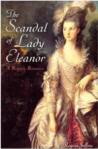
The Future Earl of Linworth: James Kerrington, a key member of the British government’s secret unit, the Realm, never expected to find love again after the loss of his beloved wife. But a visit to his close friends, the Fowlers, leads to a chance meeting with Lady Eleanor Fowler. Instantly, Kerrington whole world tilts on its axis.The Debauchery of Lord Thornhill: For years, Lady Eleanor hid from Society, knowing her father’s notorious reputation for wickedness tainted her chance for romantic fulfillment. Now, with Kerrington’s advances and her father’s recent death, she is at last hopeful that her family’s dark past is behind her. But when Sir Louis Levering appears with final proof of her father’s depravity, Eleanor is drawn into a web of immorality and blackmail.

Return of the Realm: To free Eleanor from Levering’s diabolical clutches, Kerrington brings together his former Realm comrades. Before they can save her, they must confront their own secret pasts and tangle with Shaheed Mir, a longtime nemesis who is exacting revenge against members of the Realm for stealing a mysterious emerald from his homeland.
A Touch of Velvet (Book 2 of the Realm Series)

After years away, members of the Realm return home to claim the titles and the lives they abandoned, each holding on to the fleeting dream of finally knowing love. For now, all any of them can hope is the resolution of their previous difficulties before Shaheed Mir, their old enemy, finds them and exacts his revenge. Mir seeks a mysterious emerald, and he believes one of the Realm has it.

No one finds his soul mate when she is twelve and he seventeen, but Brantley Fowler, the Duke of Thornhill, always thought he had found his. The memory of Velvet Aldridge’s face was the only thing that had kept him alive all those years he remained estranged from his family. Now, he has returned to Kent to claim his title and the woman he loves, but first he must obliterate the memory of his infamous father from the books, while staving off numerous attacks from Mir’s associates.

Velvet Aldridge always believed in “happily ever after.” Yet, when Brantley Fowler returns home, he has a daughter and his wife’s memory to accompany him. He promised her eight years prior that he would return to make her his wife, but the new Duke of Thornhill only offers her a Season and a dowry. How can she make him love her? Make him her “knight in shining armor”? Regency England has never been hotter or more dangerous.

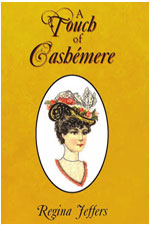
A Touch of Cashémere (Book 3 of the Realm Series)

Marcus Wellston never expected to inherit his father’s title. After all, he is the youngest of three sons. However, his oldest brother Trevor has a developmental problem, and his second brother has lost his life in an accident, so Marcus has returned to Tweed Hall and the earldom. He had left Northumberland years prior to escape the guilt in his sister’s death. He could not save Maggie, and Wellston has spent years in atonement with the Realm, a covert governmental group. Now, all he wants is a biddable wife with a pleasant personality. Neither of those describes Cashémere Aldridge.

Cashémere Aldridge thought her opinions were absolutes and her world perfectly ordered, but when her eldest sister Velvet is kidnapped, Cashé becomes a part of the intrigue. She quickly discovers nothing she knew before is sacred. Leading her through these changes is a man who considers her a “spoiled child” – a man of whose approval she desperately needs. Mix in an irate Baloch warlord, who seeks a missing emerald, and the Realm has its hands full.
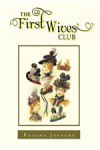
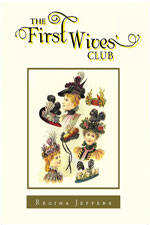
The First Wives’ Club (Book 1 in First Wives’ Trilogy)

Nathaniel Epperly, the Earl of Eggleston, has married the woman his father chose, but the marriage has been everything but comfortable. Nathaniel’s wife, Lady Charlotte, came to the marriage bed with experience. She provides Eggleston his heir, but within a fortnight, she deserts father and son for Baron Remington Craddock. In the eyes of the ton, Lady Charlotte has cuckolded Epperly.

Rosellen Warren longs for love and adventure. Unfortunately, she’s likely to find neither; she’s a true diamond in the rough. Yet, when she meets Epperly’s grandmother, the Countess Henrietta creates a “story” for the girl, claiming if Rosellen is presented to the ton as a war widow with a small dowry, that the girl will find a suitable match.

Baron Remington Craddock remains a thorn in Eggleston’s side, but when Craddock makes Mrs. Warren a pawn in his crazy game of control, Eggleston offers the lady his protection. However, Nathaniel has never before faced a man who holds no strength of title, but who still wields great power, and he finds himself always a step behind the enigmatic baron. When someone frames Nathaniel for Lady Charlotte’s murder, Eggleston must quickly learn the baron’s secrets or face a death sentence.

To read excerpts from each of my books or to place an order, please visit www.rjeffers.com

Posted in Uncategorized | Tagged , , , | 6 Comments

Tom Stoppard’s Screenplay of Tolstoy “Anna Karenina” Called “Right On”

I am so looking forward to this movie. It has many of my film favorites: Keira Knightley; Matthew Macfadyen; Olivia Williams; Ruth Wilson; Thomas Howes. Plus, I love Tom Stoppard’s take on the Russian history. His “Coast of Utopia” trilogy was brilliant. (It starred Jennifer Ehle (the 1995 Elizabeth Bennet), who won a Tony Award.) I am pleased to find more information on the film available. Below find an article from The Daily Mail. There’s a link to read the complete story.

Stunning as always: Keira Knightley turns in a great performance as Anna Karenina

By BAZ BAMIGBOYE

Last updated at 7:49 AM on 27th January 2012

Keira Knightley, as Anna Karenina, emerges from the mist, her gaze focussed on her husband — and her lover — played by Jude Law and Aaron Johnson, respectively.

The actress is wearing an embroidered coat that sweeps the floor, a hat trimmed in fox fur — and £1 million worth of Chanel gems, dangling from her ears.

The costume designer, Jacqueline Durran, has at the request of director Joe Wright, created a hybrid look for Keira, in which 1870s style meets fitted Fifties couture, and the result is stunning.

Big screen starlet: Keira Knightley Big screen starlet: Keira Knightley

Anna Karenina is Tolstoy’s giant meditation on the aspects of love, and Keira, now 26, is clearly up to the task of playing one of the greatest heroines in literature.

I’ve been following Keira’s career for years, but as I stood looking at her on the set of Anna Karenina, something had changed. The film’s hair and make-up designer Ivana Primorac articulated my thoughts. ‘Keira looks like a proper woman,’ she says. Director Joe Wright, who is filming the train station scene at Shepperton studios, tells me: ‘There’s fire in Keira’s belly.”

Triple threat: The new adaptation has a screenplay written by Shakespeare in Love writer Tom Stoppard and is directed by Atonement's Joe Wright Triple threat: The new adaptation has a screenplay written by Shakespeare in Love writer Tom Stoppard and is directed by Atonement’s Joe Wright. He’s directing her for the third time, having worked with her on Pride and Prejudice and Atonement. And he agrees that Keira has grown up. ‘She’s her own woman — she’s got so much fight in her at the moment,’ he says, as he watches her being framed by Seamus McGarvey, the director of photography, and camera operator Peter Robertson.

He tells me that Keira’s taken a lot of stick in England, in the years since they last worked together. ‘A lot of young actors would have gone “Up yours!’ and gone off to Hollywood. But she braved it out, and it has made her stronger — and fiercer,’ Wright adds, with a slightly nervous laugh. The director believes Keira is more than ready to play Anna — but not a 20th-century feminist version of Anna, ‘following her heart.’

‘As far as Tolstoy was concerned, he was writing a book about a woman who was a sinner — a fallen woman,’ Wright says. ‘He wasn’t writing about her as a heroine. He started off writing this book about a good husband and a bad wife. But then, as he  wrote, he fell in love with Anna.’

Wright’s basing his version of Tolstoy’s great novel on a powerful screenplay by Tom Stoppard, in which the playwright gives equal weight to the parallel stories of Anna’s cuckolding of her husband Karenin (Law), and her passionate affair with Count Vronsky (Johnson), and also the romance between Levin (Domhnall Gleeson) and Kitty (Alicia Vikander). Stoppard’s view is that most previous versions made the mistake of favouring Anna’s story over Levin’s. ‘Tom turned in one draft and it was all there,’ marvels producer Paul Webster.

Tim Bevan of Working Title, who is making the film for Focus Films and Universal, told me it’s the first time Wright has worked with a great screenplay. ‘Joe’s had good scripts, but this is a great one,’ says Bevan, a man not known for idle overstatement.

Wright and his long-time design collaborator Sarah Greenwood checked out locations in St. Petersburg, and stately homes in the UK (particularly in Yorkshire) which could double as Russian homes.

But the more Wright studied Russian cultural history, the more he realised he didn’t want to shoot a conventional costume drama. The eureka moment came as he pored over Orlando Figes’s study of Russian cultural history, Natasha’s Dance, which suggested the aristocrats of St. Petersburg in the 1870s were more western European in their behaviour than Russian. ‘The aristocrats spoke Italian, English and French — and Russian only to the serfs. There was a sense that they were always playing parts,’ producer Webster explained.

So Wright hit on the idea of doing an expressionistic version of Anna Karenina, emphasising that theatricality. Greenwood designed a theatre on a soundstage at Shepperton, from which the action would flow. You go through a door and there’s a train station; go through another and there’s a snowy street, or a forest of silver birch. While most of the filming was done on lavish sets, there were real life locations, too; and some shooting is being done in Russia, for the more naturalistic scenes involving Levin and Kitty. Ornate tableaux peopled with extras of Russian heritage, all choreographed to move in a certain way.

And the cast is as rich as Greenwood’s sets. Ruth Wilson (“Jane Eyre”) plays Princess Betsy; Olivia Williams(“Miss Austen Regrets”) is Countess Vronsky; Emily Watson plays Countess Lydia; Kelly Macdonald is Dolly; and Matthew Macfadyen (“Pride and Prejudice” and “The Three Musketeers”), Oblonsky.

Downton Abbey’s Michelle Dockery has been cast as Princess Myagkaya, while her former co-star Thomas Howes (William, the ill-fated footman) plays Yashvin.

Read more: http://www.dailymail.co.uk/tvshowbiz/article-2092451/Keira-Knightley-turns-great-performance-Anna-Karenina.html#ixzz1kyaRyaEw

Posted in Uncategorized | 4 Comments

Could Barnes & Noble Go the Way of Borders?

The book store’s last stand

By JULIE BOSMAN, The New York Times
Published: Sunday, January 29, 2012 at 9:46 a.m.
Last Modified: Sunday, January 29, 2012 at 9:46 a.m.

Page 2 of 7

No one expects Barnes & Noble to disappear overnight. The worry is that it might slowly wither as more readers embrace e-books. What if all those store shelves vanished, and Barnes & Noble became little more than a cafe and a digital connection point? Such fears came to the fore in early January, when the company projected that it would lose even more money this year than Wall Street had expected. Its share price promptly tumbled 17 percent that day.

Lurking behind all of this is Amazon.com, the dominant force in books online and the company that sets teeth on edge in publishing. From their perches in Midtown Manhattan, many publishing executives, editors and publicists view Amazon as the enemy — an adversary that, if unchecked, could threaten their industry and their livelihoods.

Like many struggling businesses, book publishers are cutting costs and trimming work forces. Yes, electronic books are booming, sometimes profitably, but not many publishers want e-books to dominate print books. Amazon’s chief executive, Jeffrey P. Bezos, wants to cut out the middleman — that is, traditional publishers — by publishing e-books directly.

Which is why Barnes & Noble, once viewed as the brutal capitalist of the book trade, now seems so crucial to that industry’s future. Sure, you can buy bestsellers at Walmart and potboilers at the supermarket. But in many locales, Barnes & Noble is the only retailer offering a wide selection of books. If something were to happen to Barnes & Noble, if it were merely to scale back its ambitions, Amazon could become even more powerful and — well, the very thought makes publishers queasy.

“It would be like ‘The Road,’ ” one publishing executive in New York said, half-jokingly, referring to the Cormac McCarthy novel. “The post-apocalyptic world of publishing, with publishers pushing shopping carts down Broadway.”

To read the complete article (and it is well worth the time), go to http://www.heraldtribune.com/article/20120129/ARTICLE/120129451?p=1&tc=pg

Posted in Uncategorized | 4 Comments