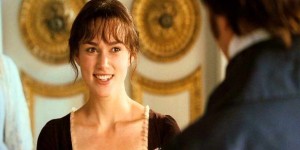
Locations for Pride & Prejudice 2005 – Majestic Houses

For this movie discussion, I decided to visit some of my favorite places in the UK for filming. The places below were all used in Pride and Prejudice 2005. I have also included some of the history. If you know additional facts, please chime in. Most of these facts came from http://www.infobritain.co.uk.

Groombridge Place and Enchanted Forest, Kent (Longbourn)
In 1662 by architect Philip Packer, with the help of his friend, Christopher Wren, the seventeenth century’s premier architect, built Groombridge Place. Packer’s house was built on the site of a series of former manor houses owned by wealthy nobles, including Richard Waller, who famously kept Charles Duke of Orleans at Groombridge after capturing him at the Battle of Agincourt. Completing his new house in 1662 Packer then started thinking about his garden. Beginning in 1674, Packer began designing the gardens surrounding Groombridge House He was assisted by John Evelyn, a horticulturist and famous diarist. Evelyn was a multi-talented man who showed an unusually modern concern with the problems of urban living, and a reverence for gardens as an escape from them. Evelyn conceived a series of formal gardens arranged as “outside rooms” of the house. Although Evelyn was generally formal in his gardening ideas, the sense of blurring the boundary between indoors and outdoors was actually a theme that would emerge once again in the 20th Century. Some of Evelyn’s garden rooms at Groombridge also preempted modern design in creating an artfully “natural” landscape. The Secret Garden is the best example. It is suggested that this was Packer’s favourite garden. He is supposed to have died here in 1686 while reading a book.

Basildon Park, Berkshire (Netherfield Park)
Building of Basildon Park began in 1776 under Francis Sykes’ tutelage. A farmer’s son, who joined the British East India Company to make his fortune to support his political career, Sykes became governor of Kazimbazar. Returning to England in 1771 a rich man, Sykes bought the Basildon estate. Although facing financial difficulties, he managed to win a baronetcy and to become an MP. Sykes struggled on with the building of his grand house, in a palladian style, which was already going out of fashion. When Sykes died in London in 1804, Basildon Park remained unfinished. Sykes’ son inherited the property, but he too died within a few weeks, and the new owner, Sykes’ grandson, Francis Sykes the third baronet, was only five years old. With little money, ownership somehow remained with the boy, who at age 14 started entertaining Prince George at the house. Prince George was famously dissolute, and Sykes’ association with him only drained the family fortune further. With the family in a state of financial turmoil, Basildon Park was offered for sale. Just for good measure, personal turmoil was also thrown into the mix, when Sykes’ wife Henrietta started having an affair with future Prime Minister Benjamin Disraeli. Henrietta also had an affair with the painter Daniel Maclise. When her husband denounced Maclise he broke the unwritten rule that such goings on in high society should be kept discreet. As a result, Charles Dickens, a friend of Maclise, decided to use the name Bill Sykes for a villainous character in a new book he was writing. Oliver Twist, complete with Bill Sykes, was published in 1838, and Francis Sykes was humiliated. He finally sold Basildon Park that year.

Burghley, Lincolnshire (Rosings Park)
Burghley is perhaps the grandest of all England’s sixteenth century Elizabethan houses, capturing the drama and other-worldly spirit of that time. Lord Burghley, William Cecil, Treasurer to Elizabeth I, and her most influential advisor, directed its structure. His grand house is like others of the period, Longleat or Wollaton Hall for example, except Burghley just had more of everything. In fact it may claim to be the definitive grand house of late Tudor England. Burghley, like most great properties, housed lavish collections of art and valuable objects. The Heaven Room became Lady Catherine’s drawing room in the 2005 film. The fifth Earl, Lord Exeter, commissioned the Italian artist Verrio to paint the murals on the wall and ceiling. There is a Hell Staircase leading to this room. Owned by a family trust, Lady Victoria Leatham, daughter of the Marquis of Exeter, the medal-winning Olympic runner portrayed in Chariots of Fire, manages the estate. (As footnote,s the late Ian Charleson, who played Exeter in the film, has a RSC Award named after him. Matthew Macfadyen previously was nominated for the award. Also, Lady Victoria appears regularly on Antiques Roadshow.) Burghley has been used as a location for a number of films including Pride and PrejudiceElizabeth, the Golden Age, and The DaVinci Code.

Chatsworth, Derbyshire
Chatsworth is home to the Duke and Duchess of Devonshire. Since Chatsworth was first built in the early sixteenth century, it has been closely involved with religious disputes that have shaped Britain into modern times. Elizabeth Hardwick, and her husband Sir William Cavendish, treasurer to Henry VIII, built Chatsworth. When the king decided to marry Anne Boleyn, he needed to escape the influence of the pope who refused to grant Henry a divorce from his first wife Catherine of Aragon. In the upheaval of the Reformation that followed, huge amounts of money were taken from dissolved Catholic monasteries. From 1532 onwards a significant amount of this appropriated money went to Sir William Cavendish. He was made First Earl of Devonshire, and Chatsworth benefited from William’s newfound wealth. The Earls of Devonshire remained Protestant champions thereafter. Protestant Elizabeth I held the Catholic Mary Queen of Scots prisoner at Chatsworth on a number of occasions between 1569 and 1584.

Wilton House, Wiltshire (Mr. Darcy’s music room at Pemberley, where Elizabeth first meets Georgiana)
Wilton has been linked to royalty since early Anglo Saxon times. A nunnery was founded here, which figures quite frequently in Anglo Saxon royal history. The twelfth century saw the nunnery at Wilton being replaced by a Benedictine abbey, which was disbanded during Henry VIII’s Dissolution of the Monasteries. In 1542 Henry VIII granted the abbey and its lands to William Herbert, whose descendents, the Earls of Pembroke, still own Wilton. A year after acquiring his new property William Herbert began creating a Tudor house, incorporating parts of the old abbey. This house was famous during Tudor times as the residence of Mary Sidney, sister of Elizabethan poet Sir Philip Sidney. In the 1630s the 4th Earl of Pembroke commissioned Inigo Jones to re-model Wilton House in a Palladian style. The Double Cube Room used in the film is an example of the style. Many films have used Wilton House as a location including The Young VictoriaPride and PrejudiceSense and SensibilityThe Madness of King GeorgeMrs Brown, and The Bounty.

Haddon Hall, Derbyshire (the inn at Lambton)
Originally built as a fortified manor house in the eleventh century, Haddon Hall belonged to the Vernon family, and then passed by marriage to the powerful Manners family. In 1703 John Manners, 9th Earl of Rutland left Haddon Hall, and went to live at the Manners family seat at Belvoir Castle in Leicestershire. A long period of neglect followed for Haddon Hall. For over two hundred years it lay in a kind of suspended animation in an almost unaltered sixteenth century condition. A lesser house would have fallen down, but this was a strong stone built, fortified manor house. The empty house endured through the centuries until the 1920s when the 9th Duke of Rutland visited his long forgotten family property and realised how important it was. With the help of a restoration expert named Harold Brakspear the building was restored, not as a building representing a single time period, but more as a building that had accreted layers like sedimentary rock over long periods of time. There are small sections that date to the eleventh century, but there are also parts of the building which date to rebuilding between the thirteenth and early seventeenth centuries.
With Haddon Hall illustrating a long period in history it is fitting that the house is often used as a film location for historical film and drama. Haddon Hall has been used for The Princess Bride(1986), Jane Eyre (1996), Elizabeth (1998), and Pride and Prejudice (2005).

Stourhead, Wiltshire (location of The Temple of Apollo used for the first proposal scene)
Henry Hoare, whose father, Sir Richard Hoare had made his fortune in banking, built Stourhead between 1717 and 1725. Stourhead and the banking fortune, which created it, date from a financial revolution that accompanied the Glorious Revolution of 1688. After 1688, British monarchs were obliged to work within the constitution set out by Parliament. Now debt run up by the country became the “national debt.” Debt became increasingly accepted, and this new attitude was one of the reasons Britain became such a powerful country in the 18th century. The gardens at Stourhead illustrate the worldwide power that Britain began to enjoy following the financial revolution. It became increasingly fashionable to have exotic foreign plants in gardens, brought back from countries under British influence. The estate is huge, and includes King Alfred’s Tower, a folly of monumental proportions. This fifty meter high building lies at the end of a long coach track leading away from the house. It commemorates King Alfred’s victory over the Danes in 878 A.D. Stourhead remained with the Hoare family until 1946. Henry Hoare, the Sixth Baronet lost his only son during World War One, and a year before his own death in 1947, he gave Stourhead to the National Trust.

Posted in Uncategorized | Tagged , , , , , , | 4 Comments

“X” Doesn’t Mark the Spot – Or Why Jane Austen Does Not Use Words Beginning With “X”

Recently, I spent a delightful morning counting words in Pride and Prejudice. Why? You may ask: Regina, do you not have enough to do with your retirement years than to sit around counting how many times Jane Austen used the word “sex” in this novel? (That would be seven times, by the way.) The truth is I am a bit OCD about some things. (Okay, I’m a lot OCD at times, but not as afflicted as my friend Brooke who turns all the paperclips in the holder on her desk in the same direction. Yet, that is another story.) Counting and numbers actually are distracting. It exercises the other side of my brain, and on that particular day, I had hit a wall with my latest novel (entitled The Disappearance of Georgiana Darcy). I had three possible scenarios for endings, and I could not make up my mind, which one would play out the best. Of course, choosing the ending affected the events I would choose early on in the storyline. My writing was at a stand still. I had already counted the comments on Austen Authors. (Yes, that is one of my glorious duties as the person who runs the contests on that site.) Therefore, I turned my attention to the post I had yet to write for my own blog.

Looking back at my three part series of “Do You Speak Jane Austen?” on https://reginajeffers.wordpress.com, I needed to find a word or two in Austen’s writings that began with the letter “X.” I was soon to find out that “X” as the beginning letter was quite elusive. I scanned Pride and PrejudiceSense and Sensibility, and Mansfield Park. No “X” words were to be found. However, that doesn’t mean that our Jane never used the letter. On the contrary, 158 different words containing the letter “X” are used within Pride and Prejudice alone.

The most commonly used word containing “x” was “next,” and I shall take great pleasure in telling my editor, who seems to frown on the word, that Jane Austen used “next” one and seventy times in Pride and Prejudice. Other “X” words that our Jane used repeatedly were “expected” (43); “expect” (35); “exactly” (30); “exceedingly” (27); “expressed” (25); “anxious” (25); “express” (to mean both “to state” and “the mail”) (24); “expression” (22); “fixed” (22); “except” (22); and “excellent” (20).

 Jane was also quite fond of “expectation” (19); “anxiety” (18); “extraordinary” (17); “excuse” (used both as a noun and a verb) (16); “extremely” (14); “excessively” (11); “expressions” (11); “vexation” (10); and “excited” (10). Of course, there are the variations of each of these words:
“vexing” (1); “vex” (1); “vexed” (8); “vexatious” (2): “vexations” (1); “exceeding” (1); “exceeded” (2); “exceed” (2); “expectations” (7); “expecting” (8); “expects” (1); “expecting” (1); “excepting” (4); “fixing” (2); “fix” (3); “inexpressibly” (1); “expressing” (3); “inexpressible” (1); “expressly” (1); “expressed” (1); “expressively” (1); “anxiously” (1); “excessive” (4); “excess” (2); “excellency” (1) “unexpected” (8); “unexpectedly” (3); “excuses” (2); and “extreme” (4).

However, some of my favorite finds had nothing to do with Austen’s repeating of these common words. Instead, I enjoyed finding “Oxford” (1), “annexed” (1), “exigence” (1), “bandbox” (1), “beaux” (1), “proxy” (1), “expostulation” (1), “exercise” (6), “exertion” (9), and “foxhounds” (1). Another thing I noted (minus the deep scientific study I should have executed) is that Austen seems to use the number “six” quite often in her writing. In Pride and Prejudice, she used “six” ten times, “sixth” once, and “sixteen” seven times. I laughingly told myself it was because our dear Jane had to handwrite her stories (which you might recall is an act in my writing process) and “six” is much shorter to write than say “seven” or “eight.” That reasoning died away when I thought of the words “one,” “two,” and “ten.” Perhaps, “six” was Austen’s lucky number. After all, in Mandarin, “six” is good for business and can mean happiness. Did our Jane anticipate her literary success by using the number “six” often? Yes, it is used multiple times in Sense and Sensibility also. Or, mayhap, I am simply looking for a good story behind all this counting. My mathematical brain is now assuaged. (Did I ever tell you that I began college as a math major? Eventually, I switched to language arts, and the rest is history.) Hopefully, some of you are also both right and left brained and can understand my need to be whole brained in my daily life. If not, you will continue to see me as quite eccentric. [By the way, if one is looking for more delicious Jane Austen words, check out the Jane Austen Thesaurus (http://writelikeausten.com/).]

Posted in Uncategorized | Tagged | Comments Off on “X” Doesn’t Mark the Spot – Or Why Jane Austen Does Not Use Words Beginning With “X”

The Absentee King – Richard, the Lionheart

Richard I (8 September 1157 – 6 April 1199) was King of England from 6 July 1189 until his death. He also ruled as Duke of Normandy, Duke of Aquitaine, Duke of Gascony, Lord of Cyprus, Count of Anjou, Count of Maine, Count of Nantes, and Overlord of Brittany at various times during the same period. He was known as Cœur de Lion, or Richard the Lionheart, even before his accession, because of his reputation as a great military leader and warrior. The Saracens called him Melek-Ric or Malek al-Inkitar – King of England.

Plantagents

By the age of sixteen, Richard was commanding his own army, putting down rebellions in Poitou against his father, King Henry II. Richard was a central Christian commander during the Third Crusade, effectively leading the campaign after the departure of Philip II of France and scoring considerable victories against his Muslim counterpart, Saladin, but was unable to reconquer Jerusalem.

He was seen as a pious hero by his subjects. He remains one of the very few Kings of England remembered by his epithet, rather than regnal number, and is an enduring, iconic figure in England and France. Richard was tall and muscular and athletically built. He was also a well-educated man. A third son, Richard became King of England upon the death of his father in 1189. During Richard’s absence, William Longchamp served as Chancellor of England. However, in 1191, Longchamp falls from power, and Richard’s brother John assumed the throne. During his ten-year reign, Richard spent but seven months in England.

Richard I was officially crowned duke on 20 July 1189 and king in Westminster Abbey on 3 September 1189. When he was crowned, Richard barred all Jews and women from the ceremony, but some Jewish leaders arrived to present gifts for the new king. According to Ralph of Diceto, Richard’s courtiers stripped and flogged the Jews, then flung them out of court.

When a rumour spread that Richard had ordered all Jews to be killed, the people of London began a massacre. Many Jews were beaten to death, robbed, and burned alive. Many Jewish homes were burned down, and several Jews were forcibly baptised. Some sought sanctuary in the Tower of London, and others managed to escape. Among those killed was Jacob of Orléans, a respected Jewish scholar. Roger of Hoveden, in his Gesta Regis Ricardi, claimed that the rioting was started by the jealous and bigoted citizens, and that Richard punished the perpetrators, allowing a forcibly converted Jew to return to his native religion. Baldwin of Forde, Archbishop of Canterbury reacted by remarking, “If the King is not God’s man, he had better be the devil’s.”

Realising that the assaults could destabilise his realm on the eve of his departure on crusade, Richard ordered the execution of those responsible for the most egregious murders and persecutions, including rioters who had accidentally burned down Christian homes. He distributed a royal writ demanding that the Jews be left alone. The edict was loosely enforced, however, and the following March there was further violence including a massacre at York.

In 1191, Richard defeated Saladin at Arsouf, near Jaffa. He forced Saladin into an agreement that would guarantee Christians safe pilgrimages to Jerusalem. However, upon his return to England, Richard was taken prisoner by Henry VI, Emperor of Germany. Henry demanded a ransom of 100,000 marks from England for Richard’s safe return. 

Richard’s ship had wrecked near Aquileia and was captured by Leopold V, Duke of Austria. On 28 March 1193, Richard was brought to Speyer and handed over to Henry VI, who was aggrieved both by the support which the Plantagenets had given to the family of Henry the Lion, and also by Richard’s recognition of Tancred in Sicily, and who imprisoned him in Trifels Castle. Henry VI, needing money to raise an army and assert his rights over southern Italy, continued to hold Richard for ransom. In response Pope Celestine III excommunicated Henry VI, as he had Duke Leopold, for the continued wrongful imprisonment of Richard.

Richard famously refused to show deference to the emperor and declared to him, “I am born of a rank which recognises no superior but God.” Despite his complaints, the conditions of his captivity were not severe.

The emperor demanded that 150,000 marks (65,000 pounds of silver) be delivered to him before he would release the king, the same amount raised by the Saladin tithe only a few years earlier, and 2–3 times the annual income for the English Crown under Richard.  Richard’s mother, Eleanor of Aquitaine, worked to raise the ransom. Both clergy and laymen were taxed for a quarter of the value of their property, the gold and silver treasures of the churches were confiscated, and money was raised from the scutage and the carucage taxes. At the same time, John, Richard’s brother, and King Philip of France offered 80,000 marks for the Emperor to hold Richard prisoner until Michaelmas in 1194. The emperor turned down the offer. The money to rescue the King was transferred to Germany by the emperor’s ambassadors, but “at the king’s peril” (had it been lost along the way, Richard would have been held responsible), and finally, on 4 February 1194 Richard was released. Philip sent a message to John: “Look to yourself; the devil is loose.”

In March 1199, Richard was in the Limousin suppressing a revolt by Viscount Aimar V of Limoges. Although it was Lent, he “devastated the Viscount’s land with fire and sword.” He besieged the virtually unarmed castle of Chalus-Chabrol.

Tomb containing the heart of King Richard at Rouen Cathedral

In the early evening of 25 March 1199, Richard was walking around the castle perimeter without his chainmail, investigating the progress of sappers on the castle walls. Missiles were occasionally shot from the castle walls, but these were given little attention. One defender in particular amused the king greatly—a man standing on the walls, crossbow in one hand, the other clutching a frying pan which he had been using all day as a shield to beat off missiles. He deliberately aimed at the king, which the king applauded; however, another crossbowman then struck the king in the left shoulder near the neck. He tried to pull this out in the privacy of his tent but failed; a surgeon, called a ‘butcher’ by Hoveden, removed it, ‘carelessly mangling’ the King’s arm in the process. The wound swiftly became gangrenous. Accordingly, Richard asked to have the crossbowman brought before him; called alternatively Pierre (or Peter) Basile, John Sabroz, Dudo, and Bertrand de Gurdon (from the town of Gourdon) by chroniclers, the man turned out (according to some sources, but not all) to be a boy. This boy claimed that Richard had killed the boy’s father and two brothers, and that he had killed Richard in revenge. The boy expected to be executed; Richard, as a last act of mercy, forgave the boy of his crime, saying, “Live on, and by my bounty behold the light of day,” before ordering the boy to be freed and sent away with 100 shillings. Richard then set his affairs in order, bequeathing all his territory to his brother John and his jewels to his nephew Otto.

King John

Richard died on 6 April 1199 in the arms of his mother; it was later said that “As the day was closing, he ended his earthly day.” Due to the nature of Richard’s death, he was later referred to as ‘the Lion (that) by the Ant was slain’. According to one chronicler, Richard’s last act of chivalry proved fruitless; in an orgy of medieval brutality, the infamous mercenary captain Mercadier had the crossbowman flayed alive and hanged as soon as Richard died.

Richard’s heart was buried at Rouen in Normandy, the entrails in Chalus (where he died) and the rest of his body was buried at the feet of his father at Fontevraud Abbey in Anjou.

A 13th-century Bishop of Rochester wrote that Richard spent 33 years in purgatory as expiation for his sins, eventually ascending to Heaven in March 1232.

Posted in Uncategorized | Tagged , , , , , , , | 2 Comments

How To Avoid Writing Disasters

7 THINGS THAT WILL DOOM YOUR NOVEL (& HOW TO AVOID THEM)

There are a lot of ways not to do something.

Like the new boat owner a few years ago who was filling up his pleasure craft with fuel for that first time out. Only he mistook the tube meant to hold fishing poles for the gas tank. After completing his work he started up the engine.

The gas fumes ignited and blew the boat owner into the sky. He came down in the drink and was rescued, but the boat was a goner.

You can be just as creative in finding ways not to write your novel. With a little thought and not much effort, you can easily devise methods to prevent yourself from actually finishing a book—or finishing a book that has a chance to sell.

So if not finishing or not selling are your goals, I’m here to help you with the following seven tips:

1. Wait for inspiration.

2. Look over your shoulder.

3. Ignore the craft.

4. Keep a chip on your shoulder.

5. Write for the market only.

6. Take as many shortcuts as possible.

7. Quit

For the complete article, visit Writers Digest at http://www.writersdigest.com/whats-new/7-things-that-will-doom-your-novel-how-to-avoid-them?et_mid=560336&rid=232481818

Posted in Uncategorized | Comments Off on How To Avoid Writing Disasters

The Future of Book Cover Design

Ereaders are literally changing the way we read. But for all the efficiency and portability they offer, they lack the curious romance of reading a book in its hard, physical form — not least the charms that lie on the cover.

These days, Kindles start up on the first chapter of a book, so it’s increasingly easy to only ever see the cover a handful of times as a small thumbnail image. But while many wallow in the fact such a shift is disastrous but inevitable, the likes of Craig Mod — formerly of Flipboard — are embracing the change. In fact, he’s written a wonderful essay about the problem, and possible solutions, over on his blog. As a taster:

“The cover as we know it really is — gasp — ‘dead.’ But it’s dead because the way we touch digital books is different than the way we touch physical books. And once you acknowledge that, useful corollaries emerge…

“And so we don’t want the cover to disappear. And yet the cover as we have known it is disappearing, rather quickly (nearly eradicated on hardware Kindles). This doesn’t mean it won’t be replaced. Whatever it’s replaced with, however, will not serve the same purpose as the covers with which we’ve grown up…”

For the complete article, visit Gizmodo UK at http://www.gizmodo.co.uk/2012/05/the-future-of-book-cover-design-in-the-digital-age/

Posted in Uncategorized | Comments Off on The Future of Book Cover Design

For $78 Million You Can Buy Dracula’s Castle

‘Dracula Castle’ put up for sale
Bran Castle in Transylvania

The castle is one of Romania’s top tourist attractions

The descendants of the Habsburg monarchy have confirmed they want to sell a Transylvanian castle mythically linked to the fictional Count Dracula.The family were turfed out of Romania’s 14th-Century Bran Castle by the communists after World War II.

It was returned to them in 2006 after a long legal battle.

But now Dominic Habsburg, a New York architect and son of the late Romanian Princess Ileana, says he is willing to sell it back for $78m (£40m).

The local council has said it is willing to buy the castle, one of the country’s top tourist attractions.

It wants to prevent the castle being turned into a hotel or theme park, and is in the process of investigating a bank loan.

However, Romania’s culture minister said the local authorities would be “stupid” to pay such a hefty price.

For the complete article, visit http://news.bbc.co.uk/2/hi/europe/6248537.stm

Posted in Uncategorized | Comments Off on For $78 Million You Can Buy Dracula’s Castle

Interview from Humphrey’s Tattletales with Austen Author, Regina Jeffers

Q: If you could spend an hour talking to anyone from any time in history, who would it be? And Why?

A: When I was younger, I had a fascination with George Custer. Besides the Regency Period, I read extensively about the American Civil War, when Custer’s military career began. I tried to discover every little detail about the man who died at the Battle of Little Bighorn. For example, did you know that a year after that fateful battle that Custer’s remains were dug up and reburied at West Point? Were you aware that Custer used a cinnamon scented tonic on his long golden locks? Did you realize that Custer wrote a book, published in 1874, entitled My Life on the Plains or Personal Experiences with the Indians? How about the fact that Walt Whitman, on hearing the news of Custer’s death, wrote the poem “From Far Dakota’s Canyons”? Among his men, Custer developed a reputation for flamboyant behavior. He led his troops into battle wearing a black velvet jacket trimmed with gold lace, a crimson necktie, and a white hat. He claimed that he adopted this outfit so that his men “would recognize him on any part of the field.”

Custer’s defeat at the Little Bighorn made the life of an obscure 19th century military figure into the subject of legends with countless songs, books, and paintings. Custer’s critics say his blunders caused his death and the death of his men. His supporters say he was only following standard military tactics of his time.

Paintings and writings about “the Custer massacre” depict Custer as a gallant victim, surrounded by bloodthirsty savages. The fact that Custer started the battle by attacking the Indian village is often omitted.

It is said that the “Indians” did not scalp or mutilate Custer’s body out of respect for his fighting ability, but few participating Indians knew who he was. To this day no one knows the real reason the Amerinds left Custer’s body intact.

Q: What’s the craziest, bravest, or stupidest thing you’ve ever done? 

A: I have discussed this previously. At one time, I worked as a volunteer EMT for a local fire department. In November 1970, I was a senior at Marshall University in Huntington, West Virginia. On November 14, after a loss to East Carolina University, Southern Airways Flight 932 went into the side of the hill on its approach to Tri-State Airport. No one survived. I was among those who retrieved bodies of football players, town leaders, university boosters, coaches, etc. It is a moment forever etched on my memory. The event was the focus of the 2006, Matthew McConaughy, Matthew Fox, and Anthony Mackie film “We Are Marshall.”

Q: What was your favorite chapter (or part) of “The Disappearance of Georgiana Darcy” to write and why?

A: I love to write confrontations. I am not certain what that says about me. Perhaps, it is all the years that I spent in martial arts. I have always seen the forms (simulated fights) used to train the students in Tae Kwon Do as “dance.” Therefore, if one looks closely at any of my books, it’s the “fight scene” that takes more than one chapter. In “The Disappearance of Georgiana Darcy,” Major General Fitzwilliam (the former Colonel Fitzwilliam) and Darcy race across the Scottish moors to rescue a woman they believe to be the missing Georgiana; yet, before they have the opportunity to find their missing loved one, they must fight their way through the prison cells below Normanna Hall. Those pages are wrought with tension.

Q: List three of your favorite movies.

A: I would sit up late into the night to watch “Seven Brides for Seven Brothers,” “Von Ryan’s Express,” and “The Quiet Man.” I love period pieces also. I know you only asked for three, but I would be remiss if I did not mention: “North and South,” “Pride and Prejudice,” “The Young Victoria,” “Little Dorrit,” “The Way We Live Now,” “Jane Eyre,” “Persuasion,” “Bright Star,” “Lord Byron,” “The Tudors,” “Cranford,” etc., etc., etc.

Q: Name an actor or book character you have a crush on.

A: Actually, that is one and the same. I am a Matthew Macfadyen fan, and he is my Mr. Darcy. Several years ago, I was fortunate to meet Colin Firth, and I absolutely adore him. I am one of those fans who trot off to see every film in which Firth performs. However, in 1998, I came across a made for TV version of “Wuthering Heights” that was appropriate for my English classroom to view. In the part of Hareton, there was Macfadyen. He smiled in one scene, and my interest was engaged. After that, I followed his career in film and television. When he portrayed Fitzwilliam Darcy, it was simply icing on the cake.

Please note that prior to Macfadyen, I have held an interest in Errol Flynn, Clark Gable, James Garner, Howard Keel, Peter Lawford, and Jeffrey Hunter.

Q: Is there a book you know that you will never read? Or one you tried to read but just could not finish?

A: There are only a few books that I have not finished, and, truthfully, at the moment, I cannot think of any of them. (Out of sight…out of mind.) Sometimes, it takes several attempts to read certain pieces. One title that I never enjoyed teaching was Charles Dickens’ Great Expectations. It is awful to say, but when I was pregnant with my son, I purposely left Great Expectations for my substitute to teach while I was on pregnancy leave.

Q: Do you work from an outline or just write?

A: I have an “umbrella” list of events that should happen within the story, which serves as my outline. However, I am very much a pantser. I write my books out in long hand in several spiral notebooks. Then I word process the story. Finally, I edit and revise. Generally, the story picks up some spontaneous twists and turns that I did not originally anticipate. In my current title, however, the story has taken a divergent twist. Yet, I think the story is better for the unexpected turn.

Q: Do you ever experience writer’s block? 

A: Occasionally, writer’s block sets in. It is usually when I planned one path for the story, and the tale takes “one less traveled.” When that happens, I simply set the writing aside and let the book play out in my head until it works itself right. The longest I have ever spent away from a book was two weeks. That was with Darcy’s Temptation. I agonized over whether to use amnesia as part of the plot.

Q: What will be your next project?

A: Currently, during the day, I am spending time with my new grandson. His parents are both teachers, and “LoLa” is tending the child until the end of the school year. I love to watch him reach each of his benchmarks. James is 30 weeks old and is my new best friend.

In the evenings, I am writing. My next Austen-inspired title with Ulysses Press will be another Darcy mystery to be released in the spring of 2013. I am preparing to release my contemporary version of Pride and Prejudice, entitled Honor and Hope, as soon as we decide on the cover art for the project. It will be released through Create Space. Currently, I am writing book 4 of my Regency historical series: A Touch of Grace. (Book 1 was The Scandal of Lady Eleanor [formerly A Touch of Gold]; Book 2 was A Touch of Velvet; Book 3 was A Touch of Cashémere.)

Book Blurb:

Shackled in the dungeon of a macabre castle with no recollection of her past, a young woman finds herself falling in love with her captor – the estate’s master. Yet, placing her trust in him before she regains her memory and unravels the castle’s wicked truths would be a catastrophe.

Far away at Pemberley, the Darcys happily gather to celebrate the marriage of Kitty Bennet. But a dark cloud sweeps through the festivities: Georgiana Darcy has disappeared without a trace. Upon receiving word of his sister’s likely demise, Darcy and wife, Elizabeth, set off across the English countryside, seeking answers in the unfamiliar and menacing Scottish moors.

How can Darcy keep his sister safe from the most sinister threat she has ever faced when he doesn’t even know if she’s alive? True to Austen’s style and rife with malicious villains, dramatic revelations and heroic gestures, this suspense-packed mystery places Darcy and Elizabeth in the most harrowing situation they have ever faced – finding Georgiana before it is too late.

Website – www.rjeffers.com

Blog – https://reginajeffers.wordpress.com

Twitter – @reginajeffers

Publisher – Ulysses Press http://ulyssespress.com/

Posted in Uncategorized | Tagged , , , , , , | Comments Off on Interview from Humphrey’s Tattletales with Austen Author, Regina Jeffers

Henry II, the Best of the Plantagenets

The Plantagenet Era began in 1154 and continued through fourteen British monarchs and 331 years. Reportedly, the family’s surname came about because Geoffrey, Count of Anjou, wore a sprig of flowering broom (Planta genista) as part of his daily dress. Therefore, the family became the Plantagenets. The period was marked by costly wars with France and Scotland. Developments in English law, most pronounced in the Common Law, and unique architectural trends were also of note.

Undoubtedly, the best of the Plantagenet kings was Henry II, who ruled from 1154 to 1189. With Henry’s succession, the Angevin Empire, which stretched from the Cheviot Hills to the Pyrenees, was brought under one ruler. Immediately upon his coming to the throne, Henry II set about destroying the “barony” power, which was established during Stephen’s reign.

Henry II supported Church reforms. For example, the Constitution of Clarendon held priests accountable in civil court for their crimes. However, the Pope did not approve the Constitution, and Thomas á Becket, the Archbishop of Canterbury, would not sign off on the reforms. Therefore, the Archbishop and Henry quarreled again and again. When Becket published papal letters that voided Henry’s Constitution of Claredon, Henry’s knights killed the Archbishop to rid the country of the man’s influence.

Henry II and Thomas á Becket

In 1155, Pope Adrian IV issued a papal order, which gave Henry dispensation to invade Ireland and to bring the Irish Church under Rome’s control. In 1166, Dermot McMurrough, King of Ireland, appealed to Henry for English king’s assistance in fighting off a confederation of other Irish kings. Henry sent a force led by Richard de  Clare, the Earl of Pembroke. This was the beginning of an English presence in Ireland. In 1171, Henry invaded Ireland and is accepted as Lord of Ireland.  At the Council of Cashel, Henry forces the Irish clergy to submit to Rome’s authority.

Henry II and Eleanor of Aquitaine

Henry II (5 March 1133 – 6 July 1189), also known as Henry Curtmantle, Henry FitzEmpress or Henry Plantagenet, ruled as King of England (1154–89), Count of Anjou, Count of Maine, Duke of Normandy, Duke of Aquitane, Count of Nantes, and Lord of Ireland; at various times, he also controlled Wales, Scotland, and Brittany. Henry was the son of Geoffrey of Anjou and Matilda, who was the daughter of King Henry I and took the title of Empress from her first marriage. He became actively involved by the age of 14 in his mother’s efforts to claim the throne of England, and was made the Duke of Normandy at 17. He inherited Anjou in 1151 and shortly afterwards married Eleanor of Aquitaine, whose marriage to the French king Louis VII had recently been annulled. King Stephen agreed to a peace treaty after Henry’s military expedition to England in 1153, and he inherited the kingdom on Stephen’s death a year later. Still quite young, he now controlled what would later be called the Angevin Empire, stretching across much of western Europe.

As Henry’s reign progressed he had many children with Eleanor, and tensions over the future inheritance of the empire began to emerge, encouraged first by Louis VII and then Louis’s son and successor Philip Augustus. In 1173 Henry’s heir, “Young Henry,” rebelled in protest against his father; he was joined by his brothers Richard and Geoffrey and by their mother, Eleanor. France, Scotland, Flanders and Boulogne allied with the rebels against Henry. The Great Revolt spread across Henry’s lands and was only defeated by his vigorous military action and talented local commanders, many of them “new men” appointed for their loyalty and administrative skills. Henry was mostly generous in victory and appeared for the moment to be at the height of his powers, but Young Henry and Geoffrey revolted again in 1183, resulting in Young Henry’s death. Despite invading Ireland to provide lands for his youngest son John, Henry struggled to find ways to satisfy all his sons’ desires for land and immediate power. Philip successfully played on Richard’s fears that Henry would make John king, and a final rebellion broke out in 1189. Decisively defeated by Philip and Richard and suffering from a bleeding ulcer, Henry retreated to Chinon in Anjou, where he died.

Henry II’s Children (from left to right) William, Henry, Richard, Matilda, Geoffrey, Eleanor, Joan, and John

Posted in Uncategorized | Tagged , , , , , , , , , , , | 2 Comments

Jane Austen’s Parents: A Perfect Match

The Reverend George Austen belonged to the professional class. From the Weald of Kent, Austen’s ancestors had found success in the manufacture of woollen broadcloth. The Austens owned Broadford and Grovehurst in Horsmonden. However, the “family fortune” was not distributed equally among the Austens.  Jane’s great-grandmother, Elizabeth Austen, was left penniless. Elizabeth took a position as housekeeper at Sevenoaks School so that her younger sons might receive a free education. Each son was then apprenticed to a profession. Francis became a solicitor in Sevenoaks and William a physician. Unfortunately, William died shortly after achieving this position. He left behind two children: Philadelphia and George. Francis say to his nephew’s education at Tonbridge School and St John’s College Oxford. George Austen was ordained and soon assumed the position of Usher (second master) at St John’s and served as the curate in a nearby parish. At the age of eight and twenty, George Austen became the proctor at St John’s.

In contrast to the Austens, Cassandra née Leigh came from the landed gentry and held aristocratic connections. Reports say that Thomas Leigh, the lord mayor of London, received his knighthood from Elizabeth I. Another of the Leighs, Thomas’s grandson, became Lord Leigh of Stoneleigh Abbey in Warwickshire at Charles I’s hands. The Leighs of Adlestrop (in Gloucestershire) held connections to the Duke of Chandos, whose second wife Cassandra Willoughby, lent her name to one of Jane Austen’s most notorious characters. 

Cassandra Leigh had grown to womanhood in her father’s rectory of Harpsden in Oxfordshire, but the Leighs moved to Bath in 1760. Upon a visit with relations in Oxford, Cassandra was introduced to George Austen by a mutual friend, Thomas Powys. When the couple married in April 1764, it was Powys who conducted the ceremony. A distant relative, Thomas Knight, who owned estates at Godmersham in Kent, and at Steventon and Chawton in Hampshire, presented George Ausen with the living of Steventon in 1761. Doubly blessed, Uncle Francis Austen purchased the adjoining living of Deane for his nephew. George and Cassandra began their married life with two incomes.

Matched in character and intellect, the Austens raised eight children. To supplement his income, George Austen not only managed the two parishes, but he took in pupils and worked farm land, which he rented from Thomas Knight. By all accounts George and Cassandra Austen had a happy marriage. His annual income from the combined tithes of Steventon and the neighboring village of Deane was around 210 pounds. It was a modest income for such a large family, but one cannot count “riches” in the form of money. “Riches” also means love and respect and self-confidence. In that manner, the Austens excelled. 


Posted in Uncategorized | Tagged , , | Comments Off on Jane Austen’s Parents: A Perfect Match

Incorporating Fascinating Legends into Classic Story Lines

Incorporating Fascinating Legends in Classic Story Lines

I have been writing Jane Austen-inspired novels since late 2007. One of the issues of reinventing Austen’s story lines to incorporate new materials or events that would prove true for the time period. As I am preparing to write my fourth Austen novel with a “mysterious” slant, I have become quite proficient in finding unusual legends that add a bit of suspense to the plot/conflict. Some of my favorite twists and turns include Bungay and Blythburgh’s Black Shunk, The Hat Man, Landisfarne Island and St. Cuthbert, the baker of Depedale, as well as the Merrick Moor’s Murder Hole.

The legend of the Black Shunk comes to us from the late 16th Century in the small towns of Bungay and Blythburgh and serves as part of my first mystery, “The Phantom of Pemberley.” According to church records, on August 4, 1577, during a violent thunderstorm, an apparition of a black dog entered unseen by the assembled parishioners the nave of the church of St. Mary’s in Bungay. The apparition touched two of the congregation and immediately fell dead. As Abraham Fleming stated in his 1577 pamphlet, “A Straunge and Terrible Wunder,” a third parishioner was “drawn together and shrunk up as like a piece of leather.” Thirteen miles away, at the Holy Trinity Church of Blythburgh, three parishioners were killed and others “blasted” by the demonic creature.

All down the Church in midst of fire,


The hellish monster flew;


And passing onwards to the Quire,


He many people slew

In Fleming’s own words, he described the apparition as, “This black dog, or the divel in such a likenesse (God hee knoweth al who worketh all), running all along down the body of the church with great swiftnesse, and incredible haste, among the people, in a visible fourm and shape, passed between two persons, as they were kneeling uppon their knees, and occupied in prayer as it seemed, wrung the necks of them bothe at one instant clene backward, in somuch that even at a momet where they kneeled, they stragely dyed.” Fleming also said of the dog, “[s]ame black dog…passing by an other man of the congregation…gave him such a gripe on the back, that therwith all he was presently drawen togither and shrunk up, as it were a peece of leather scorched in a hot fire; or as the mouth of a purse or bag, drawen togither with a string.” This victim “dyed not, but as it is thought yet alive.”

Those in Blythburgh described the event as, “[l]ike thing entered, in the same shape and similitude, where placing himself uppon a maine balke or beam…sodainly he gave a swinge downe through ye church, and there also, as before, slewe two men and a lad, and burned the head of another person that was there among the rest of the company, of whom diverse were blasted.” Fleming thought these events as a “woderful example of God’s wrath, no doubt to terrifie us.”

The Black Dog of Bungay became part of the local folklore; the official Bungay coat of arms features the famous Black Dog and the local Bungay Town Football Club goes by the popular name of the Black Dogs. However, although the local St Mary’s Church does possess a wooden carving that depicts the legendary Black Dog, there are otherwise no remaining signs of the beast’s visit. On the other hand, if you travel down the A144 and then nip across the B1123 to Blythburgh, and visit the Holy Trinity Church the north door still bears the marks of the Black Dog to this day (or perhaps these are the remnants of a lightning strike during the storm).

The legend of the Hat Man served as the “Phantom” in “The Phantom of Pemberley.” Shadow People are supernatural shadow-like humanoid figures that, according to believers, are seen flickering on walls and ceilings in the viewer’s peripheral vision. They are often reported moving with quick, jerky movements, and quickly disintegrate into walls or mirrors. They are believed to be evil and aggressive in nature, although a few people consider them to be a form of guardian angel.

Reportedly, Wes Craven based Freddy Krueger on an experience that he had as a young boy. Craven once saw a scary looking man wearing a bowler hat. The man had scars all covering his face.  People who reportedly come across a hat man usually claim to feel a frightening feeling, as if they are being threatened. While some ghosts do not seem aware of the presence of the living, it appears that shadow people do. Witnesses claim that, despite not seeing his face, they have a sense that the hat man is staring right at them.

Furthermore, it would seem that this entity’s sole purpose in visiting people is to make them as uncomfortable and frightened as possible. They normally don’t try to communicate, except for the fact they are emitting bad vibes. Their mere presence alone is enough to make someone feel extremely uncomfortable and even threatened.

Dale Abbey Archway

I used the tale of the baker of Depedale in my latest novel, “The Disappearance of Georgiana Darcy.” Dale Abbey is in Derbyshire, the shire in which Jane Austen placed Fitzwilliam Darcy’s magnificent estate of Pemberley. Once known as Dependale, Dale Abbey is three miles SW of Ikleston and six miles NE of Derby. Augustinian monks founded the abbey in the 13th Century.

Behind All Saints’ Church, one can find an ancient woodland area with beech, ash, oak and lime trees. Within these woods is the Hermit Cave, which was hewn out of the sandstone cliff by a 12thCentury Derby baker. It is said an angel had visited the baker and had told him to find his way to this place and to live as a recluse. The cave is six yards by three with a doorway, two windows, a peephole, and a niche that let in more light. Part of the legend includes how the Norman Ralph Fitz-Geremund found the hermit in the woods, and touched by the baker’s piety, gave the man the site of the hermitage and a tithe of his mill at nearby Borrowash. Then the hermit built himself a more pretentious oratory and a cottage to end his days.

Dale Cave

One of my favorite legends to incorporate into a story was that of St. Cuthbert and Lindisfarne Island. I used Lindisfarne as the final location of vampire George Wickham’s remains in “Vampire Darcy’s Desire.” The island is said to have magical powers.

One of those powers is the idea that those buried on the island do not decay. This comes from the tale of St. Cuthbert. Cuthbert, monk, hermit and Bishop of Lindisfarne, died on 20 March 687.

St. Cuthbert’s coffin

Eleven years after his death the monks went to dig up the body, to translate it into the fine new shrine inside the church, and found, to their astonishment, that his body was incorrupt. Bede, the first English historian, said that Cuthbert was more like a sleeping than a dead man.

418 years after Cuthbert’s death, questions arose as to whether Cuthbert’s body remained undecayed. Therefore, nine monks, led by Prior Turgot, examined the contents of the coffin. The first account of this is in Symeon of Durham’s ‘Historia Ecclesiae Dunhelmensis,’ written in the 12th Century.

The nine monks carried the coffin into the new church. There, they lifted the lid and removed the cloths until they exposed body of Cuthbert. The monks reported that Cuthbert was lying on his right side, whole and undecayed, as though he were asleep. The watchers immediately fell on their knees and recited the penitential psalms. Then they removed the bones of Bede and other saints, which had been stored in Cuthbert’s coffin and put them to one side.

Two of the monks nervously lifted out the body, and the watchers reported that it sagged, as if alive. A new floor was made for the coffin and Cuthbert’s body replaced. News of the revelation spread quickly amongst those who had been invited for the translation ceremony, but skepticism persisted.

Lindisfarne Castle

Lindisfarne is a tidal island off the NE coast of England. It is also known as Holy Island and constitutes a civil parish in Northumberland. A causeway connects the island to the mainland of Northumberland and is flooded twice a day by tides–something well described by Sir Walter Scott: “For with the flow and ebb, its style/Varies from continent to isle/ Dry shod o’er sands, twice every day/ The pilgrims to the shrine way/ Twice every day the waves efface/ Of stave and sandaled feet the trace.” This fact played out well in “Vampire Darcy’s Desire” because Darcy and Colonel Fitzwilliam chose the island because vampires supposedly cannot cross water. However, a causeway would provide Wickham an escape. Large parts of the island, and all of the adjacent intertidal area, are protected as Lindisfarne National Nature Reserve to help safeguard the internationally important wintering bird population. I did not use the birds in the story line, but I am enthralled with the idea of how the birds return to the island year after year.

I have added several more unusual new and unusual legends to “The Disappearance of Georgiana Darcy.” When you read it, I hope you will think of the way I have previously used unusual tales in my novels, while you enjoy the reading journey.

Book Blurb:

Shackled in the dungeon of a macabre castle with no recollection of her past, a young woman finds herself falling in love with her captor – the estate’s master. Yet, placing her trust in him before she regains her memory and unravels the castle’s wicked truths would be a catastrophe.


Far away at Pemberley, the Darcys happily gather to celebrate the marriage of Kitty Bennet. But a dark cloud sweeps through the festivities: Georgiana Darcy has disappeared without a trace. Upon receiving word of his sister’s likely demise, Darcy and wife, Elizabeth, set off across the English countryside, seeking answers in the unfamiliar and menacing Scottish moors.

How can Darcy keep his sister safe from the most sinister threat she has ever faced when he doesn’t even know if she’s alive? True to Austen’s style and rife with malicious villains, dramatic revelations and heroic gestures, this suspense-packed mystery places Darcy and Elizabeth in the most harrowing situation they have ever faced – finding Georgiana before it is too late.

Website – www.rjeffers.com

Blog – https://reginajeffers.wordpress.com

Twitter – @reginajeffers

Publisher – Ulysses Press http://ulyssespress.com/


Posted in Uncategorized | Tagged , , , , , , , , , , , , , | 3 Comments