The Naming of Characters – A Rose by Any Other Name

Recently, one of my friends noted that I had used a familiar name or two from where I once lived in Ohio. She thought it quite clever of me, but I explained this was a common practice with authors. In fact, most of my “author” friends have told me of their naming characters and places after people they know.

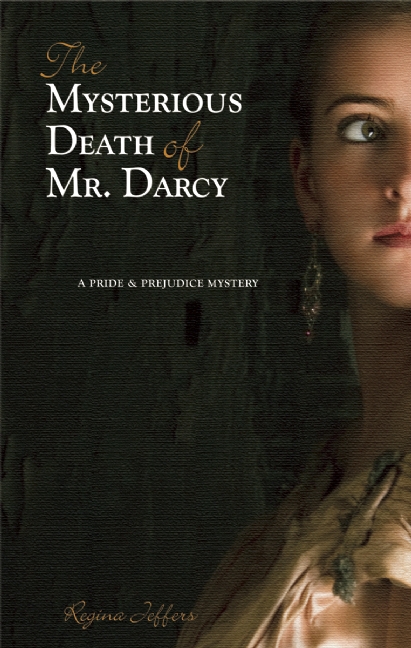
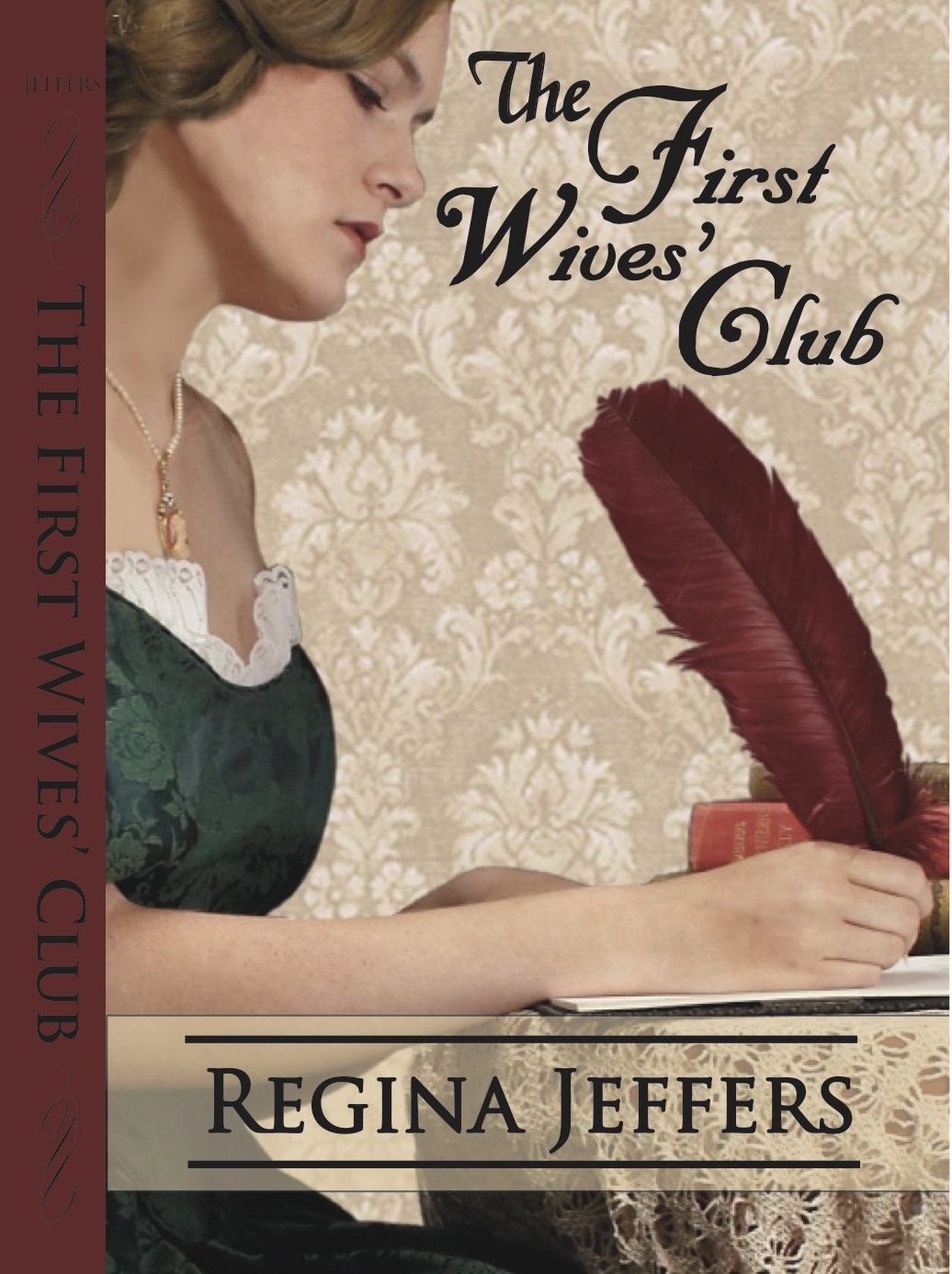
I, for example, named Chadwick Harrison from Darcy’s Temptation after Chad Pennington, the former NFL quarterback. Pennington showed great kindness to my son while my mother lay dying. Clayton Ashford from the same book comes from Clay Aiken and my former principal at Parkwood High School. Kim Withey, a regular follower on this site, found her name used for the villain in The Phantom of Pemberley. My son’s godmother is married to a man named Epperly. In The First Wives’ Club, Nathaniel Epperly is Lord Eggleston. Recently, while I was writing a new chapter of my next Austen-inspired novel (tentatively entitled, The Mysterious Death of Mr. Darcy) I was watching Tamara Drewe on a cable channel. A character I introduced in that chapter became Nicholas Drewe.

In The Scandal of Lady Eleanor, James Kerrington is Lord Worthing. My son attended school in Worthington, Ohio. Gabriel Crowden, the hero of my next Regency romance, A Touch of Grace, is the Marquis of Godown. In the Worthing area, Godown Road is a regular cut through between major thoroughfares. (We often called it “God own”-ed.) I have been known to open the newspaper or to switch to a news channel in search of an interesting name for my characters.

Occasionally, I choose a name that is indicative of the name’s meaning. “Aoife,” the heroine of His Irish Eve, is so named because “Aoife” means “Eve.” She is the “Eve” to “Adam” Lawrence, one of the main characters in The Phantom of Pemberley. This novella is a continuation of Adam’s life after Phantom. Likewise, in my Christmas tale, Christmas at Pemberley, “Mary Joseph” is a major influence on Elizabeth Darcy’s life. From The Disappearance of Georgiana Darcy, one finds such names as “Dolina,” which comes from the Scottish Gaelic Dolag, which means “world ruler,” an apt name for the villain of the tale. Even the last name “MacBethan” was chosen to meet several requirements of the story line. First, “MacBethan” is a derivative of “MacBean.” As I wished the MacBethans to be related to the infamous Sawney Bean, that was important. Secondly, “MacBean” is a patronymic name that comes from the Gaelic and means “life.” As “life” is in short supply in the MacBethan household, it seemed more than appropriate.

So, based on my assumption from above, what is the possibility that our beloved Jane Austen used famous names or those she parlayed from the local newspapers in her stories? Could Mrs. Reynolds in Pride and Prejudice have come about because Jane read a piece about the famous artist Joshua Reynolds?

There was, for example, a real life George Morland, a man known for his paintings of rustic scenes. Could William Hodges have lent his name to Emma Woodhouse’s housekeeper? Hodges is best known for his paintings of exotic locales, especially those he visited while accompanying James Cook on the captain’s second voyage to the Pacific Ocean.

Charles Hayter was a painter who specialized in portraits of navy men. Is there any wonder that Hayter gives his name to a character in Austen’s book of seafaring men, that of Persuasion? (By the way, the real-life Hayter taught Princess Charlotte about perspective and was later given the title of Professor in Perspective and Drawing.)

Also in Persuasion, one finds Sir Walter openly declaring that Frederick Wentworth was “[q]uite unconnected; nothing to do with the Strafford family.” One must recall that in her early History of England, Austen defended Thomas Wentworth, the first Earl of Strafford and the architect of Charles I’s design for absolute government. In fact, scholars have traced the Strafford connection to Austen’s novels. It shows that in the 13th Century Robert Wentworth married an heiress named Emma Wodehous. Coincidence?

One of the things that I often found ironic in Austen’s novels is the number of “Whig” names she used: D’Arcy, Fitzwilliam, Dashwood, Wentworth, Woodhouse, Watson, Brandon, Churchill, Russell, Steele, and Bertram. Could our dear Jane have spent time with her nose buried in the Peerage of England? For a Tory daughter, she certain gave the Whigs prominence!

For a more in-depth study of these names, please visit, Janine Barchas’ “Artistic Names in Austen’s Fiction: Cameo Appearances by Prominent Painters,” Persuasion. 2009. Volume 31.

http://www.jasna.org/persuasions/printed/pers31.html

(or)

Reinbold, Amanda Katherine, “Jane Austen and the Significance of Names.” (2009). University of Tennessee Honors Thesis Projects. http://trace.tennessee.edu/utk_chanhonoproj/1313

Posted in Jane Austen, writing | Tagged , , , , , , , , , , , | Comments Off on The Naming of Characters – A Rose by Any Other Name

Time.com’s List of the Best 100 Novels

Welcome to the massive, anguished, exalted undertaking that is the ALL TIME 100 books list. The parameters: English language novels published anywhere in the world since 1923, the year that TIME Magazine began, which, before you ask, means that Ulysses (1922) doesn’t make the cut. (Yes, I know this is an older list, but I would still like to think that “popularity” does not always = “quality.”)

There is a slide show with detailed descriptions of each chosen title. Read more: http://entertainment.time.com/2005/10/16/all-time-100-novels/?iid=ent-main-feature#all

A – B

C – D

F – G

H – I

L – N

O – R

S – T

U – W

Read more:http://entertainment.time.com/2005/10/16/all-time-100-novels/?iid=ent-main-feature#all#ixzz1yjVi1d6G

Are there any from the list that you would put as one of your favorites? I, for example, would choose Brideshead Revisited, The Bridge of San Luis Rey, and Lord of the Flies. 

Posted in Uncategorized | Comments Off on Time.com’s List of the Best 100 Novels

The Influx of eBooks

This excerpt comes from Publishers Weekly. To read the complete article, visit http://www.publishersweekly.com/pw/by-topic/digital/retailing/article/52204-the-march-of-the-e-books.html

E-books accounted for 7% of consumer spending on books in 2011 and 14% of units purchased, according to the most recent data from Bowker Market Research. In 2010, e-books had a 2% share of dollars and a 4% share of units. The wide discrepancy between unit and spending gains reflects the lower price e-books have compared to print formats, especially hardcover. The increase in spending on e-books came largely at the expense of hardcover, with the market share for hardcovers falling from 42% in 2010 to 39% last year. In 2009, hardcovers held a 46% share of spending. Unit sales of hardcovers took a slightly steeper drop last year, falling from 34% of titles sold to 29%. Trade paperback fared better, with the Bowker data showing that after holding steady at 36% of spending in 2009 and 2010, trade paperback accounted for 37% of spending last year despite a dip in its share of units. The mass market paperback segment has had a steady decline in units and dollars between 2009 and 2011, with units falling from 18% in 2010 to 14% in 2011; its share of spending fell last year to 7% from 8% in 2010.

The Bowker numbers also illustrate the inroads e-books have made among some of the largest genres, but also show the impact the lower prices of e-books can have as increases in unit gains markedly outpaced share gains in spending. In the mystery/detective category, for example (which had the highest percentage of e-book sales among the major genres), e-books’ market share of units purchased rose to 24% last year from 6% in 2010.

Just behind mystery/detective among the top genres where e-books are the most popular were espionage/thriller, with e-books generating 15% of sales, up from 4% in 2010, and romance, where e-books also accounted for 15% of sales, up from 5%. In science fiction, e-book sales rose to 14% of all sales, up from 5%. In all three categories, units were more than a 20% share of purchases in 2010.

Posted in Uncategorized | Comments Off on The Influx of eBooks

Interview with Austen author, Regina Jeffers, and The Real World According to Sam (Part 2)

Part Two (originally published on The World According to Sam)

Q: Writing an entire novel continuing the adventures of Austen characters is rather indicative of your fondness for Miss Austen’s work. Can you tell us about your first experience with her work?

A: I have been in love with Jane Austen’s stories for as long as I can remember. When I was twelve, I read Pride and Prejudice and was hooked. Perhaps, it was being a product of the 1950s and 1960s. Those decades were a male dominated period (Have you ever watched “Mad Men”?). Jane Austen’s works looked at society through a comedic screen while examining issues found in a male dominated world. Charlotte Lucas symbolizes the prevailing attitude toward women, while Elizabeth Bennet does not condemn feminine “virtues,” but rather balances them with a sensible mind. In each of Austen’s novels, the main characters have experiences that create a profound and permanent transformation (Fitzwilliam Darcy and Elizabeth Bennet in Pride and Prejudice; Marianne Dashwood in Sense and Sensibility; Emma Woodhouse in Emma; Anne Elliot in Persuasion; Catherine Morland in Northanger Abbey; and Edmund in Mansfield Park). Austen’s witty, satirical approach to her subjects resonates across the centuries. Therefore, as a twelve-year-old, I read Jane Austen for the first time, and I was hooked.

Q: Can you tell us about any of your other published or planned works?

A: Currently, during the day, I am spending time with my new grandson. His parents are both teachers, and “LoLa” is tending the child until the end of the school year. I love to watch him reach each of his benchmarks. James is 6 months old and is my new best friend.

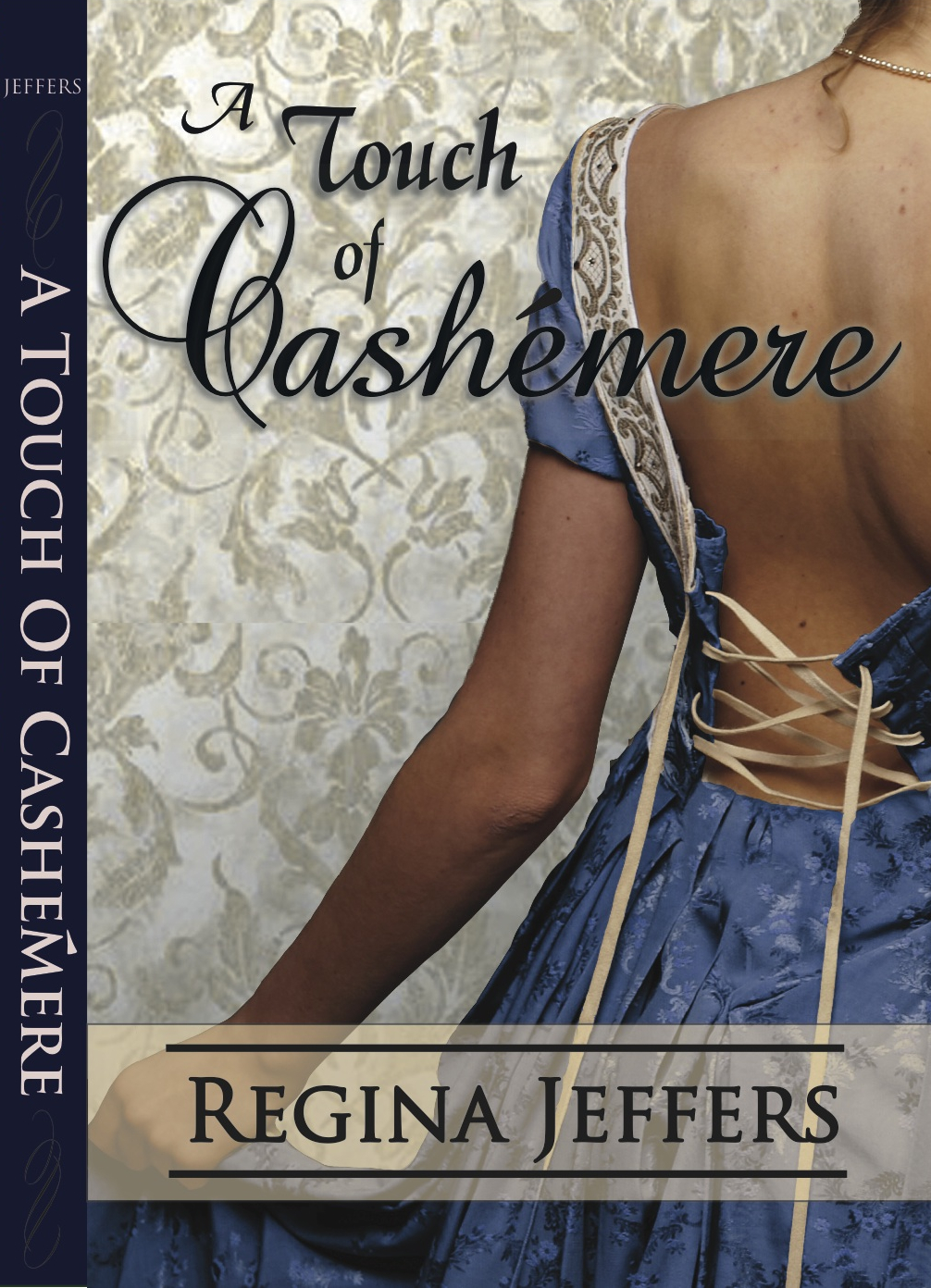
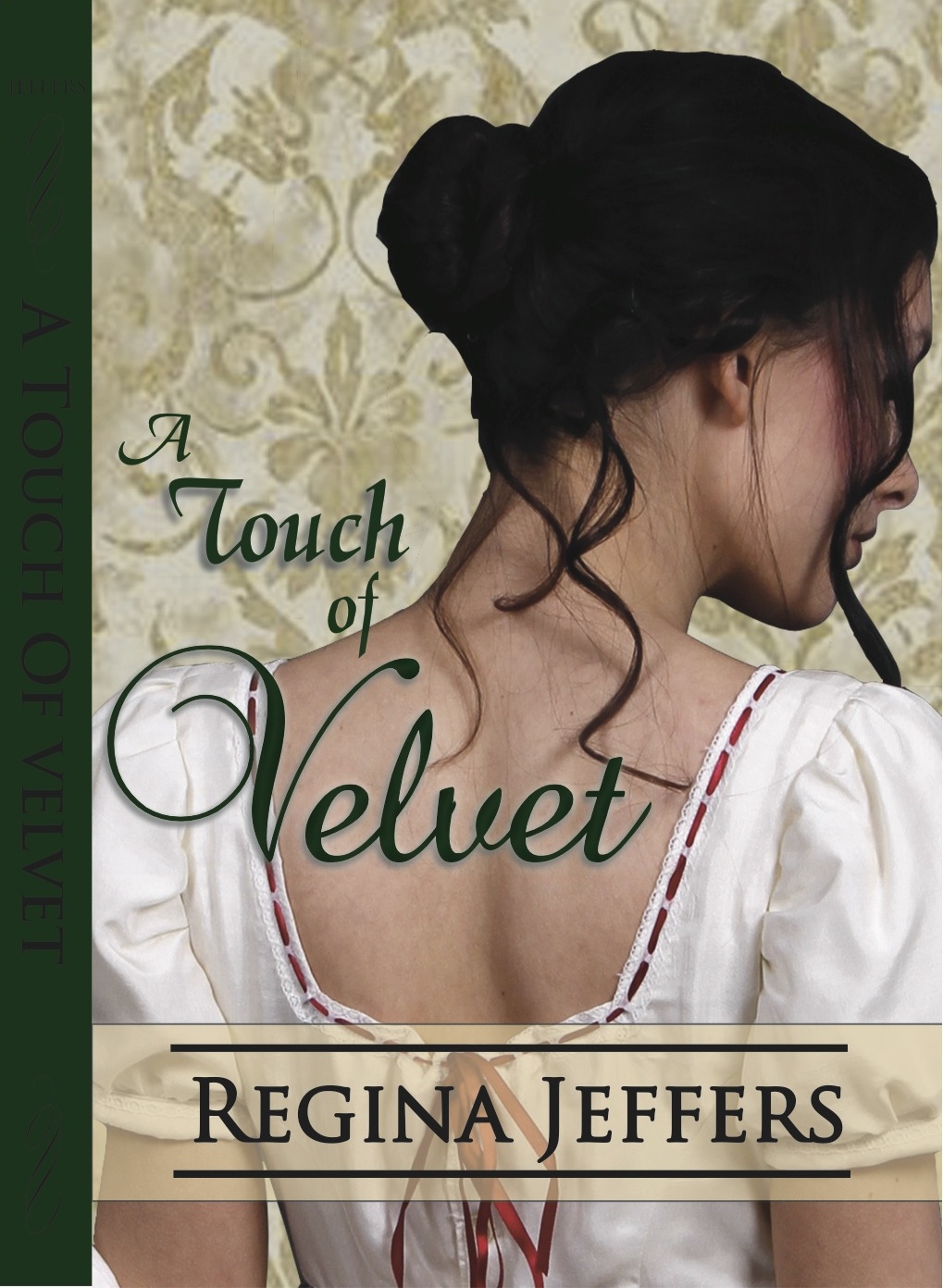
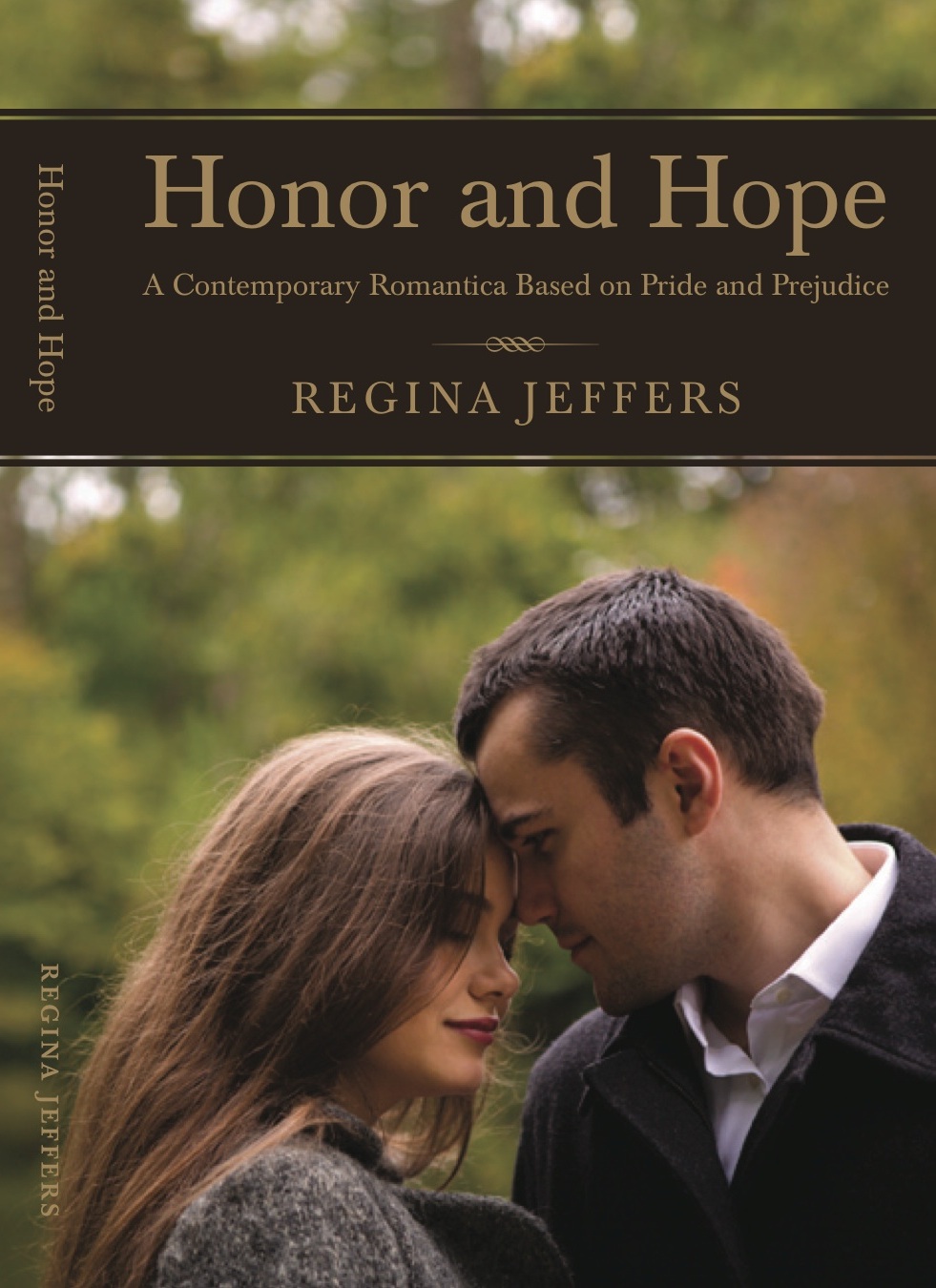
In the evenings, I am writing. My next Austen-inspired title with Ulysses Press will be another Darcy mystery to be released in the spring of 2013. I am preparing to release my contemporary version of Pride and Prejudice, entitled Honor and Hope, as soon as we decide on the cover art for the project. Recently, I have finished book 4 of my Regency historical series: A Touch of Grace. (Book 1 was The Scandal of Lady Eleanor [formerly A Touch of Gold]; Book 2 is A Touch of Velvet; Book 3 is A Touch of Cashémere.) Thankfully, The Scandal of Lady Eleanor was recognized by the the Write Touch Awards with a second place in historical fiction.  Publishers’ Weekly called this series a “knockout.” Those who have read the early versions of A Touch of Grace consider it a superior tale to Eleanor’s. 

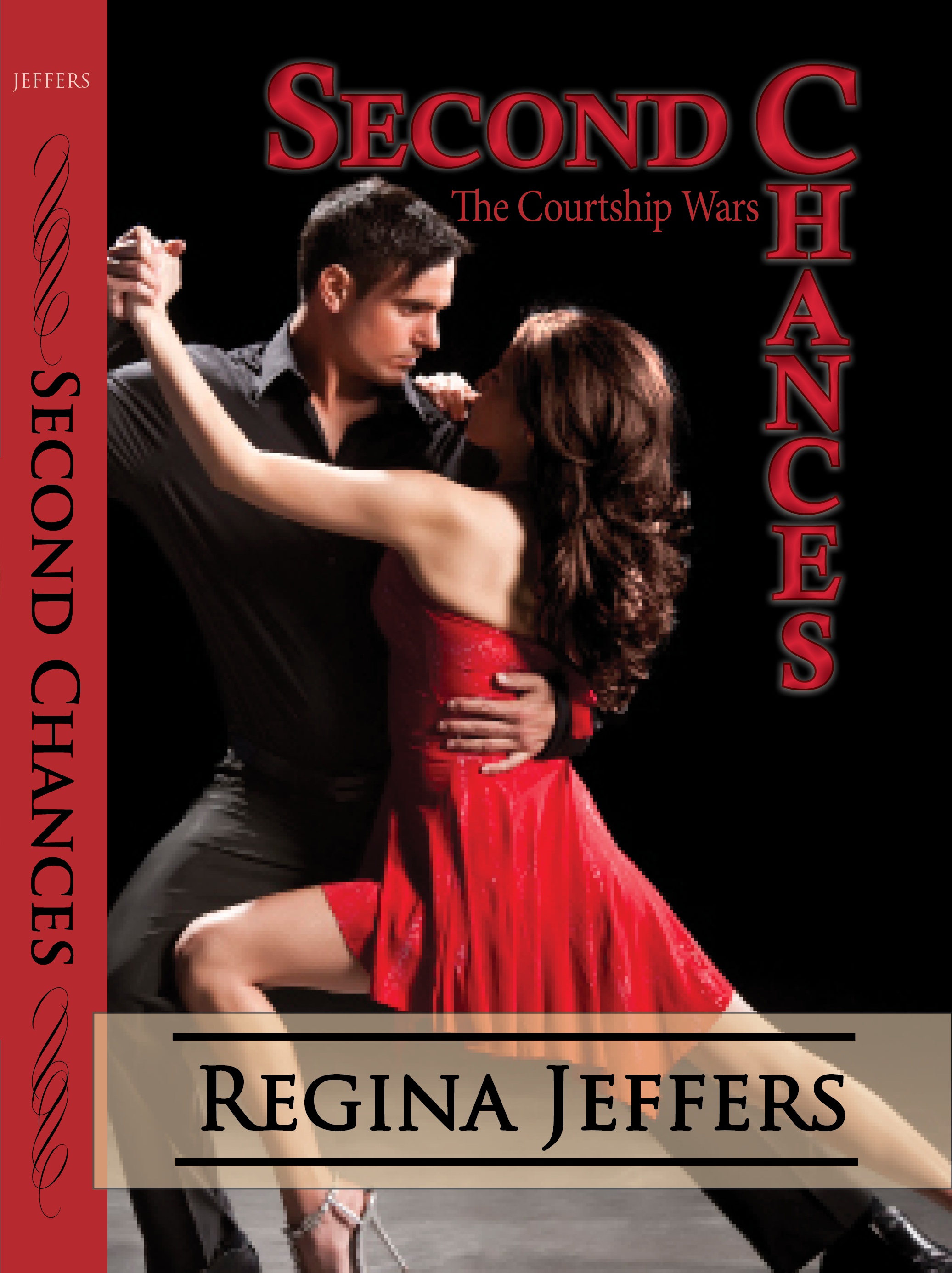
Beside the above titles, I have written seven Austen-inspired titles. They include Darcy’s Passions: Pride and Prejudice Retold Through His Eyes; Darcy’s Temptation, The Phantom of Pemberley, Vampire Darcy’s Desires, The Disappearance of Georgiana Darcy, Captain Wentworth’s Persuasion, and Christmas at Pemberley. In addition to the books in the Realm series, The First Wives’ Club is the first book in a Regency era trilogy, and there’s always my contemporary romance, Second Chances: The Courtship Wars, which is based around a reality TV show.

Q: If you could spend an hour talking to anyone from any time in history, who would it be? And Why?

A: When I was younger, I had a fascination with George Custer. Besides the Regency Period, I read extensively about the American Civil War, when Custer’s military career began. I tried to discover every little detail about the man who died at the Battle of Little Bighorn. For example, did you know that a year after that fateful battle that Custer’s remains were dug up and reburied at West Point? Were you aware that Custer used a cinnamon scented tonic on his long golden locks? Did you realize that Custer wrote a book, published in 1874, entitled My Life on the Plains or Personal Experiences with the Indians? How about the fact that Walt Whitman, on hearing the news of Custer’s death, wrote the poem “From Far Dakota’s Canyons”? Among his men, Custer developed a reputation for flamboyant behavior. He led his troops into battle wearing a black velvet jacket trimmed with gold lace, a crimson necktie, and a white hat. He claimed that he adopted this outfit so that his men “would recognize him on any part of the field.”

Custer’s defeat at the Little Bighorn made the life of an obscure 19th century military figure into the subject of legends with countless songs, books, and paintings. Custer’s critics say his blunders caused his death and the death of his men. His supporters say he was only following standard military tactics of his time.

Paintings and writings about “the Custer massacre” depict Custer as a gallant victim, surrounded by bloodthirsty savages. The fact that Custer started the battle by attacking the Indian village is often omitted.

It is said that the “Indians” did not scalp or mutilate Custer’s body out of respect for his fighting ability, but few participating Indians knew who he was. To this day no one knows the real reason the Amerinds left Custer’s body intact.

Q: What’s the craziest, bravest, or stupidest thing you’ve ever done? 

A: I have discussed this previously. At one time, I worked as a volunteer EMT for a local fire department. In November 1970, I was a senior at Marshall University in Huntington, West Virginia. On November 14, after a loss to East Carolina University, Southern Airways Flight 932 went into the side of the hill on its approach to Tri-State Airport. No one survived. I was among those who retrieved bodies of football players, town leaders, university boosters, coaches, etc. It is a moment forever etched on my memory. The event was the focus of the 2006 Matthew McConaughey, Matthew Fox, and Anthony Mackie film “We Are Marshall.”

Q: What was your favorite chapter (or part) of “The Disappearance of Georgiana Darcy” to write and why? 

A: I love to write confrontations. I am not certain what that says about me. Perhaps, it is all the years that I spent in martial arts. I have always seen the forms (simulated fights) used to train the students in Tae Kwon Do as “dance.” Therefore, if one looks closely at any of my books, it’s the “fight scene” that takes more than one chapter. In “The Disappearance of Georgiana Darcy,” Major General Fitzwilliam (the former Colonel Fitzwilliam) and Darcy race across the Scottish moors to rescue a woman they believe to be the missing Georgiana; yet, before they have the opportunity to find their missing loved one, they must fight their way through the prison cells below Normanna Hall. Those pages are wrought with tension.

Q: List three of your favorite movies.

A: I would sit up late into the night to watch “Seven Brides for Seven Brothers,” “Von Ryan’s Express,” and “The Quiet Man.” I love period pieces also. I know you only asked for three, but I would be remiss if I did not mention: “North and South,” “Pride and Prejudice,” “The Young Victoria,” “Little Dorrit,” “The Way We Live Now,” “Jane Eyre,” “Persuasion,” “Bright Star,” “Lord Byron,” “The Tudors,” “Cranford,” etc., etc., etc.

Q: Name an actor or book character you have a crush on.

A: Actually, that is one and the same. I am a Matthew Macfadyen fan, and he is my Mr. Darcy. Several years ago, I was fortunate to meet Colin Firth, and I absolutely adore him. I am one of those fans who trot off to see every film in which Firth performs. However, in 1998, I came across a made-for-TV version of “Wuthering Heights” that was appropriate for my English classroom to view. In the part of Hareton, there was Macfadyen. He smiled in one scene, and my interest was engaged. After that, I followed his career in film and television. When he portrayed Fitzwilliam Darcy, it was simply icing on the cake.

Please note that prior to Macfadyen, I have held an interest in Errol Flynn, Clark Gable, James Garner, Howard Keel, Peter Lawford, and Jeffrey Hunter.

Q: Is there a book you know that you will never read? Or one you tried to read but just could not finish?

A: There are only a few books that I have not finished, and, truthfully, at the moment, I cannot think of any of them. (Out of sight…out of mind.) Sometimes, it takes several attempts to read certain pieces. One title that I never enjoyed teaching was Charles Dickens’ Great Expectations. It is awful to say, but when I was pregnant with my son, I purposely left Great Expectations for my substitute to teach while I was on pregnancy leave.

Q: Do you work from an outline or just write?

A: I have an “umbrella” list of events that should happen within the story, which serves as my outline. However, I am very much a pantser. I write my books out in long hand in several spiral notebooks. Then I word process the story. Finally, I edit and revise. Generally, the story picks up some spontaneous twists and turns that I did not originally anticipate. In my current title, however, the story has taken a divergent twist. Yet, I think the story is better for the unexpected turn.

Q: Do you ever experience writer’s block? 

A: Occasionally, writer’s block sets in. It is usually when I planned one path for the story, and the tale takes “one less traveled.” When that happens, I simply set the writing aside and let the book play out in my head until it works itself right. The longest I have ever spent away from a book was two weeks. That was with Darcy’s Temptation. I agonized over whether to use amnesia as part of the plot.

Posted in Uncategorized | Tagged , , , , , , , , , , , , , , | Comments Off on Interview with Austen author, Regina Jeffers, and The Real World According to Sam (Part 2)

Interview with Austen author, Regina Jeffers, and The Real World According to Sam

Part One (originally posted on The Real World According to Sam)

Q: Tell us about your latest book.

A: The Disappearance of Georgiana Darcy is a cozy mystery, much in the vein of an Agatha Christie novel or the “Murder She Wrote” TV series. A cozy is set in a deserted area and has no sex or graphic violence. Along with the main characters, a “cozy” requires the reader to use his intelligence to solve the mystery’s clues. The book is classified as romantic suspense, but there is more suspense than romance in the story line. I prefer the idea of “romantic elements” instead. The Disappearance of Georgiana Darcy is set two years after Pride and Prejudice ends. Although Georgiana Darcy had made a brilliant match in Major General Fitzwilliam, Darcy has never fully accepted the loss of his sister to a proper marriage, but he would gladly “lose” Georgiana to Edward Fitzwilliam’s care if it meant that he could finally locate her on the infamous Merrick Moor.

Book Blurb: Shackled in the dungeon of a macabre castle with no recollection of her past, a young woman finds herself falling in love with her captor–the estate’s master. Yet, placing her trust in him before she regains her memory and unravels the castle’s wicked truths would be a catastrophe.

Far away at Pemberley, the Darcys happily gather to celebrate the marriage of Kitty Bennet. But a dark cloud sweeps through the festivities: Georgiana Darcy has disappeared without a trace. Upon receiving word of his sister’s likely demise, Darcy and wife, Elizabeth, set off across the English countryside, seeking answers in the unfamiliar and menacing Scottish moors.

How can Darcy keep his sister safe from the most sinister threat she has ever faced when he doesn’t even know if she’s alive? True to Austen’s style and rife with malicious villains, dramatic revelations and heroic gestures, this suspense-packed mystery places Darcy and Elizabeth in the most harrowing situation they have ever faced–finding Georgiana before it is too late.

Q: What inspired you to write a mystery book set in the general Pride and Prejudice milieu?

A: The Disappearance of Georgiana Darcy is actually my second romantic suspense. Ulysses Press released The Phantom of Pemberley in 2010. It did well, placing third in the Dixie Kane Memorial Awards. Fans also received “Phantom” with open arms. Naturally, in the publishing world, one stays with success. But more than that, I believe the Regency Period, with its strict guidelines for behavior and the stringent delineation for social class makes it easy to craft a mystery. Information is withheld; yet, everyone in Regency era Society knows the secrets. It is the perfect scenario.

Yet, writing a mystery is always difficult–to mix overt clues about the crime with essential details that appear unimportant, but are necessary to solve the mystery. Balancing the reveal with inference gaps takes time and planning. And, of course, tossing in those lovely “red herrings,” which take the reader down the wrong paths, are wonderful to see come to fruition.

Q: Was it difficult to balance the tension required with mystery with the sort of generally non-mystery atmosphere associated with Austen characters (well, outside of Northanger Abbey, at least).

A: Actually, Austen was a master at creating a diversion, an ingredient necessary for a well-developed mystery. For example, in Pride and Prejudice, she manages to make her readers not see the truth about Mr. Darcy. About Mr. Wickham. About Elizabeth Bennet. Austen says things such as, “It is a truth universally acknowledged that a single man in possession of a good fortune must be in want of a wife.” This is a tongue-in-cheek statement of theme, but it is flawed first impression of what the story entails. She says of George Wickham that he is “beyond them all in person, countenance, air, and walk.” That is another flawed impression. Of Elizabeth, Austen says, “She is not so handsome as Jane, nor half so good-humored as Lydia.” Yet, those of us who have read the novel know this is a false impression. Elizabeth has depths of character not seen in either Jane or Lydia Bennet. Mr. Darcy says of Elizabeth, “She is tolerable, but not handsome enough to tempt me.” Flawed, again and again.

As in any well-told mystery, it is necessary to introduce an unexpected scenario. For the crime, it becomes prudent to develop a closed circle of suspects, each of whom has credible motives and reasonable opportunities to commit the crime. “Phantom” dealt with a series of unexpected deaths; “Disappearance” builds suspense with the setting. Legends of the Merrick Moor, the Awful Hand, and the Murder Hole add suspense to the story line.

Q: Will we get to see the good Mr. Darcy thrash a villain or two?

A: I have written several “Darcy” sequels and adaptations. In each, Mr. Darcy is a virile specimen of Regency era manhood. He has had more than one “tussle” with Mr. Wickham in my novels.

Andrew Davies’ created the image of “Darcy” in the 1995 Pride and Prejudice mini-series. Colin Firth as Fitzwilliam Darcy is given scenes (NOT found in the original story) that make his character more appealing to the predominantly female viewing audience. We see him on horseback, swimming in a placid lake, fencing, and hunting. We see him stepping from his bath and staring broodingly out a window. Women loved the image. These same women are my audience. I would be foolish to go against the model.

Q: Your novel has a mix of original creations and more well-known Austen characters. Did you find it difficult to write scenes with the Austen characters?

A: I seriously believe that Austen’s intertextual reinscriptions of Restoration comedy have echoes in contemporary rewrites of classical literature. Reading a historical novel in its period requires the reader to understand the period, as well as the social distance from the present. Despite Austen being a part of the Society of which she wrote, her works display a “distance” from the time period, and that “distance” marks Austen’s voice as one more distinct than others of her time. Jane Austen was sophisticated, subtle, and very intelligent in her handling of complex issues. Austen’s women were women of sense; they embodied the notion of rational love. Today’s audience has paradoxically maintained Austen’s “formula.”

Austen characters have lived in my head for half a century. They are often dancing about a ballroom or strolling along a country lane. When I write, the scenes play in my head as if they were part of a movie. When something is not correct, I simply hit “rewind” until the scene plays with authority. I often find myself saying, “Mr. Darcy would not say that.” Then I replay the scene until it is correct.

Q: Did you ever have any concern that readers might take issue with your interpretation of these well-known characters?

A: The most difficult part of writing Austen-inspired literature is that each of Austen’s fans feels as if “Jane” is her personal friend, and that reader knows “Jane’s mind” better than anyone else. Therefore, they bring to the reading experience a preconceived idea of how Austen’s characters would act outside of her novels. I have been fortunate, overall. Most of my readers feel that I understand how Austen’s characters would respond to various situations. However, I occasionally meet a reader who disagrees with what I have written. One thing that I do religiously in my works is that I use as much of Austen’s actual text as possible within the story line. Many love to hear familiar phrases in new situations.

Writing scenes with the forbidden word “SEX” in them is more of an issue. Many Janeites think any scene that involves sexual references is inappropriate for Austen-inspired works. My scenes are more realistic. I look at Darcy and Elizabeth’s joining as a loving one. I do not write torrid sexual encounters, but I also do not avoid the old adage of “an heir and a spare.” My scenes are more indicative of vintage films. One sees the build up, but then the door closes, and he knows what happens.

Q: Period novels necessitate research. Even with you having a starting point in a famous work, your story goes off in directions Austen never dreamt of. So, in the course of doing research for your novel, is there anything you learned that surprised you? 

A: The research is based on what would and would not be acceptable for the Regency Period, the time period in which the majority of my novels are set. The true Regency Period lasted only ten years, from 1811 to 1820. Most writers of the period place their stories somewhere between 1800 and 1820; however, a few feature everything from the French Revolution to the Reform. When I am creating a Jane Austen adaptation, my setting is defined by Austen’s original story line. For example, the events in Pride and Prejudice occur in 1812. If I am writing an Austen sequel, I must be aware of the events that happened in the years following 1812. In my latest novel, The Disappearance of Georgiana Darcy, Colonel Fitzwilliam is returning from service with Wellington at Waterloo. Therefore, the book must be true to June 1815. In my unique Regencies, I tend to place my characters in situations that occur between 1810 and 1815. It is the time period of which I am most familiar.

I have a stash of Regency related books to which I often turn for assistance. The Internet is helpful, but there is so much misinformation on the Web that a person must look for sites that verify the content found upon the page. One of the biggest issues is anachronistic phrases. I am more aware of those issues in my Austen-inspired works. Miss Austen has a distinct style, which is difficult to replicate, and I make a point of adding her actual wording to the story lines. In most Regencies on the mass market, in the publishing business, a certain number of anachronistic phrases are acceptable. Those serve as a segue between what is often seen as the stilted language of the period and modern phrasing. However, I do attempt to be true to language style.

I love to look for the “unusual” of the Regency era and then incorporate the legend into my novels. For example, there is the mysterious Holy Island of Lindisfarne and the legend of St. Cuthbert’s miraculous burial site or the real-life case of Mary Reynolds, a woman who suffered from Dissociative Identity Disorder. I also found it quite fascinating that Lord Thomas Cochrane proposed saturation bombing and chemical warfare during the Napoleonic Wars. The era has such “nuggets” that amaze my readers and keep them coming back for more.

Posted in Uncategorized | Tagged , , , , , , , , , | Comments Off on Interview with Austen author, Regina Jeffers, and The Real World According to Sam

Whuppity Scoorie and Whoopy Do


by Regina Jeffers

So what is Whuppity Scoorie? It is a unique celebration of spring taking place in Lanark (on the east bank of the River Clyde), Scotland. On March 1, youngsters take part in the ancient custom of “Whuppity Scoorie.” They gather in early evening outside St. Nicholas’s church. Then as the bells ring out, they run around the church waving balls of paper around their heads. Years ago, it was a race, but now the celebration is a bit more structured. At the end, the children scramble for coins thrown by community members.
The celebration’s origin is vague. Many say it is a remembrance of days when miscreants were whipped around the cross, which was then “scoored” in the Clyde. It is supposed to reflect the spring’s light replacing the dark winter nights. Whatever its origins, generations of children have taken part and have made sure that this part of Lanark’s past endures. (www.thecapitalscot.com/pastfeatures/whuppity.html)
By the way, “a plaque on a stone plinth set in an unpromising gap between two buildings facing across to St. Nicholas’s church states, ‘Here stood the house of William Wallace who in Lanark in 1297 first drew his sword to free his native land.’”
And what is “Whoopy Do,” you may ask? It is what I utter as I do a little computer dance. The first book in my  Regency romance series on the Realm, a covert governmental group, has taken second place in historical romance in the Write Touch Readers’ Awards, and I am shouting “Whoopy!” The Scandal of Lady Eleanor (originally entitled A Touch of Gold)  is the first book in the “Realm” series. Book 2, A Touch of Velvet, and Book 3, A Touch of Cashémere, are currently available. I finished book 4, A Touch of Grace, this past week. It will be available soon.
Posted in Uncategorized | Tagged , , , , , , | Comments Off on Whuppity Scoorie and Whoopy Do

In Remembrance of My Mother, Peggie Jeffers

This is a picture of my beautiful mother, Peggie Jeffers. She raised me as a single parent when divorce and dysfunctional families were not the norm. She carried me up and down stairs when I had rheumatic fever. She made me Halloween costumes. She taught me to love reading and dance and literature and art. She tolerated indignities so that I might succeed. She was a woman both ahead and behind her time. I lost her in 2002, but she remains with me forever. With every breath I exhale, her essence is released into the world.

Posted in Uncategorized | 1 Comment

Starling Murmurations in Somerset, UK


One of the most spectacular examples of British wildlife are Starling Murmurations. Thousands of starlings flocking together to form swirling balls can be found in Somerset each year from early autumn to February. The birds form the flying spheres before swooping down and roosting in the trees.

One of the best places to see this visual feast is the Somerset’s Wildlife Trust’s Westhay Moor National Nature Reserve, Natural England’s Shapwick Heath National Nature Reserve, and RSPB Ham Wall Reserve, all on the Somerset Levels, close to Glastonbury, Street and Wedmore.
To find out exactly where the starlings are at any given time, one can ring the Avalon Marshes Starling Hotline on 07866 554 142 or emailhttp://www.blogger.com/starlings@rspb.org.uk.
A fabulous site, loaded with lots of pictures of the murmurations ishttp://visitsomerset.co.uk/site/explore-somerset/countryside/starling-murmurations.
Posted in Uncategorized | 1 Comment

Jane Austen’s “Literary” Brothers

Many of those around her influenced Jane Austen, but Henry’s and James’s influences were profound. Most of Austen’s biographers believe that Henry was Austen’s favorite brother and James her least favorite.

James Austen was the first born. He was reportedly a quick scholar with an aptitude for the classics. At age 14, James matriculated at Oxford, where he remained for eleven years.  James was known within his family and among his friends for his efforts in writing poetry. During Jane’s early years (1782-1788), the family produced a series of amateur theatricals, of which we have documented proof.  James composed metrical prologues and epilogues for these “family” plays – likely modeling for the youthful Jane the thrill of having her family’s adulation for her writing efforts.

Although he was six years James’s junior, Henry joined James at Oxford in 1788. In 1789, the brothers began producing a weekly periodical, which contained a series of fashionable essays, called The Loiterer. In fact, James and his friends provided the majority of the essays; however, Henry became quite adept at the occasional piece of fiction, which was included in the weekly issued. He used “stock” characters and situations – those commonly found in the fiction of the day. They continued their efforts for 60 consecutive weeks – quite an undertaking for the time.

Some biographers even suggest that Jane wrote one of the letters published in The Loiterer, which expressed an objection to the lack of a female perspective in the articles published in the weekly periodical. It was signed “Sophia Sentiment.” It is said that the issue containing the letter supposedly written by Jane Austen (issue 9) was the only one to be advertised for sale in North Hampshire, where the Austen’s lived. The other issues were for sale at Oxford and in London. In the Cambridge University Press collection of Austen’s Juvenilia, Peter Sabor suggests that the letter may have been inspired by Jane’s voice in her brothers’ ears rather than her actually writing the letter.

James’s poetry efforts dwindled as he settled into the life of a country clergyman. As the heir to his wealthy, childless uncle, James Leigh Perrot, James Austen’s future was solid. After leaving Oxford, James became Rector of Steventon (rather than his father’s curate at Deane). He married twice – the second marriage bringing him two children, but gave him a wife with whom he was generally thought to be disappointed. We have no records of James’s poetry from 1789 to 1805.

Henry is well known among Austen scholars as Jane’s “man of business,” acting as her agent in arranging the publication of Austen’s novels. He managed to convince Thomas Egerton, who coincidentally had published the Austen brothers’ efforts with The Loiterer,  to take a chance on a piece of fiction. Egerton specialized in pieces of military history, so this was a different track for the publisher. In 1811, Egerton published Sense and Sensibility, by a Lady. Henry likely advanced the £180 upfront fees for printing and advertising for the novel.

Posted in Uncategorized | Tagged , , | Comments Off on Jane Austen’s “Literary” Brothers

Pride & Prejudice Retelling – Darcy Attempts to Forget Elizabeth Bennet – Part 2

“So, Darcy, where do you go from here?”

The words choked him, but he managed to say, “I know my duty; the Darcy name and Pemberley must survive. I must forget Elizabeth Bennet and find a suitable match. I am a rich man, and I will settle upon an appropriate woman as soon as I am tempted by her charms. I am ready to marry with all speed; I have a heart ready to accept the ready of the first pleasing woman to come my way.” Excepting Elizabeth Bennet. This was his only secret exception to his declarations. “A woman with a little beauty and some words of flattery will have me as her own, whether she be fifteen or thirty or somewhere in between. I am perfectly ready to make a foolish match.”

“Then you mean to have our cousin Anne?” Edward questioned.

“As much as I respect and admire Anne,” Darcy said seriously, “she is not the woman I envision as the mistress of Pemberley. Despite Lady Catherine’s wishes, Anne will not be the object of my search. Even with Miss Elizabeth’s refusal,” he added hastily. “The woman I want will possess a handsome countenance, a lilt figure, and a quickness of mind. I must find a woman who can assist me in the running of Pemberley. Her character must be an adventurous one; she must not be easily intimated. I may choose to settle for something a bit less, but I will not compromise my standards; I have thought on this for a long time.”

Later, Darcy found Georgiana in the music room. She was listlessly stroking the keys of the pianoforte. His sister sprang to her feet when he entered the room. Darcy purposely strode toward her, took her hand, and said, “Come with me, Georgiana; we must speak honestly.”

Darcy hated how she tentatively followed him across the room to a settee. He despised how his actions of late had affected her. Even after they were well settled, he did not release her hand. Apparently fearing his disappointment, she sat with eyes downcast; yet, he would have none of it. Darcy cupped her chin gently with his fingers and lifted it to where he might look lovingly upon her countenance. “Georgiana, my girl,” he said softly. “I have dealt you a disservice, and I beg your forgiveness. You did not deserve the treatment you have received at my hand of late.”

Uncontrollably, the tears rolled down his sister’s cheeks, and Darcy reached up to gently brush them away; she caught his hand to kiss his palm. “Fitzwilliam, you have never forgiven any fault of your own while you have forgiven many of those around you, especially me.” He started to protest, but she shushed him with a touch of her finger to his lips. “Please, allow me to finish. You have always been available when I required your attention. You have accepted my sorrow and made it your own. Edward spoke of your hopes and your loss. It would do me proud to offer you my support in your time of need.”

He protested, “I could not impose on your sensibilities. Our father left you in my care.”

“No, Fitzwilliam,” she contradicted him. “Our father left you as my guardian, but we are to care for each other. How can you know pain without my feeling it?” Darcy could not comprehend his sister’s transformation; she was still the shy, innocent girl he had always cherished, but she had developed an emotional strength of which he was not aware before now. He could never think of George Wickham’s betrayal without loathing, but his sister had added a new sense of maturity because of the experience. Regrettably, Georgiana had known the rebukes of love. “Our parents were of superior birth,” she continued. “We learned to be proud of being a Darcy, but we have not learned to acknowledge the true worth of others. Mrs. Annesley has given me a ‘mother’s’ view of the world. Oh, Fitzwilliam, there are so many who require our generosity; aiding the poor in Derbyshire is persuading me to care more for myself. If we do not love ourselves, my Brother, how may we expect others to love us?”

“When did you become so wise?” he whispered hoarsely and stroked her hair from her countenance.

“You taught me these things, Fitzwilliam. You simply never listened to your own lessons,” she giggled.

“Today, you are the instructor and I, the student.” He pulled her to him in a tight embrace. “And I welcome more of your teachings.”

Attempting to forget Elizabeth Bennet and Hertfordshire, Darcy threw himself into London’s society. He became a regular at his gentleman’s club; he escorted Georgiana to concerts and the theatre; he dined with old acquaintances and made new ones. Yet, try as he may, it was too soon for him to forget Miss Elizabeth. Darcy acknowledged, if only to himself, that he could truly love none but her. She could not be replaced in his mind as the woman he was meant to love; he would never find her equal. Unconsciously, he vowed to remain constant to Elizabeth Bennet. He had meant to forget her, and he had honestly believed it possible. He had told himself that he held no preference, but, as the days passed, he accepted the fact that she had wounded his pride. That he was only angry. Angry at her for refusing him and at himself for making a cake of the Darcy name. Elizabeth Bennet’s character became fixed in his mind as perfection itself; at Hertfordshire, he had learnt to do her justice, and at Hunsford, he had begun to understand himself.

In his attempts, attempts of angry pride, to attach himself to another, he had felt it to be impossible. He could not forget the perfect excellence of Elizabeth Bennet’s mind or the way she possessed him. From her, he had learned the steadiness of principle, and Darcy had to admit to admiring the way she had withstood his arguments in her defense of George Wickham.

“Of course, I would prefer that the lady had not placed her trust in Mr. Wickham, but I understand that if I had opened myself to her prior to when I thought to propose, mayhap, Mr. Wickham’s perfidy would not have taken root in Miss Elizabeth’s sensibility,” he had shared with his image in his dressing room mirror. “I would like to believe a different outcome possible if I had come to this knowledge sooner.”

Reluctantly, Darcy admitted to himself that his desire to protect Bingley had not really been for altruistic reasons. “If I had truly cared for Bingley’s future, I would not have abandoned my objections to the Bennet family’s connections in order to secure my own happiness,” he said to the darkness encompassing his chambers. “It is difficult to acknowledge that my motives were quite selfish. If I could not attain Miss Elizabeth’s affections, I had to make a choice, and I chose to keep Bingley’s friendship. Because, in reality, I could never remain Bingley’s friend if he married Miss Bennet. Seeing their happiness would remind me too much of what I had lost.” It was a sobering realization for a man who prided himself on his earnest regard for Charles Bingley.

“The problem lies in what is my duty to my family line,” he grumbled over his solitary breakfast. “If I yield to what most declare to be my duty, and I marry a woman who is indifferent, all risk would be incurred and all duty violated.”

Unable to place his heart in the pursuit of a proper companion, Darcy abandoned the farce and prepared for an early retreat to Pemberley. Both he and Georgiana accepted the need for solitude. Darcy would care for his estate and wait for acceptance to come; Georgiana would continue the journey upon which she had recently set her feet. She would find a means to know contentment through selfless acts. Together, they would safeguard each other’s love.

A few evenings prior to their departure, Edward returned to assess Darcy’s progress. While Georgiana and Mrs. Annesley prepared to entertain them in the music room, Darcy and the colonel lingered in the dining room.

“Am I to understand you have been to Kent?” Darcy asked as he poured them both a brandy.

“Yes, and our aunt was most insistent that I relay her anxiousness for your return to Rosings Park,” Edward explained.

“I will not be fulfilling our aunt’s wishes,” Darcy said dismally. “When I marry, our cousin Anne will not be my choice for mistress of Pemberley.”

“Lady Catherine will not take your obstinate refusal easily,” Edward said.

“Hopefully, the family will support my decision,” Darcy said uneasily. Family meant Edward’s father, the Earl of Matlock, and his older cousin, Edward’s brother Roland.

“The Earl knows how best to handle our aunt’s contentious ways,” Edward assured. They sat in companionable silence for several minutes, before the colonel ventured. “I do bring news from Kent, but I dare not speak of Mrs. Collins’s friend.”

Hoping to belie his interest in the subject, Darcy fixed his countenance. “Edward, you may speak Elizabeth Bennet’s name; I cannot avoid the lady forever; my most excellent friend lets an estate in Hertfordshire; her best friend is married to Lady Catherine’s cleric; I must harden myself to Miss Elizabeth’s memory and to my former feelings.” When the colonel continued to delay, Darcy sighed heavily, “Out with it, Man!”

With a shrug of his shoulders, Edward said, “Anne shared some news of Miss Elizabeth that she had learned from her companion, Mrs. Jenkinson. One afternoon, our cousin and I were having our own amusement at Mr. Collins’s expense.” Darcy rolled his eyes at the mention of Mr. Collins. The man was a complete nincompoop. “Did you know, Fitz, that prior to marrying Miss Lucas that Mr. Collins proposed to Miss Elizabeth? Evidently, that was the day after Mr. Bingley’s ball at Netherfield.” Just the mention of the ball brought exquisite memories; holding Miss Elizabeth’s hand and staring into her eyes were some of his fondest memories of the woman. “Miss Elizabeth’s mother demanded that the lady save the family estate by marrying Collins; Mr. Bennet refused to force his daughter into the marriage. The Bennet estate is entailed upon Mr. Collins. We wondered how Collins had come to marry Miss Lucas. It makes so much sense in hindsight. Can you imagine Miss Elizabeth’s vitality in the hands of a superfluous ass such as Collins?”

He attempted to downplay his reaction, but the thought of Collins kissing Elizabeth and taking husbandly privileges with her caused Darcy to redden with abhorrence. A shudder of disdain shook him to his core. He had not taken more than one drink since the night he had confessed everything to his cousin, but he did not think all the brandy in his cellars would deaden the distaste filling his soul. With irony, he said, “It does not make me happy to know that the lady places me in company with our aunt’s clergyman. She has refused two proposals of marriage. That is quite incomparable.”

“One would think that Miss Elizabeth’s lack of a dowry would have the lady accepting any appropriate offer,” Edward reason. “Refusing Mr. Collins is understandable. The man would smother Miss Elizabeth’s spirit. But to refuse a man of your standing, Darcy, is not to be reasoned.”

Darcy swallowed hard. “The lady wishes a love match,” he said softly.

Georgiana’s musical interlude was as superb as ever, but all Darcy could see were Elizabeth’s eyes and her smile and how the images faded whenever he reached for them.

(The scene is an adaptation from chapter 10 of Darcy’s Passions: Pride and Prejudice Retold Through His Eyes. I am pleased to announce that Ulysses Press has sent Darcy’s Passions for a second printing.)

Posted in Uncategorized | Tagged , , , , , , , | 3 Comments