We Get Stacks and Stacks of Letters…

On the Perry Como Show, the chorus used to sing: “Letters, we get letters. We get stacks and stacks of letters.” However, during the Regency Period, the mail was expensive. MPs were the only ones who had a “free” ride for the mail delivery. Until 1840, MPs could “frank” their own letters.

In Jane Austen’s Mansfield Park, Edmund tells Fanny to have a friend or relative who was an MP to frank the letter for her and, therefore, save the Price family from the cost of the letter. “As your uncle will frank it, it will cost William nothing.”

Postage was based on the number of miles the letter traveled from point A to point B. Recipients paid, rather than the sender of the letter. These were the going rates for a single page: fourpence for the first fifteen miles, eightpence for eighty miles, etc., etc., up to seventeen pence for a letter covering seven hundred miles. Additional pages increased the price accordingly.

To save on the expense of sending a letter, people developed their own form of “Tweeting.” Abbreviations saved space. Often the writer would “cross” the letter, which meant turning the letter at right angles and writing between the previously written words.

A “two penny post,” which was developed for mail delivery within London proper, was separate from the General Post Office, which dealt with the national mail. There were designated shops for dropping off the mail.  As with the writing of the letter, abbreviations were used as part of the address/directions to speed the delivery: “W” for the West End; “N” for north of the Old City, etc.

After 1840, a person could send a letter anywhere in England for the cost of one penny. Railroads sped the delivery system and made the mail service more economical. Also, before 1840 envelopes were generally not used. In Jane Austen’s stories, her characters use a wafer to seal the letters. A wafer was small disk made of flour and gum. A person would lick the wafer and stick it to the folded sheet of writing to form the envelope. Those of the upper class used seals. It was melted and applied to the letter. Commonly, red seals were used for business and other colors for social correspondence. Black was a sign of death and mourning. 

Posted in British history, Jane Austen, Regency era | 3 Comments

The Peerage

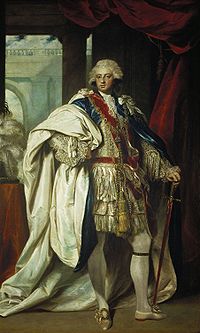
If one reads Regency romance, he encounters his fair share of England’s titled gentlemen, often referred to as the “peerage.” In order of rank, one finds dukes, marquesses, earls, viscounts, and barons. Baronets and knights were NOT peers. The House of Lords were made up of those of the first rank, along with the bishops and the archbishops of the Church of England.

The title and the landed estates associated with the peerage were always inherited. “Life peerages” were created in the late 1800s, but, generally, without exception, the title passed to the eldest son. If the heir left a male child, the child would inherit if his father had passed before inheriting. If the child had died or there were no issue from the marriage, a brother could inherit. The male line of direct descent from the first holder of the title was always maintained. Even if the only male available was from a junior or “cadet” branch of the original family, he would inherit the title and the manor. Originally, titles were presented with “letters of patent” as a symbol of the presentation. The person with the oldest “patent” held rank over others of the same title.

As the estates became more and more problematic to maintain, many of the peers were forced to look beyond those with strong ancestral lines for mates. A woman from trade or of inferior lines could often marry into the peerage if she possessed a large enough fortune. Besides the expensive way of life that a titled gentleman was forced to uphold, the cost of maintaining the entailed property was often exorbitant. Marrying for love was not an option. A marriage of convenience often meant the titled gentleman must marry for the lady’s money. The man’s wife received the female equivalent of his title: duke/duchess; viscount/viscountess; earl/countess; etc. However, if an untitled gentleman married a titled lady, she relinquished her formal address to become a “Mrs.” In addressing a titled gentleman, he might have an accumulation of titles, such as Baron Joe, Viscount Smoe, and the Earl of Doe.


A British or Irish Duke is entitled to a coronet (a silver-gilt circlet, chased as jewelled but not actually gemmed) bearing eight conventional strawberry leaves on the rim of the circlet. The physical coronet is worn only at coronations. Any peer can bear his coronet of rank on his coat of arms above the shield.

So, how did one become a member of the peerage? Generally speaking, the title and land was bestowed upon a man for his loyalty and service to the monarchy. The prime minister in power, at the time, granted the power. Occasionally, military heroes (i.e., the Duke of Wellington) and lord chancellors were given titles. Rarely were commoners presented a title. If a commoner had no children (therefore, the title would die out with him), a title might be possible for extraordinary service. With each generation, only one child (the male heir) was given the title. The other children were “commoners.” Recently minted peers were not well received by the other members of the aristocracy.

Below the peerage were the baronets and knights, who were addressed as “Sir.” A baronetage was hereditary, but baronets were not peers, and they did not sit in the House of “Lords.” Baronets were the upper levels of the gentry. They might sit in the House of Commons, but this was not part of the title. Knighthoods were not hereditary. Distinguished lawyers and doctors and brewers became baronets, while those in trade were bestowed with the “Sir” of a knighthood.

A Royal Duke is a duke who is a member of the British Royal Family, entitled to the style of “His Royal Highness.” The current Royal Dukedoms are, in order of precedence:

▪                Edinburgh, held by The Prince Philip

▪                Cornwall (England) and Rothesay (Scotland), held by The Prince Charles, Prince of Wales

▪                Cambridge, held by Prince William

▪                York, held by The Prince Andrew

▪                Gloucester, held by Prince Richard

▪                Kent, held by Prince Edward

With the exceptions of the dukedoms of Cornwall and Rothesay, which can only be held by the eldest son of the Sovereign, royal dukedoms are hereditary, according to the terms of the Letters Patent that created them, which usually contain the standard remainder to the “heirs male of his body.” The British monarch also holds and is entitled to the revenues of the Duchy of Lancaster, and within the borders of the County Palatine of Lancashire is by tradition saluted as “The Duke of Lancaster.” Even when the monarch is a Queen regnant, she does not use the title of Duchess.

Posted in British history, Regency era, Uncategorized | Comments Off on The Peerage

The Life of the Gentry During the Regency Period

Caroline of Brunswick

During the Regency Period, wealth and social class separated the English citizenry. Beginning with the Royals, citizens found their place based on birthright and wealth. The nobility stood above the gentry, who stood above the clergy, who stood above the working class, etc. As part of the gentry, Jane’s family held certain privileges, but also lacked political power. Although he was a rector, the Reverend George Austen was a gentleman. Austen’s novels are populated with those of the gentry. Occasionally, her readers encounter the nobility, as in Lady Catherine De Bourgh and the Dowager Viscountess Dalrymple or the clergy as with Mr. Collins or Mr. Elton.

To be part of the landed gentry, the family had to own 300+ acres of property. The Reverend George Austen was part of the gentry, but he came from the lower end of the class distinction, while Jane’s mother came from a wealthier background. When one reads Austen, he meets the gentry. A member of the gentry was known as a gentleman, but not all members of the gentry acted as a gentleman. 

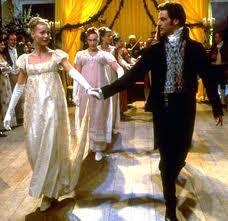
Good manners defined a person during the era. Loosely based on Renaissance Italy and 17th Century French customs, the “rules” of engagement during the Regency Period were strictly enforced by members of the “ton.” One who did not adhere to the rules would be shunned by Society.

A gentleman, for example, was expected to speak properly and to avoid vulgarity; to be dressed appropriately; to be able to dance well; to be well versed on a variety of subjects and to have a university education or above; and to practice condescion to those of a lower class.

When addressing women the eldest daughter in a family would be referred to as “Miss” + her last name (i.e, Miss Elliot or Miss Bennet). Youngest sisters would be “Miss” + the woman’s given name (i.e, Miss Anne or Miss Elizabeth). Addressing males followed a similar form. The eldest son was “Mister” + last name (i.e, Mr. Ferras or Mr. Wentworth). The younger sons used both given name and surname (i.e., Mr. Robert Ferras or Mr. Frederick Wentworth).

People of lower rank had to wait to be introduced to someone of a higher rank. (Do you recall Catherine Morland and Mrs. Allen at Bath? They must wait for an introduction to Henry Tilney, who calls upon the evening’s master of ceremonies to do the deed.) Women of the period were to be obedient to their fathers and husbands, docile and without opinions, have refined qualities, and attendant to their families. Education was not a prerequisite for women. In Austen’s stories, her heroines often shun these qualities. 

Posted in British history, Jane Austen, Regency era | 2 Comments

Oh the Places You Will Go…Real-Life Places in Jane Austen’s Life

The grand country estates and locations used in the film adaptations of Jane Austen’s novels often lead her fans into believing that “our Jane” lived in some of Britain’s finest homes. But where, oh where, did Jane Austen call home?

Steventon Rectory in Hampshire

The Steventon Rectory was Jane Austen’s birthplace. She lived at Steventon until she was five and twenty, from 1775-1801. It was a 17th Century property surrounding by large fields and sporting an attached farm. The Rectory is no longer standing, but St Nicholas Church, where Reverend Austen was the rector, can be seen. However, please remember that if you go to Hampshire that St Nicholas burned down and was rebuilt in 1872.

Bath

In 1800, Reverend Austen considered retirement. Because the Austens had met and married in Bath, the resort city became their destination. In May 1801, the Austens moved into a temporary “home.” In September, they found more permanent accommodations. They finally moved into 4 Sydney Place. There’s a plaque outside the house to commemorate Jane Austen’s years at the house. Because it was much smaller than their Steventon home, the Austens sold off Reverend Austen’s library and the pianoforte.

Southampton and Godmersham

With the passing of Reverend Austen in 1805, Jane, her mother, and her sister Cassandra found themselves in poor financial straits. The Austen took on the support of their mother and sisters. In 1806, the women moved in with Frank Austen and his new wife in Southampton. In 1808, they went to stay with Edward Austen at his Godmersham estate in Kent.

Chawton cottage

Chawton

In 1808, Edward lost his wife to childbirth. After this tragedy, he offered a six-bedroom cottage on another of his estates to his family. The women moved into the Chawton cottage in Hampshire, which was close to the Steventon property upon which they had once lived. By this time, James Austen was the Steventon rector. Jane published four novels while living at Chawton. She finished a fifth and started a sixth one during those years.

Winchester

By 1816, Jane was no longer able to write. Her illness had progressed. In May 1817, her family took Jane to Winchester so that she might be near her physician, Giles King Lyford. They moved in with their old friends, the Biggs, at 10 College Street. In July 1817, Jane Austen lost her fight with her illness. She passed peacefully. She is buried at Winchester Cathedral. 

Posted in British history, Jane Austen, Regency era | Tagged | Comments Off on Oh the Places You Will Go…Real-Life Places in Jane Austen’s Life

Dorset’s Demon Judge

James Scott, first Duke of Monmouth

In June 1685, James Scott, the first Duke of Monmouth, the illegitimate son of King Charles II, landed at Lyme Regis in Dorset, bringing with him a bloody swatch of rebellion. In the days that followed, horror filled the hearts and minds of those living in the area. Monmouth brought some eighty trained soldiers with him. When King Charles II died, his Catholic brother, James, the Duke of York, who became King James II, succeeded him. However, Monmouth, a Protestant, made a bloody bid for the throne.

Landing in Lyme Regis, Monmouth marched across the West Country towards Taunton, into Somerset, Devon, and back to Dorset, gathering support for his bid. The revolt soon became known as The Pitchfork Rebellion. When word reached James II of his “nephew’s” efforts to claim the throne, James II sent an army, commanded by Lord Faversham, to crush the revolt.

On July 6, the two armies clashed at the Battle of Sedgemoor, where Monmouth’s army, along with the Duke, fled. The following morning, disguised as a farm laborer and hiding in a ditch at a spot now known as Monmouth’s Ash, the Duke was captured near Horton Heath, about 8 miles south of the hamlet of Woodyates. Escorted immediately to London, Monmouth was tried for treason and, eventually, beheaded on Tower Hill on July 15, 1685.

Monmouth’s Execution

George Jeffreys

As part of his revenge on those who stood with Monmouth, King James II sent his most ruthless judge, George Jeffreys, the First Baron Jeffreys of Wem, to deal with the rebels. Jeffreys held a reputation for swift justice and merciless sentences; he, eventually, rose to the position of Lord Chancellor, and occasionally served as Lord High Steward.  Some 1400 prisoners were brought before Jeffreys at the courts of Winchester, Taunton, and Dorchester. The court hearings were given the title of The Bloody Assizes, for some 300 men were put to death during the proceedings. Those found guilty by Jeffreys were hanged or drawn and quartered. Rotting bodies hung from makeshift gallows peppered the main highways and towns in the area. These gruesome sights were a clear warning to those who might force the king’s hand. Another 800 men were sentenced for transportation.

George Jeffrey

From his Prescript to the Sheriff of Dorset, Jeffreys leaves these orders: “These are, therefore, to will and require of you, immediately on sight hereof, to erect a gallows in the most public place to hand the said traytors on, and that you provide halters to hang them with, a sufficient number of faggots to burn the bowels, and a furnace or cauldron to boil their heads and quarters, and salt to boil them with, half a bushel to each traytor, and tar to tar them with, and a sufficient number of spears and poles to fix and place their heads and quarters; and that you warn the owners of four oxen to be ready with dray and wain, and the said four oxen, at the time hereafter mentioned for execution, and you yourselves together with a guard of forty able men at the least, to be present by eight o’clock of the morning to be aiding and assisting me or my deputy to see the said rebels executed. You are also to provide an axe and a cleaver for the quartering of the said rebels.”

Judge Jeffreys opened the Bloody Assizes at Dorchester on 5 September 1685 at the Antelope Hotel in the “Oak Room.” During his stay in Dorchester, Jeffreys stayed at a house in High West Street, a building, which is still known as his lodgings, and made his way to the courtroom by a secret passage in order to avoid the angry crowds. In one of his more infamous manipulations, Jeffreys convinced a young girl to spend the night in his bed in exchange for her brother’s freedom. When the girl woke the next morning, she peered out the window to see her brother hanging from the neck by a Bridport Dagger. (The town of Bridport was known for the production of netting and rope for the fishing industry and for use by the British navy. Bridport was also known for the production of the hangman’s rope. It was customary to say that those who were hanged were “stabbed by a Bridport Dagger.”) By the time, Jeffreys moved on to Lyme Regis, he had sentenced 74 men to death, sent another 175 to transportation, had 9 whipped, and pardoned 55.

On 11 September 1685, the Bloody Assizes opened at Lyme Regis. On the 12th of September, twelve men were executed on the beach west of the Cobb, and their body parts were displayed on spikes along the railings around the church. Two of the men’s heads were impaled on the iron gates of Chatham House. Jeffreys had dined at the great house on Broad Street the evening before the executions. Since that time, Jeffreys’ ghost is said to carry a bloody bone through the house.

This ghost tale is circumspect at best. After all, in reality, Jeffreys died some four years after the Bloody Assizes ended. During the Glorious Revolution, Jeffreys stayed in London when James II fled However, when William III’s troops marched into the city, Jeffreys disguised himself as a sailor and made his escape. He was captured at a public house in Wapping (now named The Town of Ramsgate). Fearing the public outcry for his “crimes,” Jeffreys begged for protection. On 18 April 1689, he died of kidney failure while in custody in the Tower of London.

Book Blurb:

The Disappearance of Georgiana Darcy

A Pride and Prejudice Mystery

By Regina Jeffers

A thrilling novel of malicious villains, dramatic revelations, and heroic gestures that stays true to Austen’s style…

Darcy and Elizabeth have faced many challenges, but none as dire as the disappearance of Darcy’s beloved sister, Georgiana. After leaving for the family home in Scotland to be reunited with her new husband, Edward, she has disappeared without a trace. Upon receiving official word that Georgiana is presumed dead, Darcy and Elizabeth travel to the infamous Merrick Moor to launch a search for his sister in the unfamiliar and menacing Scottish countryside. Suspects abound, from the dastardly Wickham to the mysterious MacBethan family. Darcy has always protected his little sister, but how can he keep her safe from the most sinister threat she has ever faced when he doesn’t even know if she’s alive? Written in the language of the Regency era and including Austen’s romantic entanglements and sardonic humor, this suspense-packed sequel to Pride and Prejudice recasts Darcy and Elizabeth as a husband-and-wife detective team hunting for truth amid the dark moors of Scotland.

Posted in British history | Tagged , , , , , , , , , , , , , | Comments Off on Dorset’s Demon Judge

Weymouth’s History – Learn Something of the Site of Olympic Sailing Events

With the Olympic’s Sailing venue being based in Weymouth Bay and Portland Harbour this year, I thought I would add to the “legend” of Weymouth with some background information. Weymouth plays a significant role in my next Austen-inspired novel, The Mysterious Death of Mr. Darcy, which is due out after the first of the year.

Weymouth, itself, was once two independent communities, divided by the harbour. Weymouth developed on the harbour’s south side, while Melcombe developed on the northern side. Weymouth’s affluence was a dark contrast to Melcombe, famous as the sport where the Black Death plague had entered Britain.

The two “towns” often fought over the harbour’s ownership. The often violent rivalry between the two communities came to an end when, in 1591, Queen Elizabeth I enacted a bill which united the towns into the borough of Weymouth and Melcombe Regis. A wooden bridge connecting the towns spanned the harbour by 1594, but the “peace” was never a true one.

With the onset of the Civil War, new hostilities rose up between the towns. Melcombe came to be under Parliamentarian control and Weymouth under the control of the Royalists. In fact, in the side of a house on the Melcombe side of Maiden Street, there is a cannonball firmly lodged into the wall of one of the houses.

The whole in the wall is on the far left.

During the hostilities, a small group of residents led a plot to oust Cromwell’s forces from Weymouth and bring it back under Royalist rule. The Crabchurch Conspiracy brought more blood to the doors of Weymouth’s citizens. During the Crabchurch Conspiracy (1645), 250 Weymouth citizens were killed during the battle, which aimed to bring the town back under the control of the King’s army. Eventually, the monarchy was restored. The period that followed brought high taxes. The government wished to thwart the spread of smuggling and the “wide use” of alcohol among the Dorset citizens.

Gloucester Lodge

Things changed dramatically for the area in 1789, when King George III made his first visit to Weymouth. The King so loved the area’s golden sandy beaches, that he made Weymouth his “holiday” of choice. Eventually, he purchased Gloucester Lodge on the Melcombe seafront from his brother. Thus, Weymouth and Melcombe Regis became one of the first holiday resorts. A monument, a statue of George III, was erected in 1810 at the junction of the two main streets of the town, St. Mary Street and St. Thomas Street. It remains to this day on an island in the middle of the road along the seafront, a permanent reminder of what Royalty did for Weymouth.

George III’s Statue

Sadly, during WWII, Weymouth’s resort atmosphere gave over to the need to protect British soil from invasion. Between June 6, 1944, and May 7, 1945, nearly 500,000 troops and 150,000 vehicles departed for France via Weymouth’s harbour.

Posted in British history, Regency era | Tagged , , , , , | 4 Comments

Austen’s Transition to Modern Adaptations

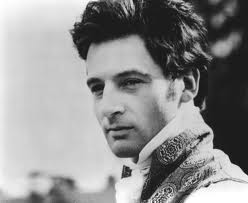
Jane Austen’s works are often classified as “romances.” The assumption comes from the premise that if the heroine meets a handsome man in Chapter One, he must be the hero. Fitzwilliam Darcy is the romantic hero of Pride and Prejudice, and although he does not appear in Chapter One, he does make an appearance by Chapter Three, and Austen’s chapters are short in comparison to contemporary writers. However, if you know nothing of the story line nor do you have sweet dreams of Colin Firth emerging dripping wet from a placid lake (Sigh!) or of Matthew Macfadyen walking through the morning mist with an open shirt and lots of chest hair (Sigh!), you may not think much of the infamous Mr. Darcy.

Quite frankly, upon our first meeting of this wonderful character, he is a jerk. He makes a horrendous “first impression.” But that is the thing with Austen. Her original title of the novel and her theme are one and the same: first impressions are misleading.

From the first line of Pride and Prejudice, “It is a truth universally acknowledged that a single man in possession of a good fortune must be in want of a wife,” Austen plays a merry game with her readers. “First impressions” are misleading: Darcy does not come to Hertfordshire seeking a wife; Wickham is not the perfect mate for Elizabeth; Jane might be more beautiful than Elizabeth, but she lacks her sister’s depth of character; Darcy’s best quality is not his wealth, nor is his worst quality his pride. Austen’s theme permeates every line, and, generally, the reader does not recognize that our favorite author hits us over the head with it. Readers simply sense the resonance found within Austen’s works.

Theme explains why Austen’s works are considered “classics.” Theme, well done, brings us universal truths, and discerning readers revere truth well told. Austen writes about the truths of an imperfect humanity.

What we find in Austen, as well as in the Brontes, Dickens, Conan Doyle, Shakespeare, etc., is how easily her stories are transferred to the present. Critics of “remaking” the classics refer to the phenomenon as “nostalgia.” Yet, it is much more than a longing for an easier time. If it is “nostalgia,” then what is missing from our current time that brings us to seek out another?

It is more than an “escape” into the past. Why do readers and viewers return again and again to these tales? What parts of these remakes of the classics speak to our present-day needs and fantasies? In reality, we often use a magnifying lens to view the world. This lens has a filter known as the “past.” We view contemporary society by reinventing the past. Parts of the past survive, while others fade away. From the perspective of current cultural and social ambitions, politics, and historiography, the past is remade. Do not our grandparents tell us of a simpler time? Do we not look back and see with out “selected” memory a past in which life moved as an easier pace? Yet, in truth, those easier times had issues similar to those of which we deal every day. Death, famine, disease, betrayal, corruption, etc., exist in each era.

As a writer of Austen-inspired novels, I strongly feel that I “hold” the past in waiting for my readers to cherish, but I also believe that my novels, as well as those of other writers of remakes, reshape the past in the current styles and fashions. Remakes appeal to both our need for the classics and our need for popular culture. As a teacher for 40 years, I repeatedly asked my students to read and view and analyze – to imagine themselves in relation to a past and an ever-changing present. 

As a writer, I reimagine Jane Austen’s works as a portal through which the reader can consider what we were, what we are, and what we want to be. In doing so, I underscore the importance of permitting the canon and its past to be complemented by, and in some sense supplanted by, the tools and technologies of our contemporary culture and popular media.

In such adaptations, those of use who delve into these remakes, retain the specifics of the context and the historical setting, while highlighting and exploring current issues. In my many Austen sequels/adaptations, I have used political intrigue, issues of race, women’s rights, the plight of the poor, post traumatic stress syndrome, childbirth, governmental spies, etc. These issues fit the historical setting, but they also speak to modern times.

So, how popular are these remakes? How easily have Jane Austen and others made the journey into contemporary times? In 1995, A&E Network aired an Andrew Davies’ retelling of Pride and Prejudice. It earned the network its highest rating ever in the U.S. In England, 21% of British viewers watched the last episode of this series, which starred Colin Firth and Jennifer Ehle. Sales of Pride and Prejudice hit 35,00 copies per week during the broadcast.

In the past twenty years, there have been more than 32 films and TV adaptations of Austen’s works, as well as over 300 continuations and sequels based on Austen’s six simple novels. Multiple markets have grown up around the love of Jane Austen: music to read Austen by; boutiques; guidebooks; cookbooks; dolls; advice books; organized tours, etc.

Based on what I have already shared, it shall not surprise you when I say, “Hello, my name is Regina, and I am a Jane Austen addict.” I own a Jane Austen action figure, Scrabble squares, paper dolls, and a jigsaw puzzle. I attend Austen conferences and dress in period costumes and try not to stumble through a country line dance. I sleep with “Mr. Darcy,” a teddy bear with a monogrammed shirt, as well as an image of Matthew Macfadyen on my pillowcase. Colin Firth is my screensaver. I have multiple autographed images of Firth and Macfadyen framed and mounted on my home office wall.

Because of Jane Austen, I have been a guest panelist at the Smithsonian. Because of Jane Austen, I have endured caustic criticism and glorious praise, sometimes in the same review. Because of Jane Austen, I have developed wonderful friendships with others who love her works as much as I. Because of Jane Austen, I see things as they are and as they ought to be. From Austen, I have learned that ordinary people can have interesting lives. So, I am a card-carrying Janeite, a member of the Jane Austen Society of North America. I am in love with a simpler time, and I wonder why everyone else does not love my best friend “Jane” equally as well.


Book Blurb:

Liz Bennet’s flirtatious nature acerbates Will Darcy’s controlling tendencies, sending him into despair when she fiercely demands her independence from him. How could she repeatedly turn him down? Darcy has it all: good looks, a pro football career, intelligence, and wealth. Pulled together by a passionate desire, which neither time nor distance can quench, they are destined to love, as well as misunderstand, each other until Fate deals them a blow from which they can no longer escape. Set against the backdrop of professional sports and the North Carolina wine country, Honor and Hope offers a modern romance loosely based on Jane Austen’s Pride and Prejudice.


Posted in Jane Austen, Regency era, writing | Tagged , , , | Comments Off on Austen’s Transition to Modern Adaptations

Ed Gein: The Real-Life Norman Bates

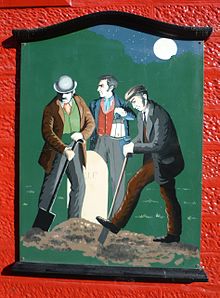
Of late, I’ve spent a lot of research hours on grave robbing, especially as it was practiced during the early 1800s. The need for medical schools to rob graves of “fresh” corpses to use as cadavers is common knowledge, but I had not thought to stumble across a modern-day grave robber, a man with a fetish for bowls made of human skulls; a wastebasket made of human skin; a full breastplate made of a skinned woman’s torso; ten female heads with the tops sawed off; skulls on his bedposts; human skin covering several chairs; a pair of lips on a drawstring for a window shades; and a belt made of different women’s nipples.

Ed Gein was the model for the Norman Bates character in Robert Bloch’s novel, Psycho. Bloch’s tale of murder and mayhem became the basis of the famous Alfred Hitchcock film. Some experts claim that Gein’s story also inspired the Texas Chainsaw Massacre and the Buffalo Bill character in Thomas Harris’s The Silence of the Lambs.

The son of Augusta and George Gein, Ed Gein early on moved to a remote farm outside of Plainfield, Wisconsin. His father was a drunkard, but his mother was highly religious. Augusta reportedly instilled strict rules of sexuality in the household. Both Ed and his brother Henry were told repeatedly about the “sinfulness of women” and of the utter evil of premarital sex.

Ed’s sexual confusion escalated after George Gein died in 1940. His father’s death forced Ed and Henry to seek odd jobs in the nearby town. Ed, generally, worked as a handyman. In 1944, Henry died under suspicious circumstances. He and Ed were fighting a nearby fire in the marshes; later, Henry’s body was found. He had several bruises about his head, and he was lying in an unburned area. However, authorities ruled the death as accidental: smoke asphyxiation.

Barely a year later, Augusta died of a stroke, leaving Ed all alone. Ed  nailed her bedroom door closed, preserving the room in immaculate condition. After his mother’s death, Ed became fascinated by human anatomy: absolutely devouring any information about Christine Jorgensen and the first sex-change operation. Ed considered such an operation for himself.  Later, he took up with a drifter, and the two of them began robbing graves for “souvenirs.” Reportedly, Ed Gein would scour the obituaries for information on female grave sites.

The grave robbing, eventually, no longer satisfied Gein’s fascination with the macabre. In December 1954, a woman named Mary Hogan disappeared from the bar she managed in Pine Grove, Wisconsin. Gein was a suspect, but no hard evidence could be linked to him at the time.

Three years later, another 50-something year old woman disappeared. Like Mary Hogan, Bernice Worden resembled Augusta Gein. The woman was abducted from the hardware store she owned. This time there was a more concrete connection to Gein. Worden’s son told authorities that Gein had approached Bernice about a date. A Plainfield resident told the police of how Gein bought antifreeze from Worden’s store on the day of the incident.

Arriving at Gein’s home, the police found decapitated body hanging from the rafters. Bernice’s torso was slit and gutted. Her genitalia removed. Her head had been turned into an ornament, and her heart sat in a saucepan on the stove. A search of the house produced a gun that matched the cartridge found at the scene of Mary Hogan’s murder. Gein confessed to the murder of both women and was committed to a secure mental institution, where he died of respiratory failure on July 26, 1984.

Posted in gothic and paranormal, legends and myths, real life tales, writing | Tagged | Comments Off on Ed Gein: The Real-Life Norman Bates

Henry VII, the First of the Tudors

Henry VII came to the throne of England after defeating Richard III at Bosworth in 1485. With his accedence, England came into a long period of “National Pride.” The War of the Roses had weakened the nobility to the point where the Tudors could wield more power than had their predecessors, the Plantagenets. When Henry VII took the throne he broke the power of the barons by bringing back into favor the Court of the Star Chamber, to put on trial those who opposed Henry’s rule.

Henry married Elizabeth of York (uniting the houses of York and Lancaster) at Westminster Abbey on 18 January 1486. Together, they had seven children. He died at Richmond Palace in Surrey on 21 April 1509 at age 52. During his reign, Henry crushed a revolt at Stoke by the Earl of Lincoln on behalf of Lambert Simnel, a claimant to the throne. His invasion of France ended quickly when he withdrew his forces in return for a substantial payment from the French crown. In 1492, Henry managed to squash a second attempt to overthrow his rule. Perkin Warbeck made a claim to the throne; Warbeck was put to death in 1499.

Let us outline the Tudor dynasty.

Henry VII (1485-1509) marries Elizabeth of York (d 1503)

Their children were

(1) Arthur, Prince of Wales (19 September 1486 to 2 April 1502) marries Catherine of Aragon in 1501. (When Arthur dies, Prince Henry becomes heir to the throne. Henry later marries Arthur’s widow.)

(2) Margaret Tudor (28 November 1489 to 18 October 1541) marries James IV, King of Scotland (1473 – 1513) in 1503. Their child was James V of Scotland (1513 – 1542). James V married Mary of Guise. Their marriage gave the land Mary, Queen of Scots (1542-1567). Mary first married Francis II of France (who died in 1560); then Henry Lord Darnley (who died in 1567); and, finally, James, Earl of Bothwell (who died in 1578).

Margaret Tudor

(3) Henry VIII, who was born on 28 June 1491, (1509 -1547) marries Catherine of Aragon (divorced 1533). Their child Mary I ruled England from 1553-1558. Mary I married Philip II of Spain.

Henry VIII marries Anne Boleyn (beheaded in 1536). Their child, Elizabeth I, ruled England from 1558 to 1603.

Henry VIII marries Jane Seymour, who died from complications of child birth in 1537. Their son, Edward VI, ruled from 1547-1553.

Henry VIII marries Anne of Cleves (married and divorced within 7 months in 1540).

Henry VIII marries Catherine Howard (beheaded on grounds of adultery in 1542).

Henry VIII marries Catherine Parr (who died in 1548). Catherine outlived Henry. She married again shortly after his death.

(4) Elizabeth Tudor was born on 2 July 1492 and died 14 September 1495.

Mary Tudor

(5) Mary Tudor was born on 18 March 1496. Mary married Louis XII of France in 1514. Unfortunately, Louis passed in 1515. Mary then married Charles Brandon, 1st Duke of Suffolk. Their child, Francis, married Henry Grey, Duke of Suffolk. Francis and Henry’s child was Lady Jane Grey.

(6) Edmund Tudor, Duke of Somerset, was born on 21 February 1499 and died on 19 June 1500.

(7) Katherine Tudor was born on 2 February 1503 and died the same day. Elizabeth of York died as a result of Katherine’s birth.

(8) An illegitimate son was born to a “Breton Lady.” Sir Roland de Velville was born in 1474. He was knighted in 1497 and was Constable of Beaumaris Castle.


Posted in Uncategorized | Comments Off on Henry VII, the First of the Tudors

What Does Your eBook Reader Tell Publishers About Your Reading Habits?

IT TAKES THE AVERAGE READER JUST SEVEN HOURS TO READ THE FINAL BOOK IN SUZANNE COLLINS’S “HUNGER GAMES” TRILOGY ON THE KOBO E-READER—ABOUT 57 PAGES AN HOUR. NEARLY 18,000 KINDLE READERS HAVE HIGHLIGHTED THE SAME LINE FROM THE SECOND BOOK IN THE SERIES: “BECAUSE SOMETIMES THINGS HAPPEN TO PEOPLE AND THEY’RE NOT EQUIPPED TO DEAL WITH THEM.” AND ON BARNES & NOBLE’S NOOK, THE FIRST THING THAT MOST READERS DO UPON FINISHING THE FIRST “HUNGER GAMES” BOOK IS TO DOWNLOAD THE NEXT ONE.


For centuries, reading has largely been seen as a solitary and private act, an intimate exchange between the reader and the words on the page. But the rise of digital books has prompted a profound shift in the way we read, transforming the activity into something measurable and quasi-public.

In the past, publishers and authors had no way of knowing what happens when a reader sits down with a book. Does the reader quit after three pages, or finish it in a sitting? Do most readers skip over the introduction, or read it closely, underlining passages and scrawling notes in the margins? Now, e-books are providing a glimpse into the story behind the sales figures, revealing not only how many people buy particular books, but how intensely they read them.


The perfect man, according to data collected by digital publisher Coliloquy from romance-novel readers, has a European accent and is in his 30s with black hair and green eyes.


For centuries, reading has largely been a solitary and private act, an intimate exchange between the reader and the words on the page. But the rise of digital books has prompted a profound shift in the way we read, transforming the activity into something measurable and quasi-public.

To learn more about how “Big Brother” is watching another facet of our lives, please visit Alexandra Alter’s article on The Wall Street Journal at http://online.wsj.com/article_email/SB10001424052702304870304577490950051438304-lMyQjAxMTAyMDIwODEyNDgyWj.html


Posted in Uncategorized | Comments Off on What Does Your eBook Reader Tell Publishers About Your Reading Habits?