Facebook and Courts Collide on Free Speech and Technology

I originally read this article in The Charlotte Observer on September 8, 2012. Since that time it has seen multiple reprints.

“In Facebook Court Cases, High Tech and Free Speech Collide” (To read the complete article, search the McClatchy link that follows. http://www.mcclatchydc.com/2012/09/07/167685/in-facebook-court-cases-high-tech.html 

By Michael Doyle | McClatchy Newspapers

WASHINGTON — “Like” the First Amendment? Then prepare for a fight, as courts and employers figure out whether a simple click on Facebook deserves free-speech protection.

It’s 21st-century technology meets an 18th-century Constitution, and the real-world implications are starting to erupt.

In rural Mississippi, two firefighters and a police officer are serving 30-day suspensions because they hit “like” on a controversial Facebook post.

In Virginia, a sheriff’s department employee said he was fired for “liking” a page sponsored by the sheriff’s political rival. One federal appellate court already is being asked to weigh in; others surely will follow.


Posted in Industry News/Publishing, real life tales | Comments Off on Facebook and Courts Collide on Free Speech and Technology

“Lady Catherine Has Confronted Elizabeth Bennet,” Darcy said.

At Austen Authors, we are celebrating the 200th anniversary of the events in Jane Austen’s Pride and Prejudice. This is a scene from Mr. Darcy’s point of view. It is when he discovers that Lady Catherine has confronted Elizabeth Bennet for reportedly starting the rumor of their upcoming marriage. This excerpt comes from Chapter 15 of my Austen-inspired novel, Darcy’s Passions.

On Saturday he returned from an afternoon outing to discover his aunt’s chaise and four before his townhouse. “Mr. Darcy,” on cue, his butler approached privately, “although I told her you were not at home, your aunt, Lady Catherine de Bourgh, insisted on being admitted. She demanded, Sir, to await your return.”

He looked beyond Thacker’s shoulder to where Lady Catherine likely held court. It was a favorite maneuver of Her Ladyship–one of which Darcy was well aware. “You were correct to admit her, Mr. Thacker. Would you have tea brought to the drawing room?” he said authoritatively.

“Yes, Mr. Darcy.”

Darcy did not like uninvited visitors; his aunt knew his distaste for such intrusions upon his privacy. He supposed something could be amiss. Could something have happened to Anne? He certainly hoped not. He strode into the drawing room expecting to find his aunt in tears. Instead, she was agitated; she was angry; she was demanding. “Lady Catherine, what brings you to London? I was unaware of your plans to travel. Please tell me my Cousin Anne has not taken ill again.”

His aunt ceased her pacing. “Darcy, you came at last; I am so distressed–such an inconvenient situation!”

No Anne. What supposed crisis could Lady Catherine have conjured for his attention this time? Irritated, Darcy said, “Aunt, I could possibly empathize with you if I knew of what you speak.”

“Then you have no knowledge of it? I suspected as not.” Her voice rose in volume with each subsequent phrase.

The tea arrived at that precise moment. After the servant placed the tray on the table, Darcy waited until Thacker poured the distraught Lady Catherine a cup and then prepared one for Darcy. He motioned Thacker away and waited for the servants’ to close the door before he began again, “Let us enjoy our tea, and then allow me the opportunity to ascertain what most disturbs you.”

Lady Catherine made to sip the tea, but her discomfort overwhelmed her, and she decidedly placed the saucer on the table to emphasize her agitation. “That girl!” His aunt spit out the words.

Darcy expected another of his aunt’s diatribes on Anne’s lack of social graces. It had been a constant disappointment to the vibrant Lady Catherine to have borne such a mouse of a girl, as was Anne de Bourgh. “What girl, Madam?”

She declared, “Miss Elizabeth Bennet, of course!”

Darcy froze. Had he heard his aunt correctly? “Miss Elizabeth Bennet?” he attempted nonchalance. “What could Miss Elizabeth have to do with our family?” Just the mention of the lady’s name sent his heart pounding out a staccato.

With disdain, Lady Catherine insisted, “She is an insincere young lady, one not to be given proper address!”

Darcy’s mind raced; about what could his aunt be speaking? “I thought Miss Elizabeth had earned your approval, Aunt.”

Her Ladyship snapped, “She most certainly has not! Miss Elizabeth spreads scandalous falsehoods, and I came to London to demand that you deny her report.”

Darcy stood before forcing himself to walk casually to the mantel. “What falsehood has Miss Elizabeth spread which caused you such torment?”

Lady Catherine squeezed her eyes shut and shuddered with revulsion. “That girl,” she began again, “let it be known she intends to be united in marriage with you, Nephew.”

Darcy’s heart leapt at the words. He knew Elizabeth would never spread such a rumor; it was beyond her. “Are you certain, Aunt? This seems uncharacteristic of what I know of Miss Elizabeth. From whom did you hear this rumor?” He attempted to disguise his own turmoil.

“From Mr. Collins, of course,” she exclaimed. “He is Miss Bennet’s cousin! I have it on his good authority, and I expect you to publicly contradict this braggart.”

“No one,” he started deliberately, “of any consequence will repeat such stories. The Lucases are a gossipy lot. These are only Collins’s assumptions; falsely based, I might add, on Charles Bingley’s plans to marry Miss Elizabeth’s eldest sister. Mr. Collins exaggerates the situation. There is nothing for me to contradict.”

“First the girl will not retract the rumors, and now you refuse to contradict them!” she lamented.

“Lady Catherine, have you spoken to Miss Elizabeth?” He could not believe his aunt confronted Elizabeth with these accusations; Elizabeth must hate him for bringing such censure into her life!

“I have, Sir. I am almost your nearest relative, and I will expunge your reputation even if you will not!” Her haughtiness spoke of her true nature.

Darcy gripped the mantel for support; he must keep his aunt talking to know what happened, but at the moment all he wanted was to drive the woman from his house for attacking Elizabeth. “May I ask what you so kindly told Miss Elizabeth?”

Pulling herself up in a prideful stance, Her Ladyship declared, “I confronted her, demanding she contradict the rumor she started. Of course, Miss Bennet feigned innocence, claiming my coming to Longbourn would only give merit to a rumor if it existed.”

Darcy smiled wryly. Miss Elizabeth was not the type to take Lady Catherine’s attack as an absolute. “The lady makes a reasonable point, Lady Catherine.”

“Nonsense! I asked Miss Elizabeth if she could declare there was no foundation for the rumor, and that impertinent young lady told me I may ask questions which she may choose not to answer! Can you imagine such insolence?”

Imagining Elizabeth Bennet was his existence. Word of her brazen confrontation of his aunt caused Darcy to stifle an ironic laugh. “Go on, Your Ladyship,” he encouraged for he had to know whether Elizabeth spoke positively of him or not.

Her expression settled in stubborn lines. “When I told her that as your aunt I had a right to know all your dearest concerns, Miss Bennet claimed I had no right to know hers.” She warned, “Her arts and allurements are many; I fear you have succumbed to them, Nephew.”

Darcy could not respond; all he could consider was that although Elizabeth did not say she affected him, she refused to say she did not hold him in her regard. “What else happened, Lady Catherine?” He attempted to control the chaos of his mind by steadying his voice and by encouraging his aunt’s retelling of the events.

Her countenance flushed as the words tumbled easily from his aunt’s lips. “I reminded the lady of your engagement to my daughter and how it was your mother’s wish for it to be so; and I told her as a young woman of inferior birth, she had no claim on a man of your standing. I reminded her of propriety and delicacy.”

The gentleman gritted his teeth and bit the words as he said them, but miraculously, Darcy controlled his ever-building anger. “What was Miss Elizabeth’s answer?”

“The response reeked of more insolence! Miss Elizabeth said that although she heard of your engagement to Anne, that fact would not keep her from marrying you if neither your honor nor inclination confined you to your cousin.” His aunt’s eyes narrowed in disapproval. “Miss Elizabeth insisted that if you were to make another choice, and she should be that choice, she had the right to accept the proposal.”

Darcy’s breath came in short bursts. Elizabeth did not say she would accept his proposal; only she had the right to accept it. Was there still hope for his suit? He had to know more; he schooled his mind and his stance to appear in tune with Lady Catherine’s sentiments, but Her Ladyship waited not for his response. “I told Miss Bennet such an alliance would bring her only disgrace; she would never be recognized or accepted by your family and acquaintances. Obstinate headstrong girl! Miss Bennet claimed being your wife would have its own attached happiness, and that happiness would be great enough to keep your wife from feeling any regret in her choice.”

Again, Darcy heard Elizabeth thought being married to him could bring a woman happiness. Yet, would she think it possible to bring her happiness? Hope took root. “I assume that was the end of this confrontation,” he added as a manipulation of his aunt’s ire. Thankfully, she ignored his poorly disguised response.

“It most certainly was not! I reminded her of your noble lineage on your mother’s side and that your father was from a respectable, honorable, and ancient, though untitled, family. I told Miss Bennet if she were sensible of her own good, she would not wish to quit the sphere in which she had been brought up.”

Darcy cringed from Lady Catherine’s lack of prudence and decorum. “Miss Elizabeth probably did not appreciate your bringing this to her attention.”

“The lady was livid! She insisted that by marrying you, she would not be quitting her sphere because she is a gentleman’s daughter.” Lady Catherine’s excitement grew. “I had her there, Nephew! I had her there! I explained how I knew of her mother’s low connections, but she insisted if you did not object to her connections, it was nothing to me.”

Much to his regret, Darcy remembered saying something very similar to his aunt’s words at one time to Elizabeth. Now, however, he came to a new realization: Lady Catherine repeatedly abused Elizabeth, and Elizabeth had a right to deny any connection to him. If she had, his aunt would have stopped her tirade, but even with all Lady Catherine had said to her, Elizabeth never said she would not marry him. He walked toward the window; he feared if his aunt could see his countenance at the moment, it would betray how happy this conversation made him.

“I demanded to know if you were engaged.” Darcy’s back stiffen with anger directed toward Her Ladyship’s intimidation of someone lower in standing. “Thankfully, she confirmed you were not engaged, but Miss Bennet refused to promise she would never enter into such an engagement.” Elizabeth would not promise to refuse him. “I told her I would never abandon this mission. Being wholly unreasonable, Miss Bennet claimed my application to be ill-judged and my arguments to be frivolous, saying even if she refused your hand, it would not make you turn to Anne.”

With conflicted emotions, Darcy frowned. “Madam, do you not think you overstepped your status? This is my life of which you speak.”

She declared, “I have not, Sir. Family resentment will follow such a union.”

“I doubt our family would dare resent any woman I chose.”

“Miss Bennet said something similar. She insisted that she would not allow her decision to marry you to be affected by duty, honor, or gratitude. Resentment from your family or indignation from the world would mean nothing to her if you were excited by being married to her; the world, according to Miss Bennet, would have too much sense to join in the scorn!”

“Miss Elizabeth is correct, Madam. If I chose her, your disapproval would mean nothing; I would regret the loss of your affection as my aunt, but it would not alter my decision.” He did not turn to face her.

“Darcy, you cannot mean as such. Have you forgotten your mother’s wish for you to marry Anne?” she protested.

“My mother never expressed such a desire to me, and I will not allow it to control my heart nor my choice. As much as I respect Anne, she is not the woman for me. I require a mistress for Pemberley and a mother for my children, Pemberley’s heirs. Anne and I have spoken; she and I are of a like mind in this matter.”

Lady Catherine stood abruptly. “So, you intend to make this girl your wife despite my objections?”

Darcy turned to confront her. “If Elizabeth Bennet will have me, my life would be complete.”

“It is her arts and allurements,” she said as she headed towards the door, “which make you speak so foolishly. I will give you one week to come to your senses; if not, you will never be welcomed at Rosings again.” With that, she walked brusquely away. Darcy watched as she shooed servants from her way.

When the front door closed behind her, Darcy collapsed into the chair she had vacated. Lady Catherine had given him hope; where days before he resolved to put distance between him and Elizabeth, now he thought only of returning to Netherfield and to her.

Darcy most welcomed Edward’s arrival at Kensington Place that evening. He required his cousin’s advice because his own emotions were far too out of control for him to think sensibly. The gentlemen took dinner leisurely, stopping several times for intense conversation and then returning to the meal to “chew” over the ideas as much as to consume the food. Darcy updated Edward on the pleasure of finding Elizabeth at Pemberley, sharing many of the intimate details and asking for Edward’s astute interpretation of what Elizabeth said and did. When Darcy spoke of how Elizabeth thwarted Miss Bingley’s attempt at a cut and maintained Georgiana’s secret, the news astounded Edward. “I always found Miss Bennet to be most engaging,” he said with a smile

Next came the story of George Wickham and Lydia Bennet’s “arranged” marriage. “Now you understand why I purchased the commission,” Darcy related.

“In some ways I wish Miss Elizabeth realized the depth of your affection, Darcy. Only a man as honorable as you would assist his worst enemy to secretly save the woman he loves. My estimation of you has increased substantially, and it was always of the highest regard.”

This brought Edward to the news of Darcy’s return to Netherfield. “I went with Bingley when he called on the Bennets the first time. I hoped to be able to speak to Miss Elizabeth, but she barely looked at me. Her needlework was never as beloved as it was that day.”

“Darcy, she had not seen you since sharing her sister’s shame with you. She must be confused. Why would you come to her home? Miss Elizabeth has to know how you feel by now, but she must wonder how you could renew your affections to her with George Wickham as her brother.”

“What you say is so reasonable when you say it but not when I am living it,” Darcy chuckled ironically. “But things did not change at the dinner two days later. I spent the meal seated beside Mrs. Bennet; she spent the evening surrounded by other ladies, and we were unable to speak.”

“Again, Darcy, was that Miss Elizabeth’s doing or Mrs. Bennet’s?”

“Why would Mrs. Bennet want to keep me from Miss Elizabeth? If she threw Elizabeth at Mr. Collins, my wealth should earn me a right to court her daughter. The woman may dislike me, but her only goal is to marry off her daughters to well-suited matches. She would not keep me from Elizabeth!”

“Mrs. Bennet, I doubt realizes your interest in her second daughter. If what you say about the woman is true, and she knew how you felt, Elizabeth would be sitting on your lap. Instead, I think Mrs. Bennet was attempting to keep you from Mr. Bingley. By now, the Bennets must know of Miss Bingley’s cut in London of Miss Bennet. You and Caroline Bingley are intimates in the Bennets’ opinions. Keeping you from interfering with her plans to marry off Miss Bennet to Mr. Bingley seems a more likely explanation of what happened. Did Miss Elizabeth not say anything?”

“She only asked about whether Georgiana was at Pemberley.”

“Cousin, Miss Elizabeth asked about Pemberley because it was the place where you shared something special. If you do not stop second guessing everything, you will lose this woman.” Ashamed at how easily Edward saw what he did not, Darcy moaned in frustration. “Now what of this dark conversation between Miss Elizabeth and our indomitable aunt?”

“Her Ladyship heard from her favorite gossipmonger Mr. Collins that Elizabeth started a rumor of our impending marriage, and Lady Catherine demanded it be universally denied. Lady Catherine went to Longbourn to confront Miss Elizabeth.”

“That must have been an impressive altercation! I cannot imagine Lady Catherine displaying much civility.”

“Our aunt was quite frank about what she said to Elizabeth. I kept myself in check to ascertain the extent of the accusations and the exact discourse, but it was difficult. She reminded Miss Elizabeth of her connections, berated her for her insolence, and demanded that Elizabeth honor my pledge to Anne.”

Edward pleaded, “Please tell me Miss Elizabeth withstood Lady Catherine’s demands. She is the only person who could be so defined.”

“Miss Elizabeth refused to say she would not marry me if I asked, but she also never said she would accept my proposal. How do I know she desires my affections? She could have been obstinate and disagreeable because of our aunt’s interference in her private affairs. I know the words Miss Elizabeth said, but I still do not know the tone of those words.”

“Darcy, she could have simply promised Lady Catherine to never marry you, and her ordeal would have been over. Instead, Miss Elizabeth withstood our formidable aunt’s accusations rather than to promise she would not marry you. Darcy, do you not see Miss Elizabeth will accept you this time?”

“I am afraid to think as such; my heart cannot take such disappointment again.”

“Then do nothing, but are you not the one who told Bingley his fate would be the same whether he chose to wait or not? You should heed your own advice, Cousin. Miss Elizabeth will be yours if your cautious temperament will allow it.”

Between them, they settled how to proceed; Darcy would return to Netherfield on Monday. His fate was in his own hands. As he departed, Edward embraced his cousin and reminded Darcy, “Take the package of lace with you, Cousin. Miss Elizabeth will want it for her wedding attire.”

Posted in book excerpts, Jane Austen | Tagged , , , | 5 Comments

The Top 10 Worst Passwords – Is Yours Among Them?

Okay, I admit that one of my previous passwords is on this list. I have long ago changed that password to something a bit more challenging; yet, this list demonstrates how easy it is to become complacent over creating a secure link to our personal information.

This list comes from Splashdata. You can check out the complete list at http://bit.ly/uAf2B2  If your password is one of those listed below, you might think about changing it.

1.   password

2.   123456

3.   12345678

4.   qwerty

5.   abc123

6.   monkey

7.    1234567

8.   letmein

9.    trustno1

10.  dragon

Posted in Industry News/Publishing, real life tales | Tagged , | 7 Comments

Regency Era Lexicon – The Fifth Letter is “E”

Earnest Money – the first installment of a financial bargain; often the master of a household hiring a servant at a hiring fair offered earnest money to secure the person’s services

Easter term – one of the terms of the law courts in London, Oxford, or Cambridge

East India Company – privately ruled India until the British government took over in the wake of the Mutiny in 1857

Eat One’s Terms – to study for the bar; to be eligible to be “called to the bar,” a man had to eat a certain number of meals at the Inns of Court

Ecarte – a popular gambling game

Elder – a medicinal berry used to make Elderberry wine

Entail – a legal term which indicated that a landed estate was tied to a particular person (the heir); the property could not be sold or mortgaged

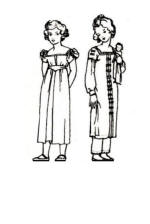
Empire waist – In England, the early 1800s (up to 1820) was known as the Regency Period, but in France, the same period was known as the Empire Period. England looked to France as the leader in fashion. Dresses with an Empire waist were straight (tube or column shaped) and with a low neckline. The waistline was high, located just below the bosom.

English country dance – the most frequent dance form of the period; the dancing couples stood opposite (etre contre) each other in a lien; contre-dancing was Anglicized as country-dancing

English Gentleman – a book by Richard Braithwait (1622); a popular courtesy book for gentlemen; a “self-help” book that included the proper protocol in a social context

Envy – a common theme in Jane Austen’s novels

Epigrammatism – Jane Austen told her sister Cassandra that her readers delighted in Epigrammatism of the general stile (sic); Austen refers to clever, witty, and terse remarks

Epistolary Style – a novel where the plot is rendered through letters

Epsom Downs – the location of the Derby (in Surrey, south of London)

Equipage – a generic term to denote a horse and carriage (occasionally it also referred to the servants accompanying the carriage)

Escritoire – a writing desk with small compartments for writing implements and paper

Established Church – the Church of England

Execution – seizing a person and his good (pursuant of a court order)

Expectations – denoting the likelihood of inheriting wealth (i.e., Dickens’ Great Expectations)

Étiquette – in French, the word means “ticket”; proper etiquette was the ticket to social acceptability, a mix of good manners and polite behavior

Posted in British history, Regency era | 2 Comments

Can Reading Jane Austen Make You Smarter?

Stanford Report, September 7, 2012

This is your brain on Jane Austen, and Stanford researchers are taking notes

Researchers observe the brain patterns of literary PhD candidates while they’re reading a Jane Austen novel. The fMRI images suggest that literary reading provides “a truly valuable exercise of people’s brains.”

BY CORRIE GOLDMAN
The Humanities at Stanford

L.A. CiceroResearcher Natalie Phillips positions an eye-tracking device on Matt Langione.

The inside of an MRI machine might not seem like the best place to cozy up and concentrate on a good novel, but a team of researchers at Stanford are asking readers to do just that.

In an innovative interdisciplinary study, neurobiological experts, radiologists and humanities scholars are working together to explore the relationship between reading, attention and distraction – by reading Jane Austen.

Surprising preliminary results reveal a dramatic and unexpected increase in blood flow to regions of the brain beyond those responsible for “executive function,” areas which would normally be associated with paying close attention to a task, such as reading, said Natalie Phillips, the literary scholar leading the project.

To read the complete article, please visit http://news.stanford.edu/news/2012/september/austen-reading-fmri-090712.html

Posted in Industry News/Publishing, Jane Austen, real life tales | 6 Comments

Crazy Online Reviews

I have recently discovered Robert Jackson Bennett’s WordPress Blog. Mr. Bennett is a Shirley Jackson Award Winner in Science Fiction. One of my favorite of his posts is this one on Book Reviews. See if you recognize yourself in this process.


The types of online reviews that drive writers totally nuts


The weekend has not brought joyous news in regards to online reviews.

For many writers, online reviews are the primary pulse they can apply their fingers to, because writers receive very little actual feedback regarding their books. So, they have to go online to feed their voracious doubts, like – is my book successful? Is it liked? Does anyone get it?

As we’ve now learned, a lot of the feedback we see online is not trustworthy – some writers can, essentially, buy reviews and attention. This is kind of weird for me, because I treat online customer reviews with the same wariness as I do the comments on a news article – the odds of anything intelligent being said are very low, but the odds of reading strung-together swears and racial epithets are very, very high.

TO READ THE COMPLETE POST, PLEASE VISIT http://robertjacksonbennett.wordpress.com/2012/08/27/the-types-of-online-reviews-that-drive-writers-totally-nuts/

Posted in Industry News/Publishing | Comments Off on Crazy Online Reviews

The Bloody Assizes and the Demon Judge, George Jeffreys

Historical Context 

With the death of Oliver Cromwell in 1658, the newly-elected Parliament “restored” Charles II to the throne of England. Charles II’s reign (1660-1685) was marked by political unrest. The ruling class split into two parties: the Whigs and the Tories. The Whigs supported Charles’s brother, James, the Catholic heir to the throne. They believed in constitutional monarchism and opposed absolute rule. The Whigs played a central role in 1688’s Glorious Revolution and were the standing enemies of the Stuart kings and pretenders, who were Roman Catholic. They took full control of England’s government in 1715 and remained in control until King George II came to the throne in 1760.  The Whigs were reliant on parliamentary power and distrustful of the Catholic Church.

Charles II

The Tories, on the other hand, remained sympathetic to royal power and the reestablishment of the Anglican Church. They were hostile to Protestant “dissenters,” such as the Baptists, the Quakers, and the Presbyterians.

Each side tried to outmaneuver the other in its power struggle. Unfortunately, the Whigs tried one too many manipulations when they encouraged Titus Oates to lodge conspiracy and treason charges against James and other governmental officials of Catholic sympathies. “God, King, and Country”

Charles II disbelieved Oates’s conspiracy theories, but he dared not to confront Oates openly. In 1681, he was able to dissolve a Whig parliament and rule directly, with the support of the Tories. Charles II’s reign saw the outbreak of the Second Anglo-Dutch War in 1665, as well as the Great Plague in the same year and the Great Fire of London in 1666.

James II

Charles II died in 1685 after being received into the Roman Catholic Church on his deathbed, and his brother James II came to the throne. Although he was a known Catholic, James II did not impose his beliefs upon his people, but most Whigs did not believe him. Therefore, a Whig faction supported a revolt by Charles II’s illegitimate son, the Duke of Monmouth. The revolt was quickly dispensed, and James sent Judge George Jeffreys to deal out his “revenge.” The result was what is known as The Bloody Assizes.

Full of confidence, James II dismissed Parliament (1685) and appointed Catholic officials, even going so far as to ally himself with the much-despised Louis XIV of France. In 1686, James took measures to restore Catholicism in England and to set up a standing army of 13,000 troops. A like army was supported in Ireland, which created large pockets of distrust among the English. The execution of the Duke of Monmouth united James’s Whig opposition behind the only remaining Protestant claimant to the throne, William of Orange, husband to Mary, James’s daughter. In 1688, Whigs and disenchanted Tories invited William to England to restore English liberties and to drive James from the throne. In 1688, James abdicated and fled to exile in France.

The Bloody Assizes were a series of trials, which began on August 25, 1685, in the aftermath of the Battle of Sedgemoor, which ended the Monmouth Rebellion. There were five judges: Sir William Montague (Lord Chief Baron of the Exchequer); Sir Robert Wright; Sir Francis Wythens (Justice of the King’s Bench); Sir Creswell Levinz (Justice of the Common Pleas), and Sir Henry Polexfen. The group was under the direction of Dorset’s Demon Judge, Lord Chief Justice George Jeffreys.

George Jeffreys:

James Scott, Duke of Monmouth

In June 1685, James Scott, the first Duke of Monmouth, the illegitimate son of King Charles II, landed at Lyme Regis in Dorset, bringing with him a bloody swatch of rebellion. In the days that followed, horror filled the hearts and minds of those living in the area. Monmouth brought some eighty trained soldiers with him. When King Charles II died, his Catholic brother, James, the Duke of York, who became King James II, succeeded him. However, Monmouth, a Protestant, made a bloody bid for the throne.

Landing in Lyme Regis, Monmouth marched across the West Country towards Taunton, into Somerset, Devon, and back to Dorset, gathering support for his bid. The revolt soon became known as The Pitchfork Rebellion. When word reached James II of his “nephew’s” efforts to claim the throne, James II sent an army, commanded by Lord Faversham, to crush the revolt.

On July 6, the two armies clashed at the Battle of Sedgemoor, where Monmouth’s army, along with the Duke, fled. The following morning, disguised as a farm laborer and hiding in a ditch at a spot now known as Monmouth’s Ash, the Duke was captured near Horton Heath, about 8 miles south of the hamlet of Woodyates. Escorted immediately to London, Monmouth was tried for treason and, eventually, beheaded on Tower Hill on July 15, 1685.

George Jeffreys

As part of his revenge on those who stood with Monmouth, King James II sent his most ruthless judge, George Jeffreys, the First Baron Jeffreys of Wem, to deal with the rebels. Jeffreys held a reputation for swift justice and merciless sentences; he, eventually, rose to the position of Lord Chancellor, and occasionally served as Lord High Steward.  Some 1400 prisoners were brought before Jeffreys at the courts of Winchester, Taunton, and Dorchester. The court hearings were given the title of The Bloody Assizes, for some 300 men were put to death during the proceedings. Those found guilty by Jeffreys were hanged or drawn and quartered. Rotting bodies hung from makeshift gallows peppered the main highways and towns in the area. These gruesome sights were a clear warning to those who might force the king’s hand. Another 800 men were sentenced for transportation.

From his Prescript to the Sheriff of Dorset, Jeffreys leaves these orders: “These are, therefore, to will and require of you, immediately on sight hereof, to erect a gallows in the most public place to hand the said traytors on, and that you provide halters to hang them with, a sufficient number of faggots to burn the bowels, and a furnace or cauldron to boil their heads and quarters, and salt to boil them with, half a bushel to each traytor, and tar to tar them with, and a sufficient number of spears and poles to fix and place their heads and quarters; and that you warn the owners of four oxen to be ready with dray and wain, and the said four oxen, at the time hereafter mentioned for execution, and you yourselves together with a guard of forty able men at the least, to be present by eight o’clock of the morning to be aiding and assisting me or my deputy to see the said rebels executed. You are also to provide an axe and a cleaver for the quartering of the said rebels.”

Judge Jeffreys opened the Bloody Assizes at Dorchester on 5 September 1685 at the Antelope Hotel in the “Oak Room.” During his stay in Dorchester, Jeffreys stayed at a house in High West Street, a building, which is still known as his lodgings, and made his way to the courtroom by a secret passage in order to avoid the angry crowds. In one of his more infamous manipulations, Jeffreys convinced a young girl to spend the night in his bed in exchange for her brother’s freedom. When the girl woke the next morning, she peered out the window to see her brother hanging from the neck by a Bridport Dagger. (The town of Bridport was known for the production of netting and rope for the fishing industry and for use by the British navy. Bridport was also known for the production of the hangman’s rope. It was customary to say that those who were hanged were “stabbed by a Bridport Dagger.”) By the time, Jeffreys moved on to Lyme Regis, he had sentenced 74 men to death, sent another 175 to transportation, had 9 whipped, and pardoned 55.

On 11 September 1685, the Bloody Assizes opened at Lyme Regis. On the 12th of September, twelve men were executed on the beach west of the Cobb, and their body parts were displayed on spikes along the railings around the church. Two of the men’s heads were impaled on the iron gates of Chatham House. Jeffreys had dined at the great house on Broad Street the evening before the executions. Since that time, Jeffreys’ ghost is said to carry a bloody bone through the house.

This ghost tale is circumspect at best. After all, in reality, Jeffreys died some four years after the Bloody Assizes ended. During the Glorious Revolution, Jeffreys stayed in London when James II fled However, when William III’s troops marched into the city, Jeffreys disguised himself as a sailor and made his escape. He was captured at a public house in Wapping (now named The Town of Ramsgate). Fearing the public outcry for his “crimes,” Jeffreys begged for protection. On 18 April 1689, he died of kidney failure while in custody in the Tower of London.

Posted in British history | Tagged , , , , , , , , , , , | 5 Comments

Excerpt from “Darcy’s Passions” – Darcy Apologizes to Bingley

At Austen Authors, in celebration of the 200th anniversary of the novel’s events, we are retelling Pride and Prejudice from the points of view of the other characters. This excerpt comes from chapter 15 of my Austen-inspired novel, Darcy’s Passions. 

When Bingley entered the morning room, finding Darcy dressed for a journey brought a surprise to his friend’s countenance. “Darcy, it appears that you plan to leave Netherfield today?”

“I do, Bingley.” He had spent a restless night anguishing over what he would say to his best friend.

“Why must you leave so soon? Are you not satisfied at Netherfield? I know country society does not appeal to you, but I had hoped you would find it more pleasurable this time,” Bingley reasoned.

“Bingley,” Darcy established the tone of what he had would confide. “Would you please join me at the table? I have something important to impart.”

“Darcy, you sound so deliberate.” Bingley walked cautiously to the table and slid onto a chair.

“Bingley, I am not leaving Netherfield because of country society. In fact, I have been served an education; some parts of the country can be very agreeable.” The ambiguity of Darcy’s speech obviously confused Bingley, but Darcy could not seem to bring himself to leave thoughts of Elizabeth Bennet behind. “I do have business to address in London, but that is not my main reason for leaving. After I say what I have to tell you, you will desire my going.”

“Darcy, this speech lacks sensibility; I could never turn away a friend such as you have proved to be.”

“I have been a deplorable friend, Bingley. You have trusted me unwisely.”

“Darcy . . .?” Bingley began, but Darcy dismissed Bingley’s protest with a flick of his wrist.

“Please, Bingley, I must say this while I still possess the nerve. I have given you a disservice.” Uncertain where the conversation led, Bingley sat unresponsive. Having to finish this sad business quickly, Darcy swallowed hard before saying, “I conspired with your sisters last fall to separate you from Miss Bennet; I did so because I considered you to be my dearest friend, and I believed, at the time, that Miss Bennet was indifferent and did not desire your affection; however, that is no excuse for what I have done.”

“Darcy?” Bingley said incredulously. His friend was immediately on his feet and pacing the room. “Am I to understand you kept me from Miss Bennet with some sort of deceit? How could you? You of all people! You recognized how I felt about the lady? You have consulted your own will and made it mine without my permission. You have brought me pain, but what is worse, you have wounded Miss Bennet!”

“Bingley, you are correct to be so upset. I am without reason; my conceit at thinking I knew what was best for you is unforgivable.” Darcy, eyes lowered; realizing he had ruined his relationship with Charles Bingley, he sat dejected.

Several minutes passed before Bingley spoke again. “Darcy,” Bingley forced evenness into his voice, “I am not certain how I will be able to forgive you, but I must assume some of the blame in this matter. This much I know: My nature is too changeable. What you did, you completed in my name, and I allowed it to happen. I should have returned to Netherfield as I planned; I have known that fact for a long time. I should have been man enough to seize my own happiness.”

Realizing how much in his vainglory that he had damaged the one true acquaintance that Darcy treasured, Darcy grimaced, but his conscience would not permit him to tell Bingley only half-truths. “Bingley, you are excelellent to offer your absolution; yet, I have something else to confess.”

Bingley’s countenance displayed his vexation. He was seeing Darcy for the first time. Turning his disappointment on Darcy, he said, “Please continue.”

Darcy lifted his head to meet his companion’s dark, lethal gaze. “Miss Bennet was in London last winter for nearly three months; she stayed with Mr. and Mrs. Gardiner. Miss Bennet sent word to Caroline and even called at the townhouse one day. Caroline, with my permission, gave Miss Bennet a cut by not returning the visit for many weeks. She led Miss Bennet to believe you were interested in Georgiana. I was aware of the lady’s presence in London, but I told you not. Again, I had witnessed your falling in and out of love so often that I did not judge your affections to be constant. Since the time I realized you and Miss Bennet were meant to be together, I have attempted to turn back the clock.”

“Darcy, you have overextended your influence on my life. Is it no wonder Miss Bennet sees me as being a lothario.” Bingley’s hands fisted at his side, and Darcy did not blame the man. If the situation were reversed, he would have planted his friend a facer. Yet, even in the tension-filled room, Darcy found hope. Bingley, evidently, did not observe the true regard for his friend found in Jane Bennet’s countenance.

“Bingley,” Darcy smiled largely. “Miss Bennet, if I may be allowed one last judgment, loves no one but you.”

Bingley protested, “She can not! Miss Bennet must think me a cad–to be indifferent to her!”

“Charles, there are not many things of which I am absolutely certain, but the constancy of Miss Bennet’s feelings for you is one of the few things upon which I would venture a gamble. At Hunsford, Miss Elizabeth reprimanded me for my misgivings regarding the lady, and the Gardiners have showed me how thoughtful Miss Bennet can be. I came to Netherfield to observe the lady’s reactions to your renewed entreaties; her love still rests in you, Charles, if you are willing to ask her.”

“Ask her? Ask her what?” Bingley nearly shouted.

“Ask her to marry you, Bingley,” Darcy said confidently. “Miss Bennet will accept you.”

Bingley frowned. “How can you be so certain? I am not of the same mind, and it is I to whom you reportedly believe the lady directs her attentions!”

Darcy sucked in a deep breath as the vivid memory of Elizabeth Bennet flared in his mind. “You are too close to observe the look in the lady’s eyes when you walk into the room. Most men would give their life for one such glimpse. The lady stirs your soul, Charles; with Miss Bennet you can share your innermost self with respect and dignity. You can wait; you can postpone, but if I were you, I would grab ‘happiness’ with both hands and ask Miss Bennet to marry me.”

A faint smile touched his friend’s lips. “The lady will say ‘yes;’ will she not, Darcy?” Bingley appeared awestruck by the realization of what Darcy shared.

“Miss Bennet will say ‘yes,’ Charles.”

Bingley began to pace, to spin, to stop, and to start all over again. “If Miss Bennet agrees, Darcy, then you will be completely forgiven.” Bingley laughed nervously.

“Then I am forgiven,” Darcy smiled. “You will send me news of your happiness, but pray write legibly.”

“I will send you my fate,” Bingley could not control his thoughts; but then he recalled his sisters’ parts in his misery.

“I hope you have predicted Miss Bennet’s response accurately, Darcy, for it will offer me an opportunity for revenge when I demand that Caroline and Louisa give Jane her proper due as my wife. They believe me to be with you at Pemberley. What I would not give to see their faces when they read I am at Netherfield, and I have offered Miss Bennet my hand.”

Darcy retrieved his glove from a nearby table. He shook Bingley’s hand and then slapped him on the back. “I must leave you now, Bingley.”

“When will you return? If Miss Bennet accepts, you will stand up with me?”

“Although I do not deserve your honest consideration, it would be my honor, Bingley. I will return within a fortnight; your fate should be decided by then.”

Darcy claimed his hat and walking stick and headed for the waiting carriage. Bingley followed close behind. At the carriage, Darcy turned, and Bingley extended his hand. “Friend,” he said.

Darcy firmly grasped the offered hand. “Friend,” came his thankful reply.

* * *

There was little to do in London, but Darcy did not care; his mind could not be happily employed. He had gone to the theatre one evening, for his spirits wanted the solitude and silence, which only numbers could give. A protégé of David Garrick performed magnificently, but the drama The Chances reminded Darcy of Elizabeth for like the character’s jealousy, Darcy remained jealous of the possibility of anyone else having Elizabeth as his wife.

At Longbourn, they had not spoken beyond common civilities. He had once believed their hearts were intertwined, and that nothing could come between them. Their natures so similar–their understanding so perfect–he could never imagine their not finding each other. It was impossible for him to forget how to love Elizabeth, but the fact was when they last met, she did not appear to want to be near enough for conversation–near enough to him. Darcy convinced himself that Elizabeth did not return his regard; he held no choice but to put distance between them. The distance between Pemberley and Longbourn was one kind of distance, but he would also have to build a wall around his heart. Darcy was Bingley’s friend; Bingley would marry Miss Bennet; Darcy could not avoid seeing Elizabeth…but he could force himself to be indifferent.

After a week, a dispatch arrived from Bingley. It read

28 September

Darcy,

You are forgiven. Miss Bennet said “yes.” My fate is sealed! We await your return to Netherfield. Your most humble servant…

Charles Bingley

In many ways, the letter brought Darcy relief, but he envied Bingley’s chance for happiness. Bitterness and lost opportunities had marred his opportunities: if he realized how much a refusal to dance at an assembly would have change his life, he would have dance with Elizabeth the first time he met her; if he…. He did not know whether he could live with all his regrets–with this profound ache of love lost.

Posted in book excerpts, Jane Austen | Tagged , , , | 3 Comments

Excerpt from “Darcy’s Passions”~Darcy and Bingley Dine at Longbourn

Several of the Bennet sisters welcomed Bingley and Darcy upon their entrance to Longbourn. Elizabeth took their greatcoats and briefly greeted Darcy with a hint of a smile and an obligatory curtsy. When they repaired to the dining room, Darcy had hoped to be seated near Elizabeth, but finding himself seated instead close to Mrs. Bennet dashed those hopes. Bingley located a seat near Jane Bennet; oh, for such pleasure with Elizabeth! Darcy could hear nothing of what she said. Only once did he notice Miss Elizabeth’s attentions towards him. It was when Bingley placed himself beside Miss Bennet; Elizabeth gave Darcy a triumphant look, and he bore it with presumed indifference. The meal included venison and a white soup. Darcy attempted to make conversation with Mrs. Bennet, “I extend my compliments on the partridge, Ma’am,” he said a bit awkwardly.

“Thank you, Mr. Darcy,” the house’s mistress said with equal awkwardness. However, Darcy noticed that his words had obviously pleased Elizabeth’s mother.

She clearly had made a statement with the menu, and his good breeding required he take notice, but he would rather have taken notice of her second daughter’s eyes. Generally though, Darcy spoke very little to anyone at the table.

He had hoped for the opportunity of some conversation with Elizabeth as the evening progressed; all he required was a few moments alone. He would ask her to meet him privately, and then he would offer her his hand again. Following the meal, useless and mundane time was spent in the dining room with the gentlemen; he was anxious to return to the ladies. When the gentlemen entered the drawing room, Darcy planned immediately to approach Elizabeth, but she served coffee to the guests and was surrounded by ladies who appeared to be protecting her~for they stood close by. He moved toward her, but one of the girls stepped closer, taking on a conspiratorial stance. Darcy, therefore, took his cup and walked away to another part of the room.

The evening went badly, but, eventually, Darcy returned with his coffee cup. Elizabeth, thankfully, seized the opportunity of saying, “May I inquire of Miss Darcy?” She even forced herself to look at him.

“Georgiana is at Pemberley with Mrs. Annesley. She will remain there until the Festive Season.”

“Then her friends have gone to Scarborough?”

“They have, Miss Elizabeth.” Darcy was barely able to utter the words; her beauty enthralled him.

“I am sorry we could not dine at Pemberley as we had planned.” She struggled to express her regrets.

“Georgiana and I both regretted your sudden departure. We hope to see you at Pemberley again.” Did she understand the double meaning of his words?

The conversation staled at that point. Searching for something more to say, he stood by her, but what he wished to tell her could not be done so in public. He wanted only a few minutes’ conversation with Elizabeth again, and he would be satisfied if only the opportunity occurred. Noting the girl still listened in, Darcy eventually walked away.

That was the last of their conversation for he was relegated to a table of whist at Mrs. Bennet’s insistence; Elizabeth sat at a different table. Darcy’s mind searched for her rather than paying attention to the game, causing him to play poorly. When the others took their leave, Mrs. Bennet attempted to keep them for supper, but their carriage had been ordered, and Bingley and Darcy were soon on their way to Netherfield.

Although he guarded his feelings from Darcy, Bingley rejoiced in the progress he made with Miss Bennet. Memories of Darcy’s censure of Jane Bennet required Bingley to be cautious. Obviously, his friend wanted to retain Darcy’s regard, but Bingley also desired Miss Bennet’s affection. Despite his own misery, Darcy knew the time for telling Bingley the truth had arrived, but he could not do so this evening. His own heart was breaking as he wrote a quick passage to his sister.

(This excerpt comes from Chapter 15 of my first novel, Darcy’s Passions.

Posted in book excerpts, Jane Austen, Regency era, Ulysses Press | Tagged , , , | 2 Comments

The Future: Reselling of eBooks? What Does That Mean for Publishers and Authors?

This article comes from Publisher’s Weekly. To read the complete article visit http://www.publishersweekly.com/pw/by-topic/digital/retailing/article/53334-redigi-plans-to-sell-used-e-books.html

For serial entrepreneur John Ossenmacher, founder, president, and CEO of ReDigi, which bills itself as “the world’s first pre-owned digital marketplace,” the copyright infringement case filed by Capitol Records in U.S. District Court in Manhattan at the start of the year to shut it down is only a “hiccup in the road.” ReDigi, which launched its Web site (redigi.com) with used digital music late last year, is poised to start reselling e-books once the case is resolved. Ossenmacher and CTO Larry Rudolph, who took a leave of absence from his work at MIT, are eager to do so, since e-books will have a much higher ticket price than 69¢ songs. Their goal is to unlock the billions of dollars that consumers have invested in digital goods by reselling them, using the partners’ patented cloud-based technology, which enables them to weed out pirated goods.

If ReDigi prevails in court, it could upend the way e-books and other digital products are sold, since such products would get a second life on the resale market and provide a new revenue stream for publishers and authors. Ironically, the Cambridge, Mass.–based firm could be competing for customers with its neighbor at the Cambridge Innovation Center, Amazon. Currently, ReDigi can’t resell Amazon’s music or other digital files; it is partnering with iTunes.

Posted in Industry News/Publishing | Comments Off on The Future: Reselling of eBooks? What Does That Mean for Publishers and Authors?