Harper Collins to Bring a Global Publishing System to the Marketplace

This article comes from Publisher’s Weekly. To read the complete article, please visit http://www.publishersweekly.com/pw/by-topic/industry-news/publisher-news/article/54323-harper-to-implement-global-publishing-system.html

Oct 11, 2012

HarperCollins is to roll out a new global publishing system, which it claims is “one of the largest undertakings of its kind to be implemented by a trade publisher.”

Developed in partnership with Publishing Technology and built on its advance platform, Global Product Manager will enable the unifying of editorial, marketing and business data around the world, widening the reach of HC’s print and digital publications in its core target markets. By integrating systems and assets across the globe, the new system will provide the company with the long-term infrastructure needed to maximize its extensive catalogue of books, ebooks and apps, empowering HC staff to explore current and future content delivery types and business models, while enabling better metadata management to improve discoverability.

The system will be rolled out first in the US, followed by the UK and subsequently Canada and Australia, as well as to the Christian Publishing Division through 2013.

Posted in Industry News/Publishing, writing | 1 Comment

Regency Era Lexicon – “M” is for …

M.P. – a member of Parliament

macintosh – invented by Charles Macintosh in the 1820s; rubberized waterproof clothing; originally these smelled “terrible”

madeira – a sweet white wine

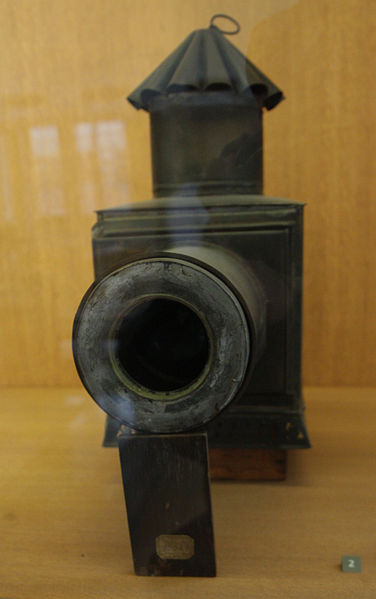
magic lantern – The magic lantern has a concave mirror in front of a light source that gathers light and projects it through a slide with an image scanned onto it. The light rays cross an aperture (which is an opening at the front of the apparatus), and hit a lens. The lens throws an enlarged picture of the original image from the slide onto a screen. Main light sources used during the time it was invented in the late 16th century were candles or oil lamps. These light sources were quite inefficient and produced weak projections. The invention of the Argand lamp in the 1790s helped to make the projected images brighter. The invention of the limelight in the 1820s made it even brighter.

magistrate – another term for a justice of peace; where justices were usually unsalaried country gentlemen, magistrates received a stipend

maid-of-all-work – a maid who performed all the chores in those households, which could afford only one servant

“making love” – During the Regency, this phrase held no physical or sexual connotations. It simply meant verbal flirting or visual flirting (as in a knowing glance across a crowded ballroom).

mail coaches – replaced the ill-conceived post boys in 1784; delivered the post to and from rural areas; was also a means of transportation for many

“making violent love” – is telling the person of the depth of one’s love (i.e., Mr. Elton in “Emma”)

male inheritance defines a “gentleman’s status” – a true gentleman was a man of property; very likely he inherited his country estate and manor from his father; no other requirements were needed to define a “gentleman”

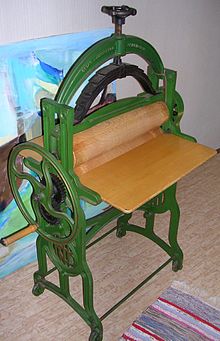
mangle – A mangle (as it is called in the United Kingdom) or wringer (as it is called in the United States) is a mechanical laundry aid consisting of two rollers in a sturdy frame, connected by cogs and, in its home version, powered by a hand crank.

man-of-war – large ship built specifically for warfare

man-trap – used to catch poachers; steel traps weighing up to 80 pounds

mantua-maker – a term for a dressmaker, based on the type of gown she made

marchioness – wife or widow of a marquis

marl – soil used as a fertilizer; it contained clay

marquis – the second highest rank of the peerage after a duke

marriage – was more of a business arrangement than a romantic attachment; the girl’s father/guardian assured her financial protection

marriage settlement/articles – a contract between the future bride and groom, which stipulated how the gentleman’s money would be settled upon the wife and future children upon his death

Martin’s Day– Martinmas, November 11; “Martin’s summer” was used to describe a period of good weather continuing into the late autumn

Master of Ceremonies – employed to oversee the protocol of the large public assemblies (especially those held at the Upper and Lower Rooms in Bath); introduced young ladies and gentlemen to each other so they might dance together (i.e., Henry Tilney and Catherine Morland in “Northanger Abbey”); held knowledge of people’s backgrounds and shared information discreetly; Mr. James King was the MC for the Lower Rooms from 1785-1805, then moved to the Upper Rooms

Mayfair – a half mile square in London’s West End; bounded by Oxford Street on the north, Bond Street on the east, Piccadilly on the south, and Hyde Park on the west; contains Pall Mall, Grosvenor Square, and Berkeley Square; the most elite residential area of London

merino – a superior wool from Spain

mews – any lane or open area where a group of stables could be found

Michaelmas – the feast of St. Michael, which is held on September 29; one of the quarter days

Middlesex – the county in which London north of the Thames was located (to the south was Surrey)

Midsummer Day – another quarter day; celebrated on June 24, which was also the feast of John the Baptist

militia – volunteer soldiers; unlike the regular army, a man from a lower class could enter the militia as an officer

milliner – a maker of women’s hats

“Miss” – used with a surname meant the eldest of several sisters

“Mister” – used with the man’s surname to indicate a surgeon or apothecary; a physician was “Doctor”

mobcap – a standard indoor headgear; A mob cap or mob-cap is a round, gathered or pleated cloth (usually linen) bonnet consisting of a caul to cover the hair, a frilled or ruffled brim, and (often) a ribbon band, worn by married women in the era.

minuet – a French dance for two people

moor – a wild, desolate area in Yorkshire, which is usually covered by heather; a term used in northern England and southern Scotland to designate a boggy or marshy area

morning calls – ceremonial visits paid by the genteel to ladies “at home” in their drawing rooms between 3-5 P.M.

muslin – a fine quality of cotton; very thin material; some young women wore muslin dresses with damped down chemises underneath

mute – a person hired to attend a funeral and mourn

Posted in British history, Jane Austen, Regency era | 4 Comments

Oh, the Places We Will Go…in Austen Novels

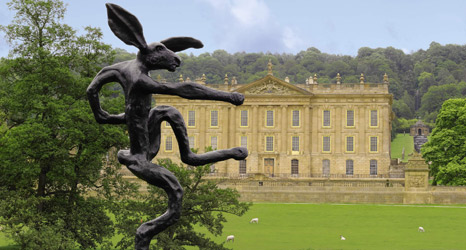
Chatsworth House, likely the inspiration for Pemberley

Through Jane Austen’s novels, I was first introduced, at the age of 12, to beautiful English estates and a land beyond my imagination. I fell in love with the time, the homes, the heroes and heroines, and I have spent a lifetime admiring Austen’s works. Do you know the many places found within Austen’s novels?

from Persuasion

Lyme Regis – where Louisa Musgrove falls from the Cobb; later falls in love with Captain Benwick

Uppercross – the Musgroves’ family home

Bath – city where the Elliots moved and where Anne and Captain Wentworth are reunited

Kellynch Hall – Sir Walter Elliot’s ancestral home

________________________

from Northanger Abbey

Putney, London – from where the Thorpes hail

Oxford – where James Morland attends university

Bath – the city Catherine Morland visits; she meets Henry Tilney there

Northanger Abbey, Gloucestershire – the family seat of the Tilney family

Fullerton, Wiltshire – the village from which the Morlands hail

_______________________________

from Emma

Bath – where Mr. Elton travels to secure a wife

Brunswick Square, London – home of John and Isabella Knightley

Donwell Abbey, Surrey – Mr. Knightley’s estate

Randalls, Surrey – where Mr. and Mrs. Weston reside

Hartfield, Surrey – where the Woodhouses live; Emma’s home

Highbury, Surrey – the village near the estates of Hartfield, Randalls, and Donwell Abbey

______________________________

from Mansfield Park

Sotherton – Mr. Rushwoth’s estate

Portsmouth – the place from where Fanny Price hails; her family resides there

Antigua – Sir Thomas owns a plantation there

London – from which Maria and Julia elope

Thornton Lacey – the clerical living Edmund will receive as part of his orders

Mansfield Parsonage – where first Mr. and Mrs. Norris reside; later it is the home for the Grants; Mary and Henry Crawford visit at the Parsonage

Mansfield Park – the home of the Bertram family and of Fanny Price

_________________________

from Pride and Prejudice 

Brighton, Sussex – where George Wickham is stationed; from which he and Lydia Bennet elope

Gracechurch Street, London – home of Mr. and Mrs. Gardiner, Elizabeth Bennet’s maternal uncle and his wife

Hunsford, Kent – Mr. Collins’ parsonage
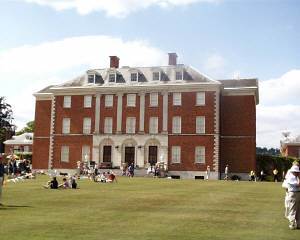
Chevening House, likely the inspiration for Rosing Park

Rosings Park, Kent – the estate of Lady Catherine De Bourgh; Darcy’s aunt

Pemberley, Derbyshire – Fitzwilliam Darcy’s estate

Netherfield, Hertfordshire – Mr. Charles Bingley’s let estate

Lucas Lodge, Hertfordshire – home of Sir William Lucas’s family

Meryton, Hertfordshire – the village nearest to Longbourn

Longbourn, Hertfordshire – home to the Bennet family

___________________________

from Sense and Sensibility

Cleveland, Somersetshire – the Palmer’s estate; where Marianne Dashwood falls ill

Allenham, Devonshire – the estate Willoughby is to inherit

Berkeley Street, London – Mrs. Jennings’ London address

Combe Magna, Somersetshire – Willoughby’s estate

Delaford, Devonshire – Colonel Brandon’s home

Barton Park – the home of Sir John Middleton

Barton Cottage – the home for the Dashwood sisters and their mother

Norland Park, Sussex – the Dashwood ancestral home


Posted in Jane Austen, Regency era, writing | Tagged , , , , , , | 6 Comments

Remembering the 1970 Marshall University Plane Crash

A Memory of the Marshall University Plane Crash
Originally Posted on November 14, 2010, by reginajeffers
This is not a post on Jane Austen. Rather it is a moment in time when I saw the true human spirit, and like Jane Austen, I need to speak of it. Today is the anniversary of one of the most tragic events I have ever experienced, and I hope you will allow me to take you into my life, and by doing so, you will understand more of what makes me the person I am and comprehend why I look to the simplicity of romance for my release. When I think back to the moments which have defined me as a person, I must choose my senior year in college. I attended Marshall University in Huntington, West Virginia.

On November 14, 1970, the Marshall faithful followed the team to Eastern Carolina University for a closely contested game. Returning to Huntington after the loss, Flight 932, a chartered twin-engine Southern Airways DC-9, struck a tree on a hill 5,543 feet west of the runway. The plane cut a path 95 feet wide by 279 feet long through the tree line, even clipping an abandoned house. It crashed, nose-first, in a hollow 4,219 feet short of the runway. The plane, essentially, came apart. A fire melted most of the fuselage. All 75 people aboard, including the entire football team, coaches, a group of supporters, and a crew of five, died. Even today, the cause remains uncertain: weather (fog and rain) or too low of a descent or improper use of cockpit instrumentation data.

Besides being a MU student, I also spent some time with a volunteer fire unit, one of the closest to the accident. Upon my arrival at the scene, I was pressed into combing the hillside for the bodies, one of the most horrendous experiences of my life. With flashlights and flares used for light, we began to gather what we could salvage. Taking my finds to a temporary morgue at the National Guard Armory at the airport, I recall the terrible moment when we realized we had not enough body bags. On the hillside, small fires burned for hours, and only the jet’s engine and a wing section were recognizable. Pieces of bodies were scattered throughout the area. We covered our finds with white plastic to block the view of “interested” onlookers who rushed to the scene. What we could recover, we placed on sheets laid on the armory’s floor. I remember that, ironically, Logan Packing Company provided a cooling unit to preserve the bodies.

Over the next week and a half, I attended 13 funerals, three in one day alone. An “instant” snuffed out the lives of the young who still had potential before them (the players) and those who had greeted life as a partner (mothers, fathers, business leaders, doctors, lawyers, coaches). A 52-minute flight had changed a town and changed me. A grief impossible to explain gripped the area. It was not only that we lost a football program. In reality, we were not a powerhouse at the time, but we were one of the first schools to recruit Black athletes, a statement of change following the Civil Rights movement. And like every young person, I had my hopes on a brighter tomorrow. The crash was a gaping hole waiting to be healed.

Despite our common anguish, things happened to keep the hope alive. The NCAA allowed Marshall to play freshmen, something never permitted previously, and with the insistence of Nate Ruffin, a man who later served on the university’s Alumni Board, as did I, the program became whole again. Walk-on players stepped up, and a team resurfaced. I would like to tell you that the program miraculously became automatic winners, but that would be a lie. For my birthday weekend, the first game in 1971, I was among those in the stands at Morehead State University watching the “Young” Thundering Herd; and although MU lost, many of us saw it as a victory for the university and the town. The next weekend, I was again among the throng crowded into Fairfield Stadium for the team’s first home game. And miracle of miracles, God answered the combined prayer of a crazed crowd – from those who pleaded for a sign that He had not forsaken them. I am not one to beg God for winning lottery numbers or for an unexpected inheritance, but I admit to adding my silent prayers for a win and was granted a last-minute one over Xavier. For hours afterwards, we remained in the stands, hugging strangers who shared the joy of seeing hope resurrected.

Marshall won only one more game that season, and for over a decade the university and the town suffered through numerous losing seasons; yet, even with those losses, people remembered the Xavier win. Often one heard someone say, “Were you here when the plane crashed?” Meaning, “Do we have a shared identity?” In the mid-80′s, MU won a I-AA National Championship and in the 90s more games than any other Division I school. Like every other school, MU has its good seasons and its rebuilding ones, but football is not the lesson here.

What did I learn from this tragedy? First, life is short. Embrace each day as if it is your last. Secondly, hope never dies. Even when faced with complete devastation, some moment, no matter how brief, tells a person that the phoenix will rise from the ashes. Lastly, true love is the most compelling of tasks. It is what sees us through the darkness.

November 14, 1970, serves as a defining date in my life. Like many who experienced this tragedy first hand, I am forever changed. However, the release of the 2006 movie We Are Marshall filled that gaping hole. I cried the first time I saw the film – the memory still too raw even after 35 years, but with each subsequent viewing, the hurt has lessened. Instead of death, I now view the resiliency of the human spirit. That resiliency and that need for hope and love are the subject of my writing.

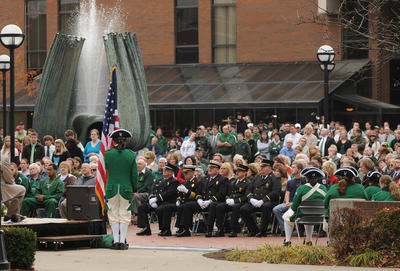
The Memorial Student Center Fountain was dedicated to the memory of the plane crash victims on November 12, 1972. Each year on the crash’s anniversary the water is turned off until the next spring. Its creator Harry Bertora said, “I hoped the fountain would ‘commemorate the living – rather than the dead – on the waters of life, rising, receding, surging, so to express upward growth, immortality, and eternality.’”

Posted in Uncategorized | Comments Off on Remembering the 1970 Marshall University Plane Crash

One Author Carries His Agent’s Rejection Too Far

This article comes from the Los Angeles Times. It is a “lesson” in self control. To read the whole story, please visit http://www.latimes.com/features/books/jacketcopy/la-jc-literary-agent-assault-twitter-20120914,0,7168502.story?track=rss

On Thursday, the Twitter feed of @BookaliciousPam was full of the normal posts: plans to attend an upcoming writers’ conference, which galley service she preferred, enthusiasm for good books. Then she wrote that she had just been the victim of attempted carjacking.

But it wasn’t a carjacking; it was an attack by an author whose work she had rejected.

Pam van Hylckama Vlieg began working as a literary agent for San Francisco’s Larsen Pomada Literary Agency this summer. For years she’s been blogging about romance as Bookalicious and running a separate kids’ literature blog. She’s one of those people who has been comfortable living online, using Twitter, Facebook, and the check-in app Foursquare. And that may have been the problem.

Posted in Industry News/Publishing | 4 Comments

The Lesser Key of Solomon, a Grimoire

The Lesser Key of Solomon (or) Lemegeton (This would have made a great Halloween post with the October holiday so often associated with witches, demons, and spirits.)

The circle and triangle, used in the evocation of the seventy-two spirits of the Goetia. The magician would stand within the circle and the spirit was believed to appear within the triangle.

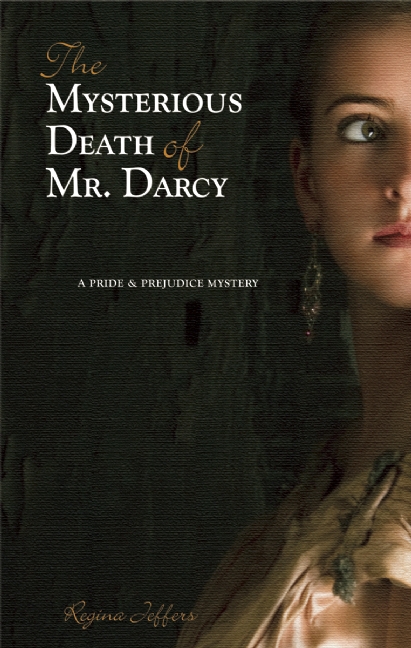
In researching my next cozy mystery, I have sought out several sources that speak of The Lesser Key of Solomon. Although there is not much print space assigned to it, the Lemegeton plays a central role in The Mysterious Death of Mr. Darcy. Therefore, I thought it prudent to bring to light some of the beliefs and inaccuracies associated with this text. What is this manuscript and what is its significance?

The Lesser Key of Solomon or Clavicula Salomonis Regis is an anonymous 17th Century grimoire (textbook of magic). It is widely known as the Lemegeton. The Lesser Key took much of its text from several 16th century manuscripts, including Johann Wierus’s Pseudomonarchia Daemounum (a hierarchy of demons) and late-century grimoires. Some of the first section dates to the 14th Century. Claims that the book was originally written by King Solomon have easily been proven incorrect, but that fact has done little to dampen the documents popularity among those who practice demonology. For example, titles are given to many of the demons. These titles of the nobility were not in use in King Solomon’s time, nor were the prayers to Jesus (Solomon was born some 900 years before Jesus) and the Christian Trinity included in the text.

Reginald Scott, who has completed extensive research on magical texts, mentions Ars Paulina, Ars Almadel, and Ars Notoria (three of the Lesser’s 5 books) and a text closely related to the Goetia. Several experts believe the text of the Lesser could have been collected by 1584.

Buer, the 10th spirit, who teaches “Moral and Natural Philosophy” (from a 1995 Mathers edition. Illustration by Louis Breton from Dictionnaire Infernal).

The Lesser provides detailed description of spirits and conjurations of how to evoke their powers. The several original copies extant vary in detail and spellings. Modern editions are widely available in print and on the Internet.

The books of the Lesser Key of Solomon include:

Ars Goetia – list of 72 demons similar to that of Johann Wierus’s; no demonic seals are assigned to Wierus’s demons, nor are the rituals for conjuring the demons as elaborate as those found in the Lesser; deals with the evocation of different types of spirits

Theurgia Goetia – a system of angel magic; closely parallels Trithemius’ Steganographia (At esotericarchives.com there are some great comparison between the Trithemius’ manuscript and the Lesser.); deals with spirits of the cardinal points; explains the names, characteristics and seals of the 31 aerial spirits that King Solomon evoked

Ars Paulina – the spirits in this part of the Lesser coincide with those found in Trithemius’s Steganographia Book 2; supposedly the Apostle Paul discovered “The Pauline art”; experts have known of the Ars Paulina since the Middle Ages; it contains detailed descriptions on how to deal with the angels of me

Ars Almadel – explains how the almadel, or a wax tablet with protective symbols drawn upon it; has instructions concerning the colors, materials, and rituals necessary for the construction of the almadel

Ars Notoria – a collection of prayers, mixed with kabbalistic phrases and magical words from several languages

Note! As one can easily see, researching the smallest details of a fictional novel are often time consuming. Authors attempt to be accurate in the most minute details, but often they encounter conflicting information, as I have in researching The Lesser Key of Solomon. In my story, the archaeologist finds an original copy of this manuscript, and several devious elements wish to take it from him.

Posted in British history, gothic and paranormal, Jane Austen, legends and myths | Comments Off on The Lesser Key of Solomon, a Grimoire

The Tale of Aradia, Daughter of Diana and Lucifer

In researching my next Austen-inspired cozy mystery, The Mysterious Death of Mr. Darcy, I have been reading LOTS of tales of paganism, witchcraft, and folklore. Believe me, this is not my usual fare, so it’s been quite eye-opening. Below, one will find the tale of Diana, Lucifer, and Aradia.

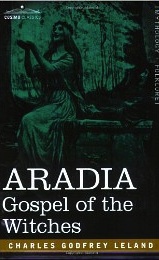
Aradia, a principal figure in American folklorist Charles Leland’s 1899 work “Aradia, or the Gospel of the Witches,” is considered a central figure in the modern pagan witchcraft revival. Aradia is featured in various forms of neopaganism, including Wicca and Stregheria, as an actual deity. Raven Grimassi, founder of Stregheria, claims Aradia was an actual historical figure who led a group of “Diana-worshipping witches” in the 14th Century in Tuscany. That figure was called Aradia di Toscano.

When Leland published his book, he claimed he had received the book from a Tuscan woman named Maddalena and that the story was the religious text belonging to a group of Tuscan witches. In the tale, Diana seduces her brother Lucifer, who is described as “the god of the Sun and of the Moon, and of the Light, who was so proud of his beauty, and who for his pride was driven from Paradise.” When Diana sent her child Aradia to the earth below, Diana instructed Aradia “To be a teacher unto women and men/Who fain would study witchcraft.” Aradia became the first of Earth’s witches, and she promised her students that “Ye shall all be freed from slavery/And so ye shall be free in everything.”

According to the legend, Aradia taught witches and gypsies about spells and charms. She also reportedly taught peasants how to perform magic to be used against the upper classes and, specifically, against the Roman Catholic Church. Leland’s tale speaks of Aradia performing magic and of the night assembly, known as the Sabbat. Leland speculated that this folklore ultimately had roots in ancient Etruscan mythology.

The folklorist Sabina Magliocco was originally a supernatural figure in Italian folklore, who was later merged with the other folkloric figures such as the sa Rejusta of Sardinia. 

Posted in gothic and paranormal, legends and myths, Regency era | Tagged , , , , , , , , | 2 Comments

Amazon’s Author Rank? Good News for Authors or A Step in the Wrong Direction?

This article comes from the Los Angeles Times. To enjoy the complete article, please visit http://www.latimes.com/features/books/jacketcopy/la-jc-amazon-author-rank-20121010,0,1235993.story

By Carolyn KelloggOctober 10, 2012, 10:58 a.m.

As if intending to bring back the emotional scars of not being popular in high school, Amazon has rolled out a beta version of something called Amazon Author Rank. If you are not an Amazon bestseller, you are not going to be in the top. Go on, sit over at the loser table.

There are two sides to the Amazon Author Rank. One is the public-facing one, where the 100 top-selling authors appear. The other is for authors’ eyes only — Amazon provides authors with the ability to see their own sales data in a portal called Author Central. Now the Author Rank has been added to it.

Authors have been crying out in pain on Twitter ever since.

“Thank you, Amazon, for introducing ‘Amazon Author Rank’. What a depressing start to the morning that was,” tweeted award-winning horror writer Michael Marshall Smith.

Young adult author Maureen Johnson wrote, “‘Are you an author? Check out your Amazon Author Rank at Amazon Author Central’ Or stick your hand into this woodchipper! CHOOSE NOW.”

“Breaking: Amazon proposes digital author rank displays be implanted in foreheads. Lower-rankers have to call high-rankers ‘sir,’ or ‘ma’am,'” wrote Myke Cole, author military fantasies published by Penguin.

Novelist and screenwriter Chuck Wendig joked, “My Amazon Author Rank today is: ‘Trembling Wombat.'”


Posted in Industry News/Publishing, writing | Comments Off on Amazon’s Author Rank? Good News for Authors or A Step in the Wrong Direction?

Regency Era Lexicon – We’re Up to the Letter “L”

£ – symbol for the pound, a monetary unit

Ladies’ Mile – a road in Hyde Park set aside for women

Lady – used in the following manner: colloquially used for a man’s wife; the wife of a baronet or a knight; the wife of a peer below the rank of duke; the wife of a younger son of a duke or marquis; the daughter of a duke, marquis, or earl

ladybird – slang for a prostitute

Lady Day – March 25; a quarter day; until 1752, it was the start of the year for official business; the day the Angel Gabriel announced the birth of Jesus to the Virgin Mary

lady’s maid – the woman who tended to the mistress’s clothes and grooming; was an upper servant in the household

Lambeth Palace – the official residence of the archbishop of Canterbury

landau – an open carriage with four wheels; had a hood at each end and two seats opposite

larder – where perishable goods were kept in a great house

laudanum – opium in a solution of alcohol

lawn – a fancy linen

league – a measure of distance that was not precise; somewhere between 2 and 4 miles

levee – a formal reception for presenting men to the sovereign

liberty – an area outside the formal city limits but was still subject to the law’s representatives of the city

license to marry – there were three different licenses/means to marry: common/ordinary license, which was purchased from a clergyman and the couple married in the parish in which one of them lived; calling of the banns, in which the intention to marry was announced over a period of three consecutive Sundays – the couple could marry within 90 days of the last calling of the banns; a special license could only be afforded by the wealthy and those of the haut ton, but they permitted the couple to marry at any time and place

lifeholder – land/property leased for a period of time equivalent to the life of the leasee

life peerage – meant the title died with the holder; not a hereditary title

Limehouse – an area in east London near the docks

linen – a generic term for fine shirts and underwear

link – torches carried by “linkboys,” who ran ahead of a carriage to light its way through the city streets at night

linsey-woolsey – material made of wool and linen

list – a cloth’s edge from which slippers were sometimes made

livery – the uniform worn by the servants of a house

living – a benfice

London Corresponding Society – founded in 1792 to oppose the war with France, fight hunger, and compel parliamentary reform; comprised mainly of small craftsmen

London Riots of 1795 – London Corresponding Society stoned the coach of George III as he traveled through London’s streets to open Parliament; later they rioted to pass acts forbidding Seditious Meetings, etc.

loo – a card game; must win the trick with the high card or the trump card

lord – member of the peerage; also a form of address; also a courtesy title given to the eldest sons of the peerage and to the younger sons, but only if the Christian and surnames were added (Lord James Landry)

lozenge – the shape of the coat of arms on a carriage for a spinster or a widow (rather than the shape of a shield used by the male heir of a line)

Low Church – people who did not practice the rituals of the Church of England (for example, the Evangelicals); stressed the Church’s Protestantism; tolerated Dissenters; supported Latitudinarianism or latitude within the church

lych-gate – a covered gateway at a church entrance where people attending a funeral would wait for the minister before moving the coffin to the graveyard


Posted in British history, Jane Austen, Regency era | 6 Comments

Jami Attenberg Names the Most Dysfunctional Families in Literature~Is Your Favorite Novel on the List?

This article comes from Publisher’s Weekly. I admit that when I read the title of the article, I immediately thought “Pride and Prejudice” and “Wuthering Heights.” My second thought included “The Way We Live Now,” “Ethan Frome,” and “House of Mirth.” What do you think of Attenberg’s list? WHAT BOOKS WOULD YOU ADD TO THE MIX? THERE ARE LOTS OF DYSFUNCTIONAL FAMILIES OUT THERE. If you wish more than a list of the titles, Ms. Attenberg includes her reasoning at http://www.publishersweekly.com/pw/by-topic/industry-news/tip-sheet/article/54424-the-most-dysfunctional-families-in-literature.html

Neuroses run rampant across three generations of the Middlestein family in Jami Attenberg’s sublime new novel,The Middlesteins. Who better to recommend great books about profoundly imperfect families?

In literature, as in life, every family is pretty much dysfunctional in one way or another. So what makes one dysfunctional literary family more memorable than the next? Personally, I prefer a little wit with my disaster, not to mention a little soul; it makes the pain go down easier. But every once in a while I like my families extra wicked and dark. I guess it makes me feel like I’m not that terrible after all.

Jonathan Franzen’s “The Corrections”

Lionel Shriver’s “We Need to Talk About Kevin”

George R.R. Martin’s “Game of Thrones”

Andre Dubus III’s “Townie”

Lauren Groff’s “Arcadia”

Mario Puzo’s “The Godfather”

Alison Bechdel’s “Fun Home”

Maria Semple’s “Where’d You Go Bernadette?”

Jane Austen’s “Pride and Prejudice”

Jeannette Walls’s “The Glass Castle”

Posted in Industry News/Publishing, Jane Austen, writing | Comments Off on Jami Attenberg Names the Most Dysfunctional Families in Literature~Is Your Favorite Novel on the List?