(Sung to the tune of “The Twelve Days of Christmas”)
On the second day of Christmas, Jane Austen gave to me
Two dashing colonels
And a love for Mr. Dar…cy.
(Come back tomorrow for Day 3.)
(Sung to the tune of “The Twelve Days of Christmas”)
On the second day of Christmas, Jane Austen gave to me
Two dashing colonels
And a love for Mr. Dar…cy.
(Come back tomorrow for Day 3.)
The “twelve days” of Christmas comes after the celebration of the religious holiday and leads to the Epiphany on January 6.
(Sung to the tune of “The Twelve Days of Christmas”)
On the first day of Christmas, Jane Austen gave to me
A love for Mr. Dar…cy.
(Come back tomorrow for Day 2.)
Christmastide (also Christmas or the Christmas season) is one of the seasons of the liturgical year of most Christian churches. It tends to be defined (with slight variations) as the period from Christmas Eve to the Epiphany. This period is also commonly known as the Twelve Days of Christmas, as referred to in the Christmas carol of the same name, or Yuletide, as in “Deck the Halls.”
Many Protestant churches add an Epiphany season after the Christmas season, extending the celebration of Christmas for forty days until the feast of the Presentation of Christ in the Temple (Candlemas) on 2 February (or a nearby Sunday). In the Missal and Breviary of the Roman rite, since 1970, the Christmas season runs a shorter period, from Christmas Eve to the Baptism of the Lord, which depending on the place and the year can occur between 7 January and 13 January. In the Little Office of the Blessed Virgin Mary, the season runs from Vespers on 24 December till Compline on 2 February.
During the season, various festivities are traditionally enjoyed and buildings decorated. In some countries the superstition has arisen that it is bad luck to leave the decorations up after Twelfth Night.
Advent, anglicized from the Latin word adventus meaning “coming”, is a season observed in many Western Christian churches, a time of expectant waiting and preparation for the celebration of the Nativity of Jesus at Christmas. It is the beginning of the Western liturgical year and commences on Advent Sunday, called Levavi. The Eastern churches’ equivalent of Advent is called the Nativity Fast, but it differs both in length and observances and does not begin the church year, which starts instead on September 1.
The progression of the season may be marked with an Advent calendar, a practice introduced by German Lutherans. At least in the Roman Catholic, Anglican, Lutheran, Moravian, Presbyterian, and Methodist calendars, Advent starts on the fourth Sunday before December 25, the Sunday from November 27 to December 3 inclusive.
Latin adventus is the translation of the Greek word parousia, commonly used in reference to the Second Coming of Christ . For Christians, the season of Advent anticipates the coming of Christ from two different perspectives. The season offers the opportunity to share in the ancient longing for the coming of the Messiah, and to be alert for his Second Coming.
union – short for a workhouse; usually built by a union of several individual parishes
up – used in referring to moving toward London; used in referring to coaches (and later to trains)
up – meant toward Oxford or Cambridge (to go up); in contrast, to be sent down was to be expelled from university
Upper Rooms – Bath possessed two large assembly rooms. The older Lower Rooms were near Bath Abbey in the lower part of the city. The Lower Rooms were destroyed by fire in 1820. The Upper Rooms were located near The Circus and Bennett Street in the upper part of the city. Although damaged by bombing in World War II, the Upper Rooms have been refurbished.
upper servants – those with the most senority in a household; included the butler, the housekeeper, valet, and the lady’s maid; the housekeeper was always addressed as “Mrs.”
usher – an assistant to a headmaster of a school
vacation – the period between terms at the universities or the terms for London’s high courts
vail – a form of gratuity given by a departing guest to the household servants who attended him
valet – the counterpart to a lady’s maid; the valet took care of a gentleman’s dress/clothing; referred to as a gentleman’s gentleman
Vauxhall Gardens – an eleven-acre pleasure garden across the Thames from London; one of the leading venues for public entertainment in London from teh mid 17th Century to the mid 1800s
vellum – a parchment made from sheep or goat skin and used for fine quality writing paper
Venerable – a term of respect used when addressing an archdeacon of the Church of England
verger – the man who tended to the inside of a church
Vernon, Lady Susan – the main character in Austen’s Lady Susan novella; known as “the most accomplished coquette in England”
Very Reverend – form of respect/address for a dean in the Church of England
vestry – the room where the clergyman dressed for the service; also where the bride and groom signed the registry following the wedding ceremony; was often used to store sacred vessels or to conduct parish business
vicar – a parish priest appointed to the living by a landowner; he shared the tithes with the landowner; in contrast, a rector received all the tithes
vinaigrette – a small silver box containing vinegar; it was used to revive women who swooned or fainted
A Vindication of the Rights of Woman with Strictures on Political and Moral Subjects (1792) – written by the 18th-century British feminist Mary Wollstonecraft, is one of the earliest works of feminist philosophy. In it, Wollstonecraft responds to those educational and political theorists of the 18th century who did not believe women should have an education. She argues that women ought to have an education commensurate with their position in society, claiming that women are essential to the nation because they educate its children and because they could be “companions” to their husbands, rather than mere wives. Instead of viewing women as ornaments to society or property to be traded in marriage, Wollstonecraft maintains that they are human beings deserving of the same fundamental rights as men.
ving-et-un – a card game; basically, it was the equivalent of “21”; getting as close to 21 without going over
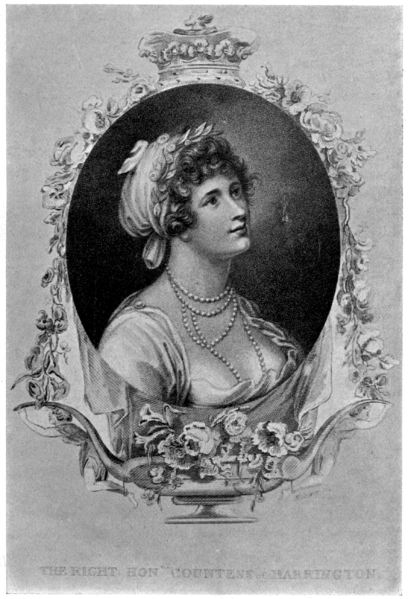
viscount – a peer ranking below an earl and above a baron; his wife was a viscountess; was spoken of or called the “Right Honourable” and addressed as Lord__________
visiting card – a card displaying one’s name; left when paying a call
visitation – when a bishop or archdeacon made a tour of a parish or a diocese
Volume the First – one of the three sections of what is known as Jane Austen’s “Juvenilla”; it contains Austen’s “Jack and Alice” and “Henry and Eliza”; Austen copied many of her pieces in three volumes; the volumes are NOT in chronological order
Volume the Second – the earliest of Austen’s three volumes, likely completed when she was 14-15 years of age; it is marked with “Ex dono mei Patris” (From my father); it is dated in 1790; two of the better selections in this volume is “Love and Friendship” and “The History of England,” which made fun of Oliver Goldsmith’s History of England
Volume the Third – another of Austen’s “Juvenilla”; inside is written in her father’s handwriting “Effusions of Fancy by a very Young Lady Consisting of Tales in a Style entirely new”; this volume contains “Caatharine; or The Bower” and “Evelyn”
volumes – books during the Regency were published in volumes; most often the books were three-deckers (three separate volumes); in Jane Austen’s case, all her books are three-deckers, except Persuasion and Northanger Abbey, which were two volumes each
**Bing Crosby and Danny Kaye starred in 1954’s White Christmas. But did you know that the movie was the first one to be made in Vista Vision?
**The Philippines celebrated Christmas as long ago as 1280-1320 A.D. That was 200 years before Ferdinand Magellan discovered the country.
**A choirmaster at Cologne Cathedral was the first to shape candy canes with a “shepherd’s crook.” At that time, canes were plain white sugar candy. It was the 20th century before anyone added the stripes.
**Charles Dickens’s originally planned for Scrooge to say “Bah Christmas.”
**Frankincense was burned by the Romans on their altars and at cremations. It was a valuable resin and was very costly. It is a sweet smelling gum resin from Boswellia trees. Frankincense was presented to the Christ Child by the black king, Balthasar.
**Oklahoma was the last U.S. state to declare Christmas a legal holiday. That happened in 1947.
**Dutch children receive gifts left in shoes rather than to hang Christmas stockings. The gifts are received any time between mid-November and December 5, which is St. Nicholas’s birthday.
**The American version of a stable is wooden. However, if one studies the Biblical time period, he would realize that it was likely that Jesus Christ was born in a cave rather than a wooden stable. Caves were used to keep animals out of the intense heat of that area of the world. In fact, a large church is now built around the cave. People can go down inside the cave to see the reported scene.
** “Silent Night” was written in 1818 by an Austrian priest Joseph Mohr. The church organ was in disrepair, and Mohr did not want the ceremony to have no music. So, he composed three stanzas which could be sung by the choir to guitar music.
**”The Twelve Days of Christmas” was written to help Catholic children, in England, to remember different articles of faith during the persecution by Protestant Monarchs. The “true love” is God.
“Partridge in a pear tree” = Christ
2 Turtle Doves = Old and New Testament
3 French Hens = Faith, Hope, and Charity (Theological Virtues)
4 Calling Birds = the Four Gospels
5 Golden Rings = The “Pentateuch”
6 Geese A-Laying = the days of the Creation
7 Swans A-Swimming = the seven sacraments
9 Maids A-Milking = the eight beatitudes
10 Lords A-Leaping = the Ten Commandments
11 Pipers Piping = eleven apostles who remained faithful
12 Drummers Drumming = the twelve point of doctrine in the Apostle’s Creed
take orders – becoming a clergyman in the Church of England
take silks – a barrister would wear a silk gown once he became the King’s Counsel (or the Queen’s Counsel)
tallow – fat from oxen or sheep, which was used to make soap and candles
tambour – a hoop filled with material; used for embroidery work
tandem – a team of two horses harnessed one behind the other, rather than side by side
tanner – slang for a sixpence
taproom – an inn’s room where ordinary laborers were served (as opposed to a private parlor for the genteel sect)
tea caddy – a box that held tea
teapoy – a 3-legged stand used for serving tea
Tea Room – located in the Bath assembly rooms; one could take tea in the room, but it was also used for concerts
tea service – in contrast to the suppers served at private balls, at assemblies or public balls, teas was served halfway through the evening; gentlemen sat with the ladies with whom they had danced prior to the tea service
Temple – the site for two of the four Inns of Court (the Inner Temple and the Middle Temple); was once occupied by the Knights Templar
Temple Bar – a gate that marked the formal entrance to the City of London; the sovereign had to request permission of the Lord Mayor to enter the city; north of the Temple at the eastern end of the Strand
tenants – prosperous farmers who rent land; not necessarily the poor
tenner – slang for a ten-pound note
Test Act – legislation that forbid Catholics from holding public office, including Parliament; was repealed in 1828
Thirty-nine Articles – the basis of the Church of England; a clergyman “read himself in” to a new parish congregation by reading the articles aloud to the congregation from the pulpit
three-decker novel – a common occurrence in novels of the 18th and 19th Centuries; the novel is divided into three volumes within one book; the volumes were published as separates (only Austen’s Northanger Abbey and Persuasion are two volumes; all other Austen works were 3 volumes)
ticket-of-leave – an early release from jail (similar to parole)
ticket porter – a member of the official group licensed to carry goods, parcels, etc.; a ticket porter carried a badge which identified him as a member of this occupation; like a guild member
ticket to a public ball – anyone who could afford a ticket to a public ball or assembly was admitted; a season of tickets would cost between one pound and ten guineas (depending on the country or in London)
tidewaiter – a customs official for incoming boats/ships
tights – thin, skintight pants worn by gentlemen in the early part of the century; were so tight that men resorted to carrying a purse for their money
tilbury – the cloth covering part of a wagon
Times – the most important newspaper of the day; one could find the entire text of parliamentary debates in the Times
tinderbox – used to start a fire before matches became common; one struck the flint from the box against a piece of metal in hopes that a spark would light the rags inside the box; candles, etc., were lit from the tinderbox
tippet – a fur scarf that hung about the neck and down either side of the chest; many times the tippet was a dead animal (think Fox furs, etc.)
tithes – the amount paid in kind to the local parish clergyman; equal to 1/10 of the farmer’s or tradesman’s annual produce
top – the place in a ballroom or assembly from which the orchestra played; the “top” couple in a line of dance was the one closest to the orchestra; to be at the top of the line was a place of honor, usually afforded to the highest ranking aristocrat in the room
top boots – high boots used for riding
Tory – the conservative party in English politics
training college – a college that trained teachers for the national schools
Transatlantic Trade Triangle – goods were shipped from British ports to the west coast of Africa, where they were exchanged for slaves; the slaves were taken by The Middle Passage to the Americas; slaves were traded for agricultural goods (cotton and sugar) and returned to England
transportation – sending English criminals overseas as punishment; until 1776, the American colonies were the destination; afterwards, the criminal was sent to Australia
traveling post – a hired driver, chaise, and horses for a journey
treacle – a sweet medicine (similar to molasses)
truck system – paying one’s employees in goods, food, etc., rather than money
tucker – a piece of lace to cover a woman’s chest in lady’s garments
turbans – a popular ladies’ fashion in the early part of the century; an imitation of a Middle Eastern headdress
turnkey – a jailer
turnpike – a toll road; the average toll was 2-3 pence per mile
twelfth cakes – cakes made for Twelfth Night; those who found the coin or bean inside became the “king” or “queen” of the celebration
Twelfth Night – January 5; the night before the 12th day after Christmas; when Christmastide officially ended; January 6 is the Epiphany
two-dance rule – a couple was expected not to dance more than twice; dancing more often with a partner was a symbol of serious matrimonial interest
two-penny post – London’s local mail delivery system, which was run as a separate entity from the national mail system; similar local mail delivery systems rose up within other large metropolitan areas
Known locally as the Minster, Wimborne Minster is the parish church of Wimborne, Dorset, England. The Minster has existed for over 1300 years and is recognised for its unusual chained library (one of only four surviving chained libraries in the world). The Minster, a former monastery and Benedictine nunnery, is the resting place of King Ethelred of Wessex.
Dedicated to Sain Cuthburga, who founded a Benedictine abbey of nuns at the present day minster in circa A.D. 705. A monastery for men was built around this time, adjacent to the abbey. In 871, Alfred the Great buried his brother King Ethelred in the Minster.
The women’s monastery was destroyed by the Danes in 1013 during one of their incursions into Wessex and never rebuilt, though the main abbey building survived. In 1043, Edward the Confessor founded a college of secular (non-monastic) canons, consisting of a dean, four prebends, four vicars, four deacons, and five singers at the minster. The minster was remodelled and rebuilt by the Normans between 1120 and 1180, to support that institution.
In 1318, Edward II issued a document that made the minster a Royal Peculiar, which exempted it from all diocesan jurisdiction. The choir used to wear scarlet robes, a legacy of this ‘Peculiar’. Similar robes of this type are worn in Westminster Abbey and St. George’s Chapel at Windsor Castle. In 1496, Lady Margaret Beaufort, granddaughter of John of Gaunt and mother of Henry VII, founded a small chapel in the minster. With the reign of Henry VIII, the remaining parts of the monastery were adopted into part of the minster to avoid being destroyed. However much of the wealth of the minster was confiscated by King Henry VIII.
Sixty six years later in 1562 a grant was obtained from Queen Elizabeth I by which part of the property formerly belonging to the college, together with all ecclesiastical rights and prerogatives was returned to Wimborne and vested in twelve governors. The charter was surrendered to James I and a new charter was obtained from Charles I at a cost of £1000 with the addition of an organist and singing men. During the English Civil War, when Charles I was beheaded his coat of arms was painted out from the wall of the minster, but on the restoration of Charles II the arms were speedily replaced and have now been restored.
In 1846 the Royal Peculiar was abolished, and now all that remains of the old order is the control by 12 governors of some of the minster affairs. The church was renovated towards the end of the 19th century and its last addition, a vestry was added at the same time. Today the church is a place of visit and worship for the local community and visitors.
The old Treasury which housed the wealth of the minster has an important chained library. The library was founded in 1686 and is the second largest chained library in the country and also one of the first public libraries. Some of the collections of the library include a manuscript written on lambskin in 1343, a book bound for the Court of Henry VIII, an incunabulum printed in 1495 on the works of Saint Anselm, and a Paraphrase of Erasmus printed in 1522 with a title page designed by Holbein.
Wimborne Minster is the home of an astronomical clock, one of a group of famous 14th to 16th century astronomical clocks to be found in the west of England. It is currently maintained by notable Wimborne resident Bruce Jensen.
Body Snatching was the removal of bodies from graveyards, usually for the purpose of using the corpses as cadavers for the 19th Century medical schools. Those who practiced body snatching were referred to as resurrectionists or resurrection-men. As opposed to grave robbery, which involved robbing a tomb or crypt to steal artifacts or the corpse’s personal effects, body snatchers dealt in bodies for sale.
Before the Anatomy Act of 1832, the only legal way for medical schools to have bodies for anatomical purposes in the UK were those condemned to death and dissection by the courts. Those sentenced for harsher crimes were often condemned to dissection.
Before electric power to supply refrigeration, bodies would decay rapidly and become unusable for study. Therefore, the medical profession turned to body snatching to supply the deficit of bodies fresh enough to be examined.
Stealing a corpse was only a misdemeanour at common law, not a felony, and was therefore only punishable with fine and imprisonment, rather than transportation or execution. The trade was a sufficiently lucrative business to run the risk of detection, particularly as the authorities tended to ignore what they considered a necessary evil.
Body snatching became so prevalent that it was not unusual for relatives and friends of someone who had just died to watch over the body until burial, and then to keep watch over the grave afterburial, to stop it being violated. Iron coffins, too, were used frequently, or the graves were protected by a framework of iron bars called “mortsafes,” well-preserved examples of which may still be seen in Greyfriars churchyard in Edinburgh.
One method the body snatchers used was to dig at the head end of a recent burial, digging with a wooden spade (quieter than metal). When they reached the coffin (in London the graves were quite shallow), they broke open the coffin, put a rope around the corpse and dragged it out. They were often careful not to steal anything such as jewellery or clothes as this would cause them to be liable to a felony charge.
The Lancet reported another method. A manhole-sized square of turf was removed 15 to 20 feet (5 to 6 m) away from the head of the grave, and a tunnel dug to intercept the coffin, which would be about 4 feet (1.2 m) down. The end of the coffin would be pulled off, and the corpse pulled up through the tunnel. The turf was then replaced, and any relatives watching the graves would not notice the small, remote disturbance. The article suggests that the number of empty coffins that have been discovered “proves beyond a doubt that at this time body snatching was frequent”.
During 1827 and 1828, some Edinburgh resurrectionists including Burke and Hare changed their tactics from grave-robbing to murder, as they were paid more for very fresh corpses. Their activities, and those of the London Burkers who imitated them, resulted in the passage of the Anatomy Act of 1832. This allowed unclaimed bodies and those donated by relatives to be used for the study of anatomy, and required the licensing of anatomy teachers, which essentially ended the body snatching trade. The use of bodies for scientific research in the UK is now governed by the Human Tissue Authority. 
Regency Era manners were based on the conduct of the upper crust of Renaissance Italy, as well as 17th Century France. The fashions and the codes of conduct were influenced by both, but the Regency Period carved out a specific style all its own. Social classes were more obvious during the Regency. It was important to know one’s place and to act accordingly. Social rank determined many everyday interactions.
Men of the period were taught how to be a “gentleman” from a very young age. Their tutors and formal schooling enforced such codes. A gentleman was expected to speak and act with confidence; to use correct English and to avoid vulgarity in speech; to be exceptionally dressed; to walk with confidence and proper posture; to dance well; to have a well-rounded education that included science, math, the arts, literature, etc.; to demonstrate proper manners; and to show of a lesser class consideration.
Women were expected to be meek, obedient, docile, fragile, and dependent on the men in their lives. A woman’s appearance was her crowning glory; therefore, women were expected to take care with their dress and hair. Women were taught to value beauty over education. Learning and intelligence was frowned upon.
Men of the period turned to courtesy books and guides on rules for behavior. Sir Thomas Holby translated an Italian courtesy book entitled Il Cortegiano from the early 1500s. It was very popular during the Regency. Women consulted conduct manuals such as Fordyce’s Sermons to Young Women and Gregory’s A Father’s Legacy to His Daughter.
Some of the stricter guidelines for behavior included proper ways to address others. For example, only close friends and family would use a person’s given name. It was permissible for a person of higher rank to use the given name of a lower class acquaintance, but not the reverse. The eldest daughter in a family was “Miss” + last name (as in Miss Bennet for Jane Bennet in “Pride and Prejudice”). Her sisters would be “Miss” + given name (as in Miss Elizabeth).
Only those of a higher rank could approach someone he did not know. People of a lower or equal rank had to wait for an introduction by a friend or a master of ceremonies. After an introduction, a person was considered an “acquaintance.” Shunning an acquaintance was considered rude and was a “direct cut.” If an acquaintance was in the same room in the company of an unknown person, one would simple acknowledge the acquaintance with a nod or an unobstructive wave or a bow. A handshake was only exchanged among close friends.
People entered a room by social rank. Members of the aristocracy entered by rank: Duke/Duchess; Marquess/Marchioness; Earl/Countess; Viscount/Viscountess; Baron/Baroness. The aristocracy were followed by the landed gentry. Family members entered according to their age and marital status. (Do you recall Lydia Bennet Wickham claiming precedence over her elder sister Jane. Although Lydia was the youngest Bennet sister, her marriage would place her above her sisters.)
Rame Head is a coastal headland, southwest of the village of Rame in southeast Cornwall, United Kingdom. The area plays a prominent role in my Regency romance, The First Wives’ Club, which recently received an honorable mention in SOLA’s Seventh Annual Dixie Kane Awards.
The site was used for a hill fort in the Iron Age. The headland has a prominent chapel, dedicated to St Michael, accessible by a steep footpath. The chapel was first licensed for Mass in 1397 and is probably on the site of a much earlier, Celtic, hermitage. It remains as an intact shell. Earl Ordulf, who was the owner of vast estates in the West Country and was the uncle of King Ethelred, gave Rame to Tavistock Abbey (which Ordulf had founded) in 981. 
The headland is prominent to sailors and fishermen leaving Plymouth through Plymouth Sound. It is often the last piece of land they see leaving England, and the first they see when returning home; Rame Head thus appears in the sea shanty “Spanish Ladies.”
Due to its exceptionally high and panoramic vantage point, there is a volunteer National Coastwatch Institution lookout on the top of the headland.