Regency Celebrities: Henry Bell, Pioneer in the Development of the Steamship

150px-Henry_Bell,_portraitl Henry Bell (7 April, 1767 – 14 March, 1830) was a Scottish engineer who is famed for introducing the first successful passenger steamboat service in Europe.

Early Career
Bell was born at Torphichen, near Bathgate, West Lothian in 1767 and pioneered the development of the steamship. He was the fifth son of Patrick Bell and Margaret Easton, themselves members of a family well known at the time as millwrights, builders and engineers. Their work included the design and construction of harbours, bridges, etc., in Scotland and throughout the United Kingdom.

Henry Bell was educated at the local parish school and was apprenticed to a stonemason in 1780. Three years later, he was apprenticed to his uncle, a millwright. He later learned ship modelling in Borrowstounness and in 1787, pursued his interest in ship mechanics in Bell’s Hill with the engineer Mr James Inglis. This was followed by several years in London.

He returned to Scotland around 1790, and moved to Glasgow, where he worked as a house-carpenter. His ambition was to follow in the footsteps of his ancestors and become a civil engineer, and to this end he joined the Glasgow corporation of wrights on October 20, 1797. He was entirely unsuccessful, apparently due to either lack of money, or lack of application or skill on his part. According to his contemporaries:

“Bell had many of the features of the enthusiastic projector; never calculated means to ends, or looked much farther than the first stages or movements of any scheme. His mind was a chaos of extraordinary projects, the most of which, from his want of accurate scientific calculation, he never could carry into practice. Owing to an imperfection in even his mechanical skill, he scarcely ever made one part of a model suit the rest, so that many designs, after a great deal of pains and expense, were successively abandoned. He was, in short, the hero of a thousand blunders and one success.”

Interest in Steam Power for Shipping
The idea of propelling vessels by means of steam early took possession of his mind. “In 1800 (he writes) I applied to Lord Melville, on purpose to show his lordship and the other members of the Admiralty, the practicability and great utility of applying steam to the propelling of vessels against winds and tides, and every obstruction on rivers and seas, where there was depth of water.”

Disappointed in this application, he repeated the attempt in 1803, with the same result, notwithstanding the emphatic declaration of the celebrated Lord Nelson, who, addressing their lord-ships on the occasion, said, “My Lords, if you do not adopt Mr Bell’s scheme, other nations will, and in the end vex every vein of this empire. It will succeed (he added), and you should encourage Mr Bell.” Having obtained no support in this country, Bell forwarded copies of the prospectus of his scheme to the different nations of Europe, and to the United States of America. “The Americans,” he writes, “were the first who put my plan into practice, and were quickly followed by other nations.” The various attempts which preceded that of Bell are briefly noticed in the “Fifth Report of the Select Committee of the House of Commons on Steam-Boats, June, 1822, Sir Henry Parnell, chairman.” Mentioning the following as experimenters, namely, Mr Jonathan Hulls, in 1736; the Duke of Bridgewater, on the Manchester and Runcorn canal; Mr Miller of Dalswinton; the Marquis de Jouffroy (a French nobleman), in 1781; Lord Stanhope, in 1795; and Mr Symington and Mr Taylor, on the Forth and Clyde canal, in 1801-2; the Report proceeds—”These ingenious men made valuable experiments, and tested well the mighty power of steam. Still no practical uses resulted from any of these attempts. It was not till the year 1807, when the Americans began to use steamboats on their rivers, that their safety and utility were first proved. But the merit of constructing these boats is due to natives of Great Britain. Mr Henry Bell of Glasgow gave the first model of them to the late Mr Fulton of America, and corresponded regularly with Fulton on the subject. Mr Bell continued to turn his talents to the improving of steam apparatus, and its application to various manufactures about Glasgow; and in 1811, constructed the Comet steam-boat.”

Paddlesteamer Comet
In 1808, Bell moved to the modern town of Helensburgh, on the north shore of the Firth of Clyde, where his wife undertook the superintendence of the public baths, and at the same time kept the principal inn, whilst he continued to prosecute his favourite scheme, without much regard to the ordinary affairs of the world.

In 1812 he built his steam-boat the Comet, of 30 tons burthen, with an engine of three horsepower. The Comet, named after a great comet, which had been visible for several months in 1811-12, was built by Messrs John Wood and Co., at Port Glasgow which lies 3 miles to the east of Greenock, as adjacent towns on the south bank of the River Clyde as it widens into the Firth of Clyde. The Comet made a delivery voyage from Port Glasgow 21 miles upriver to the Broomielaw, Glasgow, then sailed from Glasgow the 24 miles down to Greenock, making five miles an hour against a head-wind. (some sources give a date of January 18, 1812 for a trial trip, McCrorie gives August 6, 1812 for the delivery, with the historic trip a day or so later.)

In August, Bell advertised a passenger service on the Comet between Glasgow, Greenock and Helensburgh three times a week, returning on alternate days, “to ply upon the River Clyde from Glasgow, to sail by the power of air, wind, and steam.”

Bell briefly tried a service on the Firth of Forth. Then he had the Comet lengthened and re-engined and from September 1819 ran a service to Oban and Fort William (via the Crinan Canal), a trip which took four days, but on December 13, 1820 the Comet was shipwrecked in strong currents at Craignish Point, near Oban.

Bell built another vessel, Comet II, but, on October 21, 1825, she collided with the steamer Ayr off Kempock Point, Gourock. Comet II sank very quickly, killing 62 of the 80 passengers on board. After the loss of his second ship, Bell abandoned his work on steam navigation.

Later Life
Bell lived to see his invention universally adopted. The Clyde, which first enjoyed the advantages of steam navigation, became the principal seat of this description of ship-building. Bell reaped no personal advantage from the widespread adoption of steam powered ships, and, due to his poor management of his finances spent many of his later years in abject poverty.

Touched by his condition, the late Dr Cleland, and a number of other benevolent individuals, commenced a subscription on his behalf, by which a considerable sum was raised. The trustees on the river Clyde granted him an annuity of £100, which was continued to his widow. This was but a becoming acknowledgment of the value of his great invention on the part of the trustees of a river whose annual revenue was greatly increased by it.

Death
Bell died at Helensburgh in 1830, aged 62. He was interred in the Rhu churchyard. An obelisk to his memory was erected on the rock of Dunglass, a promontory on the Clyde, about 2½ miles above Dumbarton.

Posted in British history, Great Britain, Living in the Regency, real life tales, Regency era, Regency personalities, Scotland | Tagged , , , | 1 Comment

Exploring the UK: Badbury Rings in Dorset

285px-Badbury_Rings_-_view_from_the_northeast_-_April_2013 Badbury Rings is an Iron Age hill fort in east Dorset, England. It was in the territory of the Durotriges. In the Roman era a temple was located immediately west of the fort, and there was a Romano-British town known as Vindocladia a short distance to the south-west.

Iron Age
Badbury Rings sits 327 feet (100 m) above sea level. There are two main phases of construction; the first covered 7.3 hectares (18 acres) and was defend by multiple ditches, while the second was more than twice the size, covering 16.6 ha (41 acres) and defended by a single ditch and rampart. Bronze Age round barrows in the vicinity demonstrate an earlier use of the area.

Until 1983 Badbury Rings was part of the Kingston Lacy estate, the owners of which had discouraged investigation of the site. The site now belongs to the National Trust. A survey of the hillfort by the RCHME was begun in 1993. The summit area was cleared of undergrowth by the National Trust in 1997 and the conifer plantation was thinned out. This allowed the RCHME to complete the survey in 1998, which recorded 28 potential hut sites within the ramparts, although some depressions are probably caused by uprooted trees. The first excavations, led by Martin Papworth, took place in 2004, when three evaluation trenches were dug. Almost all of the pottery found was dated to the Late Iron Age. The current evidence does not suggest that the hillfort was a principal settlement in the Early Iron Age. It seems likely that the hillfort became depopulated towards the end of the Late Iron Age, perhaps as the Vindocladia settlement near Shapwick developed.

Badbury Rings is the fifth in a series of Iron Age earthworks, starting from Hambledon Hill, and also including Hod Hill, Spetisbury Rings, Buzbury Rings, Badbury Rings and Dudsbury Camp. The Iron Age port at Hengistbury Head forms a final Iron Age monument in this small chain of sites.

Roman Roads
During the Roman era, five Roman roads formed a complex junction on the north side of Badbury Rings.

The Roman Conquest of Britain began in 43 AD. It is likely that the Legio II Augusta campaigned in Dorset under the command of the future emperor Vespasian. 4 km southeast of Badbury Rings, at Lake Farm near Wimborne, a fort was established. A military road from the Lake Farm fort was created which passed by the northeast side of Badbury Rings. Beyond Badbury Rings the road headed in a northwest direction (visible today as a thin strip of woodland) heading for the Roman fort at Hod Hill. At an early stage, this road formed a junction with Ackling Dyke, a Roman road which headed northeast to Old Sarum (Sorviodunum). Another road ran across country in a north by northwest direction towards Bath. The final road (still used as a modern trackway on the west side of Badbury Rings) ran in a southwest direction through the settlement of Vindocladia heading towards Dorchester (Durnovaria). This final road was not built until the later Roman period.

Romano-Celtic Temple
Immediately west of Badbury Rings is the site of a Romano-Celtic temple. It is located within a polyogonal boundary bank visible on aerial photographs. It was excavated as early as 1900, and again in 1952. These excavations revealed stone roofing slabs, painted wall-plaster, and over 185 Roman coins, as well as 21 Durotrigian silver and bronze coins. Pottery, glass beads, bronze pins, a bracelet and a brooch were also recovered. Further excavations were conducted in 2000 which showed that the temple was in use from the 1st to 5th century AD.

Vindocladia
A short distance (1.5 km) to southwest of Badbury Rings, between the hillfort and the modern village of Shapwick, lay a small Romano-British town (ST946022), believed to be that listed in the Antonine Itinerary as Vindocladia. In the later Roman period, a small fort was also established on the east side of the town. The fort was only discovered in 1975, and the existence of the town only came to light in the 1990s.

It has long been known that there was Roman activity in the area. A Roman pit and occupation debris were discovered in 1954 in the village of Shapwick, which included Samian ware pottery, a bronze coin of Claudius, and a rim fragment of a mortarium. In 1990 an archaeological field survey revealed three areas of building debris including roof and flue tiles, tesserae, and 2nd-4th century AD pottery.

Excavations, led by Martin Papworth, took place in 1991, 1995, and 2004. The 1991 excavations uncovered robber trenches, tesserae, pottery, painted wall plaster and evidence for iron working. The 1995 excavations demonstrated that the Roman occupation overlay numerous pits and ditches dating from the middle to late Iron Age, and uncovered smithing hearths dating from the second century. They further demonstrated that the Roman road through the settlement and the associated fort were not built until the later Roman period. Excavation of the settlement’s boundary ditch in 2004 uncovered early first-century pottery, including a Samian-ware platter, as well as a first-century brooch.

The evidence suggests that the settlement began as a pre-Roman village or town of the late Iron-Age which continued in use in the Roman period. Coins and pottery recovered from the site show that it was occupied until at least the 5th century. A geophysical survey of the entire settlement has shown that the site covers 25 hectares. It appears to have been one of the biggest Roman towns in Dorset, second only to Dorchester (Durnovaria). It is likely that the town was the Vindocladia listed in the Antonine Itinerary as the only named place between Old Sarum (Sorviodunum) and Dorchester.

The Roman fort is a rectangular enclosure with straight sides and rounded corners, surrounded by triple ditches. It measures around 200×160 metres and encloses about 2.5 hectares. It is located on the east side of the town. Pottery picked up on the ground in 1975 suggested a mid 1st-century date for the fort. However, the subsequent excavations have revealed that the fort was not built until the later Roman period, and that the fort went out of use at the end of the Roman era. The fort contained a large building complex, and may have been the site of an imperial inn, or mansio.

Saxon Era
Finds of late Roman material within the hillfort indicate that Badbury Rings was reoccupied, perhaps as security declined in the post-Roman period. The ancient frontier of Bokerley Dyke to the northeast was revived and may have played a role in keeping the invading Saxons out of Dorset during the 5th and 6th centuries.

The identification of Badbury Rings with the Arthurian Battle of Mount Badon (c. 500 AD) was reported in the 19th century by John Hutchins as originating with a supposition by the ’eminent Dr Edwin Guest’ in the Salisbury Volume of the Archaeological Institute. Local historian Roy Carr has suggested that the Saxons were held off from crossing Bokerley Dyke, by the threat of an army in the west, perhaps stationed at Badbury Rings. Carr has suggested that such a force could be one of the sources of the legends of King Arthur, and that Badbury could be the “Badon” of the legend of the Mount Badon. Badbury Rings is one of three sites regularly advanced as the location of this quasi-mythical battle, with the city of Bath also recognised as a contender.

Nearly 400 years later another Saxon use of Badbury is less contentiously recorded. Edward the Elder stationed troops at Badbury on his succession to the throne in AD899, to face down a challenge to his claim for the crown by his cousin Æthelwold, based at Wimborne Minster.

Antiquarian Accounts
The Tudor antiquarian John Leland visited Badbury Rings during his Itinerary of England conducted from 1538-43. After speaking about the nearby town of Wimborne Minster he wrote:

The Saxon Kinges had hard by the Toune a Castelle now caullid Badbyri, but clerely down. The Diches, Hilles, and Site ther of be yet evidently seene. now Conyes borough in it.

The site today
The site, on the dip slope of Cranborne Chase, is now part of the Kingston Lacy estate owned by the National Trust, with free access.

The site is also used for the popular point to point racing by the Portman hunt.

Posted in British history, buildings and structures, Great Britain | Tagged , , , , , , , , | 1 Comment

Regency Scandal: Princess Charlotte’s Indiscretions

George IV

George IV

In the spring of 1812, George IV’s attempted to pique his daughter’s, Princess Charlotte of Wales, interest in William of Orange. The move would have strengthened England’s alliance with the Netherlands. Orange had lived in exile in England and had received his education at Oxford.

Princess Charlotte

Princess Charlotte

The Prince Regent was well aware of his daughter’s increasing acts of defiance, but he was not aware of the depth of Princess Charlotte’s indiscretions. Charlotte had her first flirtation of note in 1811 (when she was but 15 years of age) with Charles Hesse, who was reportedly the Duke of York’s illegitimate son. Hesse was a young, handsome Hussar captain. Rumors had it that Hesse, who later joined Princess Caroline in Brunswick as an equerry, might have been the lover of both mother and daughter.

Duke of York

Duke of York

Princess Caroline of Brunswick

Princess Caroline of Brunswick

Caroline had encouraged the relationship. She had once locked her daughter and Hesse in a bedchamber and had told them to amuse themselves. With Caroline’s encouragement, Charlotte had corresponded with Hesse until Charlotte’s friend and confidant, Mercer Elphinstone, advised against continuing the relationship.

George FitzClarence

George FitzClarence

Next, Charlotte’s cousin Captain George FitzClarence (eldest son of the actress Dorothea Jordan and William, Duke of Clarence, the Prince of Wales’s youngest brother) caught the young princess’s eye, but George soon moved with his regiment to Brighton, where he fell in love with Mary Seymour (who was the first to call the Prince Regent “Prinny”).

William, Duke of Clarence

William, Duke of Clarence

Dorothea Jordan

Dorothea Jordan

 During this time, Charlotte wrote to Mercer regarding Jane Austen’s Sense and Sensibility saying, “[The book] certainly is interesting, and you feel quite one of the company. I think Marianne and me are very like in disposition. I am not so good, displaying the same imprudence, etc., however very like. I must say it interested me much.”

When the Regent first encouraged his daughter to accept William of Orange, Charlotte was determined to oppose the union. However, a marriage would free her from her father’s control, as well as to provide her with her own household and financial independence. Therefore, in December 1813, Princess Charlotte agreed to the marriage.

Yet, when she discovered that Orange would expect her to live part of the year in Holland, Charlotte had second thoughts. The Whig politician Lord Grey had advised Charlotte against leaving England. He had insinuated that if Charlotte resided in Holland for even part of the year that Princess Caroline would follow suit. It was common knowledge that Caroline intended to take up residence away from her estranged husband. If Caroline left Prinny, he could claim desertion and file for a divorce. If the Regent then remarried and produced a son out of his next joining, Charlotte would be replaced in the line of succession. With this in mind, Princess Charlotte ended the engagement.

Meanwhile, the Princess fell in love with Prince Frederick, the King of Prussia’s nephew. One of her lady companions aided Charlotte in arranging several clandestine meetings with Frederick, and she maintained a secret correspondence with the prince until January 15, 1815, when he informed her that he had fallen for another. Frederick returned Charlotte’s gifts and portrait at that time.

Incensed by Charlotte’s refusal to marry Orange, George IV removed his daughter’s servants and dismissed her lady’s companions. Confined to Cranbourne Lodge, Charlotte was permitted no visitors except Queen Charlotte. In August 1814, Princess Caroline departed England. Charlotte felt deserted. Her depression became quite evident. Queen Charlotte encouraged a resolution to the separation between her eldest son and his daughter.

Leopold

Leopold

On Christmas Day 1814, Charlotte turned to her father for affection. During their intimate talks, she provided Prinny with a full accounting of her relationship with Captain Hesse. Charlotte explained how her mother had encouraged Charlotte to write to Hesse. She also spoke of her recent attempts to have Hesse return her letters and of the captain’s refusal to do so. Charlotte confided that she expected Hesse to blackmail her with their correspondence.

The Regent promised to assist his daughter with Hesse. Therefore, expecting a restoration of their connection, Charlotte confided in her father what she knew of Princess Caroline’s many lovers. To protect his daughter’s position in Society and in the line of succession, he suggested that Charlotte renew her engagement to Orange, but she stood firm. However, she did agree to a possible joining to Prince Leopold, third son of the Duke of Saxe-Coburg-Saalfeld. It was after Napoleon’s defeat in June 1815 before Leopold could return to England. They married on 2 May 1816.

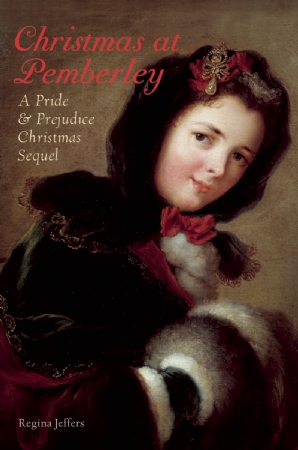
Spoiler: So what does all this have to do with my Austen-inspired novel, Christmas at Pemberley? Notice that the previous paragraph mentions Christmas Day 1814. Yes, believe it or not, I incorporated Princess Charlotte’s liaison with Hesse into my Christmas tale. How, one might ask, does a writer mix political intrigue with an inspirational romance, a Regency Christmas-themed tale, and a continuation of Jane Austen’s Pride and Prejudice? Not an easy task, but one I hope you will enjoy reading.JeffersC@Pemberley

Posted in British history, George IV, Great Britain, Jane Austen, Living in the Regency, political stance, real life tales, Regency era, Regency personalities | Tagged , , , , , , | 1 Comment

Actors Who Have Portrayed Multiple Austen Characters

Daphne Slater took on the parts of Anne Elliot in Perusasion 1960 and that of Elizabeth Bennet in the 1952 production of Pride and Prejudice.

images

Phyllida Law played Mrs. Austen in Miss Austen Regrets and Mrs. Bates in Emma 1996.

Unknown-1


Leo Bill was cast as John Warren in Becoming Jane, as well as Robert Ferras in 2008’s Sense and Sensibility.

UnknownLindsay Duncan was Lady Catherine in Lost in Austen and Mrs. Price in 1999’s Mansfield Park.

Unknown

JJ Feild portrayed Henry Tilney in 2007’s Northanger Abbey and is set to play Mr. Henry Nobley in Austenland.

UnknownGuy Henry portrayed the sleazy Mr. Collins in the 2008 film Lost in Austen, as well as the more likeable John Knightley in Emma 1996 (TV).

Unknown-1

Hugh Bonneville has appeared three times: Rev. Brook Bridges in Miss Austen Regrets; Mr. Bennet in Lost in Austen; and Mr. Rushworth in Mansfield Park 1999.

Unknown

Sylvestra Le Touzel played Mrs. Allen in Northanger Abbey 2007. Earlier she portrayed Fanny Price in Mansfield Park 1983.

Unknown

Irene Richard played Charlotte Lucas in the 1980 version of Pride and Prejudice. The next year she became Elinor Dashwood in Sense and Sensibility.

Unknown

David Savile took on the part of Charles Bingley in the 1967 version of Pride and Prejudice. Four years later, he portrayed Mr. Elliot in Perusasion.

Unknown-1

Gemma Jones, who portrayed Mrs. Dashwood in the 1995 version of Sense and Sensibility, also played the role of Bridget Jones’s mother in the films based loosely on Pride and Prejudice.

Unknown-1

Joanna David portrayed Elinor Dashwood in 1971’s Sense and Sensibility, as well as Mrs. Gardiner in 1995’s Pride and Prejudice.

UnknownCarey Mulligan has been Isabella Thorpe in 2007’s Northanger Abbey and Kitty Bennet in 2005’s Pride and Prejudice.

Unknown

James Callis will be Colonel Andrews in Austenland, but early on he was Tom in Bridget Jones: The Edge of Reason.

blake

Blake Ritson has portrayed both Edmund Bertram in 2007’s Mansfield Park and Mr. Elton in 2009’s Emma.

imagesOlivia Williams was cast as Jane Austen in Miss Austen Regrets and Jane Fairfax in 1996’s TV version of Emma.

Unknown-1

Jonny Lee Miller once portrayed Mr. Knightley in 2009’s Emma. In 1999, he was cast as Edmund Bertram in Mansfield Park, and believe it or not, he was Charles Price in the 1983 TV mini-series of Mansfield Park.

Lucy Robinson also appeared in three Austen-related flicks: she was Mrs. Hurst in 1995’s Pride and Prejudice; Mrs. Elton in the 1996 TV version of Emma; and Janey in Bridget Jones: The Edge of Reason.

I also found it interesting that Richard Owens, who played Colonel Brandon in the 1971 version of Sense and Sensibility is the father of Susannah Harker, who played Jane Bennet in 1995′s Pride and Prejudice.

It is a bit amusing that Hugh Grant’s birthday is 9 September, and Colin Firth’s is 10 September. They played the “Wickham” and “Darcy” roles, respectively, in the Bridget Jones movies. Of course, Grant was also Edward Ferrars in 1995’s Sense and Sensibility.

So, do you know of other similar roles I have missed?

Posted in film, Jane Austen | Tagged , , , , , , , , , , , , | 5 Comments

November 5 ~ Guy Fawkes’ Day

Guy Fawkes Night, also known as Guy Fawkes Day, Bonfire Night and Firework Night, is an annual commemoration observed on 5 November, primarily in Great Britain. Its history begins with the events of 5 November 1605, when Guy Fawkes, a member of the Gunpowder Plot, was arrested while guarding explosives the plotters had placed beneath the House of Lords. Celebrating the fact that King James I had survived the attempt on his life, people lit bonfires around London, and months later the introduction of the Observance of 5th November Act enforced an annual public day of thanksgiving for the plot’s failure.

The Gunpowder Treason Day celebration quickly became the predominant English state commemoration; unfortunately it also became a focus for anti-Catholic sentiment because it carried strong religious overtones. Puritanical sermons addressed the perceived dangers of popery, while during increasingly raucous celebrations common folk burnt effigies of popular hate-figures, such as the pope. Towards the end of the 18th century reports appear of children begging for money with effigies of Guy Fawkes and 5 November gradually became known as Guy Fawkes Day.

Towns such as Lewes and Guildford were in the 19th century scenes of increasingly violent class-based confrontations, fostering traditions those towns celebrate still, albeit peaceably. In the 1850s changing attitudes eventually resulted in the toning down of much of the day’s anti-Catholic rhetoric, and in 1859 the original 1606 legislation was repealed.

Eventually, the violence was dealt with, and by the 20th century Guy Fawkes Day had become an enjoyable social commemoration, although lacking much of its original focus. The present-day Guy Fawkes Night is usually celebrated at large organised events, centred around a bonfire and extravagant firework displays.

Settlers exported Guy Fawkes Night to overseas colonies, including some in North America, where it was known as Pope Day. Those festivities died out with the onset of the American Revolution, although celebrations continue in some Commonwealth nations. Claims that Guy Fawkes Night was a Protestant replacement for older customs like Samhain are disputed, although another old celebration, Halloween, has lately increased in popularity, and according to some writers, may threaten the continued observance of 5 November.

Origins and history in England
Guy Fawkes Night originates from the Gunpowder Plot of 1605, a failed conspiracy by a group of provincial English Catholics to assassinate the Protestant King James I of England and replace him with a Catholic head of state. In the immediate aftermath of the arrest of Guy Fawkes, caught guarding a cache of explosives placed beneath the House of Lords, James’s Council allowed the public to celebrate the king’s survival with bonfires, so long as they were “without any danger or disorder.” This made 1605 the first year the plot’s failure was celebrated. Days before the surviving conspirators were executed, in January 1606 Parliament passed the Observance of 5th November Act 1605, commonly known as the “Thanksgiving Act.” It was proposed by a Puritan Member of Parliament, Edward Montagu, who suggested that the king’s apparent deliverance by divine intervention deserved some measure of official recognition, and kept 5 November free as a day of thanksgiving while in theory making attendance at Church mandatory. A new form of service was also added to the Church of England’s Book of Common Prayer, for use on 5 November.

Little is known about the earliest celebrations. In settlements such as Carlisle, Norwich and Nottingham, corporations provided music and artillery salutes. Canterbury celebrated 5 November 1607 with 106 pounds of gunpowder and 14 pounds of match, and three years later food and drink was provided for local dignitaries, as well as music, explosions and a parade by the local militia. Even less is known of how the occasion was first commemorated by the general public, although records indicate that in Protestant Dorchester a sermon was read, the church bells rung, and bonfires and fireworks lit.

Early Significance
According to historian and author Antonia Fraser, a study of the earliest sermons preached demonstrates an anti-Catholic concentration “mystical in its fervour.” Delivering one of five 5 November sermons printed in A Mappe of Rome in 1612, Thomas Taylor spoke of the “generality of his [a papist’s] cruelty,” which had been “almost without bounds.” Such messages were also spread in printed works like Francis Herring’s Pietas Pontifica (republished in 1610 as Popish Piety), and John Rhode’s A Brief Summe of the Treason intended against the King & State, which in 1606 sought to educate “the simple and ignorant … that they be not seduced any longer by papists.”

By the 1620s the Fifth was honoured in market towns and villages across the country, though it was some years before it was commemorated throughout England. Gunpowder Treason Day, as it was then known, became the predominant English state commemoration. Some parishes made the day a festive occasion, with public drinking and solemn processions. Concerned though about James’s pro-Spanish foreign policy, the decline of international Protestantism, and Catholicism in general, Protestant clergymen who recognised the day’s significance called for more dignified and profound thanksgivings each 5 November.

What unity English Protestants had shared in 1606 began to fade when in 1625 James’s son, the future Charles I, married the Catholic Henrietta Maria of France. Puritans reacted to the marriage by issuing a new prayer to warn against rebellion and Catholicism, and on 5 November that year, effigies of the pope and the devil were burnt, the earliest such report of this practice and the beginning of centuries of tradition.

During Charles’s reign Gunpowder Treason Day became increasingly partisan. Between 1629 and 1640 he ruled without Parliament, and he seemed to support Arminianism, regarded by Puritans like Henry Burton as a step toward Catholicism. By 1636, under the leadership of the Arminian Archbishop of Canterbury William Laud, the English church was trying to use 5 November to denounce all seditious practices, and not just popery.
Puritans went on the defensive, some pressing for further reformation of the Church.

Bonfire Night, as it was occasionally known, assumed a new fervour during the events leading up to the English Interregnum. Although Royalists disputed their interpretations, Parliamentarians began to uncover or fear new Catholic plots. Preaching before the House of Commons on 5 November 1644, Charles Herle claimed that Papists were tunnelling “from Oxford, Rome, Hell, to Westminster, and there to blow up, if possible, the better foundations of your houses, their liberties and privileges.” A display in 1647 at Lincoln’s Inn Fields commemorated “God’s great mercy in delivering this kingdom from the hellish plots of papists”, and included fireballs burning in the water (symbolising a Catholic association with “infernal spirits”) and fireboxes, their many rockets suggestive of “popish spirits coming from below” to enact plots against the king. Effigies of Fawkes and the pope were present, the latter represented by Pluto, Roman god of the underworld.

Following Charles I’s execution in 1649, the country’s new republican regime remained undecided on how to treat 5 November. Unlike the old system of religious feasts and State anniversaries, it survived, but as a celebration of parliamentary government and Protestantism, and not of monarchy.

Commonly the day was still marked by bonfires and miniature explosives, but formal celebrations resumed only with the Restoration, when Charles II became king. Courtiers, High Anglicans and Tories followed the official line, that the event marked God’s preservation of the English throne, but generally the celebrations became more diverse. By 1670 London apprentices had turned 5 November into a fire festival, attacking not only popery but also “sobriety and good order,” demanding money from coach occupants for alcohol and bonfires. The burning of effigies, largely unknown to the Jacobeans, continued in 1673 when Charles’s brother, the Duke of York, converted to Catholicism. In response, accompanied by a procession of about 1,000 people, the apprentices fired an effigy of the Whore of Babylon, bedecked with a range of papal symbols. Similar scenes occurred over the following few years.

In 1677 elements of Elizabeth I’s Accession Day celebration of 17 November were incorporated into the Fifth, with the burning of large bonfires, a large effigy of the pope—his belly filled with live cats “who squalled most hideously as soon as they felt the fire”—and two effigies of devils “whispering in his ear.”

Two years later, as the exclusion crisis was reaching its zenith, an observer noted the “many bonfires and burning of popes as has ever been seen.” Violent scenes in 1682 forced London’s militia into action, and to prevent any repetition the following year a proclamation was issued, banning bonfires and fireworks.

Fireworks were also banned under James II, who became king in 1685. Attempts by the government to tone down Gunpowder Treason Day celebrations were, however, largely unsuccessful, and some reacted to a ban on bonfires in London (born from a fear of more burnings of the pope’s effigy) by placing candles in their windows, “as a witness against Catholicism.”

When James was deposed in 1688 by William of Orange—who importantly, landed in England on 5 November—the day’s events turned also to the celebration of freedom and religion, with elements of anti-Jacobitism. While the earlier ban on bonfires was politically motivated, a ban on fireworks was maintained for safety reasons, “much mischief having been done by squibs.”

Guy Fawkes Day
William’s birthday fell on 4 November, and for orthodox Whigs the two days therefore became an important double anniversary.

William ordered that the thanksgiving service for 5 November be amended to include thanks for his “happy arrival” and “the Deliverance of our Church and Nation.” In the 1690s he re-established Protestant rule in Ireland, and the Fifth, occasionally marked by the ringing of church bells and civic dinners, was consequently eclipsed by his birthday commemorations.

From the 19th century, 5 November celebrations there became sectarian in nature. Its celebration in Northern Ireland remains controversial, unlike in Scotland, where bonfires continue to be lit in various Caledonian cities. In England though, as one of 49 official holidays, for the ruling class 5 November became overshadowed by events such as the birthdays of Admiral Edward Vernon, or John Wilkes, and under George II and George III, with the exception of the Jacobite Rising of 1745, it was largely “a polite entertainment rather than an occasion for vitriolic thanksgiving.”

For the lower classes, however, the anniversary was a chance to pit disorder against order, a pretext for violence and uncontrolled revelry. At some point, for reasons that are unclear, it became customary to burn Guy Fawkes in effigy, rather than the pope. Gradually, Gunpowder Treason Day became Guy Fawkes Day. In 1790 The Times reported instances of children “…begging for money for Guy Faux,” and a report of 4 November 1802 described how “a set of idle fellows … with some horrid figure dressed up as a Guy Faux” were convicted of begging and receiving money, and committed to prison as “idle and disorderly persons.” The Fifth became “a polysemous occasion, replete with polyvalent cross-referencing, meaning all things to all men.” Lower class rioting continued, with reports in Lewes of annual rioting, intimidation of “respectable householders” and the rolling through the streets of lit tar barrels.

In Guildford, gangs of revellers who called themselves “guys” terrorised the local population; proceedings were concerned more with the settling of old arguments and general mayhem, than any historical reminiscences. Similar problems arose in Exeter, originally the scene of more traditional celebrations.

In 1831 an effigy was burnt of the new Bishop of Exeter Henry Phillpotts, a High Church Anglican and High Tory who opposed Parliamentary reform, and who was also suspected of being involved in “creeping popery.” A local ban on fireworks in 1843 was largely ignored, and attempts by the authorities to suppress the celebrations resulted in violent protests and several injured constables.

On several occasions during the 19th century The Times reported that the tradition was in decline, being “of late years almost forgotten”, but in the opinion of historian David Cressy, such reports reflected “other Victorian trends,” including a lessening of Protestant religious zeal—not general observance of the Fifth. Civil unrest brought about by the union of the Kingdoms of Great Britain and Ireland in 1800 resulted in Parliament passing the Roman Catholic Relief Act 1829, which afforded Catholics greater civil rights, continuing the process of Catholic Emancipation in the two kingdoms.

The traditional denunciations of Catholicism had been in decline since the early 18th century, and were thought by many, including Queen Victoria, to be outdated, but the pope’s restoration in 1850 of the English Catholic hierarchy gave renewed significance to 5 November, as demonstrated by the burnings of effigies of the new Catholic Archbishop of Westminster Nicholas Wiseman, and the pope.

At Farringdon Market 14 effigies were processed from the Strand and over Westminster Bridge to Southwark, while extensive demonstrations were held throughout the suburbs of London.

Effigies of the twelve new English Catholic bishops were paraded through Exeter, already the scene of severe public disorder on each anniversary of the Fifth. In 1863 a mob in Ipswich smashed Catholic-owned businesses, prompting the curate of the newly built Saint Pancras Church to barricade himself in the presbytery. Gradually, however, such scenes became less popular. With little resistance in Parliament, the thanksgiving prayer of 5 November contained in the Anglican Book of Common Prayer was abolished, and in March 1859 the Anniversary Days Observance Act repealed the original 1606 Act. As the authorities dealt with the worst excesses, public decorum was gradually restored. The sale of fireworks was restricted, and the Guildford “guys” were neutralized in 1865, although this was too late for one constable, who died of his wounds.

Violence continued in Exeter for some years, peaking in 1867, when incensed by rising food prices and banned from firing their customary bonfire, a mob was twice in one night driven from Cathedral Close by armed infantry. Further riots occurred in 1879, but there were no more bonfires in Cathedral Close after 1894. Elsewhere, sporadic instances of public disorder persisted late into the 20th century, accompanied by large numbers of firework-related accidents, but a national Firework Code and improved public safety has in most cases brought an end to such things.

Songs, Guys and Decline
One notable aspect of the Victorians’ commemoration of Guy Fawkes Night was its move away from the centres of communities, to their margins. Gathering wood for the bonfire increasingly became the province of working-class children, who solicited combustible materials, money, food and drink from wealthier neighbours, often with the aid of songs. Most opened with the familiar “Remember, remember, the fifth of November, Gunpowder Treason and Plot.” The earliest recorded rhyme, from 1742, is reproduced below alongside one bearing similarities to most Guy Fawkes Night ditties, recorded in 1903 at Charlton on Otmoor:
Don’t you Remember,
The Fifth of November,
‘Twas Gunpowder Treason Day,
I let off my gun,
And made’em all run.
And Stole all their Bonfire away. (1742)

The fifth of November, since I can remember,
Was Guy Faux, Poke him in the eye,
Shove him up the chimney-pot, and there let him die.
A stick and a stake, for King George’s sake,
If you don’t give me one, I’ll take two,
The better for me, and the worse for you,
Ricket-a-racket your hedges shall go. (1903)

Organised entertainments also became popular in the late 19th century, and 20th-century pyrotechnic manufacturers renamed Guy Fawkes Day as Firework Night. Sales of fireworks dwindled somewhat during the First World War, but resumed in the following peace. At the start of the Second World War celebrations were again suspended, resuming in November 1945.

For many families, Guy Fawkes Night became a domestic celebration, and children often congregated on street corners, accompanied by their own effigy of Guy Fawkes. This was sometimes ornately dressed and sometimes a barely recognisable bundle of rags stuffed with whatever filling was suitable. A survey found that in 1981 about 23 percent of Sheffield schoolchildren made Guys, sometimes weeks before the event. Collecting money was a popular reason for their creation, the children taking their effigy from door to door, or displaying it on street corners. But mainly, they were built to go on the bonfire, itself sometimes comprising wood stolen from other pyres; “an acceptable convention” that helped bolster another November tradition, Mischief Night. Rival gangs competed to see who could build the largest, sometimes even burning the wood collected by their opponents; in 1954 the Yorkshire Post reported on fires late in September, a situation that forced the authorities to remove latent piles of wood for safety reasons.

Lately, however, the custom of begging for a “penny for the Guy” has almost completely disappeared. In contrast, some older customs still survive; in Ottery St Mary men chase each other through the streets with lit tar barrels, and since 1679 Lewes has been the setting of some of England’s most extravagant 5 November celebrations, the Lewes Bonfire.

Generally, modern 5 November celebrations are run by local charities and other organisations, with paid admission and controlled access. Author Martin Kettle, writing in The Guardian in 2003, bemoaned an “occasionally nannyish” attitude to fireworks which discourages people from holding firework displays in their back gardens, and an “unduly sensitive attitude” toward the anti-Catholic sentiment once so prominent on Guy Fawkes Night.

David Cressy summarised the modern celebration with these words: “the rockets go higher and burn with more colour, but they have less and less to do with memories of the Fifth of November … it might be observed that Guy Fawkes’ Day is finally declining, having lost its connection with politics and religion. But we have heard that many times before.”

Posted in British history, Great Britain, holidays, royalty | Tagged , | 3 Comments

Regency Happenings: The Founding of The Royal Doulton Company

The Royal Doulton Company was an English company producing tableware and collectables, dating from 1815. Operating originally in London, its reputation grew in The Potteries, where it was a latecomer compared to Royal Crown Derby, Royal Worcester, Wedgwood, Spode and Mintons. Its products include dinnerware, giftware, cookware, porcelain, glassware, collectables, jewellery, linens, curtains and lighting.

Three of its brands were Royal Doulton, Royal Albert and Mintons. These brands are now owned by WWRD Holdings Ltd (Waterford Crystal, Wedgwood, Royal Doulton), based in Barlaston near Stoke-on-Trent.

History
The Royal Doulton Company began as a partnership between John Doulton, Martha Jones, and John Watts, with a factory at Vauxhall Walk, Lambeth, London. The business specialised in making stoneware articles, including decorative bottles and salt glaze sewer pipes. The company took the name Doulton in 1853.

By 1871, Henry Doulton, John’s son, launched a studio at the Lambeth pottery, and offered work to designers and artists from the nearby Lambeth School of Art. The first to be engaged was George Tinworth followed by artists such as the Barlow family (Florence, Hannah, and Arthur), Frank Butler, Mark Marshall and Eliza Simmance. In 1882, Doulton purchased the small factory of Pinder, Bourne & Co, at Nile Street in Burslem, Staffordshire, which placed Doulton in the region known as The Potteries.

When the Anglican St. Alban’s Church was built in Copenhagen, Denmark, in 1887 with Alexandra, Princess of Wales as one of the driving forces, Doulton donated and manufactured an altarpiece, a pulpit and a font. They were executed in terra cotta with glazed details to the design of Tinworth.

By this time Doulton was popular for stoneware and ceramics, under the artistic direction of John Slater, who worked with figurines, vases, character jugs, and decorative pieces designed by the prolific Leslie Harradine. Doulton products came to the attention of the Royal family. In 1901 King Edward VII sold the Burslem factory the Royal Warrant, allowing the business to adopt new markings and a new name, Royal Doulton. The company added products during the first half of the 20th century while manufacturing fashionable and high-quality bone china.

The Lambeth factory closed in 1956 due to clean air regulations preventing urban production of salt glaze. Following closure, work was transferred to The Potteries.

The headquarters building and factory of the Royal Doulton ceramics firm were in Lambeth, on the south bank of the Thames. This Art Deco building was designed by T.P.Bennett. In 1939 Gilbert Bayes created the friezes that showed the history of pottery through the ages. The factory building was demolished in 1978 and the friezes transferred to the Victoria & Albert Museum. The office building in Black Prince Road survives, complete with a frieze of potters and Sir Henry Doulton over the original main entrance, executed by Tinworth.

Recent Developments
On 30 September 2005, the Nile Street factory closed. Some items are now made in the parent company, WWRD Holdings Ltd in Barlaston, south of the Potteries Conurbation. Further production is carried out in Indonesia.

Royal Doulton Ltd (along with other Waterford Wedgwood companies) went into administration on 5 January 2009. The company is now part of WWRD Holdings Ltd.

Posted in British history, food and drink, Great Britain, Living in the Regency, real life tales, Regency era, Regency personalities | Tagged , , | Comments Off on Regency Happenings: The Founding of The Royal Doulton Company

November 2 – All Souls’ Day

225px-William-Adolphe_Bouguereau_(1825-1905)_-_The_Day_of_the_Dead_(1859) In Western Christianity, All Souls’ Day, also known as the Commemoration of All Faithful Departed, is observed principally in the Catholic Church, although some churches of Anglican Communion and the Old Catholic Churches also celebrate it; the observance is the third day of Hallowmas and annually occurs on November 2. The Eastern Orthodox Church observes several All Souls’ Days during the year. The Roman Catholic celebration is associated with the doctrine that the souls of the faithful who at death have not been cleansed from the temporal punishment due to venial sins and from attachment to mortal sins cannot immediately attain the beatific vision in heaven, and that they may be helped to do so by prayer and by the sacrifice of the Mass. In other words, when they died, they had not yet attained full sanctification and moral perfection, a requirement for entrance into Heaven. This sanctification is carried out posthumously in Purgatory.

The official name of the celebration in the Roman Rite liturgy of the Roman Catholic Church is “The Commemoration of All the Faithful Departed.” Another popular name in English is Feast of All Souls. In some other languages the celebration, not necessarily on the same date, is known as Day of the Dead.

The Western celebration of All Souls’ Day is on 2 November and follows All Saints’ Day. In the ordinary form of the Roman Rite, if 2 November falls on a Sunday, the Mass is of All Souls, but the Liturgy of the Hours is that of the Sunday, though Lauds and Vespers for the Dead in which the people participate may be said. In the extraordinary form of the Roman Rite and in the Anglican Communion, All Souls Day is instead transferred, whenever 2 November falls on a Sunday, to the next day, 3 November.

The Eastern Orthodox Church dedicates several days throughout the year to the dead, mostly on Saturdays, because of Jesus’ resting in the Holy Sepulchre on that day. In the Methodist Church, saints refer to all Christians and therefore, on All Saint’s Day, the Church Universal, as well as the deceased members of a local congregation are honoured and remembered.

Eastern-Rite Catholics and the Eastern Orthodox Churches
Among Eastern Orthodox and Eastern Catholic Christians, there are several All Souls’ Days during the year. Most of these fall on Saturday, since Jesus lay in the Tomb on Holy Saturday. These are referred to as Soul Saturdays. They occur on the following occasions:

The Saturday of Meatfare Week (the second Saturday before Great Lent)—the day before the Sunday of the Last Judgement
The second Saturday of Great Lent
The third Saturday of Great Lent
The fourth Saturday of Great Lent
Radonitsa (Monday or Tuesday after Thomas Sunday)
The Saturday before Pentecost
Demetrius Saturday (the Saturday before the feast of Saint Demetrius of Thessaloniki—26 October) (In all of the Orthodox Church there is a commemoration of the dead on the Saturday before the feast of Saint Michael the Archangel—8 November, instead of the Demetrius Soul Saturday)

(In the Serbian Orthodox Church there is also a commemoration of the dead on the Saturday closest to the Conception of St. John the Baptist—23 September)

The feast of All Saints achieved great prominence in the ninth century, in the reign of the Byzantine Emperor, Leo VI “the Wise” (886–911). His wife, Empress Theophano—commemorated on 16 December—lived a devout life. After her death in 893, her husband built a church, intending to dedicate it to her. When he was forbidden to do so, he decided to dedicate it to “All Saints,” so that if his wife were in fact one of the righteous, she would also be honored whenever the feast was celebrated.

According to tradition, it was Leo who expanded the feast from a commemoration of All Martyrs to a general commemoration of All Saints, whether martyrs or not.

In the late spring, the Sunday following Pentecost Sunday (50 days after Easter) is set aside as a commemoration of all locally venerated saints, such as “All Saints of America,” “All Saints of Mount Athos,” etc. The third Sunday after Pentecost may be observed for even more localized saints, such as “All Saints of St. Petersburg,” or for saints of a particular type, such as New Martyrs of the Turkish Yoke. This Sunday marks the close of the Paschal season. To the normal Sunday services are added special scriptural readings and hymns to all the saints (known and unknown) from the Pentecostarion.

In addition to the Sundays mentioned above, Saturdays throughout the year are days for general commemoration of all saints, and special hymns to all saints are chanted from the Octoechos, unless some greater feast or saint’s commemoration occurs.

Protestantism and Roman Catholic Church
At the Reformation the celebration of All Souls’ Day was fused with All Saints’ Day in the Church of England, though it was renewed individually in certain churches in connection with the Catholic Revival of the 19th century. The observance was restored with the publication of the 1980 Alternative Service Book, and it features in Common Worship as a Lesser Festival called “Commemoration of the Faithful Departed (All Souls’ Day).”

Among continental Protestants its tradition has been more tenaciously maintained. Even Luther’s influence was not sufficient to abolish its celebration in Saxony during his lifetime; and, though its ecclesiastical sanction soon lapsed even in the Lutheran Church, its memory survives strongly in popular custom. Just as it is the custom of French people, of all ranks and creeds, to decorate the graves of their dead on the jour des morts, so German, Polish and Hungarian people stream to the graveyards once a year with offerings of flowers and special grave lights.

Among Czech people the custom of visiting and tidying graves of relatives on the day is quite common even among atheists. In North America, however, most Protestant acknowledgment of the holiday is generally secular, celebrated in the form of Halloween festivities.

In 1816, Prussia introduced a new date for the remembrance of the Dead among its Lutheran citizens: Totensonntag, the last Sunday before Advent. This custom was later also adopted by the non-Prussian Lutherans in Germany, but it has not spread much beyond the Protestant areas of Germany.

Origins, Practices and Purposes
Some believe that the origins of All Souls’ Day in European folklore and folk belief are related to customs of ancestor veneration practised worldwide, through events such as the Chinese Ghost Festival, the Japanese Bon Festival, or the Mexican Day of the Dead. The Roman custom was that of the Lemuria. However, a review of the sources show that most of the specific European traditions are medieval in origin (post 1000 AD and reflect the “dogmatic” invention of the purgatory. Thus chiming for the dead souls was believed to comfort them in hell, while the sharing of soul cakes with the poor helped to buy the dead a bit respite in the flames. In the same way lighting candles was meant to kindle a light for the dead souls languishing in the darkness. Out of this grew the traditions of souling and the baking of special types of bread or cakes.

In Tirol, cakes are left for them on the table and the room kept warm for their comfort. In Brittany, people flock to the cemeteries at nightfall to kneel, bareheaded, at the graves of their loved ones, and to anoint the hollow of the tombstone with holy water or to pour libations of milk on it. At bedtime, the supper is left on the table for the souls.

In Bolivia, many people believe that the dead eat the food that is left out for them. In Brazil people attend a Mass or visit the cemetery taking flowers to decorate their relatives’ grave, but no food is involved.

In Malta many people make pilgrimages to graveyards, not just to visit the graves of their dead relatives, but to experience the special day in all its significance. Visits are not restricted to this day alone. During the month of November, Malta’s cemeteries are frequented by families of the departed. Mass is also said throughout the month, with certain Catholic parishes organising special events at cemetery chapels.

Posted in British history, Great Britain, holidays, legends and myths, real life tales, religion | Tagged , , | Comments Off on November 2 – All Souls’ Day

November 1 ~ All Saints’ Day

300px-All-Saints All Saints’ Day (also known as All Hallows, Solemnity of All Saints, or The Feast of All Saints) is a solemnity celebrated on 1 November by parts of Western Christianity, and on the first Sunday after Pentecost in Eastern Christianity, in honour of all the saints, known and unknown. All Saints’ Day is the second day of Hallowmas, and begins at sunrise on the 1st of November and finishes at sundown on the 1st of November. It is the day before All Souls’ Day.

In Western Christian theology, the day commemorates all those who have attained the beatific vision in Heaven. It is a national holiday in many historically Catholic countries. In the Catholic Church and many Anglican churches, the next day specifically commemorates the departed faithful who have not yet been purified and reached heaven. Christians who celebrate All Saints’ Day and All Souls’ Day do so in the fundamental belief that there is a prayerful spiritual bond between those in purgatory (the ‘Church Suffering’), those in heaven (the ‘Church triumphant’), and the living (the ‘Church militant’). Other Christian traditions define, remember and respond to the saints in different ways; for example, in the Methodist Church, the word “saints” refers to all Christians and therefore, on All Saints’ Day, the Church Universal, as well as the deceased members of a local congregation, are honored and remembered.

In the East
Eastern Christians of the Byzantine Tradition commemorate all saints collectively on the first Sunday after Pentecost, All Saints’ Sunday (Greek: Αγίων Πάντων, Agiōn Pantōn).

The feast of All Saints achieved great prominence in the ninth century, in the reign of the Byzantine Emperor, Leo VI “the Wise” (886–911). His wife, Empress Theophano—commemorated on 16 December—lived a devout life. After her death in 893, her husband built a church, intending to dedicate it to her. When he was forbidden to do so, he decided to dedicate it to “All Saints,” so that if his wife were in fact one of the righteous, she would also be honored whenever the feast was celebrated.

According to tradition, it was Leo who expanded the feast from a commemoration of All Martyrs to a general commemoration of All Saints, whether martyrs or not.

This Sunday marks the close of the Paschal season. To the normal Sunday services are added special scriptural readings and hymns to all the saints (known and unknown) from the Pentecostarion.
In the late spring, the Sunday following Pentecost Sunday (50 days after Easter) is set aside as a commemoration of all locally venerated saints, such as “All Saints of America,” “All Saints of Mount Athos,” etc. The third Sunday after Pentecost may be observed for even more localized saints, such as “All Saints of St. Petersburg,” or for saints of a particular type, such as “New Martyrs of the Turkish Yoke.”

In addition to the Sundays mentioned above, Saturdays throughout the year are days for general commemoration of all saints, and special hymns to all saints are chanted from the Octoechos.
In the Maronite Catholic Church, the Sunday of the Righteous and Just is the traditional Maronite feast in honor of all saints.

In the West
The Western Christian holiday of All Saints’ Day falls on 1 November, followed by All Souls’ Day on 2 November, and is a Holy Day of Obligation in the Latin Rite of the Catholic Church.

The origin of the festival of All Saints celebrated in the West dates to 13 May 609 or 610, when Pope Boniface IV consecrated the Pantheon at Rome to the Blessed Virgin and all the martyrs; the feast of the dedicatio Sanctae Mariae ad Martyres has been celebrated at Rome ever since. There is evidence that from the fifth through the seventh centuries there existed in certain places and at sporadic intervals a feast date on 13 May to celebrate the holy martyrs.

The origin of All Saints’ Day cannot be traced with certainty, and it has been observed on various days in different places. However, there are some who maintain the belief that it has origins in the pagan observation of 13 May, the Feast of the Lemures, in which the malevolent and restless spirits of the dead were propitiated. Liturgiologists base the idea that this Lemuria festival was the origin of that of All Saints on their identical dates and on the similar theme of “all the dead.”

The feast of All Saints, on its current date, is traced to the foundation by Pope Gregory III (731–741) of an oratory in St. Peter’s for the relics “of the holy apostles and of all saints, martyrs and confessors, of all the just made perfect who are at rest throughout the world,” with the day moved to 1 November and the 13 May feast suppressed.

This fell on the Celtic holiday of Samhain, which had a theme similar to the Roman festival of Lemuria, but which was also a harvest festival. The Irish, having celebrated Samhain in the past, did not celebrate All Hallows Day on this 1 November date, as extant historical documents attest that the celebration in Ireland took place in the spring: “…the Felire of Oengus and the Martyrology of Tallaght prove that the early medieval churches [in Ireland] celebrated the feast of All Saints on April 20.”

A November festival of all the saints was already widely celebrated on 1 November in the days of Charlemagne. It was made a day of obligation throughout the Frankish empire in 835, by a decree of Louis the Pious, issued “at the instance of Pope Gregory IV and with the assent of all the bishops,” which confirmed its celebration on 1 November. The octave was added by Pope Sixtus IV (1471–1484).

The festival was retained after the Reformation in the calendar of the Anglican Church and in many Lutheran churches. In the Lutheran churches, such as the Church of Sweden, it assumes a role of general commemoration of the dead. In the Swedish calendar, the observance takes place on the Saturday between 31 October and 6 November. In many Lutheran Churches, it is moved to the first Sunday of November. In the Church of England it may be celebrated either on 1 November or on the Sunday between 30 October and 5 November. It is also celebrated by other Protestants of the English tradition, such as the United Church of Canada, the Methodist churches, and the Wesleyan Church.

Protestants generally regard all true Christian believers as saints and if they observe All Saints Day at all they use it to remember all Christians both past and present. In the United Methodist Church, All Saints’ Day is celebrated on the first Sunday in November. It is held, not only to remember Saints, but also to remember all those who have died who were members of the local church congregation.

In some congregations, a candle is lit by the Acolyte as each person’s name is called out by the clergy. Prayers and responsive readings may accompany the event. Often, the names of those who have died in the past year are affixed to a memorial plaque.

In many Lutheran churches, All Saints’ Day and Reformation Day are observed concurrently on the Sunday before or after those dates, given Reformation Day is observed in Protestant Churches on 31 October. Typically, Martin Luther’s “A Mighty Fortress is Our God” is sung during the service. Besides discussing Luther’s role in the Protestant Reformation, some recognition of the prominent early leaders of the Reformed tradition, such as John Calvin and John Knox, occurs. The observance of Reformation Day may be immediately followed by a reading of those members of the local congregation who have died in the past year in observance of All Saints’ Day. Otherwise, the recognition of deceased church members occurs at another designated portion of the service.

Roman Catholic Obligation
In Catholicism, All Saints’ Day is a Holy Day of Obligation in many (but not all) countries, meaning going to Mass on the date is required unless one has a good reason to be excused, such as illness. However, in a number of countries that do list All Saints’ Day as a Holy Day of Obligation, including England and Wales, the solemnity of All Saints’ Day is transferred to the adjacent Sunday, if 1 November falls on a Monday or a Saturday, while in the same circumstances in the United States the Solemnity is still celebrated on 1 November but the obligation to attend Mass is abrogated.

Customs
In Mexico, Portugal and Spain, offerings (Portuguese: oferendas, Spanish: ofrendas) are made on this day. In Spain, the play Don Juan Tenorio is traditionally performed.

All Saints’ Day in Mexico, coincides with the first day of the Day of the Dead (Dia de los Muertos) celebration. Known as “Día de los Inocentes” (Day of the Innocents), it honours deceased children and infants.

Portuguese children celebrate the Pão-por-Deus tradition, going door-to-door where they receive cakes, nuts and pomegranates. This only occurs in central Portugal.

Hallowmas in the Philippines is variously called “Undas” (based on the word for “[the] first”), “Todós los Santos” (literally “All Saints”), and sometimes “Áraw ng mga Patáy” (lit. “Day of the Dead”), which refers to the following day of All Souls’ Day but includes it. Filipinos traditionally observe this day by visiting the family dead, often cleaning and repairing them. Offerings of prayers, flowers, candles, and even food are made, while Filipino-Chinese additionally burn incense and kim. Many also spend the day and ensuing night holding reunions at the graves, playing music or singing karaoke.

In Argentina, Austria, Belgium, Chile, France, Hungary, Italy, Lebanon, Luxembourg, Malta, Peru, Portugal, Puerto Rico, Spain, and American cities such as New Orleans, people take flowers to the graves of dead relatives. In some places in Portugal people also light candles in the graves.

In Austria, Bosnia and Herzegovina, Croatia, the Czech Republic, Finland, Catholic parts of Germany, Hungary, Italy, Lithuania, Moldova, Poland, Romania, Slovakia, Slovenia and Sweden, the tradition is to light candles and visit the graves of deceased relatives.

In English-speaking countries, the festival is traditionally celebrated with the hymn “For All the Saints” by William Walsham How. The most familiar tune for this hymn is Sine Nomine by Ralph Vaughan Williams. Another hymn that is popularly sung during corporate worship on this day is “I Sing a Song of the Saints of God.”

Posted in British history, Great Britain, holidays, legends and myths, real life tales, religion | Tagged | 2 Comments

Regency Celebrity: William John Napier, 9th Lord Napier, Royal Navy Officer

220px-William_Napier,_9th_Lord_Napier William John Napier, 9th Lord Napier (Chinese: 律勞卑; 1786 – 11 October 1834) was a Royal Navy officer, politician and diplomat.

Early Life
He was the son of Francis Napier, 8th Lord Napier (1758–1823) and the father of Francis Napier, 10th Lord Napier and 1st Baron Ettrick (1819–1898). He served during the battle of Trafalgar (1805) as a midshipman. He later served as Lieutenant under Thomas Cochrane, 10th Earl of Dundonald.

Career
A peer of Scotland, Lord Napier was an elected Scottish representative in the House of Lords from 1824 to 1832.
In December 1833, upon the ending of British East India Company’s monopoly on trade in the Far East, Lord Napier was appointed by Lord Palmerston, the foreign secretary and a family friend of Napier, the first Chief Superintendent of Trade at Canton (now Guangzhou), in China. He arrived at Macau on 15 July 1834, and Canton ten days later, with the mission of expanding British trade into inner China. Lacking the necessary diplomatic and commercial experience, he was not successful in achieving the objective.

Having failed to secure a meeting with the Viceroy of Canton, amid a litany of breaches of protocol, misunderstandings approaching complete communication breakdown and stubbornness on both sides, Napier’s frustration in failing to break an intractable trade deadlock led to his favoring a military solution. He sent the frigates Andromache and Imogene to Whampoa in plain breach of Imperial Viceroy Loo’s edict, with fatalities resulting on both sides in the skirmish of cannon fire as they breached the defences at the Bocca Tigris.

After a prolonged stalemate, Lord Napier was forced, sapped by typhus, to retire to Macau in September 1834, where he died of the fever on 11 October. He was buried in Macau, but later exhumed for reburial at his beloved Ettrick in Scotland. Napier was first to suggest establishment of a British presence on Hong Kong, then the site of a few small villages.

The Second and Third Superintendents were John Francis Davis and Sir George Best Robinson, respectively.

Lord Napier married Elizabeth Cochrane-Johnstone (c. 1795-1883), daughter of Scottish adventurer Andrew Cochrane-Johnstone, in 1816; they had two sons and five daughters. His eldest son, Francis Napier, also entered diplomatic service and was promoted by Palmerston for the rest of his life.

Honours
Following his death, the British Government placed a memorial to him before the Macao Customs Office. After being lost for a short time, it was moved to the Hong Kong Cemetery, and then to the Hong Kong Museum of History, where it now rests.

Posted in British history, George IV, Great Britain, Living in the Regency, Napoleonic Wars, political stance, real life tales, Regency era, Regency personalities, Scotland, Victorian era | Tagged , , | Comments Off on Regency Celebrity: William John Napier, 9th Lord Napier, Royal Navy Officer

Regency Celebrity: Vice-Admiral Sir Thomas Fremantle, Naval Strategist

220px-Sir_Thomas_Fremantle Vice-Admiral Sir Thomas Francis Fremantle GCB GCH RN (20 November 1765 – 19 December 1819) was a British naval officer in the Royal Navy whose list of accolades includes action in three separate fleet actions, a close personal friendship with Lord Nelson and a barony in Austria.

Biography
Fremantle was born in 1765, and joined the navy in 1777 aged just eleven aboard the frigate HMS Hussar. Profiting from family influence, active commissions in the American War of Independence and a keen sense of seamanship and aggressive tactical awareness, promotion came easily, making lieutenant on 13 March 1782 while on duty in Jamaica and being promoted to commander on 13 November 1790 in command of the sloop HMS Spitfire.

Although he did not achieve fame with his service in this period, he was in a good position to profit from the mass promotions, which accompanied the outbreak of the French Revolutionary War in 1793, being made a Post Captain on 16 May 1793 in the small frigate HMS Tartar. It was in this ship that he first came to Nelson’s eye, when they both served at the Siege of Bastia, where Nelson lost an eye, and Fremantle gained a reputation for daring action, taking his ship under the fortress’s walls despite heavy fire from overhead, which had already sunk one frigate in the bay.

The following year Fremantle was commanding the frigate HMS Inconstant when he was engaged in Lord Hotham’s indecisive and cautious fleet action in the Gulf of Genoa on the 14 March 1795. The French fleet had departed Toulon and were making for the Italian coast, being chased by Hotham’s fleet and an approaching storm. Fremantle, despite unspoken rules of engagement which did not require him to engage ships larger than his own, used his superior speed to overtake the 80-gun Ça Ira, which had been damaged in a collision. By taking his ship under the massive bow of his opponent, he managed to slow her enough that the oncoming British fleet was able to capture Ça Ira and another French ship which had turned back in a rescue attempt.

The first British ship to the scene was Nelson’s HMS Agamemnon, and the respect between the two officers continued to grow.

Nelson requested and received Fremantle as a companion and junior officer when he was detached to Italy in 1796, and the two wreaked havoc along the Italian coastline, evacuating British and royalist civilians to Corsica when the French army invaded, capturing coastal positions and raiding shore installations, capturing the island of Elba. One of the British refugees whom Fremantle rescued from Livorno was the 18-year old Catholic Betsey Wynne, daughter of Richard Wynne (from the famous Anglo-Venetian Wynne family, acquainted with Casanova) and Camille de Royer. Fremantle was so charmed by Betsey that he married her that year, with Prince Augustus as his best man.

The same year he was embroiled in an engagement with Spanish gunboats off Cadiz, again under Nelson, and the next year he was with his mentor at the disastrous Battle of Tenerife, where both officers were grievously wounded in the arm. Nelson’s was amputated; Fremantle’s survived, but he never regained full use of it again.

Returning home on convalescence, Fremantle used the time to hone his own theories of successful command at sea, shown by several proposals he sent to the Admiralty concerning the judgment of petty disciplinary actions on board ship. Although these were rejected out of hand, they would later be used as models when the disciplinary system was revised in the 1850s.

A very popular officer, loved by his men, his contemporaries and the public alike, Fremantle did not remain at home long, and when Nelson was given command of the Channel Fleet, Fremantle joined him in August 1800 as commander of the ship of the line HMS Ganges. It was in this ship that he received further accolades for his service at the Battle of Copenhagen in 1801 when he was in the thick of the action. He also dabbled in politics, standing unsuccessfully for the constituency of Sandwich in 1802 before taking it in 1806.

Sent to Ireland and then Ferrol in 1803 and 1804, Fremantle was given the massive 98-gun HMS Neptune in May 1805 and was attached to the Cadiz blockade, ready for Nelson’s assumption of command later that year. At the Battle of Trafalgar that October, Neptune was third in Nelson’s division, cutting the Combined Fleet shortly after HMS Victory did, and ploughing past the wrecked Bucentaure he engaged the massive Santissima Trinidad with which he endured a savage slogging match, which left Neptune with 44 casualties and the outnumbered Spanish ship with over 300. Relatively undamaged, Neptune was able to tow the shattered Victory back to Gibraltar and Fremantle profited by taking the chapel silver from the big Spanish ship which he used to adorn his home.

Fremantle spent the next five years in England, serving as a Member of Parliament for Sandwich 1806–1807 and as a Lord of the Admiralty (1806–1807), before being posted rear-admiral and taking command in the Adriatic Sea, where he employed the frigate squadrons under him to great effect against French-held Italy and Dalmatia.

When the French empire surrendered in 1814, the entire Balkan coast surrendered to him with over 800 ships, netting Fremantle a vast fortune. For his services he was made a Knight Grand Cross of the Order of the Bath on 12 April 1815, as well as a baron of the Austrian Empire and later a vice-admiral and, from 1818, the Commander-in-Chief, Mediterranean Fleet. He also received several Austrian and Italian knighthoods as well as initiation into the Royal Guelphic Order of Hanover. Fremantle died in December 1819 from a sudden illness and was buried at Naples where his grave can still be seen in the Garden of Don Carlo Califano outside the gate of San Gennaro, Naples.

Sons of Thomas Fremantle
His eldest son of the same name was a famous politician, originally given a baronetcy at his father’s death before later being made Baron Cottesloe for his own services to the country.

Another son, Charles Howe Fremantle, became the captain of the 26-gun frigate HMS Challenger, the first ship to arrive in a fleet of 3 ships sent out from Britain to establish a colony at the Swan River in Western Australia. The Australian City of Fremantle is named after him.

Another son, William Robert Fremantle (c.1808-1895) was the Dean of Ripon.

His fifth son, Stephen Grenville Fremantle (1810–1860), was captain of HMS Juno from 1853 to 1858.

Posted in Uncategorized | Tagged , , , | 2 Comments