
 I love unusual words and phrases and often make note of them as I read. Today, we have a nice mix.
“As Nice as Ninepence“ means neat, tidy, well-ordered. Phrase Finder tells us that the origin of the phrase may include the variants, ‘as right as ninepence’ and ‘as neat as ninepence.’
 There are suggestions that this expression derives from from ‘as nice as ninepins.’ In the game of Ninepins (Skittles) the pins are set out in a square. For the game to be fair this must be done neatly and accurately or, in the old parlance, nicely. There are no early records of ‘as nice as ninepins’ in print, which we might expect if the ‘ninepence’ version derived from it. The ‘ninepins’ form, in the guise of ‘as smart as ninepins’ isn’t found until the 20th century, so it is reasonable to assume that it is a simple mishearing of the earlier ‘as neat/clean/grand as ninepence’ versions.
We find the earliest known recorded form of the phrase is ‘as neat as ninepence’; the first citation is in James Howell’s English Proverbs, 1659:
“As fine as fippence, as neat as nine pence.”
 The ‘fippence’ (five pence) here makes it clear that the reference is to money rather than to skittles. For it to appear in a list of sayings viewed as proverbial it must have been in existence for some time before 1659. There was a ninepence coin in circulation in the 16th and 17th centuries, although there was nothing especially neat or nice about it. The rhyming and alliterative style of the citation suggests that the ‘neat’ and ‘nice’ were chosen just for that reason. [When I originally went looking for this phrase, I sought out “ninepence to nothing.”]
_____________________________________
Next, I have “clever about his fambles.” I could not find this one as written, but we could break down the meaning. As a noun, “famble” was a form of obsolete slang meaning “hand.” The word came from the Old English famelen, and as a verb it means “to stammer.” In James Joyce’s “Ulysses,” we find, “White thy fambles, red the gan/And thy quarrons dainly is./Couch a hogshead with me then./In the darkmans clip and kiss.”
________________________________________
“Bamboozle” is a word meaning 1.to deceive or get the better of (someone) by trickery, flattery, or the like; humbug; hoodwink(often followed by into); 2.to perplex; mystify; confound. The origin comes from 1695-1705. Bamboozle is one of those words that has been confounding etymologists for centuries. No one knows for sure what its origins are. One thing we do know is that it was originally considered “low language,” at least among such defenders of the language as British.
__________________________________________
“It won’t fadge“ can be found in The 1811 Dictionary of the Vulgar Tongue, originally by Francis Grose. It means “it won’t do.” Its origin lie in the Anglo-Saxon,fægen, to fit together; Welsh, ffag, what tends to unite. In literature, we find, “How will this fadge?” from Shakespeare: Twelfth Night, ii. 2. It could also mean a “farthing ~ A corrupt contraction of fardingal, i.e. farthingale. (See Chivy.) Source: Dictionary of Phrase and Fable, E. Cobham Brewer, 1894.
___________________________________________
“Earwig“ is a verb meaning “to eavesdrop on a conversation.” The archaic meaning is “influence (someone) by secret means or to fill the mind of with prejudice by insinuations.” Old English ēarwicga, from ēare ‘ear’ + wicga ‘earwig’ (probably related to wiggle ). “Earwigging” is any of numerous elongate, nocturnal insects of the order Dermaptera, having a pair of large,movable pincers at the rear of the abdomen.The insect is so named because it was once thought to crawl into the human ear. The word comes from the Middle English.
______________________________________________
“Humbug“ comes to us from 1751, student slang, “trick, jest, hoax, imposition, deception,” of unknown origin. Also appearing as a verb at the same time, “deceive by false pretext” (trans.). A vogue word of the early 1750s; its origin was a subject of much whimsical speculation even then. “[A]s with other and more recent words of similar introduction, the facts as to its origin appear to have been lost, even before the word became common enough to excite attention” [OED]. Meaning “spirit of deception or imposition; hollowness, sham” is from 1825.
______________________________________________

Holland linens
From Jane Austen in Vermont, we learn the meaning of “Holland Covers.” “One of my most favorite scenes in a movie is the opening of the 1995 Persuasion and the slow-motion laying on of the “holland covers” to protect all the Kellynch furniture as the Elliots retrench to Bath. One can read just about any book of historical fiction and see this term used to refer to furniture coverings: “shrouded in holland covers” or some such reference. It is such a common reference in today’s historical fiction writings, and one reads along, knowing what it means, but where does the term come from? and most important of all, did Jane Austen ever use the term?
“I have a book titled Regency Furniture, by Clifford Musgrave, and there is much on Henry Holland, and I recall when I first bought this book that I thought perhaps this is where the term originated – Holland designed furniture, so coverings for said furniture could be called ‘holland covers’ – no? Holland was the architect appointed by the Prince Regent [then the Prince of Wales] to rebuild and refurbish Carlton House, the Prince’s London establishment since 1783.”
At British History Online, we find history of the import of holland linen:
Holland and its neighbours were major producers of LINEN of all grades, the finest of which was usually designated simply as HOLLAND or HOLLAND CLOTH. It was much used for making the highest quality of NAPERY and BED LINEN above those made of DIAPER, HUCKABACK, FLAXEN CLOTH, HEMPEN CLOTH and TOW.
OED earliest date of use: 1617
Found described as PLAIN
A Dictionary of Costume and Fashion by Mary Brooks Picken [Dover, 1999] says the following under “Holland”:
Closely woven linen fabric originally made in Holland. The first Hollands were made of this fabric [i.e. a form-fitting foundation made by big establishments for special customers and used as a size guide in cutting and draping to save fittings] – a linen or fine cotton in plain weave, sized and often glazed [p. 175];
and under “Linens”: firm, course, plain-woven, linen, unbleached or partly bleached, glazed and unglazed; originally from Holland. Used for aprons, furniture covers, window shades, dress-form covers, etc. [p. 213]
And in Inside the Victorian Home: A Portrait of Domestic life in Victorian England, by Judith Flanders [Norton, 2004]:
As the second half of the century progressed, hygiene became the overriding concern. Mrs. Panton, still distressed about bedroom carpets, remembered a carpet that had spent twenty years on the dining room floor, “covered in Holland in the summer,” and preserved from winter wear by the most appallingly frightful printed red and green ‘felt square’ I ever saw.” [with a note: Holland was a hard-wearing linen fabric, usually left undyed. It was much used in middle- and upper-class households to cover and protect delicate fabrics and furniture.” [p. 43]
Someone ‘steals your thunder‘ when they use your ideas or inventions to their own advantage. Phrase Finder tells us the Origin: Devices that produce the sound of thunder have been called on in theatrical productions for centuries. The methods used include – rolling metal balls down troughs, grinding lead shot in bowls, shaking sheets of thin metal. The latter device, called a thunder sheet, is still in use today. The bowl method was referred to in Alexander Pope’s literary satire The Dunciad, published in 1728:
With Shakespeare’s nature, or with Johnson’s art,
Let others aim: ‘Tis yours to shake the soul
With Thunder rumbling from the mustard bowl.
 The story that lies behind ‘stealing someone’s thunder‘ is that of the literary critic and largely unsuccessful playwright, John Dennis. In 1704, Dennis’s play Appius and Virginia was produced at the Drury Lane Theatre, London and he invented a new method of creating the sound of thunder for the production. We don’t know now what this method was (some texts say it was a refinement of the mustard bowl referred to by Pope, in which metal balls were rolled around in a wooden bowl), but it is reported that after Appius and Virginia failed and was closed, the method was soon afterwards used in a production of Macbeth. Dennis was less than pleased at having his idea purloined and this account of his response was recorded by the literary scholar Joseph Spence (1699–1768) and later quoted in W. S. Walsh’s Literary Curiosities, 1893:
“Damn them! They will not let my play run, but they steal my thunder.”
The actual words are in doubt and are also reported as “That is my thunder, by God; the villains will play my thunder but not my play!”. What is clear is that Dennis’s experience was the source of this attractive little phrase.
__________________________________________________
From World Wide Words, we find “dab hand.” This is mainly a British Commonwealth phrase, commonly used in sentences such as “My son has become a dab hand at renovating cast-off computers”. We’re able to trace its origin back to the end of the seventeenth century, but then the trail runs into the sand.
The phrase dab hand turns up first in the early nineteenth century and is widely recorded in English regional and dialect usage through the century. The first recorded use of dab by itself in a related sense is in the Athenian Mercuryof 1691. It’s also in the Dictionary of the Canting Crew of 1698-99: a dab there is “an exquisite expert” in some form of roguery. The US word dabster for an expert comes from the same source, and is recorded from about the same time. Dab is often reported as being school slang, but that may be a later development, as the early sightings all seem to have had criminal associations.
Nobody is even sure where the original dab came from: it may be linked to the Old Dutch dabben and German tappen. The verb first appears about 1300, when it meant to give somebody a sharp blow; it weakened in sense over time, until in the sixteenth century it arrived at its modern meaning of pressing lightly and repeatedly with something soft (the criminal slang dabs for fingerprints seems to derive from this sense, perhaps with a nod towards dab hand). It’s difficult to see how the idea of expertise grew out of the various senses of dab and it’s possible that in this sense it is a separate word, perhaps from adept.

 The Female Servants Home Society was located at 21 Nutford Place and 110 Hatton Garden. Lodging was available on Nutford Place for 1s. 9d. per week. At Hatton Garden, the cost was 1s. Medical attendants cared for those too ill to work. The society granted to servants who continued in the same employment rewards proportionate to their length of service. Those who were employed for two years received a copy of the Bible. Five years earned the servant a certificated testimonial and a suitable book. A silver medal was handed out for nine years service, and a good medal rewarded for fifteen years. The group founded homes to receive female servants who were displaced. Those in residence were given religious instruction, as well as advice on providing excellent service.
 Okay, I know the calendar says September 19, but you cannot tell me you have not already seen Christmas decorations up in some of the big box stores. Years prior, I cursed the stores when they brought out Christmas items before Thanksgiving. Needless to say, no one in marketing paid any attention to my pithy complaints. Then Christmas appeared before Halloween. Now, it is here shortly after the “Back to School” sales. In truth, I gave up!!! If I cannot beat them, I will join them. I have not written a “Christmas” themed Pride and Prejudice story since Ulysses Press released Christmas at Pemberley, but today I introduce you to Mr. Darcy’s Present: A Pride and Prejudice Holiday Vagary. It officially released on September 13.


 Manifesto, the stallion in
 A Rogue in Sheep’s Clothing
 Meet Elf Ahearn:
 In larger towns, the scenes were set up upon wagons, called “pageants.” The wagons would be stationed at street corners or before a shop where the shopkeeper paid the performers a fee for the privilege. The pageants were arranged so horses (or apprentices) could drag the wagon to the next station.

 Reynolds knew his first “great success” with the introduction of Prince Albert smoking tobacco in 1907.
  The image of the camel used on the package came about with the serendipitous arrival of the Barnum and Bailey Circus in Winston-Salem. An Arabian dromedary called “Old Joe” was one of the featured animals of the circus. It helped in gaining permission to take a picture of the camel that Reynolds had closed the factory and permitted his employe
 Ironically, in North Carolina we have replaced one vice with another. Many of the former tobacco farms have been converted into vineyards. I used that idea as a key point in my contemporary Pride and Prejudice novel, Honor and Hope, in which the hero saves the heroine by purchasing the tobacco farm owned by her family. He adds the land to his vineyard.
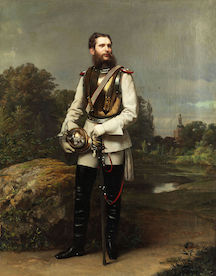
 “Fritz,” as Prince Frederick William was known, and Princess Victoria met first when Prince Albert and his secretary Baron Stockmar concocted a plan to invite the Prussian royals to London for Albert’s Grand Exhibition of 1851. Fritz was 20 at the time, and Victoria was but 10. The queen permitted Victoria to join the royal families, on the guise as a companion for Fritz’s younger sister. Princess Victoria’s German was fluent and she proved herself the perfect guide for her father’s exhibition. She was vivacious and made a good first impression. The two were permitted great access to one another (a fact which would not have occurred if she were older) over the two weeks the Prussians remained in London. If she had been older perhaps she might have noted the reticence and the alarm with which Frederick William noted the familiarity practiced openly by the British royal family. Life in Prussia would not be the same as life in London.
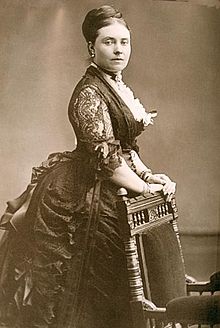 In the years of waiting, Prince Albert “trained” his daughter in how to be an excellent queen consort. Albert spent two hours daily in this manner. Unfortunately, the Princess Royal was not as adaptable as her father. Victoria’s life in Prussia would never be what she wished. Where in England, the princess’s life held a certain informality, in Berlin she encountered strict court etiquette. Moreover, the Prussia that Fritz would govern would be a military-controlled state. The ruling House of Hohenzollern practiced a state-instilled monarchy. Fritz and Vicky were married in January 1858.
 Education in England has roots deep in the Anglo-Saxon period. Latin was the main subject at these early schools and the instruction was directed toward the sons of “aristocracy” of the age. The church saw a need to train additional priests, as well as a need for someone to read the Bible and related documents to others. Both Oxford and Cambridge were founded as a means to train the clergy. It was during the reign of Edward VI that a reformed system of “free grammar schools.”
  “Robert Raikes initiated the Sunday School Movement, having inherited a publishing business from his father and become proprietor of the Gloucester Journal in 1757. The movement started with a school for boys in the slums. Raikes had been involved with those incarcerated at the county Poor Law (part of the jail at that time); he believed that “vice” would be better prevented than cured, with schooling as the best intervention. The best available time was Sunday, as the boys were often working in the factories the other six days. The best available teachers were lay people. The textbook was the Bible. The original curriculum started with teaching children to read and then having them learn the catechism, reasoning that a student who could read and understand the Bible could do the same with any other book.” (Power, John Carroll (1863). The Rise and Progress of Sunday Schools: A Biograhy of Robert Raikes and William Fox. New York: Sheldon & Company.)
 Many of the minor plot lines in my latest Regency romantic suspense concern who could inherit a title? There is the matter of the Marquess of Malvern’s losing his memory. Should the Duke of Devilfoard declare his eldest son incompetent and petition for his second son to assume control of the dukedom? Was such even legal? And what of the missing Earl of Sandahl? The original earl falls overboard on his “honeymoon” and cannot be found. Should he be declared dead? If so, who inherits? The logical answer is the second son, but that solution is not what it seems.

 Angel Comes to the Devil’s Keep


 Every Woman Dreams...