
What’s Not in Jane Austen

After reading and watching countless Jane Austen adaptations, it can sometimes be difficult to separate what Austen actually wrote in those six published novels with what we think she wrote. (Full disclosure: I once embarrassed myself by conflating the events of Pride and Prejudice and Zombies with the original.)
We’ve populated, expanded and explored the world of those novels so thoroughly that our confusion is understandable. Because of Austen, I’ve read many histories of the period. I know the Industrial Revolution was beginning to transform Britain, but unless you’re a knowledgeable reader and paid attention to John Dashwood enclosing the commons, you’d think it largely absent. I know the Napoleonic Wars were ongoing, but unless you asked yourself why there were all those red coats in Meryton, you’d think Austen had ignored it. Sometimes, though, I could swear there are more explicit references in Austen to these events and I’ve wasted a lot of time looking for what isn’t there. (Yes, there are some references to ship actions in Persuasion and Mansfield Park, but mostly in the context of gentlemanly bragging.)
Let’s look at some specific and then some general examples of what we think is in Austen’s novels, but isn’t.

The atlas
One of the easily understandable misconceptions, especially if you’re as fond of the Ang Lee/Emma Thompson adaptation of Sense and Sensibility as I am, is the atlas business with Edward Ferrars and Margaret Dashwood. It’s such a charming scene and does so much to make us like Edward, that’s it’s hard to remember it’s not in Austen’s story. This, of course, goes back to Dr. Joan Ray’s talk about Sense and Sensibility as the problem novel, inasmuch as Edward as hero doesn’t quite fit the bill. After all, the poor man hardly has a line of dialog in the first 15 chapters of the book, and yet because of various adaptations, we can conjure in our imagination all the conversations that attracted Elinor Dashwood to him. Unfortunately none of those conversations were written down.
The duel
Another thing that’s not in the book is the duel between Colonel Brandon and Willoughby. Sure there’s that line Brandon speaks: “…we met by appointment, he to defend, I to punish his conduct. We returned unwounded, and the meeting, therefore, never got abroad.” We can infer they met for the purpose of a duel, but it’s hardly clear that it was actually fought. I read Sense and Sensibility the first two times and somehow overlooked the duel and it wasn’t until I read an annotated edition that I recognized the five paragraphs that describe it. If you remember reading about the duel in any depth, I’m afraid you’re wrong.
Conversations between men
Most Janeites know that Austen never wrote conservations that happened solely among men. But we can take that further and say that even though Austen wrote in the third person, she rarely wrote of things outside the immediate experience of her protagonist, once that protagonist has been introduced. The conversation between Fanny and John Dashwood, when Fanny shortchanges her poor relations, happens before we meet Elinor. From that point on, we learn things at the same time as Elinor (although Austen often does draw back from the characters in the final chapter).
I’m pretty sure this is why the duel never gets written down in any detail. It would have happened outside the experience of Elinor and would have involved actions solely among men.
Kissing
There’s no kissing in baseball or Jane Austen, which goes against the expectations of those familiar with filmed adaptations (witness the recent poll in Austen Authors). Most of us feel rewarded when at the end of an Austen adaptation Elizabeth or Anne or Elinor have that one kiss that reminds us of William Goldman’s line from The Princess Bride: “Since the invention of the kiss, there have only been five kisses that were rated the most passionate, the most pure. This one left them all behind.” Good luck finding that in Austen. Kisses are for babies or locks of hair; they’re not the stuff of passion. (By the way, I think Sharon Lathan will have a more in-depth exploration of kissing in Austen in an upcoming post.)
Church service
For all the clergymen in Austen’s life and all the clergymen in the novels, I cannot recall any church service that occurs in the novels and the only services that I can recall from any filmed adaptation would be the marriage service. Yes, there are conversations in Mansfield Park about Edmund Bertram’s first sermon, but we don’t get to hear it. I swear I’ve seen or read of shy glances exchanged as the congregation turns to the Book of Common Prayer or sings praise to God, but it’s all in my imagination. Touring the chapel at Sotherton is the only time I can recall her characters being in a place of worship.
Death
Although so much of Austen’s novels are propelled by death and inheritance, there are no examples of major characters dying “on screen.” Despite all the speculation of Mr. Bennet’s impending death, he survives hale and hearty in Pride and Prejudice. A Mr. Dashwood dies at the beginning of Sense and Sensibility, and his death puts in motion the entire story, but we are not invested in him. Similarly, the death of Mrs. Churchill in Emma saddens no one (her husband finally gets to visit a friend!) and certainly not the reader. Mr. Woodhouse, who we do care about, also makes it to the end, despite his fear of chills and cake. Consider what the body count would be had Elizabeth Gaskell written Pride and Prejudice (although again my perceptions are colored by filmed adaptations of Gaskell’s novels).

Children
Children don’t play much of a role in the novels. Margaret Dashwood only has a few lines of dialog in Sense and Sensibility. She does propel the plot, however, when she mentions the lock of hair. Most children are stage props, something for Emma to dandle on her knee.
The Price children in Mansfield Park do have important roles in making Fanny realize just how different she is from her Portsmouth relatives, but except for Susan, I put them on a par with the unnamed Cratchit children. Considering the large number of children in Austen’s life, this is pretty odd and perhaps may be a reaction to the large number of children in her life. Austen may have practiced family planning in her novels, with the Bennets and the Prices being the only sizable families I can recall. None of these families come close to the progeny of the Austen clan.
Tropes
There are few plot tropes in Austen as we modern-day readers might define them. In Northanger Abbey, you will recall, she makes fun of tropes like ruined castles and the mysterious death of the first Mrs. De Winter, I mean Tilney. There are no McGuffins, like letters of transit, a second will or missing family jewels.
There are a number of misconceptions and some false accusations, but I never get the sense that Austen is trying to put something over on the reader. Austen’s plots are not complicated. Only Emma, I think, is somewhat complicated, which is why it is sometimes compared to mysteries or detective fiction.
Character generally rise above, ignore or flout the few tropes that do exist. Henry Tilney ignores his father’s wishes. Edward Ferrars forgoes his status as first born son. The Bennet entail still looms and seems regarded as moot by the end of the book.
Comeuppance
There’s little consequence to being evil (or just plain mean) in Austen’s novels. Her, in my opinion, worst villain, Fanny Dashwood, is untouched by the events of Sense and Sensibility, except perhaps in her disappointment that she has Elinor Dashwood as a sister-in-law — again. Lucy Steele makes out like a bandit. General Tilney is not harmed when he casts Catherine Morland from Northanger Abbey. Lady Catherine de Bourgh is definitely pissed off not to marry her daughter to her nephew, but let’s face it, that’s probably a good thing for the gene pool and it puts her daughter into play for so many adaptations. William Elliot in Persuasion is thwarted when Anne reunites with Captain Wentworth, but we suspect he has a backup scheme.
The one exception to this might be John Willoughby, who seems to genuinely pine for Marianne Dashwood — just before he returns to his rich wife and no doubt current mistress. Compare this to Charles Dickens, who often gives his villains their just deserts. Austen is amazingly non judgmental.
Do these omissions matter to the story?
No, of course not. Austen’s genius is that she gives us so much, without having to hit the reader over the head. We don’t care that she really gives only the barest description of any character. Somehow, “fine eyes” is all we need to recognize Elizabeth Bennet.
Recognizing these omissions, however, does give us an idea what is important to her. As much as the church was part of the warp and woof of her life, she was no moralizer. As much as her fortunes were affected by her father’s death, she doesn’t really employ it as plot device. (Yes, Dickens, I’m looking at you.) As much as she must have feared for her nautical brothers and would have prayed for her safety, she doesn’t dwell on the war with France. Fanny Price, after all, is most worried about her brother William’s prospects, even though I’m sure Austen knew her heroine would also have prayed for brother’s safety.
She was a remarkably canny author. She knew her limitations and she knew what she was good at. She knew to reveal Edward Ferrars to the reader only through the conversations between Elinor and Margaret.And that’s why what’s not there is sometimes as important as what is.
 Meet Jennifer Petkus: Jennifer Petkus divides her time creating websites for the dead, writing Jane Austen-themed mysteries, woodworking, aikido and building model starships. She has few credentials, having failed to graduate from the University of Texas with a journalism degree, but did manage to find employment at the Colorado Springs Sun newspaper as a cop reporter, copy editor and night city editor before the paper died in 1986. She lives in fear of getting a phone call from her dead Japanese mother. Her husband is the night editor at The Denver Post. Her best friend is a cop. She watched Neil Armstrong walk on the Moon live.
 Jane Actually, or Jane Austen’s Book Tour
With the invention of the AfterNet, death isn’t quite the end to a literary career it once was, and Jane Austen, the grande dame of English literature, is poised for a comeback with the publication of Sanditon, the book she was writing upon her death in 1817. But how does a disembodied author sign autographs and appear on talk shows? With the aid of Mary Crawford, a struggling acting student who plays the role of the Regency author who wrote Pride and Prejudice and Emma and Sense and Sensibility. But Austen discovers her second chance at a literary career also gives her a second chance at happiness and possibly even … love.
 My Particular Friend : A Charlotte House Affair
Miss Charlotte House will not admit impediments to marriage, not even when those impediments include scandal, blackmail and a duel to the death. With the help of her particular friend Miss Jane Woodsen, she deduces all that happens in Bath—both good and ill—and together they ensure that true love’s course runs smooth, even though both friends have suffered tragedies that prevent their own happiness. These six affairs, set in Bath, England, during the Napoleonic War, are inspired by the creations of both Sir Arthur Conan Doyle and Jane Austen.

 A Touch of Scandal: Book 1 of the Realm Series
  A Touch of Velvet: Book 2 of the Realm Series
 A Touch of Cashémere: Book 3 of the Realm Series
 A Touch of Grace: Book 4 of the Realm Series
  A Touch of Mercy: Book 5 of the Realm Series
  A Touch of Love: Book 6 of the Realm Series
  A Touch of Honor: Book 7 of the Realm Series
  A Touch of Emerald: The Conclusion of the Realm Series
 His American Heartsong: A Companion Novel of the Realm Series
  His Irish Eve
  The First Wives’ Club: Book 1 of the First Wives’ Trilogy
  Second Chances: The Courtship Wars
  One Minute Past Christmas: Tale of an Appalachian Christmas Miracle
 Angel Comes to the Devil’s Keep: Book 1 of the Twins’ Trilogy

 Vampire Darcy’s Desire: A Pride and Prejudice Paranormal Adventure
  Mr. Darcy’s Fault: A Pride and Prejudice Vagary
 Elizabeth Bennet’s Excellent Adventure: A Pride and Prejudice Vagary
  Elizabeth Bennet’s Deception: A Pride and Prejudice Vagary
  Mr. Darcy’s Present: A Pride and Prejudice Vagary
 Mr. Darcy’s Bargain: A Pride and Prejudice Vagary
 The Road to Understanding: A Pride and Prejudice Vagary

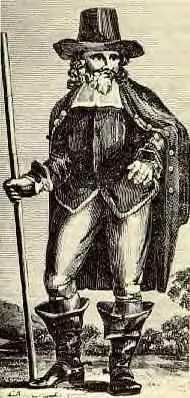 Matthew Hopkins was born in Wenham Magna, Suffolk, England. He was a Folk Figure, becoming England’s notorious “Witchfinder General,” active during the English Civil War. He was said to have exploited the fear and unrest of the times for his personal gain. Little is known of his early life and his birthdate (1619) is only approximate. He was the son of a Puritan clergyman, James Hopkins, and had knowledge of the law, but there is no evidence to support the story that he was a failed attorney, practicing in Essex.
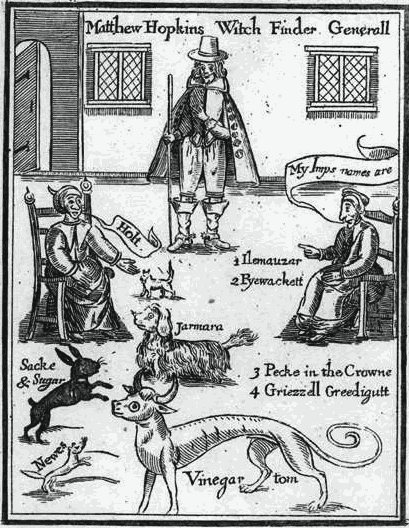 We know little of Hopkins until his reign of terror began in 1644. In March 1644, having read a book on witchcraft, he brought accusations against six people in Manningtree, calling them “witches” who had attempted to kill him. He thereupon became a “Witch Finder Generall,” going about Essex, Suffolk, Norfolk, and Huntingdon getting villagers and townspeople to hire him and his two assistants (for a fee) to search out witches, force their confessions, and have them hanged by the authorities. Throughout his reign of terror 1644-1647, Hopkins acquired a feared and evil reputation as a ‘fingerman’ (informer), paid by local authorities to commit perjury. Together with his henchman and fellow ‘Witch-Pricker’ John Sterne, in just 14 months, Hopkins was responsible for the condemnations and executions of some 230 alleged witches, more than all the other witch-hunters that proliferated during the 160-year peak of the country’s witchcraft hysteria. The hapless victims even included a few Anglican clergymen.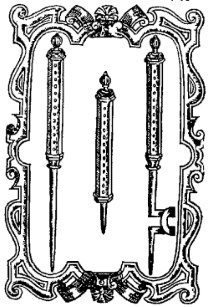

 The original brand name was “Hannon’s Best Chocolate.” The business prospered. In 1777, Hannon advertised his product with a money-back satisfaction guarantee. However, in 1779, Hannon set out for the West Indies to purchase cocoa beans. He never reached his destination. Although no one knows for certain, he was presumed to be lost at sea. The name of the product was changed in 1780 after Hannon’s wife, Elizabeth Gore Hannon, sold her husband’s share of the company to Baker in 1780, after Hannon never returned. At the time, it was rumored that Hannon intended to leave his wife, and thus deserted her.
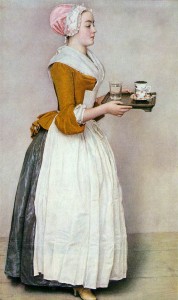 It was also Walter who gave the company its official trademark. He chose La Belle Chocolatiere to represent his company. “The young lady named “La Belle Chocolatiere” that still appears on packages is a representation of the original painting that hangs in the Dresden Gallery in Germany. La Belle Chocolatiere has graced the Baker’s Chocolate package since 1877, making her the oldest product trademark in America. Her story dates back to 1745 when Prince Dietrichstein, an Austrian nobleman, went to a chocolate shop to try the new drink everyone was talking about – hot chocolate. His waitress was Anna Baltauf, and the prince was so taken by the young lady that he soon asked her to marry him, making her a princess. Prince Dietrichstein commissioned a portrait of his wife by the famous Swiss painter Jean Etienne Liotard as a wedding gift. The artist suggested that she pose in her chocolate server’s costume, commemorating what brought them together. Some time prior to 1883, when the image was registered as a U.S. trademark, Henry L. Pierce, then president of Walter Baker & Company, saw the painting and decided it would be the perfect image for his packaged chocolate.” (
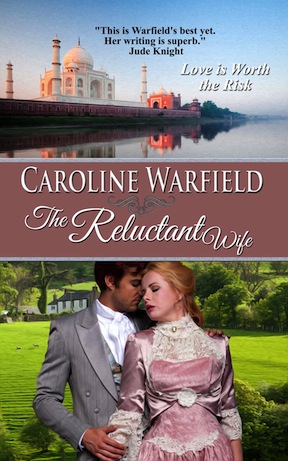 The Reluctant Wife
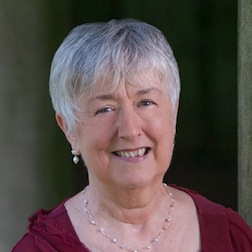 About Caroline Warfield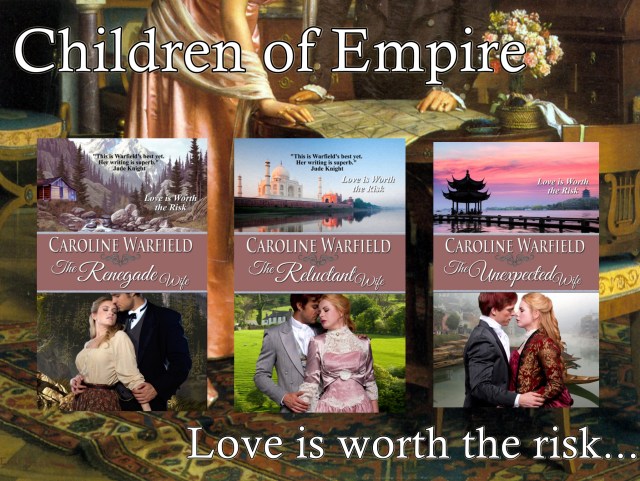


 The Prosecution of Mr. Darcy’s Cousin: A Pride and Prejudice Mystery


 Every Woman Dreams...