
What does it mean to be a “damsel in distress”? In today’s culture, such a phrase will likely set off triggers of some kind or another. Please remember that I am 77 years old, and we never thought of “triggers” as a possibility. I am not criticizing those who have known trauma (for I have, in my past, been savagely attacked), but I am just setting the table for the phrase “damsel in distress” as a common trope in storytelling.

It is a trope used by writers in which a helpless woman is in need of being saved by a hero. I admit to being guilty of using this trope in my upcoming novel, Lyon in the Way, which will be released by Dragonblade Publishers on 18 June 2025.

We have grown up with this trope, and while it assuredly does nothing for the feminine movement, it is an easily recognizable means used by writers to move a romance story forward.
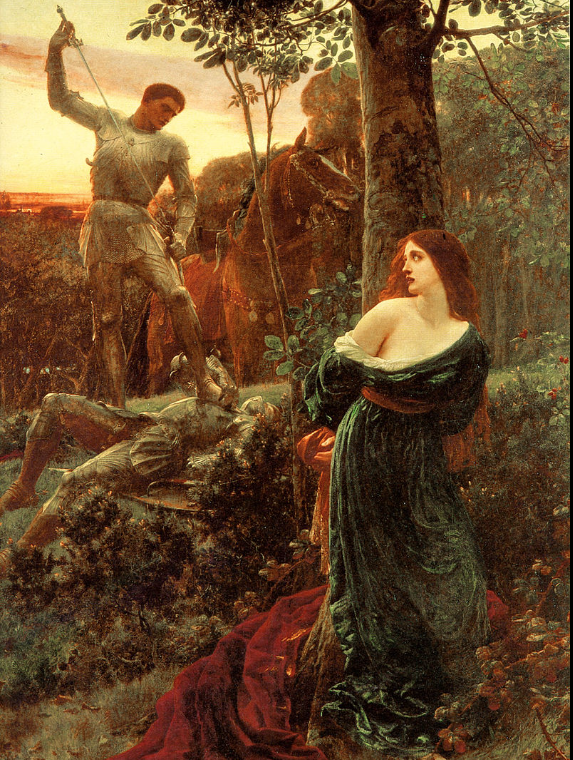
I will pause for a moment in my storytelling and quote from a site that speaks to how this trope has hurt women.
“A damsel in distress is typically a helpless woman who is in need to be saved by a hero, usually a man who is flawless. The woman, whether a princess or a peasant, doesn’t take any action towards saving herself, but waits patiently for the hero figure to take plenty of steps to save her. While this may be a simple description of the damsel in distress trope, we’re sure you have come across plenty of variations. From Cinderella and Rapunzel to the plots of innumerable movies and shows in languages from around the world, we’ve seen this trope surface again and again all around us.
“But the thing to note is that for a trope that emerges frequently, most of us have failed to outgrow it or recognise the harm it does, especially to women. In fact, the trope does immense disservice to women and women empowerment. Here’s everything you need to know.” [How the Damsel in Distress Trope Hinders Women Empowerment]
A literary trope is an artistic effect realized with figurative language — word, phrase, image — such as a rhetorical figure. In editorial practice, a trope is “a substitution of a word or phrase by a less literal word or phrase”. Semantic change has expanded the definition of the literary term trope to also describe a writer’s usage of commonly recurring or overused literary techniques and rhetorical devices (characters and situations), motifs, and clichés in a work of creative literature.
The damsel in distress is a narrative device in which one or more men must rescue a woman who has been kidnapped or placed in other peril. The “damsel” is often portrayed as beautiful, popular and of high social status; they are usually depicted as princesses in works with fantasy or fairy tale settings. Kinship, love, lust or a combination of those motivate the male protagonist to initiate the narrative. [Sarkeesian, Anita (March 7, 2013). “Damsel in Distress (Part 1) Tropes vs Women”. Feminist Frequency.]
Critics have linked the helplessness of these women to societal views that women as a group need to be taken care of by men and treated nicely. [Sarkeesian] Throughout the history of the trope, the role of the woman as the victim in need of a male savior has remained constant, but her attackers have changed to suit the tastes and collective fears of the period: “monsters, mad scientists, Nazis, hippies, bikers, aliens…” [Lowbrow, Yeoman (December 28, 2014). “When Natives Attack! White Damsels and Jungle Savages in Pulp Fiction“]
European fairy tales frequently feature damsels in distress. Evil witches trapped Rapunzel in a tower, cursed Snow White to die in Snow White, and put the princess into a magical sleep in Sleeping Beauty. In all of these, a valorous prince comes to the maiden’s aid, saves her, and marries her (though Rapunzel is not directly saved by the prince, but instead saves him from blindness after her exile). [“Unga Fakta – Grekisk mytologi”. http://www.ungafakta.se (in Swedish).]
The damsel in distress was an archetypal character of medieval romances, where typically she was rescued from imprisonment in a tower of a castle by a knight-errant. Geoffrey Chaucer’s The Clerk’s Tale of the repeated trials and bizarre torments of patient Griselda was drawn from Petrarch. The Emprise de l’Escu vert à la Dame Blanche (founded 1399) was a chivalric order with the express purpose of protecting oppressed ladies. [“Chivalry or The Chivalric Code”. webpages.uidaho.edu.]

The theme also entered the official hagiography of the Catholic Church—most famously in the story of Saint George who saved a princess from being devoured by a dragon. A late addition to the official account of this Saint’s life, not attested in the several first centuries when he was venerated, it is nowadays the main act for which Saint George is remembered. [“BBC – History – Historic Figures: St George (?–303)”. http://www.bbc.co.uk.]
These tales are not just in the Western cultures. When I taught World Literature in high school, one of the units I used was Fairy Tales from around the world. I brought in children’s book versions of probably 50 different tales. This I would ask the students to identify the different tropes. Needless to say, in many of the fairy tales, there was “saving the damsel in distress.”
For example, look at
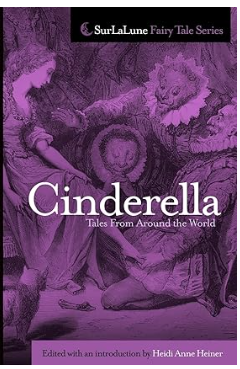
Yeh-hsien. Cenerentola. Cendrillon. Ashenputtle. Chernuska. Cinderella. These are just a few of the names of one of the best known and most beloved fairy tale characters in the world. The tale is known in countless variations throughout Europe and Asia as well as Africa and the Americas. The tales share the familiar story of a persecuted heroine who finally triumphs over oppressed circumstances through her virtue and the assistance of a magical helper. Whatever name she is given, the character has inspired countless generations and remains a vibrant part of modern popular culture. A discussion of the Cinderella Cycle is provided in the introduction, explaining how seemingly unrelated tales are considered part of the Cinderella family. A brief history of Cinderella scholarship is also included, detailing why the tale was once considered the key to understanding how stories were disseminated around the world. Building upon Marian Roalfe Cox’s seminal work with Cinderella over 120 years ago, this collection offers more than 150 full length Cinderella tales and over 200 summaries of other variants from around the world. Some of the tales are new translations, a few appearing for the first time in English. Many of the stories are clearly related to each other, but with some the relationship is less obvious. Whether you are a student of folklore or an armchair enthusiast, this anthology offers a diverse array of tales with a unifying theme that both entertains and educates, all gathered for the first time in one impressive collection.
Book Excerpt: Enjoy this Excerpt from Chapter One of Lyon in the Way, where Lord Richard Orson stumbles across a badly beaten Lady Emma Donoghue, a woman he has desired for more than a year for her bravado, her comely face, and (well, you will learn when you read the book).
Satisfied the stranger had abandoned his plans, Richard was again in search of Hunt’s carriage, but he had somehow made a wrong turn in his pursuit of the unknown man in black. “Foolish,” he chastised himself. “I am no better than the other drunks peppering these streets.”
He made two more ill turns in quick succession and had to backtrack. “It would be nice to have a street light here and there,” he grumbled as he found himself in what he thought was the old market area. “I understand now why the Duke of Bedford wishes Parliament to regulate this area.” He paused to look around him to claim his bearings. Thinking himself assured of where to find Hunt’s carriage, Richard took a side street and a short alley, ignoring a man throwing up his oats and a woman chastising him in her best “fishwife” imitation for ducking under her line of clean laundry and knocking part of the rope down.
Richard had cleared the pair and stepped upon the wooden walkway when a woman staggered from the shadows and, quite literally, into his arms. At first, he thought another of the area’s many pickpockets thought to make him her mark, but somehow Richard recognized her. The woman was not inebriated, nor did she appear to be on some sort of black powder, she was injured.
Though she attempted to pull away from his embrace, he held her in place. There was blood seeping from a cut at her temple, as well as several defensive style wounds along her arm.
She swayed in place as he propped her against the side of a nearby building so he might determine how badly she was injured, while also searching the area for a sign of her attacker.
“Don’t!” she groaned as he braced her with one hand and turned as best he could to scan the area. “Don’t touch me, I must find the three . . .”
“I shan’t!” he declared, though he kept his hand on her shoulder. “Who was in your party?” he asked, though the idea of her being with any man who would do this to her was unsettling. “Find three what?”
Her dark chocolate hair hung loose on one side and what once must have been a string of pearls laced in her curls had fallen over her forehead, which sported what would likely be a large bruise. The skirt of her gown was ripped on one side and covered with “alley” filth, a mix of garbage and human waste and mud, as if she had been knocked to her knees, and she was missing her evening slippers.
He asked again. “With whom were you traveling? Are there others for whom I should be seeking? Three more, perhaps?” Richard was already wondering if the man he had been following earlier had committed this crime. He could not imagine even the daring Lady Emma Donoghue, though she pushed all boundaries of conformity, would venture to Covent Garden alone. She swayed in place and he tightened his hold on her shoulder. “How did this happen?”
She looked at him oddly, as if she suddenly realized he was there before her. “I . . . I . . . I do not know.”
“We will discover the truth,” he said. “Permit me to assist you to this building’s entrance steps. I would like to have a look around. To know assurances that someone else has not been harmed. Can you place your trust in me to do what I say? Afterwards, I will see you home.”
“Home?” she asked and frowned. “Do not wish to return home.”
“Do not worry. I will not desert you.” He guided her to the steps leading to the main door of the building, but he had quickly become aware of how his touch frightened her. She half sat and half collapsed onto the stained bricks of the entranceway. He permitted her to slump against the cold stone, claimed his Queen Anne pistol, and walked back the way she had come, but there was no one along the street and no signs of a struggle, not even one of her missing shoes. He was guessing whatever had happened to her, it had not happened nearby. Perhaps someone had dumped her in Covent Garden after assaulting her elsewhere.
Richard briefly wondered if she had been raped. He prayed not, for a woman of her “huzzah” should not be played foul.
Hurrying back to where he had left her, he roused her gently. If she had a head injury, he did not want her sleeping until a physician or a surgeon examined her. “Come now, my lady,” he said as he gently coaxed her to her feet. “Again, I ask, can you tell me who you were with earlier this evening?”
She looked around her. “I do not . . . recall,” she said with a frown.
“My lady . . .” he began, but she reached a bloody hand to him to prevent his question.
“How do you . . . know me . . . to be a lady?” she asked, and it was the first time she appeared truly frightened, rather than simply confused.
“You are Lady Emma Donoghue. Earlier today, you and some of your acquaintances prevented a number of gentlemen from entering White’s.” He would not tell her he had been asking the occasional question about her for coming up on two years. Like it or not, the woman fascinated him.
“And this was . . . my punishment?” she asked.
“I cannot say with any confidence,” he admitted. “As I was one of the men at White’s, I saw you there. You have been among those ‘protesting,’ shall we term your actions, at several venues for months. Yet, of course, you are well aware of those efforts.”
“Who are you?” she asked as she staggered away from him, fear obviously returning.
He reached a hand to her when she swayed in place. “I am Lord Richard Orson. I am a peer of the realm and often assist those in the government.”
Book Blurb:
One man wants her dead. Another may love her forever.
For over a year, Lord Richard Orson has been quietly captivated by the unconventional Lady Emma Donoghue. Headstrong, brilliant, and unapologetically involved in causes that rattle Society’s comfort, Emma is nothing like the debutantes he’s expected to court.
But when he finds her bruised, confused, and alone in Covent Garden after midnight, Richard is thrust into a far more dangerous game.
Someone wants Emma silenced. And now, Richard has only moments to uncover the truth, protect her from harm, and keep her out of scandal’s reach. But staying focused is harder than he imagined—especially when every glance, every accidental touch, reminds him how perfectly she fits in his arms.
Tropes you’ll love: Protective hero / damsel in distress (with a twist) Bluestocking heroine Rescue & recovery romance Unlikely match / opposites attract Slow burn with rising suspense One bed (forced proximity) Hero falls first
As danger closes in and secrets are revealed, Richard must decide whether he’s willing to risk his life—and his heart—for a woman who’s always been worth the fight.
A suspenseful, slow-burn Regency romance where danger ignites desire, and love must outpace the clock.
Read in Kindle Unlimited!
Enjoy book one in a new series within The Lyon’s Den Connected world by Regina Jeffers.
Book 1 – Lyon in the Way
Book 2 – Lyon’s Obsession
Book 3 – Lyon in Disguise
Book 4 – Lost in the Lyon’s Garden
Book 5 – Lyon on the Inside


 Every Woman Dreams...