Meet Lydia Dare

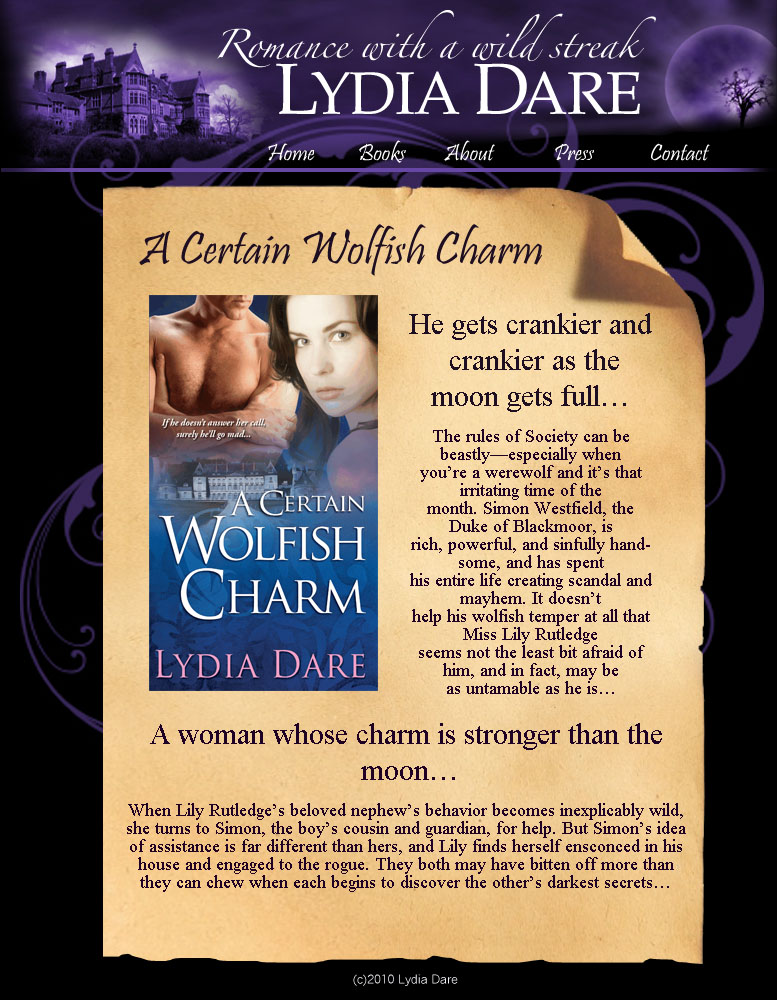
Lydia Dare is a partnership between Jodie Pearson and Tammy Falkner. They write paranormal romance set in the Regency Period. Check out Lydia Dare’s
A Certain Wolfish Charm
Tall, Dark and Wolfish
The Wolf Next Door
It Happened One Bite
In the Heat of the Bite
Posted in Uncategorized | Comments Off on Meet Lydia Dare

Meet Karen McCullough

Karen McCullough writes both mystery and science fiction, with romantic elements, for Five Star/Gale Group. Check out her
Heart of the Night
A Question of Fire
A Gift for Murder

Posted in Uncategorized | Comments Off on Meet Karen McCullough

Meet Chloe Harris

Chloe Harris writes “hot spiced historical romance” for Kensington Press. Chloe Harris is the pseudonym of a partnership of writers: Noelle Henderson and Barbara Kolten. Check out her
Secrets of Sin
In Deep
Silent Night, Sinful Night

Posted in Uncategorized | Comments Off on Meet Chloe Harris

Meet Beth Williamson

Beth Williamson also write “cowboy”-themed romance. She says she admire Leigh Greenwood’s stories over the years. Beth writes for Kensington Press. Look for her
Gideon
Lucille’s Lawman
Restless Heart

Posted in Uncategorized | Comments Off on Meet Beth Williamson

Meet Jennifer Hudson Taylor

Jennifer Hudson Taylor has released eight books, but has recently joined the group from Addington Press. She writes “inspirational” romance which thrives on characters who have very “human” qualities. Check out her
Highland Blessings
Highland Sanctuary

Posted in Uncategorized | Comments Off on Meet Jennifer Hudson Taylor

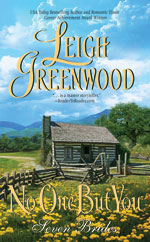
Meet Leigh Greenwood

Also on the panel, we will find Leigh Greenwood. Leigh worked for Dorchester, but has recently gone to the eBook format. His “cowboy” romances have been a staple of the business. Check out
No One But You
When Love Comes
Someone Like You

Posted in Uncategorized | Comments Off on Meet Leigh Greenwood

Meet Mary Margaret Daughtridge

On Saturday, June 25, I will be sharing a panel with 9 great romance writers. Let me introduce you to them.
Mary Margaret Daughtridge is a 2010 National Readers’ Choice Award winner. She writes for Sourcebooks. Her books about Navy Seals are very popular.
SEAled Forever
SEAled with a Kiss
SEAled with a Promise
SEAled with a Ring

Posted in Uncategorized | Comments Off on Meet Mary Margaret Daughtridge

1940 Pride and Prejudice: A “Screwball Comedy”

According to moderntimes.com, the term “screwball comedy” refers to “films where everything was a juxtaposition: educated and uneducated, rich and poor, intelligent and and a bit stupid, honest and dishonest, and most of all male and female. When two people fell in love, they did not simply surrender to their feelings, they battled it out. They lied to one another, often assuming indifferent personas toward each other. They often employed hideous tricks on each other, until finally after running out of inventions, fall into each others’ arms. It was fossilized comedy, physical and often painful, but mixed with the highest level of wit and sophistication, depending wholly on elegant and inventive writing.”

The 1940 adaptation of Pride and Prejudice was created in the image of such famous screwball comedies as Mr. Deeds Goes to Town, My Man Godfrey, Bringing Up Baby, You Can’t Take It with You, and It Happened One Night. For the true Janeite, the 1940 film speaks to everything wrong with film adaptations of Austen’s works. It has a systemic problem: four different views of the plot. There’s Austen’s original novel. There’s also Helen Jerome’s 1935 dramatization of Pride and Prejudice, upon which this film was based. Then, there’s the uncommon collaboration between MGM screenwriter Jane Murfin and British novelist Aldous Huxley. It’s no wonder the audience is given a film that’s 20% Austen and 80% Hollywood.

Laurence Olivier had garnered acclaim in his film roles in both Wuthering Heights and Rebecca. He was a natural choice for Fitzwilliam Darcy. Producers were hesitant to give the role of Elizabeth Bennet to Olivier’s real-life love Vivien Leigh, and so Greer Garson was recruited for the part. Neither gives his/her best performance, but they are both pleasant to look at. Actually, minor characters carry the film. Mary Boland (Mrs. Bennet), Edmund Gwenn (Mr. Bennet), Edna Mae Oliver (Lady Catheine de Bourgh), and Melville Cooper (Mr. Collins) bring life to the film. These characterizations are reminiscent of the Jerome’s farcical play. We all remember Oliver sitting on Kitty’s music box and her enduring the parrot squawking in the background.

Costumer Adrian provided 500 voluminous and anachronistic gowns for the film, and although the opening frame announces, “It happened in OLD ENGLAND,” the film lacks legitimate British aspects. In Jane Austen in Hollywood, Troost and Greenfield say, “Readers of the novel must balk, however, when Darcy calls Elizabeth ‘tolerable,’ and adds, ‘I’m in no humour tonight to give consequence to the middle classes at play.’ Austen is more egregiously misrepresented when Elizabeth speaks of Darcy’s unwillingness to ally himself to ‘a family of such low descent.’ The novel’s Elizabeth, so proud of being ‘a gentleman’s daughter,’ was not quite what Hollywood wanted – any more than an Elizabeth less beautiful than her sister Jane was. Enjoying Greer Garson’s perfect features and glassy composure, the camera persuades us to forget she is a decade or so older than Elizabeth Bennet’s ‘not yet twenty.’ Similarly, we are meant to consider Elizabeth as a daughter of those middle classes that reliably rose up against the aristocracy in Hollywood’s wartime renderings of nineteenth-century novels (cf. Jane Eyre), which portrayed OLD ENGLAND as democratic America’s ancestor. Part of the context that shaped this film was the producers’ aim to get the United States into the war as England’s ally together with the formal constraints of Hollywood comedy, politics was responsible for changing Lady Catherine’s mind about Elizabeth.”

Caroline Bingley wears a black gown to the assembly. This would have been unheard of for a young, unmarried woman of the Regency period. 1939’s Gone with the Wind influenced costumer Adrian’s choices. We find hooped skirts, tight bodices, tight waistlines, high puffy sleeves, and hats, which frame the face. At the garden party, Elizabeth wears a white bouffant dress with a white hat. When Mr. Collins proposes, she has black accents to the gown (bows, zigzags on the sleeve, etc.). The effect is more 1830.

Obviously, the class difference, central to the novel, is greatly reduced in this film version. Darcy’s objection to dancing with Elizabeth at the Meryton assembly rests purely in her being slighted by other men. Olivier’s role is “minor” in this adaptation. His most brilliant performances come in the proposal and the reconciliation scenes. He’s so much better as Heathcliff in Wuthering Heights. Garson is much too old for Elizabeth, and she plays the character as a “modern” woman. The script has her a downright rude at times.

None of the Bennet sisters display consistent manners or decorum. In the film, Jane is openly flirtatious – quite a contrast to the demure creature of Austen’s novel. Kitty and Lydia are shown behaving very badly. Do we not remember the scene on the swings with the officers? Kitty is also quite inebriated at the Netherfield Ball.

The first 16 chapters are reduced to one scene at the Meryton assembly. Darcy finds Elizabeth appalling at the beginning of the assembly. At the assembly’s end, he’s intrigued by her. Wickham dances with both Elizabeth and Lydia during the assembly. Elizabeth refuses Darcy’s request to dance, but then she accepts Wickham (Edward Ashley). Relationships are defined in this one extended scene. The use of the Netherfield garden party also defines personalities. Elizabeth, in a very modern strand, beats Darcy in an archery contest. She later alludes to Darcy having refused an introduction to Wickham. Darcy tells Elizabeth that he would judge each situation individually, and he admonishes her for judging him as anything but a man of honor. They appear to strike up a friendship when Darcy comforts Elizabeth after Caroline Bingley’s (Frieda Inescort) unkindness. However, Mrs. Bennet’s pronouncement regarding Jane’s prospects with Mr. Bingley (Bruce Lester) curtail the relationship.

The time compression is somewhat problematic in the film. Only moments after the audience discovers Lydia has eloped with Wickham, Darcy is on Longbourn’s doorstep to offer his assistance. He confesses Wickham’s attempted seduction of Georgiana. Elizabeth confessing to Jane that she loves Darcy follows. The audience loses the change of heart that Austen’s readers love in the novel.

There are other anachronistic elements. For example, Lady Lucas says of the letting of Netherfield Park is the best news “since the battle of Waterloo.” Of course, Waterloo came two years after the release of Pride and Prejudice. Some of Austen’s most beloved scenes are missing, especially those at Pemberley. We have NO portrait in the gallery, NO praise from Mrs. Reynolds, and NO being discovered at Darcy’s home. Ellen Belton in “Reimagining Jane Austen: The 1940 and 1995 Film Versions of Pride and Prejudice” says, “While the novel concerns itself with the complex psychological processes by which first the hero and then the heroine fall in love with one another, the film visually suggests a mutual attraction that is almost instantaneous. It is obvious from the outset that he is drawn to Elizabeth and makes very little effort to resist succumbing to her charms.”

The film might be summed up when Garson’s character says, “You’re very puzzling, Mr. Darcy. At this moment, it’s difficult to believe that you’re so proud.” To which, Olivier’s Darcy replies, “At this moment, it’s difficult to believe you’re so prejudiced. Shall we not call it quits and start again?” This film garnered both financial and critical success. In fact, when it opened at the Radio City Music Hall, it drew the largest weekly audience during the month of August in the theatre’s history. During its four-week run at RCMH, it grossed $1,849,000.

Posted in film, film adaptations, Jane Austen, Pride and Prejudice | Tagged , , , , | 2 Comments

Kindle Sales Continue to Rise

My friend and cohort at Austen Authors, Mary Simonsen, shared the following information regarding the prevalence of eBooks.

From Amazon’s Kindle Newsletter:

Amazon Now Selling More Kindle Books Than Print Books

In November 2007, Amazon introduced the revolutionary Kindle. By July 2010, Kindle book sales had surpassed hardcover book sales, and six months later, Kindle books overtook paperback books to become the most popular format on Amazon.com. Today, less than four years after introducing Kindle books, Amazon.com customers are now purchasing more Kindle books than all print books – hardcover and paperback – combined. Since April 1, for every 100 print books Amazon.com has sold, it has sold 105 Kindle books. This includes sales of hardcover and paperback books by Amazon where there is no Kindle edition. Free Kindle books are excluded and if included would make the number even higher.

Amazon announces the Top 20 Most Well-Read Cities in America:

1. Cambridge, MA
2. Alexandria, VA
3. Berkeley, CA
4. Ann Arbor, MI
5. Boulder, CO
6. Miami, FL
7. Salt Lake City, UT
8. Gainesville, FL
9. Seattle , WA
10. Arlington, VA
11. Knoxville, TN
12, Orlando, FL
13. Pittsburgh, PA
14. Washington, D.C.
15. Bellevue, WA
16.Columbia, SC
17. St. Louis, MO
18, Cincinnati, OH
19. Portland, OR
20. Atlanta, GA

Posted in Uncategorized | Comments Off on Kindle Sales Continue to Rise

West Virginia Day – June 20

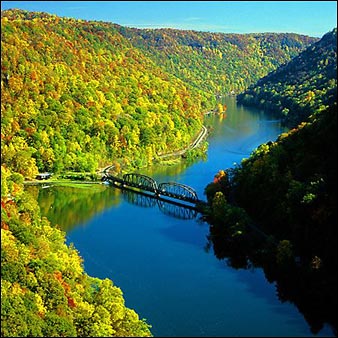
June 20 celebrates the birth of my home state. West Virginia was founded in 1863. I just returned from WV on Sunday. I love driving the mountain roads, but I’m sure many others do not. They are intimidated by the curves. When I come out of the tunnel at Bluefield, the one which separates WV from Virginia, my heart always says “home.”
On June 20, 1863, West Virginia became the thirty-fifth state in the Union. The land that formed the new state formerly constituted part of Virginia. The two areas had diverged culturally from their first years of European settlement, as small farmers generally settled the western portion of the state, including the counties that later formed West Virginia, while the eastern portion was dominated by a powerful minority class of wealthy slaveholders. There were proposals for the trans-Allegheny west to separate from Virginia as early as 1769. When Virginia seceded from the Union in 1861, the residents of a number of contiguous western counties, where there were few slaves, decided to remain in the Union. Congress accepted these counties as the state of West Virginia on condition that its slaves be freed. “Montani semper liberi,” “mountaineers always freemen,” became the new state’s motto.

Posted in Uncategorized | Comments Off on West Virginia Day – June 20