Using Austen and Shakespeare to Teach Toddlers

This comes from Deseret News. http://www.deseretnews.com/article/705389479/Counting-with-Jane-Austen-and-William-Shakespeare.html

Knowing that I’m about to be a grandmother for the first time, three different sources sent me this story today.
“LITTLE MISS AUSTEN: Pride & Prejudice” and “LITTLE MASTER SHAKESPEARE: Romeo & Juliet” by Jennifer Adams, illustrations by Alison Oliver, Gibbs Smith, 2011, $9.99 each

Classic literature has gone baby-friendly.

Baby Lit, a board book series from publisher Gibbs Smith, has published two new counting primers inspired by Jane Austen’s “Pride and Prejudice” and William Shakespeare’s “Romeo and Juliet.”

“Little Miss Austen: Pride & Prejudice” is a counting primer based on classic literature.
The books are being marketed as a “fashionable way to introduce your toddler to the world of classic literature.” “Little Miss Austen: Pride & Prejudice” and “Little Master Shakespeare: Romeo & Juliet” integrate elements of the well-known stories while counting from one to 10. “Little Miss Austen,” for example, features two rich gentlemen, five Bennet sisters and Mr. Darcy’s salary of 10 thousand pounds per year. “Little Master Shakespeare: Romeo & Juliet” incorporates a few of the more well-known lines from the play, such as “That which we call a rose by any other name would smell as sweet,” from Juliet’s famous soliloquy. Both books include some numerical representations — such as horses, ball gowns, musicians and masks — that are not necessarily unique to the classics, “Romeo & Juliet” more so than “Pride & Prejudice.”

I am not sure whether my son would appreciate these for his yet-unborn child, but his mother is enough of a nerd to, at least, consider them. What about you?

Posted in Uncategorized | 2 Comments

Locations for Pride and Prejudice 2005

Below, one will find the real-like locations for many of my favorite scenes from this film. I have included a bit of history on each historic building. Most of that information comes from http://www.infobritain.co.uk.

Groombridge Place and Enchanted Forest, Kent (Longbourn, the Bennet family home)
In 1662 by architect Philip Packer, with the help of his friend, Christopher Wren, the seventeenth century’s premier architect, built Groombridge Place. Packer’s house was built on the site of a series of former manor houses owned by wealthy nobles, including Richard Waller, who famously kept Charles Duke of Orleans at Groombridge after capturing him at the Battle of Agincourt. Completing his new house in 1662 Packer then started thinking about his garden. Beginning in 1674, Packer began designing the gardens surrounding Groombridge House He was assisted by John Evelyn, a horticulturist and famous diarist. Evelyn was a multi-talented man who showed an unusually modern concern with the problems of urban living, and a reverence for gardens as an escape from them. Evelyn conceived a series of formal gardens arranged as “outside rooms” of the house. Although Evelyn was generally formal in his gardening ideas, the sense of blurring the boundary between indoors and outdoors was actually a theme that would emerge once again in the 20th Century. Some of Evelyn’s garden rooms at Groombridge also preempted modern design in creating an artfully “natural” landscape. The Secret Garden is the best example. It is suggested that this was Packer’s favourite garden. He is supposed to have died here in 1686 while reading a book.

Basildon Park, Berkshire (Netherfield Park)
In many ways Basildon Park in Berkshire is an historical oddity, a house seeking historical grandeur when all it really found was a kind of Blackadder farce. Building of the house began in 1776, for a Francis Sykes. Sykes was originally a farmer’s son, who joined the British East India Company to make his fortune, which supported his political career. He became governor of Kazimbazar. Returning to England in 1771 a rich man, Sykes decided to buy the estate at Basildon, since this was an area where many men who had made good in India tended to settle with their money. He managed to win a baronetcy, and become an MP, but work on the house he commissioned at Basildon was slow, probably reflecting financial difficulty. Sykes struggled on with the building of his grand house, in a palladian style which was already going out of fashion. When Sykes died in London in 1804, Basildon Park remained unfinished. Sykes’ son inherited the property, but he too died within a few weeks, and the new owner, Sykes’ grandson, Francis Sykes the third baronet, was only five years old. With little money, ownership somehow remained with the boy, who at age 14 started entertaining Prince George at the house. Prince George was famously dissolute, and Sykes’ association with him only drained the family fortune further. With the family in a state of financial turmoil, Basildon Park was offered for sale. Just for good measure, personal turmoil was also thrown into the mix, when Sykes’ wife Henrietta started having an affair with future Prime Minister Benjamin Disraeli. Henrietta also had an affair with the painter Daniel Maclise. When her husband denounced Maclise he broke the unwritten rule that such goings on in high society should be kept discreet. As a result, Charles Dickens, a friend of Maclise, decided to use the name Bill Sykes for a villainous character in a new book he was writing. Oliver Twist, complete with Bill Sykes, was published in 1838 and Francis Sykes was humiliated. He finally sold Basildon Park that year.

Burghley, Lincolnshire (Rosings Park)
Burghley is perhaps the grandest of all England’s sixteenth century Elizabethan houses, capturing the drama and other-worldly spirit of that time. Lord Burghley, William Cecil, Treasurer to Elizabeth I, and her most influential advisor, directed its structure. His grand house is like others of the period, Longleat or Wollaton Hall for example, except Burghley just had more of everything. In fact it may claim to be the definitive grand house of late Tudor England. Burghley, like most great properties, housed lavish collections of art and valuable objects. The Heaven Room became Lady Catherine’s drawing room in the 2005 film. The fifth Earl, Lord Exeter, commissioned the Italian artist Verrio to paint the murals on the wall and ceiling. There is a Hell Staircase leading to this room. Owned by a family trust, Lady Victoria Leatham, daughter of the Marquis of Exeter, the medal-winning Olympic runner portrayed in Chariots of Fire, manages the estate. (As footnote,s the late Ian Charleson, who played Exeter in the film, has a RSC Award named after him. Matthew Macfadyen previously was nominated for the award. Also, Lady Victoria appears regularly on Antiques Roadshow.) Burghley has been used as a location for a number of films including Pride and Prejudice, Elizabeth, the Golden Age, and The DaVinci Code.

Chatsworth, Derbyshire (Pemberley)
Chatsworth is home to the Duke and Duchess of Devonshire. Since Chatsworth was first built in the early sixteenth century, it has been closely involved with religious disputes that have shaped Britain into modern times. Elizabeth Hardwick, and her husband Sir William Cavendish, treasurer to Henry VIII, built Chatsworth. When the king decided to marry Anne Boleyn, he needed to escape the influence of the pope who refused to grant Henry a divorce from his first wife Catherine of Aragon. In the upheaval of the Reformation that followed, huge amounts of money were taken from dissolved Catholic monasteries. From 1532 onwards a significant amount of this appropriated money went to Sir William Cavendish. He was made First Earl of Devonshire, and Chatsworth benefited from William’s newfound wealth. The Earls of Devonshire remained Protestant champions thereafter. Protestant Elizabeth I held the Catholic Mary Queen of Scots prisoner at Chatsworth on a number of occasions between 1569 and 1584.

Wilton House, Wiltshire (Mr. Darcy’s music room at Pemberley, where Elizabeth first meets Georgiana)
Wilton has been linked to royalty since early Anglo Saxon times. A nunnery was founded here, which figures quite frequently in Anglo Saxon royal history. The twelfth century saw the nunnery at Wilton being replaced by a Benedictine abbey, which was disbanded during Henry VIII’s Dissolution of the Monasteries. In 1542 Henry VIII granted the abbey and its lands to William Herbert, whose descendents, the Earls of Pembroke, still own Wilton. A year after acquiring his new property William Herbert began creating a Tudor house, incorporating parts of the old abbey. This house was famous during Tudor times as the residence of Mary Sidney, sister of Elizabethan poet Sir Philip Sidney. In the 1630s the 4th Earl of Pembroke commissioned Inigo Jones to re-model Wilton House in a Palladian style. The Double Cube Room used in the film is an example of the style. Many films have used Wilton House as a location including The Young Victoria, Pride and Prejudice, Sense and Sensibility, The Madness of King George, Mrs Brown, and The Bounty.

Haddon Hall, Derbyshire (the inn at Lambton)
Originally built as a fortified manor house in the eleventh century, Haddon Hall belonged to the Vernon family, and then passed by marriage to the powerful Manners family. In 1703 John Manners, 9th Earl of Rutland left Haddon Hall, and went to live at the Manners family seat at Belvoir Castle in Leicestershire. A long period of neglect followed for Haddon Hall. For over two hundred years it lay in a kind of suspended animation in an almost unaltered sixteenth century condition. A lesser house would have fallen down, but this was a strong stone built, fortified manor house. The empty house endured through the centuries until the 1920s when the 9th Duke of Rutland visited his long forgotten family property and realised how important it was. With the help of a restoration expert named Harold Brakspear the building was restored, not as a building representing a single time period, but more as a building that had accreted layers like sedimentary rock over long periods of time. There are small sections that date to the eleventh century, but there are also parts of the building which date to rebuilding between the thirteenth and early seventeenth centuries.
With Haddon Hall illustrating a long period in history it is fitting that the house is often used as a film location for historical film and drama. Haddon Hall has been used for The Princess Bride (1986), Jane Eyre (1996), Elizabeth (1998), and Pride and Prejudice (2005).

Stourhead, Wiltshire (location of The Temple of Apollo used for the first proposal scene)
Henry Hoare, whose father, Sir Richard Hoare had made his fortune in banking, built Stourhead between 1717 and 1725. Stourhead and the banking fortune, which created it, date from a financial revolution that accompanied the Glorious Revolution of 1688. After 1688, British monarchs were obliged to work within the constitution set out by Parliament. Now debt run up by the country became the “national debt.” Debt became increasingly accepted, and this new attitude was one of the reasons Britain became such a powerful country in the 18th century. The gardens at Stourhead illustrate the worldwide power that Britain began to enjoy following the financial revolution. It became increasingly fashionable to have exotic foreign plants in gardens, brought back from countries under British influence. The estate is huge, and includes King Alfred’s Tower, a folly of monumental proportions. This fifty meter high building lies at the end of a long coach track leading away from the house. It commemorates King Alfred’s victory over the Danes in 878 A.D. Stourhead remained with the Hoare family until 1946. Henry Hoare, the Sixth Baronet lost his only son during World War One, and a year before his own death in 1947, he gave Stourhead to the National Trust.

Posted in Uncategorized | Comments Off on Locations for Pride and Prejudice 2005

Settling for the Compromise Marriage – A Regency Era Tradition

SATURDAY, 20 AUGUST 2011

SENSE AND SENSIBILITY BICENTENARY CELEBRATION : SETTLING THE COMPROMISE MARRIAGE. GUESTPOST BY REGINA JEFFERS + GIVEAWAY

This month’s guestblog to celebrate the bicentenary of Sense and Sensibility (1811 – 2011) is by Regina Jeffers and is about the idea of a “compromise marriage” in Jane Austen’s world and novels, with special reference to the Dashwood sisters.
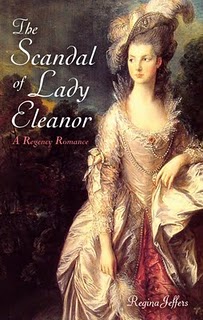
This month’s giveaway is of a signed copy of Regina Jeffers’ latest publication, The Scandal of Lady Eleanor. The details of the giveaway can be found at the end of this post.
You can read all the guestposts in the Sense and Sensibility Bicentenary Celebration following this link http://thesecretunderstandingofthehearts.blogspot.com/2011/08/sense-and-sensibility-bicentenary.html.

Settling for the Comprise Marriage

What hope was there for the dowerless daughters of the middle class during Jane Austen’s lifetime? Such is a topic Austen explored repeatedly in her novels. Elizabeth and Jane Bennet sought men of a like mind. The Dashwood sisters found their choices limited by their financial situation. Fanny Harville and Captain Benwick could not marry until he earned his future. General Tilney drove Catherine Morland from his home because of the lady’s lack of funds. Charlotte Lucas accepted Mr. Collins as her last opportunity for a respectable match. The intricacies and tedium of high society, particularly of partner selection, and the conflicts of marriage for love and marriage for property are repeated themes.

Marriage provided women with financial security. Henry Tilney of Northanger Abbey explains, “… in both [marriage and a country dance], man has the advantage of choice, woman only the power of refusal: that in both, it is an engagement between man and woman, formed for the advantage of each.” Women of Austen’s gentry class had no legal identity. No matter how clever the woman might be, finding a husband was the only option. A woman could not buy property or write a will without her husband’s approval. If a woman was fortunate, she would bring to her marriage a settlement – money secured for her when she came of age – usually an inheritance from her mother. The oldest son or male heir received the family estate, and the unmarried or widowed females lived on his kindness.

The ladies of Sense and Sensibility have this reality thrust upon them when Uncle Dashwood changes his will and leaves Norland to his grandnephew. In Uncle Dashwood’s thinking, this change will keep Norland in the Dashwood family. However, the four Dashwood ladies suddenly find themselves living in a modest cottage with an income of £500 annually. As such, they have no occasion for visits to London unless someone else assumes the expenses. Their social circle shrinks, and the opportunities to meet eligible suitors becomes nearly non-existent. With dowries of £1000 each, the Dashwood sisters are not likely to attract a man, who will improve their lots.

Jane Austen, herself, lived quite modestly. The Austens lived frugally among the country gentry. The Austen sisters were well educated by the standards of the day, but without chances for dowries, Jane and Cassandra possessed limited prospects. Jane met a Mr. Blackall the year Cassandra lost her Mr. Fowle. In a letter, Blackall expressed to Mrs. Lefroy a desire to know Jane better; yet, he confided, “But at present I cannot indulge any expectation of it.” To which, Jane Austen responded, “This is rational enough. There is less love and more sense in it than sometimes appeared before, and I am very well satisfied.” Imperfect opportunities were Jane Austen’s reality. In 1802, Jane Austen accepted an offer of marriage from Harris Bigg. With this marriage, Jane would have become the mistress of Manydown.

Yet, despite her affection for the family, Austen could not deceive Bigg. The following morning, she refused the man’s proposal. Whether she thought to some day find another or whether Austen accepted the fact that her refusal doomed her to a life as a spinster, we shall never know. In the “limited” world in which Jane Austen lived, she could not have known her eventual influence on the literary canon.

Austen held personal knowledge of young women seeking husbands in one of the British colonies. Reverend Austen’s sister, Philadelphia, traveled to India in 1752, where she married an English surgeon Tysoe Hancock, a man twenty years her senior. When the Hancocks returned to England a decade later, Reverend Austen traveled to London to greet his sister. However, Philadelphia and Tysoe were not to live “happily ever after.” Unable to support his family in proper English style, Tysoe returned to India to make his living. He never saw his wife and child again. Despite its tragic ending, this “marriage” secured Philadelphia’s future and the lady’s place in society. Only marriage could offer a woman respectability.

In Jane Austen for Dummies (page 134), Joan Klingel Ray breaks down the financial prospects of the Dashwood sisters. Converting the £500 to a modern equivalent, Ray comes out with a figure of $46,875. For the gentry, supporting four women, two maids, a man servant, paying rent, buying clothes, food, coal, etc., that sum would have meant a poor existence. I find in reading Sense and Sensibility that I am often disappointed with the eventual choices of the Dashwood sisters. Edward Ferras and Colonel Brandon have less of the “glitz and the glamour” that my innate Cinderella syndrome requires in a love match. However, if any affection did exist between the couples, then Marianne and Elinor, under the circumstances and the times, made brilliant matches. They settled for the “compromise” marriage common in the Regency era.

About the author:

Regina Jeffers is the author of several Jane Austen adaptations, as well as Regency romance, including Darcy’s Passions, Darcy’s Temptation, Captain Wentworth’s Persuasion, Vampire Darcy’s Desire, The Phantom of Pemberley, and The Scandal of Lady Eleanor. She considers herself a Janeite and spends much of her free time with the Jane Austen Society of North America and AustenAuthors.net. A teacher for 39 years, Regina Jeffers is a Time Warner Star Teacher Award winner, a Martha Holden Jennings Scholar, a Columbus Educator Award winner, and a guest panelist for the Smithsonian. She has served on various national educational committees and is often sought as a media literacy consultant.

Giveaway time!!! Leave a comment at http://thesecretunderstandingofthehearts.blogspot.com/2011/08/sense-and-sensibility-bicentenary.html for a chance to win a copy of The Scandal of Lady Eleanor.
The giveaway is open internationally and ends August 31st.

About the book

The Scandal of Lady Eleanor is a sweep-the-reader-away story of romance, adventure, and intrigue set in the Jane Austen era.
A master at capturing the elegance, grandeur, and literary style of the Regency era, Regina Jeffers has developed a loyal following with her many popular Jane Austen spin-off novels. In The Scandal of Lady Eleanor, Jeffers offers a completely original Regency romance featuring highly engaging characters and exciting—even shocking—plot twists. James Kerrington, a future Earl and a key member of the British government’s secret unit, the Realm, never expected to find love again after the loss of his beloved wife. Kerrington’s world shifts on its axis when Eleanor Fowler stumbles into his arms. Eleanor, however, is hiding a deep secret: she had hoped the death of her father, the Duke William Fowler, would give her family a chance at redemption from the dark past, but when Sir Louis Levering proves her father’s debauchery, Eleanor is thrown into a web of immorality and blackmail. Kerrington and his friends must free Eleanor from Levering’s diabolic hold.

Posted in Uncategorized | 1 Comment

Do You Speak Jane Austen? Part 2

Do You Speak Jane Austen? Part 2

A laugh, a fist pounding on a desk top, a raised eyebrow – these are all signals to punctuation of the spoken word, but what of the written word? We start with the assumption that we each wish to avoid language that is insensitive, stereotypical, or in any other way derogatory. But was that true for Jane Austen’s time? Look below. Are there words that you particularly like? Ones you find useless in our modern world?

J
jilt – to deceive a lover

“Let Wickham be your man. He is a pleasant fellow, and would jilt you creditably.” (Chapter 24)

St. James
St. James’s Palace is one of London’s oldest palaces. It is situated in Pall Mall, just north of St. James’s Park. Although no sovereign has resided there for almost two centuries, it has remained the official residence of the Sovereign and the most senior royal palace in the UK

Such formidable accounts of her ladyship, and her manner of living, quite frightened Maria Lucas who had been little used to company, and she looked forward to her introduction at Rosings with as much apprehension as her father had done to his presentation at St. James’s. (Chapter 29)

judged – to form an opinion or conclusion about

“Perhaps,” said Darcy, “I should have judged better, had I sought an introduction; but I am ill-qualified to recommend myself to strangers.” (Chapter 31)

K
kindred – family; similar people

“Can you possibly guess, Lizzy, who is meant by this?” ‘This young gentleman is blessed, in a peculiar way, with every thing the heart of mortal can most desire—splendid property, noble kindred, and extensive patronage. Yet in spite of all these temptations, let me warn my cousin Elizabeth, and yourself, of what evils you may incur by a precipitate closure with this gentleman’s proposals, which, of course, you will be inclined to take immediate advantage of.’ (Chapter 57)

kindness – an act intended to show kindness or good will; benevolence

“I can no longer help thanking you for your unexampled kindness to my poor sister.” (Chapter 58)

L
licentiousness – lack of moral discipline

“And it is the more to be lamented, because there is reason to suppose as my dear Charlotte informs me, that this licentiousness of behaviour in your daughter has proceeded from a faulty degree of indulgence; though, at the same time, for the consolation of yourself and Mrs. Bennet, I am inclined to think that her own disposition must be naturally bad, or she could not be guilty of such an enormity, at so early an age.” (Chapter 48)

livery – clothing marked for a particular member of the aristocracy

The horses were post; and neither the carriage, nor the livery of the servant who preceded it, were familiar to them. (Chapter 56)

loo – a betting card game

On entering the drawing room she found the whole party at loo, and was immediately invited to join them; but suspecting them to be playing high she declined it, and making her sister the excuse, said she would amuse herself for the short time she could stay below, with a book. (Chapter 8)

M
missish – prim and sentimental

“You are not going to be missish, I hope, and pretend to be affronted at an idle report. For what do we live, but to make sport for our neighbours, and laugh at them in our turn?” (Chapter 57)

Michaelmas – the feast day of the archangel Michael, celebrated on September 29

“Why, my dear, you must know, Mrs. Long says that Netherfield is taken by a young man of large fortune from the north of England; that he came down on Monday in a chaise and four to see the place, and was so much delighted with it, that he agreed with Mr. Morris immediately; that he is to take possession before Michaelmas, and some of his servants are to be in the house by the end of next week.” (Chapter 1)

mortifications – humiliation; shame

“Let me thank you again and again, in the name of all my family, for that generous compassion which induced you to take so much trouble, and bear so many mortifications, for the sake of discovering them.” (Chapter 58)

N
Netherfield – the fictionalized estate that Mr. Bingley rents in Hertfordshire

“Was there no good in your affectionate behaviour to Jane while she was ill at Netherfield?” (Chapter 60)

noble – dignified; gallant; aristocratic; gracious

“Had you not been really amiable, you would have hated me for it; but in spite of the pains you took to disguise yourself, your feelings were always noble and just; and in your heart, you thoroughly despised the persons who so assiduously courted you.” (Chapter 60)

novelty – freshness; uniqueness; something new, original, and different that is interesting or exciting, though often for only a short time

He was as much awake to the novelty of attention in that quarter as Elizabeth herself could be, and unconsciously closed his book. (Chapter 11)

O
odious – horrible; loathsome; abhorrent

“How many letters you must have occasion to write in the course of a year! Letters of business, too! How odious I should think them!” (Chapter 10)

obeisance – a gesture of respect, such as a bow or a curtsy; honor; loyalty

The two gentlemen left Rosings the next morning, and Mr. Collins having been in waiting near the lodges, to make them his parting obeisance, was able to bring home the pleasing intelligence, of their appearing in very good health, and in as tolerable spirits as could be expected, after the melancholy scene so lately gone through at Rosings. (Chapter 37)

P
penance – remorse; a hardship endured to compensate for wrongdoing

It seemed like wilful ill-nature, or a voluntary penance, for on these occasions it was not merely a few formal inquiries and an awkward pause and then away, but he actually thought it necessary to turn back and walk with her. (Chapter 33)

preferment – promotion; advancement; elevation; upgrading;

pecuniary – financial; relating to money

His own father did not long survive mine, and within half a year from these events, Mr. Wickham wrote to inform me that, having finally resolved against taking orders, he hoped I should not think it unreasonable for him to expect some more immediate pecuniary advantage, in lieu of the preferment, by which he could not be benefited. (Chapter 35)

Note! Yes, I know that I added a few extra words in this mix. I had originally thought to have two words for each letter of the alphabet. However, I am anticipating some problems when I reach x and z. The extras are to make up for my latter deficiencies. Part 3 will follow in the next couple of days.

Posted in Uncategorized | 12 Comments

Do You Speak Jane Austen? Part 1

Welcome to the Austenesque Reviews Touring Thursday visitors. My name is Regina Jeffers, and I write Jane Austen sequels and adaptations, as well as Regency romance. My newest book, Christmas at Pemberley is scheduled for release in late October, and I am currently working on a new Pride and Prejudice mystery, tentatively entitled The Murder Hole. (Trust me; the title will change several times before publication. It is the way of the publishing business.) Today, I am beginning a three-part examination of the differences in Regency era words and what we hear in contemporary usage. Take a look at some of my choices to determine whether you “speak Jane Austen.”

If you like what you see, please check out my website at www.rjeffers.com. There you will find news on my latest releases, excerpts from each of my books, my personal appearances/book signings, etc. Please leave a comment below for the chance to win the fabulous prizes that Meredith is offering this month on the Austenesque Extravaganza. My publisher, Ulysses Press, has donated several of my novels to the mix.

Part I: Do You Speak Jane Austen?

When my son was about three years of age, he shocked several onlookers at the mall by saying, “I have a splendid idea, if you would acquiesce.” You see, his mother is an avid Jane Austen fan, and he had heard me use such words in every day conversation. Of course, his “splendid” idea was to visit Kaybee Toys, but that is not the point. At that time, he “spoke Jane Austen.” Unfortunately, over the years, he has unlearned those phrases that were once so common. Now, he says “you know” to the point where his often-irrational mother has considered strangling him. (He is a coach, and athletes use the phrase to distraction. Yet, never fear. His mother is on the prowl, and I have banned the phrase “you know” from his speak while he is in my presence.)

So, I ask dear Readers, do you speak Jane Austen?

A
abhorrence – hatred and disgust

The sight of Miss Lucas was odious to her. As her successor in that house, she regarded her with jealous abhorrence. (Chapter 23)

acquiesce – to comply passively; to consent

Elizabeth was exceedingly pleased with this proposal, and felt persuaded of her sister’s ready acquiescence. (Chapter 25)

B
barouche-box – a luggage compartment at the front of a mid-sized carriage

“And if you will stay another month complete, it will be in my power to take one of you as far as London, for I am going there early in June, for a week; and as Dawson does not object to the barouche-box, there will be very good room for one of you—and indeed, if the weather should happen to be cool, I should not object to taking you both, as you are neither of you large.” (Chapter 37)

brooking – tolerating

I have not been used to submit to any person’s whims. I have not been in the habit of brooking disappointment.” (Chapter 56)

C
caprice – an inclination to change one’s mind impulsively; a whim

Mr. Bennet was so odd a mixture of quick parts, sarcastic humour, reserve, and caprice, that the experience of three-and-twenty years had been insufficient to make his wife understand his character. (Chapter 1)

condescension – a superior behavior and attitude

The subject elevated him to more than usual solemnity of manner, and with a most important aspect he protested that “he had never in his life witnessed such behaviour in a person of rank—such affability and condescension, as he had himself experienced from Lady Catherine. (Chapter 14)

D
dilatory – slow; tending to delay

His family knew him to be, on all common occasions, a most negligent and dilatory correspondent; but at such a time they had hoped for exertion. (Chapter 48)

E
exigence – a circumstance; a dilemma; a pressing situation

“In such an exigence, my uncle’s advice and assistance would be everything in the world; he will immediately comprehend what I must feel, and I rely upon his goodness.” (Chapter 46)

effusions – outpourings of emotion in writing or speech

“Let our first effusions be less insupportable than those of the generality of travelers.” (Chapter 27)

F
Fordyce’s Sermons – a popular manual of instruction for young women, which was written by James Fordye in 1766

Other books were produced, and after some deliberation he chose Fordyce’s Sermons. (Chapter 14)

felicity – great happiness

After a week spent in professions of love and schemes of felicity, Mr. Collins was called from his amiable Charlotte by the arrival of Saturday. (Chapter 25)

G
Gretna Green – a Scottish village on the English border; a famous place for runaways to get married; reportedly by the local blacksmith (over the anvil)

I am going to Gretna Green, and if you cannot guess with whom, I shall think you a simpleton, for there is but one man in the world I love, and he is an angel. (Chapter 47)

genteel – refined; cultured; well-bred

So much the man of fashion! So genteel and easy! (Chapter 9)

H
hauteur – arrogance; overbearing pride

A deeper shade of hauteur overspread his features, but he said not a word, and Elizabeth, though blaming herself for her own weakness, could not go on. (Chapter 18)

heinous – shockingly wicked; abominable

Let me then advise you, dear sir, to console yourself as much as possible, to throw off your unworthy child from your affection for ever, and leave her to reap the fruits of her own heinous offense. (Chapter 48)

I
invectives – abusive expressions

Mrs. Bennet, to whose apartment they all repaired, after a few minutes’ conversation together, received them exactly as might be expected; with tears and lamentations of regret, invectives against the villainous conduct of Wickham, and complaints of her own sufferings and ill-usage; blaming everybody but the person to whose ill-judging indulgence the errors of her daughter must principally be owing. (Chapter 47)

intercourse – conversation

Lady Catherine was extremely indignant on the marriage of her nephew; and as she gave way to all the genuine frankness of her character in her reply to the letter which announced its arrangement, she sent him language so very abusive, especially of Elizabeth, that for some time all intercourse was at an end. (Chapter 61)

(Over the next few days, the alphabetical list will continue. Part 2 is scheduled for tomorrow. These choices are a few of my preferences. What are some of your favorite Regency words?)

Posted in Uncategorized | 70 Comments

A Jane Austen Education

William Deresiewicz takes a humorous look at what a person might learn from reading Jane Austen. Check out his A Jane Austen Education: How Six Novels Taught Me about Love, Friendship, and the Things That Matter.
The Huffington Post recently ran a the Twelve Lessons one might learn from Jane Austen.
Among those one can find: Gossip is the highest form of wisdom.
Also, one might learn that “Humiliation is the fastest way of growing up.”
For the complete article, visit http://www.huffingtonpost.com/bill-deresiewicz/jane-austen-life-lessons_b_854579.html#s270254&title=You_arent_nearly

Posted in Uncategorized | Comments Off on A Jane Austen Education

Barnes & Noble Will Stock Some Amazon Titles

As Amazon Publishing gears up for a new fall list that will include titles from its new imprints, booksellers are deciding whether they will carry titles from a company many consider their biggest competitor. In an article appearing in today’s issue of PW, some booksellers said they will definitely carry the titles and others said they will not, but most said they will stock titles under certain conditions.

Barnes & Noble fell in the latter group, with CEO William Lynch telling PW that the dominant bricks-and-mortar bookseller will stock books published by Amazon, “if we are provided all formats for all of our channels.” Lynch noted that “we will not stock physical books in our stores if we are not offered the available digital format. In recent instances, Amazon’s exclusive publisher deals have prohibited Barnes & Noble from selling certain e-books.” Lynch said that promoting books in its showrooms, “and not have the e-book available for sale would undermine our promise to Barnes & Noble customers to make available any book, anywhere, anytime. Given Amazon’s recent push for exclusivity with agents and the authors they represent, we feel it important to be very clear about our position on content going forward.”

This article comes from Publisher’s Weekly.
http://www.publishersweekly.com/pw/by-topic/industry-news/bookselling/article/48271-b-n-will-stock-amazon-publishing-titles-with-caveat.html

Posted in Uncategorized | Comments Off on Barnes & Noble Will Stock Some Amazon Titles

What to Do with Amazon Publishing?

Publisher’s Weekly reports a mixed “review” of what to do with authors and works published through Amazon.

After Borders’s final collapse in late July, things are slower in the publishing industry. Amid the summer calm, though, many are eyeing Amazon’s new publishing unit, Amazon Publishing, which was unveiled just before BEA and which has quietly, some might say secretively, been staffing up. While agents and booksellers are wary of the unit but not opposed to doing business with it, many industry insiders say it’s publishing houses that should really be concerned.

Agents PW spoke to, all of whom talked under the condition of anonymity, said their chief concern is selling a book to an untested entity. One agent said he would be particularly leery about taking a big author to Amazon. “As a matter of rule, I don’t like to test the waters with big authors. I’d rather deal with a firm that is well established.”

Although Amazon has said its publishing unit will have distribution through the key outlets—the chains and the independents—many agents are questioning whether this will actually happen. Jeff Belle, v-p of Amazon Publishing, said the company will handle distribution in-house, with Ingram and Baker & Taylor also providing fulfillment. It is still unclear, however, who will be selling Amazon’s titles (which include those under the Montlake and Thomas & Mercer imprints) to outside accounts.

For the complete article, go to http://www.publishersweekly.com/pw/by-topic/industry-news/publisher-news/article/48259-all-eyes-on-amazon-publishing.html

Posted in Uncategorized | 5 Comments

Stephenie Meyer and Hollywood Will Make Austenland

West Wycombe plays hosts to the filming of Austenland, which marks the directorial debut of Jerusha Hess (the wife and collaborator of Napoleon Dynamite director Jared Hess).

Austenland
is the story of a somewhat geeky New York woman who is obsessed with Jane Austen’s Mr. Darcy in Pride & Prejudice; she gets the trip of a lifetime to go on a Regency-themed holiday in the English countryside.

Bret McKenzie from Flight of the Conchords and Keri Russell are set to be a part of the cast, along with James Callis, Ricky Whittle, Rupert Vansittart, and JJ Feild (who producer Stephenie Meyer — yes, she of Twilight fame — touted as the next Hugh Grant or Colin Firth).
For the complete story, visit Screen Daily at www.screendaily.com/home/blogs/bret-jane-nelly/5030565.article

Posted in Uncategorized | 1 Comment

Bridget Jones 3

There are strong rumors that the third installment of Bridget Jones franchise is in the making. Helen Fielding is reportedly working on both a new novel and the screenplay at the same time.
See the story at Access Hollywood for more details.

http://www.accesshollywood.com/bridget-jones-to-get-trilogy-treatment-third-movie-is-on-its-way_article_52002

Posted in Uncategorized | Comments Off on Bridget Jones 3