P&P 200 – Darcy Discovers That Elizabeth Is at Rosings Park


At Austen Authors, in celebration of the 200th Anniversary of the novel’s events, we are retelling Jane Austen’s Pride and Prejudice from the points of view of the other characters. If you like my attempt below, you might go to austenauthors.net and click on “The Writer’s Block” to read the other entries.

One evening just Darcy and his sister dined at his London townhouse. Mrs. Annesley had been given the evening off to visit a beloved nephew. They took a light repast together and casually enjoyed each other’s company in the drawing room. Uncharacteristically, Darcy partook of more brandy than he should; he was not drunk, but the warmth of the liquid lowered his defenses.

“Will you travel to Kent to see our aunt at Easter?” Georgiana asked as she casually flipped the pages of the book she held.

“I will; our cousin arranged a leave from his military duties so we will be able to tackle our aunt’s many business issues together. It is not a trip to which I look forward. Our aunt can be so…”

“Demanding,” Georgiana added maybe a little too quickly.

Darcy arched an eyebrow at his sister’s response; Georgiana had become more opinionated of late although she never expressed those opinions beyond her brother’s hearing. “Our aunt can be very solicitous. Has she said something to you, my dearest?”

“It is just her usual reproofs to practice my music and to maintain the proper manners. Sometimes I resent her constant remarks. I know I should not feel these things about a beloved relative, but, honestly, Fitzwilliam, her rebukes are very upsetting.”

“I am well aware that our aunt can irritate even the most devout, but I would not encourage you to be rude to our mother’s only sister. However, I would say it was permissible to overpass many of Lady Catherine’s sentiments.”

He noted how his sister bit her bottom lip in anticipation. “Fitzwilliam,” Georgiana began tentatively, “was not Mr. Bingley satisfied with his estate in Hertfordshire?”

Darcy felt the caution shoot through him. “Why do you ask, my Dear?”

“Mr. Bingley quit the estate on impulse it seems. Did something happen?”

Darcy felt a bit uncomfortable knowing his part in removing Bingley from Netherfield. He shifted his weight, gulped down the last of the brandy, and poured himself another.“Bingley is such an impetuous young man,” he extended an explanation.

“It is just,”Georgiana began shyly,“he speaks well of his short time there and expresses a fondness for the company of Miss Jane Bennet.”

Darcy said prudently, “Does he now?”

Georgiana continued, “He seems so downcast. Is Jane Bennet not the sister of Elizabeth Bennet? Your letters from Netherfield mentioned her several times. I hoped when I read your letters if Mr. Bingley remained at Netherfield that I could visit also. I thought I might like to meet Miss Elizabeth. It would be nice to have a friend such as you described. Do you think Miss Elizabeth could have seen me as an acquaintance she might like to make?”

“I am certain of it,” Darcy began slowly. “I often considered the possibilities.”

Georgiana’s interest perked up. Leaning forward and giving him her full attention, she asked, “Would you tell me about Miss Elizabeth?”

Darcy held his glass of brandy to his lips, but he did not drink. Impressions of Elizabeth Bennet came so easily to him, as if he had seen her but five minutes earlier, rather than it having been nearly eleven weeks. He began slowly, guarding his words, fearing to betray his susceptibility to the woman.“I believe I described Miss Elizabeth physically previously. Miss Elizabeth’s features are not as refined as her sister’s, but they tend to be more classical. Her eyes are the key to her soul, a quick note of what she really thinks. She says she loves to laugh, and I find her humor to be teasing in nature at times. I have not found many women with a more agreeable character. Everything is united in Elizabeth Bennet: she possesses a superior intelligence and good understanding; generally correct opinions, which she often expresses without regard to the time or the situation; and a warm heart. She demonstrates strong feelings of family attachment, without calculating pride or insufferable weaknesses. Miss Elizabeth judges for herself in everything essential.” Darcy stopped himself at this point, fearing he said too much.

Georgiana sighed heavily when he paused. “Miss Elizabeth Bennet appears the perfect mixture of sense and judgment. I hope some day I have the opportunity to make her acquaintance. I always wanted an intimacy such as you describe.”

Leaving his reason behind, Darcy said wistfully, “It would be pleasant to have Miss Elizabeth’s company again.”

Images of Elizabeth Bennet and Georgiana together at Pemberley invaded his dreams that evening.The images instantly created happiness without the misery, but when awake, Darcy could only dwell on the misery of such happiness.


Late February brought signs of spring, and Darcy, Georgiana, and Mrs. Annesley returned to Pemberley. He had buried himself in the his estate work,  explaining his plans to increase the production of crops to his tenants. His steward, Mr. Howard, was a respected overseer, and they spent many hours planning a four-crop rotation among the farmers.The system, developed by the Second Viscount Charles Townsend, had been successful in the Americas since the early 1700s. Pemberley used a three-crop rotation for many years, usually wheat, barley, and the third field left to fallow. Yet, the land was being used up too quickly, and production decreased, leaving many of Pemberley’s tenants unable to maintain their farms.

Darcy had hoped the four-crop rotation plan would save his estate and the livelihood of his tenants. Nitrogen-rich legumes would be used to put back into the soil the nutrients the grain crops used, and the grain crops put back the minerals the legumes used.They fed each other; it was a simple plan; now, he had to convince his tenants of the necessity of the changes. Mr. Howard would examine each farmer’s soil makeup and decide who would plant which crops.

The excitement of getting back to the land had relieved Darcy of the agitations of his mind. He had not thought about Elizabeth Bennet more than a couple of times over the past few weeks.Then he received a letter from his aunt.

8 March

My dear Nephew,

I am anticipating your upcoming visit; your cousin Anne is most anxious to renew your relationship. Her health seems much improved; I am certain you will notice the difference. I hoped to introduce you to my new curate Mr. Collins and his wife, but much to my chagrin, I find you met them both while you were in Hertfordshire with Mr. Bingley.

Darcy’s heart stopped. Mr. Collins married someone from Hertfordshire. Pictures of Mr. Collins’s attentive behavior to Elizabeth flashed across his eyes. The man had danced with Elizabeth at the Netherfield Ball, and after supper, Collins had adamantly refused to leave Elizabeth’s side, leaving her in misery and unable to dance with other gentlemen. Please, God, do not allow Elizabeth to be married to Mr. Collins! he prayed. Mrs. Bennet would marry Elizabeth off to Collins just to be rid of one of her daughters. Collins kissing Elizabeth—the thought brought a murderous rage to Darcy’s heart. With shaky hands, he returned to the letter.

Charlotte Lucas has made Mr. Collins a reasonable match. Her temperament is most pleasing, and I assured Mr. Collins of my approval in his choice.

Darcy’s breath came in ragged bursts. Charlotte Lucas! It was not Elizabeth! He nearly cried with relief. Although Collins would provide Miss Lucas with a steady income and a protective home, he hated to see any woman’s attentions wasted on such a supercilious arse, as was Mr. Collins. Even without her being Elizabeth’s special friend, Darcy actually liked Charlotte Lucas. He would not wish Collins upon anyone.

Mrs. Collins’s father and sister have come to stay at Hunsford. Sir William spoke highly of you, as was natural, and of making your acquaintance in Hertfordshire; the younger Miss Lucas is quite pretty, in a plain sort of fashion, and I find her very attentive to my advice. I am certain she gets no such direction at home, and I plan to spend some time with her.

Good! His aunt’s reproofs could be directed toward someone besides Georgiana. He made a mental note to speak to his cousin about Lady Catherine’s censure of Georgina; Darcy did not like anyone interfering in his sister’s life.

There is another member of the Collins’s party at the Parsonage. Mrs. Collins’s friend Elizabeth Bennet has also come for a visit.

Darcy reread that line several times to be certain his eyes did not play tricks on him. Elizabeth? His Elizabeth? Could she really be at Rosings Park residing within an easy walk of his aunt’s house? Reading on, Darcy realized his eyes did not deceive him. His aunt actually spoke of Elizabeth.The irony of it all! Elizabeth Bennet stayed on his aunt’s estate.

I understand you also made the acquaintance of Miss Bennet. My pleasure in introducing you has been lost. I will forego that pleasure with you, but, at least, it will still be my honor to introduce the Collins’s party to your cousin, the colonel.

Miss Bennet, I find, is a very outspoken young lady. She has been allowed to run free with little reproach from her parents. She offers her opinions without regard to station in life; this is most unusual for one so young. I cannot say I approve of her manners or her upbringing. She is one of five daughters, as you know. Her parents saw no benefit in exposing any of them to the masters. None of them draw; Miss Bennet’s talents on the pianoforte are limited. I told her she could only improve with more practice. Besides having no governess to supervise her upbringing, the worst offense I find in her parenting is all five daughters are out in Society at the same time.The youngest are out before the eldest has married. When I expressed my disdain, you would not believe what Miss Bennet said.

Darcy laughed out loud for the first time in months.Without being told her response, he could just imagine Elizabeth’s retort, which was likely accompanied by the “flash” in her eyes, a shift of her shoulders, and the hint of a mischievous smile. His sister could learn much from Elizabeth Bennet; he realized quickly that Lady Catherine did not intimidate Elizabeth.

Her reply was very disrespectful. She seems to exist under the ill-abused conception that having all five daughters Out at the same time is perfectly acceptable. Miss Bennet believes her younger sisters deserve their share of Society and amusement as much as does she and her elder sister. She indicated it was not equitable for her younger sisters to be denied their share of fun and courtship just because neither she nor her elder sister have had the means or the inclination to marry. Miss Elizabeth does not feel it would be “very likely to promote sisterly affection nor delicacy of the mind.” I was astonished by this response. I hope to temper her rough spirits before she leaves Hunsford.

His aunt may wish to temper the lady’s spirits, but he knew Lady Catherine was no match for Elizabeth Bennet.

Miss Bennet simply needs an example of proper society to complement her undeveloped genteel attributes. Sir William, I am afraid, will depart before your arrival, but the ladies will remain another month.We will invite them to Rosings if you so wish to renew their acquaintances.Your cousin Anne and I look forward to your and Edward’s stay at Rosings.

Your Aunt,

Catherine

Elizabeth Bennet, possibly the first to have done so, obviously, had dared to challenge the dignified impertinence of Lady Catherine. So, Elizabeth stayed at Rosings; he was glad to know prior to his arrival. It would be a good test of how well he had recovered from her charms. In thinking such, Darcy did not acknowledge the swirl of his emotions when he feared Collins married Elizabeth as being anything more than a true concern for her well-being and happiness. He would be able to meet Elizabeth again as indifferent acquaintances; Darcy was certain of that fact.

His cousin Edward Fitzwilliam came to Pemberley on the eighteenth. He would spend a few days with Georgiana before they departed for Rosings. Along with Darcy, the good colonel served as Georgiana’s guardian, and he adored her nearly as much as did Darcy.

“Cousin, Georgiana has told me about Elizabeth Bennet,” Edward teased.“Now, I am most anxious to meet our aunt’s visitors. At first, I was not looking forward to meeting a ‘country miss with poor manners,’ but Georgiana seems to feel you hold Elizabeth Bennet in some esteem. If she impresses Fitzwilliam Darcy, she must be something extraordinary, I dare say.”

“Pull in your tendrils, Edward,” Darcy cautioned.“Miss Elizabeth is not for you. As the younger son of an earl, you need to find a woman of wealth to keep you in style. I am afraid although Miss Elizabeth is a gentleman’s daughter, she has no wealth of which to make her a person of interest for a man in your position.” Darcy did not believe he could tolerate the idea of Elizabeth with his cousin. She would be family, but not his to touch.  

“I see,” Edward began. “That is my bad luck. Some day I will find a wealthy woman with whom I might also find affection. I do not want to just marry for money; some level of affection is not too much to ask is it, Fitz?”

“I never knew you felt that way.” Edward’s words stunned Darcy.

“Oh, well, at least,” Edward said with resignation, “Miss Elizabeth may help brighten our time at Rosings, can she not?”

“Miss Elizabeth, I found, can brighten most any room,” Darcy whispered to himself.

(This scene comes from Chapter 6 of my first Austen-inspired novel, Darcy’s Passions.)

Posted in Uncategorized | Tagged , , , | 5 Comments

Nine Steps in Recognizing a Fake Review Website

How to Spot a Fake Review Website

One of the more popular techniques in black-hat internet marketing is creating “fake review sites.” A fake review site superficially looks like a real review site and claims to offer impartial comparison of one or more products. The difference is that the reviewer has never actually investigated any of the products. Parts of the review may be based on the marketing literature he received from the supplier; other parts, such as testimonials and numerical ratings, are completely made up. The reviewer gets a commission regardless of which product you choose provided you buy through one of the fake reviewer’s links. Naturally, the products that pay the highest commissions get the most favorable ratings.

Fake reviews can be for any product, but are ubiquitous in industries such as weight loss, software, lending, online dating, and web hosting. There are so common that it’s almost impossible to find a real review for any of these products.

With practice, you can learn about the deceptive marketing methods these sites use and how to detect them.

For the complete article and the nine steps involved, go to WikiHow at http://www.wikihow.com/Spot-a-Fake-Review-Website

Posted in Uncategorized | 2 Comments

Letter Announcing the Birth of Henry VIII’s Heir Found

King Henry VIII letter found at Dunham Massey

A letter written by King Henry VIII and a document announcing the birth of his only male heir have gone on display in Greater Manchester.

The papers, which date back to the mid-1500s, were discovered at the Dunham Massey estate near Altrincham.

They were found by a steward in a folio of letters kept in one of Dunham’s picture stores.

An expert from the John Rylands Library confirmed the authenticity of both documents.

Both are addressed to George Booth Esq, the grandfather of Sir George Booth who built the first house at the National Trust site in 1600.

‘Signatures jumped out’

The letter from King Henry is dated 1543 and is a call to arms to landlords to recruit troops from their tenants to go into battle against the Scots.

Jane Seymour’s document announces the birth of a son, the future King Edward VI, in 1537.

To read the complete article, visit News Manchester (from BBC Mobile) at http://www.bbc.co.uk/news/uk-england-manchester-17258508

Posted in Uncategorized | 1 Comment

“Open Mouth and Insert Foot” or Diarrhea of the Mouth


I admit to being a great fan of Cracked.com, and although I do not agree with all their “survey” posts, I do find most of them sardonic humor. The one below caught my attention after Mitt Romney began his “I’m one of you” campaign. Rich people often “open mouth and insert foot.” Check out what Cracked.com “6 Things Rich People Need to Stop Saying.”

All of a sudden, it’s like you can’t make huge amounts of money without people getting all pissed off about it. And it’s only going to get worse — with the election coming up and the weather getting warmer, this whole “Occupy” movement is probably going to come back strong. The 1 percent will feel even more besieged than before.

“What the hell?” you’re probably thinking, if you’re somehow both rich and reading an article with this title, “I didn’t crash the economy!” You might even be tempted to take to a microphone, to defend yourself and your wealthy friends. But before you do, I want you to stop and ask yourself, “Will this make me sound like an out-of-touch douchebag?”

Read more: 6 Things Rich People Need to Stop Saying | Cracked.com http://www.cracked.com/blog/6-things-rich-people-need-to-stop-saying/#ixzz1oYvI9oBu


Posted in Uncategorized | Comments Off on “Open Mouth and Insert Foot” or Diarrhea of the Mouth

Latter-Day Noah to Collect a Copy of Every Book Ever Written

This article from The Daily Mail certainly caught my attention. Is Brewster Kahle crazy or the smartest man in the world?

By DAMIEN GAYLE
UPDATED: 15:06 EST, 7 March 201

An internet tycoon turned latter-day Noah is trying to collect a physical copy of every single book in existence in case of a cataclysmic internet failure.

Brewster Kahle has spent $3million building a book repository in San Francisco, California, where he hopes to archive as many books as possible.

So far he has managed to accumulate about 500,000 volumes – ranging from American Indian Policy in the 20th Century to Temptation’s Kiss – but one day he hopes to have 10million.

Storage: Internet tycoon Brewster Kahle has spent $3million building a repository in San Francisco, California, where he hopes to archive as many books as possibleStorage: Internet tycoon Brewster Kahle has spent $3million building this repository in San Francisco where he hopes to archive as many books as possible

Mr Kahle is worried that as volumes are increasingly digitised their paper versions are being thrown out, raising the prospect that one day the originals will be unavailable.

And if the digital copies are somehow corrupted, the knowledge those books hold could be lost forever.

Mr Kahle told the New York Times last week that he considers it important to keep in touch with our past even as we move into the digital future.

‘If the Library of Alexandria had made a copy of every book and sent it to India or China, we’d have the other works of Aristotle, the other plays of Euripides,’ he said.

‘One copy in one institution is not good enough.’

To read the complete article, go to the link below. It is well worth the time.

Read more: http://www.dailymail.co.uk/news/article-2111601/The-ultimate-library-Online-archive-aims-collect-physical-copy-book-existence.html#ixzz1oYxvUBoj

Posted in Uncategorized | Comments Off on Latter-Day Noah to Collect a Copy of Every Book Ever Written

Independent Publisher’s Group Out of Chicago Butts Heads with Amazon

Amazon yanks 5,000 titles from Independent Publishers Group, a Chicago book distributor
Chicago publisher, online retailer disagreed about contract, prompting Amazon to remove company’s offerings from Kindle e-bookstore.

February 23, 2012|By Corilyn Shropshire, Chicago Tribune reporter
For one Chicago book distributor and publisher, Amazon.com pushed just a bit too far.

Independent Publishers Group has found itself in a struggle with the world’s largest online retailer over terms of its contract. Failing to reach an agreement, Amazon on Monday pulled the plug on 5,000 of the company’s titles, removing those offerings from its Kindle e-bookstore, according to President Mark Suchomel.

“They decided they didn’t like the terms we offered, and we said, ‘We’re not going to change,’ and they removed them,” Suchomel said.

Print editions of its books, however, remain available through Amazon.com. Amazon officials did not return requests for comment.

For the complete article, join the Chicago Triubune
http://articles.chicagotribune.com/2012-02-23/business/ct-biz-0223-amazon-2-20120223_1_amazon-s-kindle-amazon-officials-lorraine-shanley

Posted in Uncategorized | Comments Off on Independent Publisher’s Group Out of Chicago Butts Heads with Amazon

Recent Book/Movie Connections – Which ones will you see?

THE IRON LADY (book The Iron Lady: from Grocer’s Daughter to Prime Minister by John Campbell)

Starring Meryl Streep, Jim Broadbent, Iain Glen

CORIOLANUS (book Coriolanus)

Starring Ralph Fiennes, Gerard Butler, Vanessa Redgrave

A SMILE AS BIG AS THE MOON (book A Smile as Big as the Moon by Mike Kersjes)

Starring John Corbett, Jessy Schram, Cynthia Watros

ALBERT NOBBS (book Albert Nobbs by George Moore)

Starring Glenn Close, Mia Wasikowska, Janet McTeer

WE NEED TO TALK ABOUT KEVIN (book We Need to Talk about Kevin by Lionel Shiver)

Starring Tilda Swinton, John C. Reilly, Ezra Miller

ONE FOR THE MONEY (book One for the Money by Janet Evanovich)

Starring Katherine Heigl, Jason O’Mara, Daniel Sunjatah

THE WOMAN IN BLACK (book The Woman in Black by Susan Hill)

Starring Daniel Radcliffe, Ciarán Hinds, Janet McTeer

BIG MIRACLE (book Big Miracle by Tom Rose)

Starring Drew Barrymore, John Krasinski, Kristen Bell

THE VOW (book The Vow: The True Events That Inspired the Movie by Kim and Krickitt Carpenter with Dana Wilkerson)

Starring Rachel McAdams, Channing Tatum, Jessica Lange

ACT OF VALOR (book Tom Clancy’s Act of Valor by Dick Couch and George Galdorist)

Starring Alex Veadov, Roselyn Sanchez, Nestor Serrano

DR. SEUSS’S THE LORAX

Voices of Danny DeVito, Zac Efron, Taylor Swift

THE BEST EXOTIC MARIGOLD HOTEL (book The Best Exotic Marigold Hotel by Deborah Moggach)

Starring Judi Dench, Bill Nighy, Maggie Smith

JOHN CARTER (based on the Edgar Rice Burroughs character)

Starring Taylor Kitsch, Lynn Collins, Willem Dafoe

GAME CHANGE (book Game Change by John Heilemann and Mark Halperin)

Starring Julianne Moore, Woody Harrelson, Ed Harris

MIRROR, MIRROR

Starring Julia Roberts, Sean Bean, Lily Collins

THE HUNGER GAMES

Starring Jennifer Lawrence, Josh Hutcherson, Liam Hemsworth

HEMINGWAY AND GELLHORN

Starring Nicole Kidman, Clive Owen, Robert Duvall

GREAT EXPECTATIONS

Starring Gillian Anderson, Douglas Booth, Ray Winstone

THE MYSTERY OF EDWIN DROOD

Starring Matthew Rhys, Tamzin Merchant, Freddie Fox

Which books are you anxious to see brought to film? I am waiting for Anna Karenina so I can watch Matthew Macfadyen again. I’ll also be checking out his portrayal of Jack the Ripper.

Posted in Uncategorized | Comments Off on Recent Book/Movie Connections – Which ones will you see?

Jonny Lee Miller to Play “Sherlock Holmes” in American TV Series

This is from The Silver Tongue

http://thesilvertongueonline.com/2012/02/jonny-lee-miller-to-play-sherlock-holmes-in-new-u-s-show/

For those of us who love period dramas, Miller was terrific as Edmund Bertram in "Mansfield Park" and absolutely riveting in "Byron."

   Trainspotting and Hackers star Jonny Lee Miller has been cast as Sherlock Holmes in a U.S. version of Sir Arthur Conan Doyle’s canon of the fictional detective, to be called Elementary. Lucy Liu will join Miller as a female “Watson.” The news of a U.S. adaptation has been met with opposition by Sue Vertue, producer of British show Sherlock. Worried about the two shows having an overlap because of the modern setting, Vertue said recently that:

“At the time, they made great assurances about their integrity, so we have to assume that their modernised Sherlock Holmes doesn’t resemble ours in any way, as that would be extremely worrying. We are very proud of our show and like any proud parent, will protect the interest and wellbeing of our offspring.”

A pilot of Elementary will be filmed over the coming months and, if successful, a full series will be commissioned on CBS in the Autumn.

Benedict Cumberbatch as "Sherlock"

   Sherlock will return to the BBC for a third run, according to writers Steven Moffatt and Mark Gatiss. Although, with both Benedict Cumberbatch and Martin Freeman filming in major Hollywood blockbusters this year – Star Trek and The Hobbit, respectively – it is thought that 2013 will be the most likely date for said return.


I LOVE both Jonny Lee Miller and Benedict Cumberbatch, and I don’t want to have to decide who makes the best Sherlock. Who would you pick?

Posted in Uncategorized | 4 Comments

The Norman Invasion Begins with William I

Vikings settling in northwest France became the “Normans.” In the middle of the 11th Century, the Normans conquered southern Italy and England. William the Conqueror defeated King Harold at the Battle of Hastings and was crowned King on Christmas Day 1066. The Anglo-Saxon residents were treated poorly by the Norman government, especially in land rights, but the Normans also taught the English residents more about how to be productive on the land, and the English economy grew by leaps and bounds. Beautiful stone cathedrals and churches are stunning remnants of the time. (Have you seen “Pillars of the Earth”?)

William I, or William the Conqueror, ruled England from 1066 to 1087. William, the illegitimate son of the Duke of Normandy, spent his first six years with his mother in Falaise and received the duchy of Normandy upon his father’s death in 1035. A council consisting of noblemen and William’s appointed guardians ruled Normandy but ducal authority waned under the Normans’ violent nature and the province was wracked with assassination and revolt for twelve years. In 1047, William reasserted himself in the eastern Norman regions and, with the aid of France’s King Henry I, crushed the rebelling barons. He spent the next several years consolidating his strength on the continent through marriage, diplomacy, war and savage intimidation. By 1066, Normandy was in a position of virtual independence from William’s feudal lord, Henry I of France and the disputed succession in England offered William an opportunity for invasion.

The arrival and conquest of William and the Normans radically altered the course of English history. Rather than attempt a wholesale replacement of Anglo-Saxon law, William fused continental practices with native custom. By disenfranchising Anglo-Saxon landowners, he instituted a brand of feudalism in England that strengthened the monarchy. Villages and manors were given a large degree of autonomy in local affairs in return for military service and monetary payments. The Anglo-Saxon office of sheriff was greatly enhanced: sheriffs arbitrated legal cases in the shire courts on behalf of the king, extracted tax payments and were generally responsible for keeping the peace. “The Domesday Book” was commissioned in 1085 as a survey of land ownership to assess property and establish a tax base. Within the regions covered by the Domesday survey, the dominance of the Norman king and his nobility are revealed: only two Anglo-Saxon barons that held lands before 1066 retained those lands twenty years later. All landowners were summoned to pay homage to William in 1086. William imported an Italian, Lanfranc, to take the position of Archbishop of Canterbury; Lanfranc reorganized the English Church, establishing separate Church courts to deal with infractions of Canon law. Although he began the invasion with papal support, William refused to let the church dictate policy within English and Norman borders.

The first years of William’s reign were spent crushing resistance and securing his borders, which he did with ruthless efficiency. He invaded Scotland in 1072 and concluded a truce with the Scottish king. He marched into Wales in 1081 and created special defensive ‘marcher’ counties along the borders. The last serious rebellion against his rule, the Revolt of the Earls, took place in 1075. In 1086, William ordered a survey to be made of the kingdom. This became known as the Domesday Book and remains one of the oldest valid legal documents in Britain.

With the kingdom increasingly settled, William spent most of his last 15 years in Normandy, leaving the government of England to regents, usually clergymen. He spent the last months of his reign fighting Philip I, King of France. He died on 9 September 1087 from injuries received when he fell from his horse at the Siege of Mantes. He divided his lands between two of his sons, with Robert receiving Normandy and William Rufus, England.

Some great sites with historical content including information on William the Conqueror:

http://www.britannia.com/history/monarchs/mon22.html

http://www.spartacus.schoolnet.co.uk/MEDwilliam1.htm

http://www.bbc.co.uk/history/historic_figures/william_i_king.shtml

Posted in Uncategorized | Tagged , | Comments Off on The Norman Invasion Begins with William I

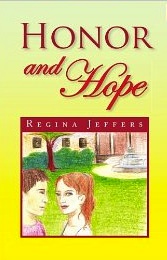
Honor and Hope, a Contemporary Romantica based on Jane Austen’s Pride and Prejudice

by Regina Jeffers

During March, we at AustenAuthors.net will be looking at Jane Austen’s influence on contemporary romance, as well as to look back at those who have written contemporary romances based on Austen’s tales. One of the key issues in the publishing business is that the author of a romance must have a strong, sympathetic believable character as the heroine. Elizabeth Bennet is the model for the romantic heroine. What we admire in Elizabeth is what we admire in most romance novels. She is a keen observer of human nature and society’s peculiarities, but she is also quite willing to own up to her own failings. All Elizabeth’s quirks and flaws add up to a heroine to which readers of any century can relate. Elizabeth’s quest to learn how to open herself up to romance when it comes along is the pattern we see repeated again and again in modern romances.

Austen is a thematic master. Of course, there is the biting humor and delving insights, but it is her development of theme that prevails. I call her thematic technique a “broccoli” because Austen expertly develops the plot by using strong story lines that branch out like a head of a broccoli. She builds gradation upon gradation of a single idea, which encases a central truism. There is a repetitive pattern that sucks the reader into the theme. One finds timbre and connections. Theme explains why Austen’s pieces work so well. There is a permanence of purpose.

Recently, I have pulled out my modern Pride and Prejudice novel and have given it a good once over. Honor and Hope is leaner; I removed some 20 pages from the original. I also revisited some of the scenes to make them read smoother. Honor and Hope is not a book I have ever publicly promoted because I knew it needed another look before I did anything with it. This book came about as a transition piece between Darcy’s Passions and its sequel Darcy’s Temptation (originally entitled Darcy’s Dreams). I had hit a wall with the sequel, not a “wall” of ideas, but a “wall” about the direction the piece would take. I had a vision for Darcy’s Temptation, but I questioned whether I had “forced” the story line. There was nothing to do but to abandon the book for a time. Therefore, I took up the writing of Honor and Hope.

First, I needed a setting upon which to base the book. For my birthday several friends had taken me to visit a North Carolina winery. I thought it would be the perfect setting for a story line. Next came the main characters. An Alpha male hero with an obsession for one particular woman and a strong, independent heroine developed. I started Honor and Hope, but I quickly realized I had broken the cardinal rule for romance novels–I brought the lovers together too quickly. As a former theatre teacher, I had related the old adage of boy gets girl, boy loses girl, boy gets girl as the romantic story line. So, I rewrote a major portion of the book, but it didn’t work for this couple. They desired each other completely and would risk anything to be together; I didn’t envision them as being the type to wait–to play the “teasing” games often found in contemporary romance.

A third time I reworked the piece. Originally, Will and Liz met by accident and quickly fell into a physically dependent relationship. Now, the task became creating a “history” for them. I changed the current physical relationship to one begun in college with an extended separation and then an accidental meeting where they discovered each other once more. Of course, I tossed in several “challenges” before they can know happiness.

Mountain State University is based on Western Carolina University. My son attended school there, and it has a beautiful campus. My son is a distance runner, and I love the pro football season. They were natural backdrops for Will and Liz’s relationship. I live in the Charlotte, North Carolina, area, giving me a basic knowledge of places involved in the story line. I’m originally from West Virginia; we often joke that it is part of our cultural heritage to vacation at Myrtle Beach. From Charlotte, the trip is less than three hours to Myrtle. Therefore, I added Myrtle Beach to the story line. I love the Resort at Glade Springs outside of Beckley, West Virginia; it became an integral part of the scenes of the book–a perfect romantic destination. Visits to England and to Tuscany complement the action; they are two of my “dream” itineraries.

Before I go further, I must extend my apologies to Jane Austen. I love her works more than any other literature. Miss Austen creates drama out of morality–her works are perfect. She knows how to describe a man because she doesn’t exploit her feminine daydreams. This book is loosely–VERY loosely–based on Pride and Prejudice. My second “apology” goes to the Jane Austen Society in Bath, England. I do know they celebrate their annual convention in September. However, for this book’s purposes, I moved it to the last part of February or early March. I also included my own convoluted “name game” to advance my story line.

This book is contemporary romantica–a couple hopelessly in love–and also sexually attracted to each other–a sexy romance focused on the relationship between Will and Liz. I write scenes–connected scenes–such as one finds in a play or a movie. My theatre background makes me prefer telling the story through dialogue rather than description. The “scenes” play in my head; I see the hero and heroine acting out the events. My dialogue is used to create the connection between the characters–the intimate relationship between a man and a woman.

Will and Liz must resolve their own character flaws and their “secrets” before making a permanent commitment. The plot isn’t simply their love affair. The events are obvious in some places and surprising in others. I use backward plotting in designing the story’s frame–starting with scenarios I wanted to create–and then figuring out what I needed in place beforehand to make the scenarios believable. The plot says “happily ever after” has a price to pay.

Within weeks, Honor and Hope will reappear from a different publisher and will be available on Kindle. Right now, it sports a cover drawn by one of my students for the book. I am excited to have the book finally out there for readers who keep asking more about it.

ABOUT THE BOOK: Liz Bennet’s flirtatious nature acerbates Will Darcy’s controlling tendencies, sending him into despair when she fiercely demands her independence from him. How could she repeatedly turn him down? Darcy has it all – good looks, a pro football career, intelligence, and wealth. Pulled together by a passionate desire, which neither time nor distance can quench, Will and Liz are destined to love each other and to misunderstand each other until Fate deals them a blow from which they cannot escape. Set against the backdrop of professional sports and the North Carolina wine country, Honor and Hope offers a modern romance loosely based on Jane Austen’s Pride and Prejudice.

To read an excerpt from Honor and Hope, visit my website, www.rjeffers.com

Posted in Uncategorized | Tagged , , | 2 Comments