Vampiric Legends

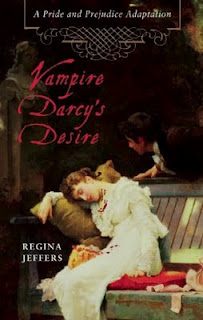
In 2010, I wrote a vampire version of Pride and Prejudice entitled Vampire Darcy’s Desire. However, unlike many books of the recent “vampire” craze, my book is set in Regency England (1800-1820). Even the legend of Dracula could not serve as a basis because Bram Stoker’s classic was not released until 1897. Therefore, it took me some time to sort out how I wanted to handle the “vampirism” in the book. I admit to being influenced by several other vampire stories over the years.
As a teacher of English for many years, I know that in Dracula, Stoker really is using Count Dracula as a combined symbol of Old World superstitions and modern economic improvements. It was the Victorian era, and the people had many fears, among them the fear of sexuality and the British fear of being conquered by an “outsider.” Both are evident in the book.

Bela Lugosi as Count Dracula (1931)

Dracula is a member of the noble class who must mingle with those of a lower class to survive. As far as feminism is concerned, please recall that in Dracula, all vampires are female (except Count Dracula). Vampirism gives them the male trait of being the perpetrator. However, Stoker’s vampires bear little resemblance to humans. Dracula, for example, has an insatiable thirst for blood. When he kills, he does so purely to sustain his own existence. He has no guilt or moral qualms about killing. Dracula’s immortality imprisons him; he has no companions except those he captures and entraps in his home. A stake or a crucifix or clove garlic are the weapons of choice to be rid of the Count, where fire does not affect him.
At one time, I read Anne Rice regularly. We all remember Lestat De Lioncourt, Rice’s main character in her Vampire Chronicles. With Lestat, the reader had a different type of vampire. Lestat possessed the human qualities of having a mind and a spirit. We found in him a vampire who did not kill just to kill. The “hunt” was part of the experience. One might find Lestat discussing philosophy or politics. In fact, he has an unusual collection of talents, and we find him to be very passionate. He makes his “lovers” people we might never associate with vampirism (a nun, for example). He seeks friendship from the mortals he turns. Lestat has an eternal soul. Unlike Count Dracula, Lestat cannot be killed by a stake or a crucifix. Lestat even slept in a church in one of the books. Rice has her vampires killed by fire or by being placed in sunlight, where they ignite into flames.
Vampire legends say that the vampire must be an animated corpse, who claws out of his grave to feed upon human blood. He is dirty and foul-smelling. Yet, the modern vampire is an immortal creature, who retains his youth and lives forever, something very appealing to our youth and sex obsessed culture. He is the eternal bad boy, forever able to indulge in dark desires and sexual urges.

The vampire who exhibits self-control is a new phenomenon. Add a bit of compassion, and one has Twilight. The post 9/11 world does not look favorably on people or beings who hide in plain sight, yet, have the ability to kill us. Therefore, our recent vampires are less likely to be portrayed as monsters. I, seriously, believe that the paranormal literature we are currently experiencing is an aftermath of our youth growing up reading the Harry Potter series. Paranormal books are a more sophisticated fantasy.

My novel is based on the original tales of vampires from the British Isles. Of the BaoBhan Sith, or Scotland’s Legendary Vampires.

The Baobhan Sith, pronounced Baa’-van shee, are one of the oldest forms of vampirism in Scotland. Mostly found within the Highland regions, the Baobhan Sith invariably take the form of a beautiful woman. The vampire is usually dressed in green, the colour of magic and the fairies.

This ghost-vampire was always deemed to be very dangerous to humans. They also have a number of things in common with the classic vampire:

  • They are creatures of the night.
  • They drink human blood.
  • They sometimes have fangs like the classic vampire.
  • They are seductive.
  • They cannot tolerate daylight.
  • At will, they can shape-shift into another animal form.
  • They are telepathic and can read thoughts.

However, there are some interesting differences:

  • The baobhan sith only rises once a year from their graves.
  • Other names include ‘The White Woman.’
  • These vampires are all female.
  • They stalk their prey in forests and other natural locations.
  • They shun society, keeping to rural areas.
  • They stalk and hunt in groups.
  • They invite men to dance with them, before attacking.
  • Their sharp fingernails draw blood from the victim rather than fangs. These nails turn into talons when they attack.
  • They reportedly have cloven hooves for feet that their long dresses hide.
  • A man bitten by a baobhan sith will not turn into a vampire.
  • Any woman who is attacked and killed by a baobhan sith will return as one of them.
  • Building a stone cairn over their grave was thought to stop them from rising.
  • Iron is one of the main weapons used against these vampires.
  • They are afraid of horses, particularly if the horses are shod with iron shoes. So anyone who remained sitting on his horse while confronting the baobhan sith would be safe.
  • What brings you to paranormal literature? Do you prefer werewolves to vampires? Or are zombies your “cup of tea”?
Posted in Uncategorized | Tagged , , , | 1 Comment

Cinematic Jane Austen

Cinematic Versions of Jane Austen

Recently, I blogged about the latest film version of a Jane Austen novel to be released. I write Austen-related adaptations/sequels, as well as contemporary and Regency era books, but many of my readers come to me via an Austen film. They see the movie/TV adaptation and become hooked on the story lines.

Below, you will find a listing of as many Austen-inspired pieces that I could compile. If you know of others, please share them with me. 

2011 – Scents and Sensibility – TV movie

2011 From Prada to Nada  – Film adaptation of Sense and Sensibility

2010 – Aisha – Film adaptation of Emma

Pride and Prejudice: A Modern Day Tale of First Impressions (2011) – Film

Jane Austen Handheld (2010) – Film based on Pride and Prejudice – comedy/drama told through a documentary-style film format

“Emma” (2009) a BBC TV mini-series

Sense and Sensibilidad (2008) – Film

“Lost in Austen” (2008) – TV mini-series that takes the main character into the novel’s pages

“Sense and Sensibility” (2008) – TV mini-series

Jane Austen Trilogy (2008) – a documentary with bibliographic intentions

Miss Austen Regrets (2008) – a made-for-TV show based on Austen’s letters

The Jane Austen Book Club (2007) – film based on the popular best-selling book

Mansfield Park (2007) – TV movie

Northanger Abbey (2007) – TV movie

Persuasion (2007) – TV movie

Becoming Jane (2007) – popular film based on Austen’s letters

Pride and Prejudice (2005) – Film

Bride and Prejudice (2004) – Bollywood film

Pride and Prejudice (2003) -modern adaptation film

The Real Jane Austen (2002) TV movie based on Jane Austen’s letters

Kandukondain, Kandukondain (2000) Film based on Sense and Sensibility

Mansfield Park (1998) – Film

“Wishbone”- “Pup Fiction” (1998) -an episode of the popular TV show based on Austen’s work

“Wishbone”- “Furst Impressions” (1997) – an episode of the popular TV show based on Austen’s work

“Emma” (1996) – TV movie

Emma (1996) – Film

Sense and Sensibility (1995) – Film

Persuasion (1995) – TV movie

“Pride and Prejudice” (1995) – TV mini-series

Sensibility and Sense (1990) – TV movie

Northanger Abbey (1987) -TV movie

Mansfield Park (1983) – TV mini-series

Sense and Sensibility (1981) – TV movie

Jane Austen in Manhattan (1980) – Film

“Pride and Prejudice” (1980) – TV mini-series

“Emma” (1972) – TV mini-series novel

“Novela” – “Persuasión” (1972) -TV series episode

Sense and Sensibility (1971) – TV movie

“Persuasion” (1971) -TV mini-series

“Novela” – “La abadía de Northanger” (1968) -TV series episode

“Pride and Prejudice (1967) – TV series

“Novela” – “Emma” (1967) – TV series episode

“Novela” – “Orgullo y prejuicio” (1966) -TV series episode

“Vier dochters Bennet, De” (1961) – TV mini-series based on Pride and Prejudice

Emma (1960) – TV movie

“Camera Three” (1960) – TV series based on Emma

“Persuasion” (1960) – TV mini-series

“Pride and Prejudice” (1958) – TV series

Pride and Prejudice (1958) – TV film

“General Motors Presents: Pride and Prejudice” (1958) – TV series episode

“Orgoglio e pregiudizio” (1957) – TV mini-series

“Matinee Theater: Pride and Prejudice” (1956) _ TV series episode

“Kraft Television Theatre: Emma” (1954) – TV series episode

“Pride and Prejudice” (1952) – TV mini-series

“The Philco Television Playhouse: Sense and Sensibility” (1950) – TV series episode

“The Philco Television Playhouse: Pride and Prejudice” (1949) – TV series episode

Emma (1948) -TV film

Pride and Prejudice (1940) – Film

Pride and Prejudice (1938) -TV

Jane Austen’s novels have never been out of print. It would seem that we might say the same thing of cinematic adaptations.

Posted in Uncategorized | Tagged , | 3 Comments

The Library of Congress is Collecting Our Tweets

From America Now comes the news that the The Library of Congress is cataloging our Tweets on Twitter. Eventually, “tweeting” will not be the “in” thing to do in our leisure time.

However, the Library of Congress is currently collecting EVERY tweet from EVERY individual.

America Now cyber expert, Theresa Payton, says that “digital is forever.  The Library of Congress collects information that might be vital to our Nation’s history.  That mission extends to digital data, but they usually don’t collect everything digital and hold it forever.  Tweets are the exception and Payton tells us why:

‘The Library of Congress said they are not collecting ‘private’ tweets, which might mean the direct message function,’ Payton explains. ‘But they are collecting all tweets, regardless of topic, and storing them forever.'”

Check out the complete story at http://www.americanownews.com/story/17410107/library-of-congress-collects-and-stores-tweets


Posted in Uncategorized | Comments Off on The Library of Congress is Collecting Our Tweets

Jane Austen’s Hollywood Appeal

Hollywood can’t get enough of Jane Austen

Jane Austen (1775-1817) is closer to Shakespeare, in calendar time, than to us. Yet her world is much closer to ours than his — which helps explain her astonishing ongoing popularity and why she’s not far below the Bard in the number of film adaptations of her work.

People are divided between wanting the past to feel strange and wanting it to feel familiar, said Henry James, and every effort to film the proverbial “period piece” is challenged by the same paradox.

But in Austen’s case, audiences can’t seem to get enough and supply is growing to meet demand: Some 40 feature films and television shows or series have been based on her works. (No. 1 Shakespeare has 400 features alone, with Dickens not a close second.) Rankings aside, Austen is clearly a cult favorite, especially among critics and academics.

But these days, she also has become a pop-culture phenomenon, her face and quotations available on everything from greeting cards and T-shirts to mousepads. “Masterpiece Theatre” on PBS will run adaptations of all six of Austen’s novels next year, plus a new drama based on her life.

What can explain such enduring fascination and eternally fresh appeal?

“Like Shakespeare, she understood human nature, which never changes,” says Joan Ray, University of Colorado English professor and longtime president of the Jane Austen Society of America. But Austen’s universality comes equipped with specificity, as well.

“She stands for England,” says Ray, citing the first superb movie version of “Pride and Prejudice” (1940), with Greer Garson and Laurence Olivier, among such other films of the period as “Mrs. Miniver” (1942, also starring Garson) intended to prod America into entering World War II “to save Jolly Old England.”

Not least of the reasons why Austen’s novels lend themselves so wonderfully to the screen is that she renders her stories largely in conversation. The dialogue comes ready-made. “I think she could’ve made great money today as a scriptwriter,” says Ray. In which regard, she once wrote her sister Cassandra, “I will write only for money!”

Certainly not for fame. All of her books were published anonymously. Only after her death at age of 41 did her brother Henry make her authorship known.

To read the complete article, visit http://www.post-gazette.com/stories/ae/movies/hollywood-cant-get-enough-of-jane-austen-496735/

Posted in Uncategorized | Tagged , | Comments Off on Jane Austen’s Hollywood Appeal

Baby Avery Loses Her Battle to Spinal Muscular Atrophy

Several days ago, I became aware of a 5-months-old little girl, whose parents had found a unique way to honor their dying child. As Baby Avery was only days younger than my grandson, the story touched my heart. Please consider a donation in this angel’s name.

“Bucket List” baby Avery Canahuati dies

By
Ryan Jaslow
avery canahuati, sma, spinal muscular atrophy(Credit: CBS KHOU)

(CBS News) Avery Canahuati, a baby who inspired countless readers as she raised awareness while struggling with a rare disease, has died. Her father Michael wrote of his daughter’s passing on the blog he and his wife had created for her, “Avery’s Bucket List.”

Avery’s Bucket List: Parents pen blog for baby dying of spinal muscular atrophy

The blog, written in Avery’s voice, encourages readers to share the story and to raise awareness about spinal muscular atrophy (SMA). The newest post was introduced by Avery’s dad, who said one of her lungs had collapsed and she went into cardiac arrest on Monday afternoon. Her father performed CPR and brought her back to life for a brief period of time before she passed away shortly after arriving at the hospital. Avery’s doctors had initially said the 5-month old girl may live as long as 18 months.

“Avery’s passing this quickly came as a complete shock to all of us, as she had just been given a thumbs up at her last doctor’s appointment only three days ago,” her father wrote. “While we were aware of the severity of her diagnosis, we never lost hope for Avery and even in her passing, we still have hope for our daughter and all of her friends.”

HealthPop reported yesterday that her parents decided to create the bucket list to make the most of her time alive and to spread awareness on the rare disease with no treatment yet.

“We can watch her die, or we can let her live,” her father Michael said. “And through letting her live we’re going to try and educate other people about this so they don’t have to go through it too.”

At 5-months-old Avery was able to scratch many items off her bucket list: The girl got her first kiss, a tattoo (temporary), her first trip to a baseball game, and other milestones aimed at spreading SMA awareness and encouraging parents to get screened for the SMA gene.

For the complete story, visit http://www.cbsnews.com/8301-504763_162-57425332-10391704/bucket-list-baby-avery-canahuati-dies/

From The Inquisitor comes this excerpt from Avery’s father, Michael

Michael then shared a letter that his 5-months-old daughter “wrote” to him before her passing. Avery writes:

“If you’re reading this it’s because I’ve gone to take care of my Uncle Bryant, Nana Carolyn, Papa George, and all my great Grandparents.  I love you veeeeeeeeeery much.  Also, tell Nana & G-Pa I love them too.  In fact, tell everyone who loved me that I love them and I appreciate them caring about me.… When I started writing my blog, I thought I’d only be speaking to my closest friends and family members.  Little did I know soooooooo many people would care about me and while I’m flattered to have so many people who love me, I hope they will also take time to love and care about all of my friends out there with SMA.

“When people think of me, I hope they’ll also think of all my friends who have been through this and who are going through this now.  But what I really hope for is that when people think about me, they will not waste time sitting there feeling sorry for me, rather I hope they will STAND UP in honor of me and all of my friends (past, present, and future).  And they can do so by spreading awareness and helping to fund a cure for my friends.

Mommy.  Daddy.  I love you every bit as much as you love me.  And while I’m not here physically, I will forever live in your minds, as you will mine. Love always, Avery, Aviator, Aves, Scuttlebutt.”

Avery also asked for people to donate to Dr. Kaspar’s SMA Gene Therapy program in order to help find a cure for SMA. (If you’d like, you can donate to the fund here.)
Read more at http://www.inquisitr.com/228359/bucket-list-baby-avery-loses-battle-with-sma/#D1B1uZJUS7KBetEs.99

Posted in Uncategorized | Tagged , , | 2 Comments

When Mr. Darcy First Spoke to Me

originally published on Darcyholic Diversions

The First Time Mr. Darcy Spoke to Me

When I was twelve, I read Pride and Prejudice for the first time. My mother, may she rest in peace, was a great reader, and like the character of Marti in Love Comes Softly, Peggie Jeffers was a firm believer that books held great adventures. Because of her model, I have always read voraciously. Therefore, Pride and Prejudice was just the latest in a long line of classic novels in my reading repertoire. Or so I thought at the time. Little did I know that this novel would speak to me of how personal conduct can be seen as a bridge between private moral order and social order.

As a girl, head and shoulders taller than many of the boys in her junior high, I discovered a time when women were prided on their sense and men on their reasoning abilities. As I devoured each page, Mr. Darcy spoke to me. 

He said, “I cannot comprehend the neglect of a family library in such days as these.” (I totally agreed with this idea. I have on more than one occasion said that I could live in a library or a bookstore and never feel the want of anything more than food and water and the occasional ray of sunshine.)

“Your list of the common extent of accomplishments has too much truth. The word is applied to many a woman who deserves it not otherwise than by netting a purse or covering a screen; but I am very far from agreeing with you in your estimation of ladies in general. I cannot boast of knowing more than half a dozen, in the whole range of my acquaintance, that are really accomplished.” (I admit to having no artistic inclinations. If Mr. Darcy detested those who feign artistic skills when none exist, he and I would do well together.)

“And to all this she must yet add something more substantial in the improvement of her mind by extensive reading.” (Caroline Bingley had described a woman who could sing well, who walked with grace, and who spoke with elegance. I did none of those. I was a gangly seventh grader, but I was a READER. Mr. Darcy recognized my great advantage.)

“There is a meanness in all the arts which ladies sometimes condescend to employ for captivation. Whatever bears affinity to cunning is despicable.” (Woohoo! At last, a man who did not fall for a woman who batted her eyes and spoke in a syrupy tone. At age 12, I had had my heart broken several times because some idiot could not discern my true worth.)

Miss Bingley said, “I can guess the subject of your reverie.” To which, Mr. Darcy says, “I should imagine not.” (My goodness! I do so love the man’s tongue-in-cheek attitude. I often cannot resist delivering a deadpan response to someone who does not see what I do.)

“This is no very striking resemblance of your own character, I am sure. How near it may be to mine, I cannot pretend to say. You think it a faithful portrait, undoubtedly.” (Good! The man is no namby-pamby. He can be a bit testy when someone pushes him. That means he will forgive my sometimes very snarky remarks.)

“I have no such pretension. I have faults enough, but they are not, I hope of understanding. My temper I dare not vouch for. It is, I believe too little yielding; certainly too little for the convenience of the world. I cannot forget the follies and vices of others so soon as I ought, nor their offenses against myself. My feelings are not puffed about with every attempt to move them. My temper would perhaps be called resentful. My good opinion once lost is lost forever.” (I am from West Virginia. Did you ever hear of the Hatfields and the McCoys? Resentful natures are part of the makeup. LOL!!!)

“A man who felt less might.” (Enough said! Mr. Darcy’s passions run deep.)

“What do I not owe you! You taught me a lesson hard indeed at first, but most advantageous. By you I was properly humbled. I came to you without a doubt of my reception. You showed me how insufficient were all my pretensions to please a woman worthy of being pleased.” (Mr. Darcy would not permit his pride to stand in the way of finding true love. *Sighs Deeply*)

“If you will thank me, let it be for yourself alone. That the wish of giving happiness to you might add force to the other inducements, which led me on I shall not attempt to deny. But your family owes me nothing. Much as I respect them, I believe I thought only of you.” (AT LAST!!!! Although it was fiction that I read, I bought into the idea that a man would put the woman he loved first.)

“When I wrote that letter, I believed myself perfectly calm and cool; but I am since convinced that it was written in a dreadful bitterness of spirit.” (I have always been of the persuasion that placing one’s angry thoughts on paper is very therapeutic. I have also written more than one letter that I thought to be reasonable, but later realized they oozed contempt.)

And so my list could go on and on. Pride and Prejudice and Mr. Darcy has been a part of my psyche for over fifty years. I hear the story’s lines in my head when I discuss politics or religion or romance. So, tell me, dear Readers. When has Mr. Darcy spoken to you?

Shackled in the dungeon of a macabre castle with no recollection of her past, a young woman finds herself falling in love with her captor – the estate’s master. Yet, placing her trust in him before she regains her memory and unravels the castle’s wicked truths would be a catastrophe.

Far away at Pemberley, the Darcys happily gather to celebrate the marriage of Kitty Bennet. But a dark cloud sweeps through the festivities: Georgiana Darcy has disappeared without a trace. Upon receiving word of his sister’s likely demise, Darcy and wife, Elizabeth, set off across the English countryside, seeking answers in the unfamiliar and menacing Scottish moors.

How can Darcy keep his sister safe from the most sinister threat she has ever faced when he doesn’t even know if she’s alive? True to Austen’s style and rife with malicious villains, dramatic revelations and heroic gestures, this suspense-packed mystery places Darcy and Elizabeth in the most harrowing situation they have ever faced – finding Georgiana before it is too late.

Website – www.rjeffers.com

Blog – https://reginajeffers.wordpress.com

Twitter – @reginajeffers

Publisher – Ulysses Press http://ulyssespress.com/


Posted in Uncategorized | Tagged , , , , , | 2 Comments

1816: The Year Without Summer

A Year Without Summer:
Benjamin Franklin was the first to establish the link between volcanic eruptions and climate change when he suggested the bitterly cold winter of 1783-84 in Europe was a result of the dust cloud from the massive eruption of Iceland’s Mt. Laki in 1783.
Mount Tambora, which is on the Indonesian island of Sumbawa, erupted on April 5, 1815, and resulted in an extremely cold spring and summer in 1816, which became known as the ‘year without a summer.’
Tambora’s explosion threw so much material into the atmosphere that, as it spread around the world, it changed the climate of the entire planet. In 1816, it snowed in June in the United States and Europe. Crops failed, there was starvation, people lost their farms, and it touched off the wave of emigration that led to the settlement of what is now the American Midwest. In the meantime, hundreds of thousands more starved around the world. Rioting and looting was common. Europe, following the devastation of the Napoleonic Wars, was exceptionally hard hit, as was the U.S. with the hardships brought on by the War of 1812.
In both Europe and New England, snowfalls and frost occurred in June, July and August, and only the hardiest of grains survived. Destruction of the corn crop forced farmers to slaughter their animals. Soup kitchens were opened to feed the hungry. Sea ice migrated across Atlantic shipping lanes, and alpine glaciers advanced down mountain slopes to exceptionally low elevations.
The large amount of sulfuric acid, eventually produced in the stratosphere by sulfur-rich gases, released during the eruption, blocked sunlight with gases and particles and resulted in a cooling of the Earth’s surface for several years after the eruption.
Low temperatures and prolonged rain caused crop failures in Britain. It was the third coldest summer recorded since record-keeping started in 1659. Parts of Europe suffered famine. Many rivers flooded due to higher than normal rainfall. It is estimated that 200,000 people died in Eastern and Southern Europe from hunger and from a typhus epidemic. Some countries had ash mixed in with snow.
Reportedly, Tambora gave us Mary Shelley’s Frankenstein. The late frosts of 1816 kept Mary and Percy Shelley holed up on the shores of Lake Geneva at Lord Byron’s house. Bored with nothing to do, Bryon suggested a ghost writing contest, but he and Percy soon abandoned their efforts. Meanwhile, Mary wrote her Gothic masterpiece during this time. The conditions also influenced artists such as JMW Turner, who tried to capture the beautiful colors of the sunsets. 
In western England, Wales, and Ireland, farm laborers found themselves out of work in greater numbers than any of them could have imagined. Returning soldiers caused unemployment to rise sharply as famine threatened. Basic food prices soared, and starvation, disease, and infection rose because of malnutrition, as well as the constantly damp conditions.
Riots became commonplace. In one notorious riot, mobs ransacked 100 food shops. The Luddite movement, which had been suppressed by 1813, regained power. In one attack on a factory in Loughbrough, over £6,000 worth of machinery was broken.
Tambora’s eruption was mixed with two other natural phenomena to bring on the catastrophic effects. 1816 marked the midpoint of one of the Sun’s extended periods of low magnetic activity, which is called a Dalton Minimum. This particular Minimum lasted from 1795 to the late 1820s. This was a period of abnormally cold weather in the Northern Hemisphere. In addition, during this period, the Sun shifted its place in the solar system. This is a common occurrence, happening every 180 years or so. Known as “inertial solar motion,” the Sun moves its position around the solar system’s center of mass. Many believe the Dalton Minimum and the inertia solar motion contributed to the destruction found worldwide.
My latest novel, The Disappearance of Georgiana Darcy, is set in 1815, but the Tambora eruption is introduced as part of the plot. Darcy and Mr. Bennet prepare for the possible impact on their estates. The devastation that followed the eruption will take a prominent role in the next book in this Pemberley series.
About the Novel:
 
Shackled in the dungeon of a macabre castle with no recollection of her past, a young woman finds herself falling in love with her captor – the estate’s master. Yet, placing her trust in him before she regains her memory and unravels the castle’s wicked truths would be a catastrophe.
Far away at Pemberley, the Darcys happily gather to celebrate the marriage of Kitty Bennet. But a dark cloud sweeps through the festivities: Georgiana Darcy has disappeared without a trace. Upon receiving word of his sister’s likely demise, Darcy and wife, Elizabeth, set off across the English countryside, seeking answers in the unfamiliar and menacing Scottish moors.
How can Darcy keep his sister safe from the most sinister threat she has ever faced when he doesn’t even know if she’s alive? True to Austen’s style and rife with malicious villains, dramatic revelations and heroic gestures, this suspense-packed mystery places Darcy and Elizabeth in the most harrowing situation they have ever faced – finding Georgiana before it is too late.
Posted in Uncategorized | Tagged , , , , , , , , , , , | 6 Comments

Will Reading Fiction Make You Smarter?

MID the squawks and pings of our digital devices, the old-fashioned virtues of reading novels can seem faded, even futile. But new support for the value of fiction is arriving from an unexpected quarter: neuroscience.

Brain scans are revealing what happens in our heads when we read a detailed description, an evocative metaphor or an emotional exchange between characters. Stories, this research is showing, stimulate the brain and even change how we act in life.

Researchers have long known that the “classical” language regions, like Broca’s area and Wernicke’s area, are involved in how the brain interprets written words. What scientists have come to realize in the last few years is that narratives activate many other parts of our brains as well, suggesting why the experience of reading can feel so alive. Words like “lavender,” “cinnamon” and “soap,” for example, elicit a response not only from the language-processing areas of our brains, but also those devoted to dealing with smells.

In a 2006 study published in the journal NeuroImage, researchers in Spain asked participants to read words with strong odor associations, along with neutral words, while their brains were being scanned by a functional magnetic resonance imaging (fMRI) machine. When subjects looked at the Spanish words for “perfume” and “coffee,” their primary olfactory cortex lit up; when they saw the words that mean “chair” and “key,” this region remained dark. The way the brain handles metaphors has also received extensive study; some scientists have contended that figures of speech like “a rough day” are so familiar that they are treated simply as words and no more. Last month, however, a team of researchers from Emory University reported in Brain & Language that when subjects in their laboratory read a metaphor involving texture, the sensory cortex, responsible for perceiving texture through touch, became active. Metaphors like “The singer had a velvet voice” and “He had leathery hands” roused the sensory cortex, while phrases matched for meaning, like “The singer had a pleasing voice” and “He had strong hands,” did not.

To read the complete article, visit The New York Times‘ Sunday Review at http://www.nytimes.com/2012/03/18/opinion/sunday/the-neuroscience-of-your-brain-on-fiction.html?_r=3

Posted in Uncategorized | 4 Comments

The Cost of Selling eBooks Too Cheaply

By Melissa Foster for IndieReader

There’s a lot of controversy circulating throughout the publishing industry about the pricing of ebooks, and it’s a significant topic that warrants discussion. Independent authors are rallying around the controversial 99-cent price point. Some authors feel the 99-cent price point devalues their hard work, while others feel that readers will not take a chance on new authors at a higher price point. To further complicate the matter, it’s not just new authors that are using the 99-cent strategy, and the issue doesn’t only affect independent authors, but publishing houses and agents as well.

Readers are scooping up ebooks for 99 cents, that alone speaks of a demand for material at that price point. After all, to some readers, an ebook is seen as nothing more than a download. Many authors spend a year or more writing their books, and 99 cents seems ridiculously low and unfair. At the same time, an ebook for $9.99 seems equally unfair to the reader.

Let’s look at the dollars and cents of the 99-cent price point for independent authors. If an author is self-published through Amazon KDP, he or she earns 34 cents per 99-cent book sold. Not only do authors put time and energy into their writing, there are other associated costs to publishing a quality book, including cover artists ($125-3000), editors ($800-5000), marketing, etc. If you add up the average cover cost of $350, average editing job of $1400, then divide by 34 cents, the author would have to sell 5,134 books just to break even, and that’s nearly impossible without an additional amount for advertising. This would also assume that the author receives no income for actually writing the book. Most independent authors will sell less than 100 copies of their ebooks.

What about the author published through a small press? For that author, that 34 cents in earnings is reduced to roughly 12 cents per book.

Traditional publishers cannot even begin to price books at 99-cents, as they have far too much overhead to do so. In addition, how can a publisher sell a hardback book for $26 if the ebook version is 99 cents?

To read the complete article, visit the Huffington Post at http://www.huffingtonpost.com/2011/12/20/ebooks-cheap-price_n_1160383.html

Posted in Uncategorized | Comments Off on The Cost of Selling eBooks Too Cheaply

“Mirror, Mirror” – Use of Filmic Devices to Tell a Story

“Mirror, Mirror, on the Wall” (Previously Posted on PrideandPrejudice05 Blog)

Often in the visual representations of Jane Austen’s works, the media employs props or artifacts as visual cues to Austen’s themes of flawed impressions, misconceptions, and false interpretations. For example in Austen’s Emma, Harriet’s sketch serves as a means to reveal how the other characters feel about Emma’s friend. Mr. Elton flatters Emma’s representation of her subject rather than remark on Harriet. Mr. Woodhouse’s sensibility and his need for fires in all the hearths shows through when he says that Harriet has been subjected to the elements when she is portrayed without a shawl. Even Mr. Knightley gives the viewer a clue to how he feels about Emma’s efforts to raise Harriet up in Society. Upon observing the sketch, he says that Emma has made Harriet “too tall.”

The resetting of the miniature of Captain Benwick in Persuasion serves as a the perfect symbol for Captain Harville’s and Anne’s “debate” over the constancy of females and males in love. In Mansfield Park, the distorted and mistaken impressions of the characters plays out in theatricals. Edward Ferrars’ ring is a prime example. In Sense and Sensibility, Elinor Dashwood mistakenly believes that it is a lock of her hair that in encased within. In truth, the lock belongs to Lucy Steele.

These “mistaken interpretations” and many more of Austen’s subtle thematic layers appear in the film versions of Austen’s works in the form of a mirror. It is a bit of irony that Austen never uses the prop as part of her story lines (except in the case of Sir Walter Elliot in Persuasion). Yet, Hollywood loves a good prop, and a mirror can tell the viewer so many unspoken tales. The mirror is often used in film to double a shot’s space or to display a character’s feelings or even to take on metaphorical dimensions. Film history gives up multiple examples of the use of the mirror as important role (Orson Welles’s 1948 The Lady from Shanghai; Walt Disney’s 1939 Snow White, etc.).


A mirror in its stillness reflects a “fundamental absence,” as Christian Metz terms the prop’s use. It is a reflection within a reflection. Ariane Hudelet says in “Deciphering Appearances in Jane Austen’s Novels and Films” that “To look at a heroine looking at herself transforms the character into a self-spectacle, a motif we could link with the emphasis on interiority in Austen’s novels. The mirror objects can thus stand for conflicting notions of blindness or introspection, vanity or revelation, according to the films and sequences. Whether it is used as a symbol to reflect the characters’ thoughts or nature, or as a metaphor of the relationships between the characters which can sometimes contrast with the contents of the dialogue and reveal ironic distance, the mirror image constitutes a privileged example of the way Austen’s very modern questioning of the perception of reality can become a post-modern questioning of the reception and distortion of images.”

So, when we as viewers encounter a filmic scene in which the director has used a mirror, we immediately translate the prop’s use to represent introspection on the part of the character. Or we may immediately interpret the character’s self-absorption. Or we may recognize the illusory blindness of the character. In Joe Wright’s 2005 adaptation of Pride and Prejudice, the scene where Elizabeth Bennet “reflects” on Mr. Darcy’s letter is a very poignant one in the film. She discovers her own misconstructions. Those are summarized by Elizabeth’s response to Charlotte Lucas’s inquiry to her mindset. “I hardly know.”

Wright’s film relies on stillness to create the conflict. Following the proposal scene in the pouring rain, the viewer follows Elizabeth’s slow progression through Hunsford cottage to stand before the mirror. We, the viewers, are on the inside of the mirror, looking back at Elizabeth’s inner journey. The scene begins with Elizabeth sitting on her bed. This is what is known as a medium close shot. She does not move. It is a back lit shot to create a claire-obscure effect. Elizabeth moves along a narrow corridor to stand before the mirror. In his commentary on the DVD, Joe Wright says, “We are her,” in referring to the viewing audience becoming Elizabeth’s reflection.

Time progresses behind Elizabeth, but she remains still and expressionless. Darcy appears behind her to deliver his letter. Images are purposely blurred to tell the viewer that these characters have often misconstrued the other.

Elizabeth is learning about Mr. Darcy but also about herself. Her “vision” is both blurred and clear. She turns around to find what she now sees clearly as having disappeared. When she can finally recognize Darcy for the man he is, he is no longer available. Wright uses the mirror as an image of revelation. In the novel, Elizabeth looks long and hard at an image of Darcy in the Pemberley gallery. She recognizes the man she should have seen from the beginning.


Now, it is your turn. Tell me other instances of when the mirror is used as a prop in an Austen adaptation. I, personally, can think of several others, but I’ll leave it to you to list some before I pour forth others. We can even explore the use of the mirror in other modern films if you like.


As I leave you, I would like to introduce you to my latest Austen-inspired novel, The Disappearance of Georgiana Darcy. It is in the warehouse and ready for release. I hope you enjoy it.


Book Blurb:

Shackled in the dungeon of a macabre castle with no recollection of her past, a young woman finds herself falling in love with her captor – the estate’s master. Yet, placing her trust in him before she regains her memory and unravels the castle’s wicked truths would be a catastrophe.


Far away at Pemberley, the Darcys happily gather to celebrate the marriage of Kitty Bennet. But a dark cloud sweeps through the festivities: Georgiana Darcy has disappeared without a trace. Upon receiving word of his sister’s likely demise, Darcy and wife, Elizabeth, set off across the English countryside, seeking answers in the unfamiliar and menacing Scottish moors.


How can Darcy keep his sister safe from the most sinister threat she has ever faced when he doesn’t even know if she’s alive? True to Austen’s style and rife with malicious villains, dramatic revelations and heroic gestures, this suspense-packed mystery places Darcy and Elizabeth in the most harrowing situation they have ever faced – finding Georgiana before it is too late.


Website – www.rjeffers.com

Blog – https://reginajeffers.wordpress.com

Twitter – @reginajeffers

Publisher – Ulysses Press http://ulyssespress.com/


Posted in Uncategorized | Tagged , , , , , | Comments Off on “Mirror, Mirror” – Use of Filmic Devices to Tell a Story