Question from a Reader: When might the new heir style himself with his title?
To the best of my knowledge he could do so immediately. The reality of your question has to do with when the title is officially bestowed upon him by the House of Lords. In truth, he could be called by his new title upon hearing of his relation’s passing. The question is more when “should” he do so rather than when “could” he do so.
This is a matter of how he chooses to style himself until the title is officially conferred. It is a point that actually also reveals something of character.
If the gentleman holds a solid claim and everyone knows it, he might assume the title at once as a form of address. His servants and all about him would begin calling him by his new title. Naturally, he would not have access to any of the estates or funds or rights of the title until it is legally confirmed by the House of Lords. If his claim is a bit shaky, he or others might want to avoid that until it is proven.
If he is a stickler for legal protocols, he might not assume the title at once, though others might begin to do so.
Of course, as an author, one must keep in mind not to confuse the reader with references to both the title and his surname, which might seem like two different characters, so that becomes a bit tricky.
When a father dies, the transfer of power and title happens automatically. The father’s will might require some wait for probate of some items but usually the executor and a solicitor see to all of it.
Notice of the death of the previous peer is usually sent to the College of Arms and the name of the new peer recorded by them. All is straightforward and customarily goes without a hitch.
When Lord Byron succeeded to his great uncle’s peerage at age 10, he did nothing and all assumed he was entitled to the peerage. He was not brought up in aristocratic circles so became very angry when he was told that in order to take his seat in the House of Lords he had to prove he was the rightful successor. This meant he had to show his father’s relationship to the previous peer and that his father was born of a valid marriage and that he [meaning Byron] was also born in a valid marriage and that his great uncle’s sons were dead and without issue. Of course that involved fees. Fortunately for Byron, he only had to show a couple of generations. Some times the proofs had to go back six generations.
When the Earl of Berkeley died in 1811, he left something like 10 children. His oldest son was known as a viscount.
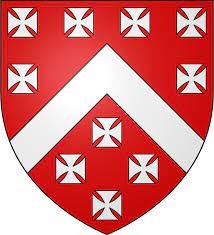
However, a marquess brought up the fact to the HoLs that when the boy/heir was born, he was listed as the son of the earl and his mistress. Fearing this might be an issue, Earl Berkeley publicly married his mistress [again?] in 1795, saying that it was just a reaffirmation of their vows because the place they had originally married had burned and the files were lost.
Several people were called as witnesses. Each reluctantly had to say that the old earl had spoken of the woman as a mistress and not as a wife for the first years of the oldest son’s life. The oldest son had been left the castle in the father’s will and all the children had been left nice fortunes, as long as they did not dispute the earl’s story that all the children were legitimate.
A 16 year old was named earl, but he never claimed the title. His mother and older brother told him where to sign as they effectively handled the property. He never even married. I often thought he did not marry because he doubted he could find a wife who would be willing to be plain Mrs. Berkeley and not The Countess of Berkeley.
The title was dormant for most of the century.
The oldest son was created a peer by William IV, who also created his own eldest son a peer.


 Every Woman Dreams...