
In the singular form the lexicon of a particular subject is all the terms associated with it. The lexicon of a person or group is all the words they commonly use. As a plural noun, a lexicon is an alphabetical list of the words in a language or the words associated with a particular subject. To distinguish lexicon from a dictionary, it is an alphabetical list of the words in a language or the words associated with a particular subject.
These examples are a mix of what one might hear upon the lips of the aristocracy, as well as examples of Cant used upon London’s streets and those terms used by farmers and like in the country.
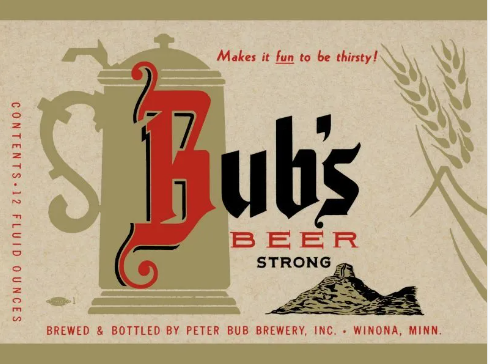
bub – strong beer [As a side note, check out the story of Bub’s beer in the U.S. “The beer that made it fun to be thirsty.“]
bubber – a drinking bowl [cant: a thief that steals plate from public houses]
to bubble – to cheat
bubble and squeak – a British dish consisting of usually leftover potatoes, greens (such as cabbage), and sometimes meat fried together; generally beef and cabbage fried together, so called because of the “bubbling” and “squeaking” sounds made during boiling
Bubble and squeak is a fried British dish made with potatoes and cabbage. It’s quite similar to the Irish colcannon. Bubble and squeak, which often contains meat such as ham or bacon, is traditionally made on Monday with the leftovers from Sunday’s dinner or on Boxing Day with leftovers from the Christmas feast.


to run a buck – to poll a bad vote at an election (Irish term)
buckeen – a bully
bucket – to die, as in “to kick the bucket”
Buckinger’s Boot – Matthias Buchinger (June 2, 1674 – January 17, 1740), sometimes called Matthew Buckinger in English, was a German artist, magician, calligrapher, and performer who was born without hands or feet and was 2’5″ (74 cm.) tall. Buchinger was especially noted for his micrography, in which illustrations consist of very small text.

He travelled to England trying to get a court appointment with King George I; unsuccessful, he then moved to Ireland where he gave public demonstrations, in Dublin in 1720 and in Belfast in 1722. He also is rumored to have had children by as many as 70 mistresses. Buchinger’s fame was so widespread that in the 1780s the term “Buckinger’s boot” existed in England as a euphemism for the vagina (because the only “limb” he had was his penis). Buchinger died in Cork, Ireland.

Despite his having small, finlike appendages for hands, his engravings were incredibly detailed. One such engraving, a self-portrait, was so detailed that a close examination of the curls of his hair revealed that they were in fact seven biblical psalms and the Lord’s Prayer, inscribed in miniature letters.
Despite his handicap Buchinger was an accomplished magician, causing balls to disappear from under cups and birds to appear from nowhere. It also was said that he was unbeatable at cards and would dazzle audiences with his amazing displays of marksmanship. Buchinger liked to build ships in a bottle. He had tremendous dexterity, in spite of his disability. Buchinger’s musical skills included the ability to play a half-dozen musical instruments including the dulcimer, hautboy, trumpet, and flute and several of his own invention. Buchinger was married four times and had at least 14 children. These fourteen children were birthed by eight women.
buckles – fetters (Cant)
budge or a sneaking budge – one who slips into houses in the dark to steal cloaks and other clothing
bufe – a dog
bufe nabber – is, naturally, someone who steals a dog
to stand buff – to withstand an attack
buffer – one that steals horses and dogs for their skins
buffer – one who takes an oath; generally applied to Jew bail
buffle-headed – confused, stupid
Bug – nickname given by the Irish to Englishmen; i.e., bugs, as it is said, having been introduced into Ireland by Englishmen
to bug – a cant word among journeymen hatters, signifying the exchange of fur from the best animal fur of which a quality hat is made for those of less value; Hats are composed of the furs and wool of diver animals, among which a small portion are beavers’ fur.

to bug the writ – when bailiffs delays serving a writ by taking a monetary bribe
bugger – a blackguard, a rascal, a term of reproach
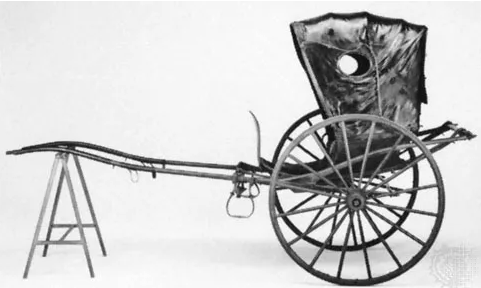
buggy – a one-horse chaise
bull – An Exchange Alley term for one who buys stock on speculation for time, as in “it’s a Bull market”
bulldog – assistants to the proctors at Oxford and Cambridge; they helped to discipline rule-breaking undergraduates.
buttons – Women’s dresses did have some buttons but nothing like the ones used for men’s coats . They sued few metal, wood or bone buttons. Men had buttons on their breeches, pantaloons, trousers, waistcoats, and coats . They had them on the sleeves of their coats as well. Women’s clothes mostly tied on or used straight pins. Women weren’t supposed to be so active that they needed someway to keep clothes on when working. The women who worked had clothes that were sturdy and wrapped, tied, and laced.
Some illustrations show a garment with small buttons at the nape of the neck in women’s clothes or at the small of the back. Some replaced pins on an apron like front with small buttons.
buying a commission – After 1795, while the wealthy still raised regiments, they were not given a colonel’s rank because under the new requirements, most did not have military experience. Thomas Graham ran into this issue and remained a ‘temporary Lt. Colonel of the regiment he raised, having no seniority in the army for eight years until General Moore’s dying request to grant him the full army rank.
Only a third of the commissions were purchased between 1792-1815. More were purchased early in the wars, fewer later, more were Ensign and Lieutenant rank than captain, major or Lt. Colonel. More guards and cavalry officers were purchased. The rank of colonel could not be purchased. In general, the attitudes and expectations of a Napoleonic British officer had little in common with the expectations of a modern officer, whether British or US.
Other Sources:


 Every Woman Dreams...
