Of late, I have been exploring words of which I was not familiar and in a variety of topics. Today, I bring you words dealing with geography. Many we are hearing something of on a daily basis on TV with many sounding the alarm for climate change. Mother Earth. Whose demise we can foresee. Most of us know, for example, something of a rainforest, a valley, topography, a mountain, a lagoon, and even a fjord (thank you to Disney for adding this word to kids’ vocabulary via “Frozen”). Yet, of late, I have heard some geographical terms of which I was not so familiar, as well as some I had not considered for more years than I can to confess. Perhaps you, also, could use a refresher course. Some of these I knew. Some are new to me and perhaps to you.
Ria – a drowned river valley, forming a long, narrow, funnel-shaped inlet at right angles to the sea. Likely the most famous one of which I can think is Port Jackson, also referred to as Sydney Harbour. It is a ria, or drowned river valley. The deeply indented shape of the ria reflects the dendritic pattern of drainage that existed before the rise in sea level that flooded the valley.

Pingo – A hillock produced in polar regions by an underground ice “blister” pushing up the surface above.

Talga – An area of coniferous evergreen forest lying south of the tundra in Europe and Asia.

Karst – Limestone landscape with a largely bare, rocky surface and rivers that flow through underground caves.

These next two are closely connected, so I will add them together.
Karst – A high block of land between parallel faults, caused by the block having risen or the land on either side having sunk.
Graben (or Rift Valley) – A long narrow trough where land has sunk between two in-facing parallel faults (also known as a graben).

Guyot – A flat-topped submarine mountain formed by a subsiding volcanic island.
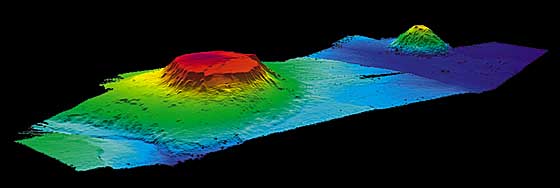
Hogback – A long narrow ridge which is steep on both sides.

Desertification (I could have figures this one out with the word “desert” at the beginning . . .) – The process by which land that has been farmed or inhabited becomes changed into desert, usually through climatic change or over-farming.

Cirque – A mountain hollow eroded by snow and ice. It may contain snow or a lake.
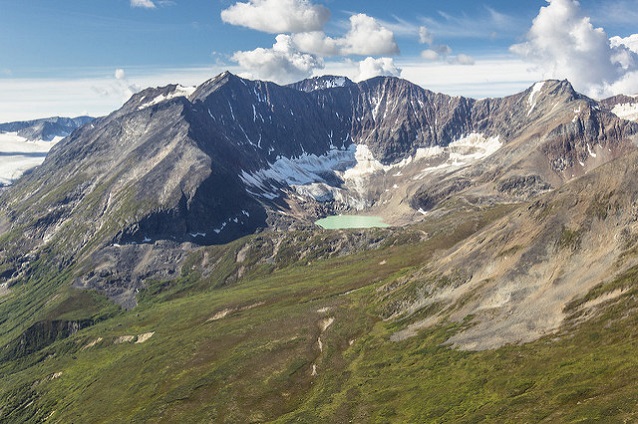
Cuesta – A ridge with a steep slope on one side and a gentle dip slope on the other.

Glaciation – The effects on land of ice sheets or glaciers that erode rocks and deposit the rock debris.

Llano – A large area of usually treeless, grassy plain in South America or the southern U.S.

Drumlin – A half-egg-shaped hill of glacial deposits, formed under moving glacial ice.


Erg – An area in the desert where there are shifting sand dunes, for example in the Sahara.

This last one, most of us know, but the Coriolls force appears to be more in the news these days with excessive rain, snow, tornadoes, etc. The Coriolls force refers to the tendency of the Earth’s rotation to turn winds and currents to the right in the northern hemisphere and to the left in the southern hemisphere.


 Every Woman Dreams...
_V2.jpg)
