
This is not meant to be a political post, so NO “haters,” please. As an author, I DO NOT discuss politics or religion publicly. Heck, I barely discuss those topics with family and friends, for I consider both quite personal subjects. Therefore, I will delete comments that grow nasty or too opinionated.
We sometimes think that history happens elsewhere, and we merely read about it. But history has a way of extending its finger and etching a line upon our souls. Therefore, this is a quick look back at the U.S. in my near 70 years on this earth, especially from the perspective of my hometown of Huntington, West Virginia. Huntington is a small town of some 70,000 people upon the Ohio River. Like many towns and cities in the United States, it has seen its moments of greatness and of despair.
In my lifetime, I have known thirteen presidents. They were…
 33. Harry S. Truman (April 12, 1945—January 20, 1953). Democratic. Democratic. Truman served as President Franklin D. Roosevelt’s third vice president and succeeded him on April 12, 1945, when Roosevelt died less than three months into his fourth term. During his presidency Truman had to deal with many challenges in domestic affairs. He established the Truman Doctrine to contain communism and spoke out against racial discrimination in the armed forces.
 34. Dwight D. Eisenhower (January 20, 1953—January 20, 1961). Republican. Before his service as the 34th U.S. President, Eisenhower was a five-star general in the U.S. Army. During WW2 he served as Supreme Commander of Allied forces with responsibility for leading the victorious invasion of France and Germany in 1944 to 1945. His focus as President was to reverse end U.S. neutrality and challenge Communism and corruption. He drafted NASA to compete with the Soviet Union in the space race.
  35. John F. Kennedy (January 20, 1961—November 22, 1963). Democratic. Also known as JFK. At age 43 Kennedy was the second youngest president ever when elected, after Theodore Roosevelt. JFK was the only president to have won a Pulitzer Prize and the only Catholic president. Events that happened during Kennedy’s presidency included the building of the Berlin Wall, the Cuban missile crisis, the Bay of Pigs Invasion, the early Vietnam War, the Space Race, and the African American Civil Rights Movement.
 36. Lyndon B. Johnson (November 22, 1963—January 20, 1969). Democratic. President Lyndon Johnson was one in four presidents to have served in all four federal offices of the U.S. government (President, Vice President, Representative, and Senator). He was well known for his domestic policies, including civil rights, Medicaid, Medicare, Public Broadcasting, the “War on Poverty,” educational aids, and environmental protection. However, his foreign strategy with the Vietnam War dragged his popularity.
 37. Richard Nixon (January 20, 1969—August 9, 1974). Republican. President Nixon was the only president to resign from office. His presidency involved improvement of relations with the People’s Republic of China, the ending of U.S. involvement in the Vietnam War, and the achievement of détente with the Soviet Union. Nixon’s second term was riddled with controversy of the Watergate scandal.
 38. Gerald Ford (August 9, 1974—January 20, 1977). Republican. Ford was assigned vice president when Spiro Agnew resigned during Richard Nixon’s administration. When Nixon resigned, Ford became president. While in office Ford signed the Helsinki Accords, easing relations during the Cold War. Involvement in Vietnam essentially ended not long after he became president when North Vietnam defeated South Vietnam. The economy was the worst since the Great Depression while he was in office. He also granted a presidential pardon to President Richard Nixon for the Watergate scandal, which drew controversy towards his name. He is credited with helping to restore public confidence in government after the disillusionment of the Watergate era. Ford understood that his decision to pardon Nixon could have political consequences, and it probably cost him the presidency in 1976. That year, he lost a close election to Democrat Jimmy Carter. Ford took the loss in stride, however, telling friends that he had planned to retire from Congress that year anyway. He viewed his brief tenure in the Oval Office as an unexpected bonus at the end of a long career in politics. Ford often said that he was pleased to have had the opportunity to help the nation emerge from the shadow of Watergate.
 39. Jimmy Carter (January 20, 1977—January 20, 1981). Democratic. Carter was the 39th President of the U.S. and the only to receive a Nobel Peace Prize (in 2002) after leaving office. As president, he created two new cabinet departments: the Department of Education and the Department of Energy. The end of his term saw the Iran hostage crisis and the failure of its major rescue operation, resulting in the deaths of eight American servicemen, one Iranian civilian, and the destruction of two aircraft, the Three Mile Island nuclear accident, the 1979 energy crisis, and the 1980 eruption of Mount St. Helens.
Airlines had been “deregulated” for only two years. Government controlled the pricing and allocation of oil in the United States. “Regulation Q” and other restrictions on banks and financial institutions kept capital formation in the doldrums. Another way of putting it was that many sectors of this economy were more socialistic then than they are now.Carter’s administration played a large part in many of the deregulation efforts.)
 40. Ronald Reagan (January 20, 1981—January 20, 1989). Republican. Prior to becoming a politician Ronald Reagan had been a radio broadcaster and actor. He earned a Bachelor of Arts degree in sociology and economics. As president, Reagan implemented new economic policies that became known as “Reaganomics.”
 41. George H. W. Bush (January 20, 1989—January 20, 1993). Republican. Before becoming the 41st President of the U.S., George H. W. Bush served as the 43rd Vice President, an ambassador, a congressman, and Director of Central Intelligence. He served as a U.S. Navy aviator during World War II. After the war he attended and graduated from Yale in 1948. He went into the oil business and became a millionaire by age 40.
 42. Bill Clinton (January 20, 1993—January 20, 2001). Democratic. Clinton was elected into office at 46, making him the 3rd youngest president. He was the first president of the baby boomer generation. He graduated from Yale Law School. Clinton was involved in a scandal with a White House intern, which nearly got him impeached. Despite that, his work as president earned him the highest approval rating of any president since World War II.
 43. George W. Bush (January 20, 2001—January 20, 2009). Republican. Bush graduated from Yale in 1968 and Harvard Business School in 1975, working in oil businesses after. Bush advocated policies on health care, the economy, social security reform, and education. In 2005 Bush was criticized for his administration’s handling of Hurricane Katrina. With the combination of dissatisfaction with the Iraq War and the longest post-World War II recession in December 2007, Bush’s popularity declined sharply.
 44. Barack Obama (January 20, 2009—???). Democratic. Obama was the first African American U.S. president. He was previously a U.S. Senator from Illinois. He was born in Honolulu, Hawaii. He graduated from Columbia University and Harvard Law School. He will be remembered for Obama Care and some not so popular foreign affairs. His legacy is yet to be named.
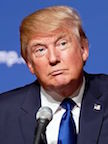 45. Donald J. Trump (June 14, 1946 — ???} Republican. Trump is an American businessman, politician, and television personality. He is President of the U.S. as of today. His legacy, like Obama’s, is yet to be defined. Trump won the general election on November 8, 2016, gaining a majority of electoral college votes, while receiving a smaller share of the popular vote nationwide than Democratic rival Hillary Clinton. At age 70, Trump will become the oldest and the wealthiest person to assume the presidency, and the first without prior military and the first without either prior military or governmental service.


 Every Woman Dreams...
Regina, being 70 like yourself, these are the American presidents I’m familiar with too.
There was a man last evening on one of the national news programs who had attended the inauguration of 18 presidents. Imagine the history he has witnessed.
I really liked this post, Regina. Just good information. I can’t remember Truman. Eisenhower is the first president I remember seeing on TV.
I started off just telling about those who came through my hometown, but as I wrote this I realized even if that never visited the small section of West Virginia, they affected me and all of those around me.
Thank you for the post. I am sick of seeing people posting on facebook about how bad Trump is and what is going to happen to this country. No one knows what is going to happen but God.
I can go back to Franklin Delano Roosevelt, so I have seen good and bad in many presidents, wars, and grew up with a parent who came from another country across the pond and couldn’t speak English. We the American people can only hope for the best of this country and the future for all the youth.
Saying one wants Trump to fail is like saying one wants the pilot upon the plane in which he is a passenger to fail. I wish all of them to succeed for they hold our futures and that of our children and grandchildren in their hands.