
Young girls had little control over their lives during the Regency and Victorian eras. Their lives were strictly regulated by nurses and governesses. The girls were expected to practice correct moral and social standards. Responsibilities to family and name were numerous. Young girls learnt the necessity of benevolence. Charitable acts were taught by mothers and other female relatives.
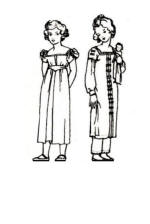
1815
Other than this “insistence” on their daughters showing condescension, parental involvement in their daughters’ educations was very limited. Remaining remote and indifferent was more the mode of the day. Mothers were traditionally active with their own social lives. Children remained at home with nurses/governesses while their mothers lived an active social life. Girls remained under the control of their nannies or governesses until they were old enough to make their debut into Society. Children often knew more affection from the house’s servants than did their parents.
Even when in residence, parents often preferred formal “daily visits” with their children rather than interacting with them informally. During the “children’s hour,” the young ones “performed” for their parents in carefully prepared exhibitions of what they had learned during their studies. The children, essentially, lived in a different world upstairs, and they were at the mercy of their caregivers. Sometimes, children resided in another of the family’s properties, or they were left in the country while their parents saw to their father’s developing political career in London. And Heaven Forbid, a marriage knew its troubles. Female children might be foisted off on other relatives or sent to live abroad under the care of a distant relative or governess. Male children were sent away to school and experienced a different type of isolation.
The segregation from the family extended to all parts of the child’s life: meals, sleeping quarters, and entertainment. Larger houses might have both day and night nurseries, as well as separate rooms for the older children. Food was often monotonous. Separate meals were prepared for the nursery. Furniture inside the nursery was often shabby. Girls often received a doll’s house, a rocking horse, and a painted screen as toys.
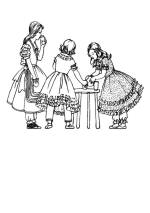
1840
During the Victorian era, girls were dressed in numerous petticoats. During the winter, the petticoats were made of flannel. In the summer, they were starched stiff. Black-buttoned shoes, elaborate hats, and pelisses were worn out of doors. The same clothes were not worn for both morning and afternoon activities, and another change of clothes was required for the formal visits with their parents.


 Every Woman Dreams...
Reblogged this on Rogues, Rebels & Rakes and commented:
Regina Jeffers’s Blog is famous for offering great posts about the Regency period. I love her blogs so much, I decided to repost today’s entry. Enjoy!
Thank you, Katherine. It is so kind of you to spread the word about my blog. I appreciate your support.
Pingback: Porter Music Box Co. (authentic victorian music box sound) | music for the soul