
In referring to the cult-like following of those who extolled all things involving Admiral Horatio Nelson, Jane Austen once wrote, “I am sick of Lives of Nelson.” Yet, the author always appreciated the lives of men in the Royal Navy. Two of her brothers served thusly. The British Navy at the time of the Napoleonic War was divided into “ships of the line,” those carrying between 60 and 100 guns, and “cruisers,” which were frigates, sloops, and brigs with fewer guns. In 1810, British naval strength was estimated to be 150+ ships of the line and near 400 cruisers. Documents on the naval history sites say that the Navy employed 800+captains, 600+ commanders, and nearly 3300 lieutenants.
During the Napoleonic Wars, the size of the British fleet was greater than all the other sea-faring nations put together.
The British Isles remained safe behind the “Wooden Walls” of the Royal Navy, and Britain was able to continue its world trade and empire building. They controlled English Channel and trading routes with size of their fleet, but Britain also actively sent its vessels out to attack enemy warships. With its strength in numbers and its developing naval industry, Britain could risk losing a ship or two to protect the British people.
In 1797, 1801, and 1807, the British navy sailed to destroy the neutral or French-allied vessels of Holland and Denmark. At Camperdown in 1797, Admiral Duncan pitted his 16 ships against 16 Dutch warships under Admiral de Winter and destroyed the enemy fleet – capturing seven Dutchmen and allowing the rest to flee.
In April 1801, the Admirality sent an expedition against Denmark to break up a northern European agreement, the Armed Neutrality of the North, that threatened British trade and shipbuilding materiel – wood, rope, grain and tar – in the Baltic Sea.
The naval Battle of Copenhagen was a British victory that saw 12 of 18 Danish vessels captured and ended the threat to its trade. In 1807, Britain again moved against Denmark when it became known there was a French move to grab the Danish fleet. Admiral Gambier took 20 ships of the line and an infantry force of some 20,000 men – including Arthur Wellesley (yes, that is the Duke of Wellington) – to prevent the vessels falling into French hands. A two-week siege began and a Danish military move to break the blockade was ended by Wellesley’s infantry. The bombardment of the capital by the Royal Navy forced neutral Denmark to hand over its 18 ships to London.
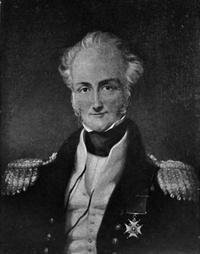
Sir Charles Austen
Jane Austen’s brothers entered the navy at the age of 12 and first went to sea at age 15. Naval life was a hard one, and many believed it necessary “to toughen up the boys.” Unlike in the army, naval commissions could not be bought. It was necessary to succeed in a naval career to have the patronage of an influential personage. If one recalls Admiral Crawford in Mansfield Park, this makes more sense. A man earned his future in prize money. Do we not recall Captains Wentworth, Benwick, and Harville in Persuasion? The captain would receive one-fourth of the value of the captured ship. His officers would receive graduated proportions, and ordinary seamen divided the final quarter among themselves. In Persuasion, Wentworth has earned 20,000 pounds in his eight years of service. Men learned to look forward to another war so they might continue their winning ways.


 Every Woman Dreams...
Your blog is WONDERFUL I had such a fun time on it! Thank you for posting! This post was especially informative !
Thanks for joining me, Jasmine. I like to include items from the publishing industry, a bit of Jane Austen and Regency era posts, and something from the research I do for my novels. It’s an eclectic mix.
Oh I wish I could Do that. Have you seen this series I just found it today! It’s been interesting watching!
Have a great weekend!
I had not seen the series on You Tube. I tend to live in the Regency, but I have been drifting over into the Victorian era of late. Thanks for sharing. Enjoy your family and friends this weekend.